
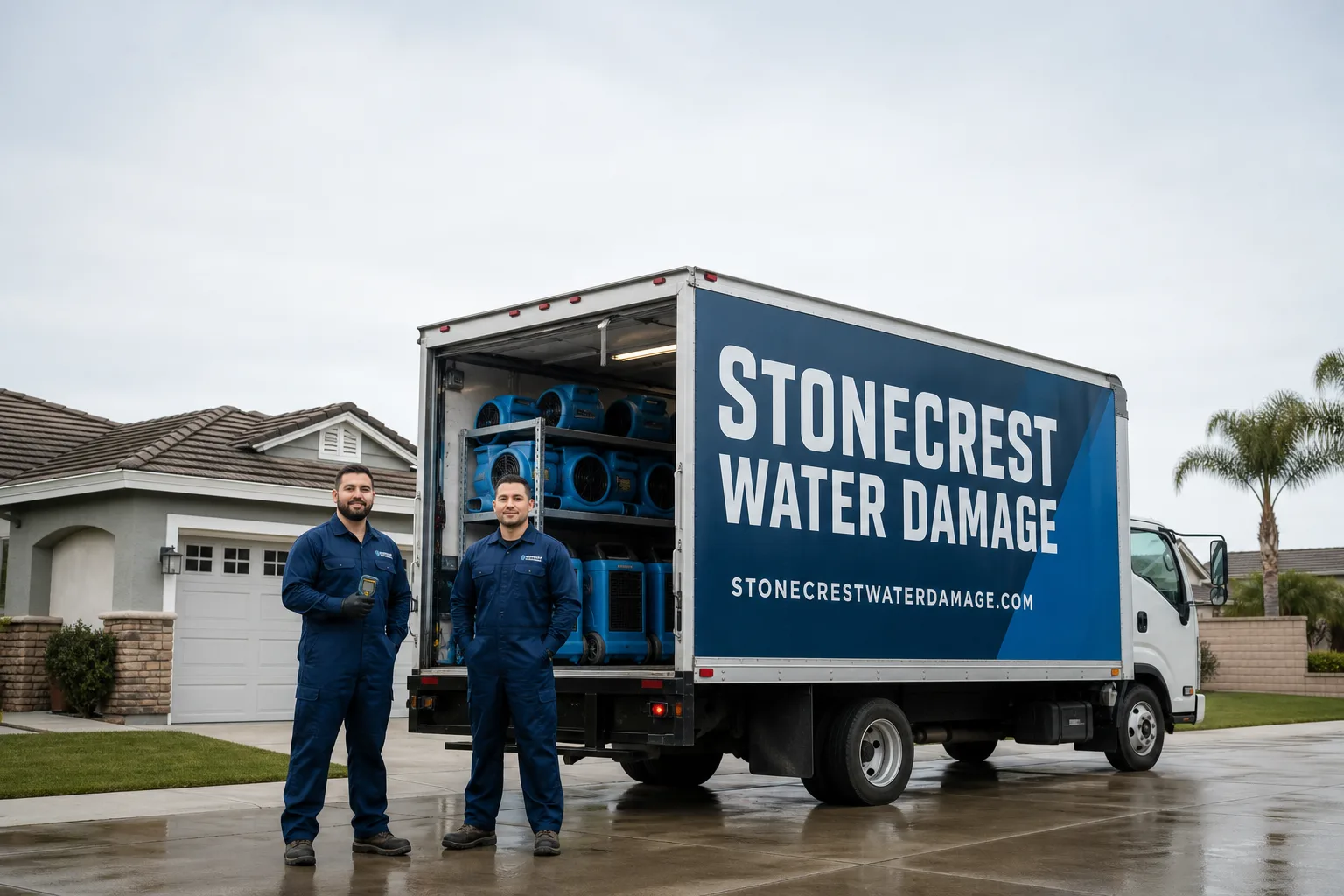
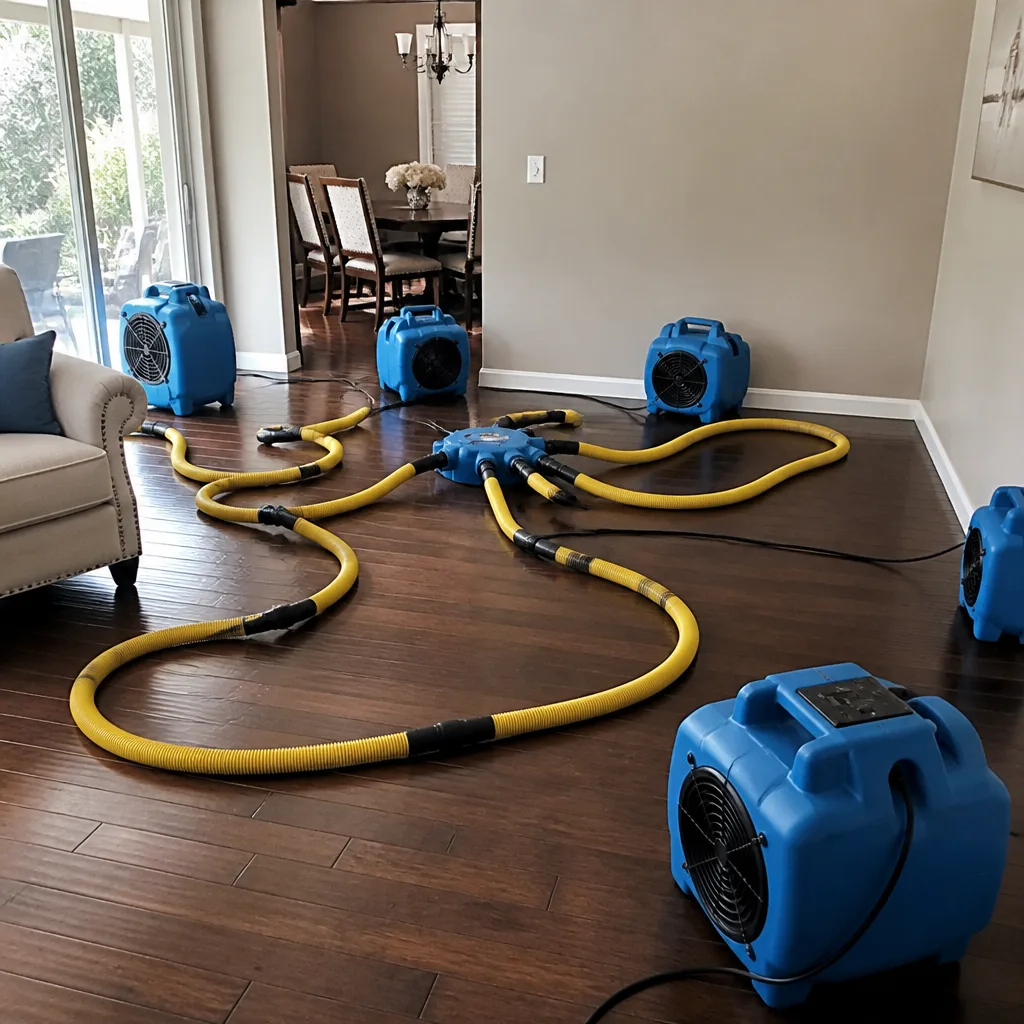
 Water damage drying
 Fire & smoke cleanup
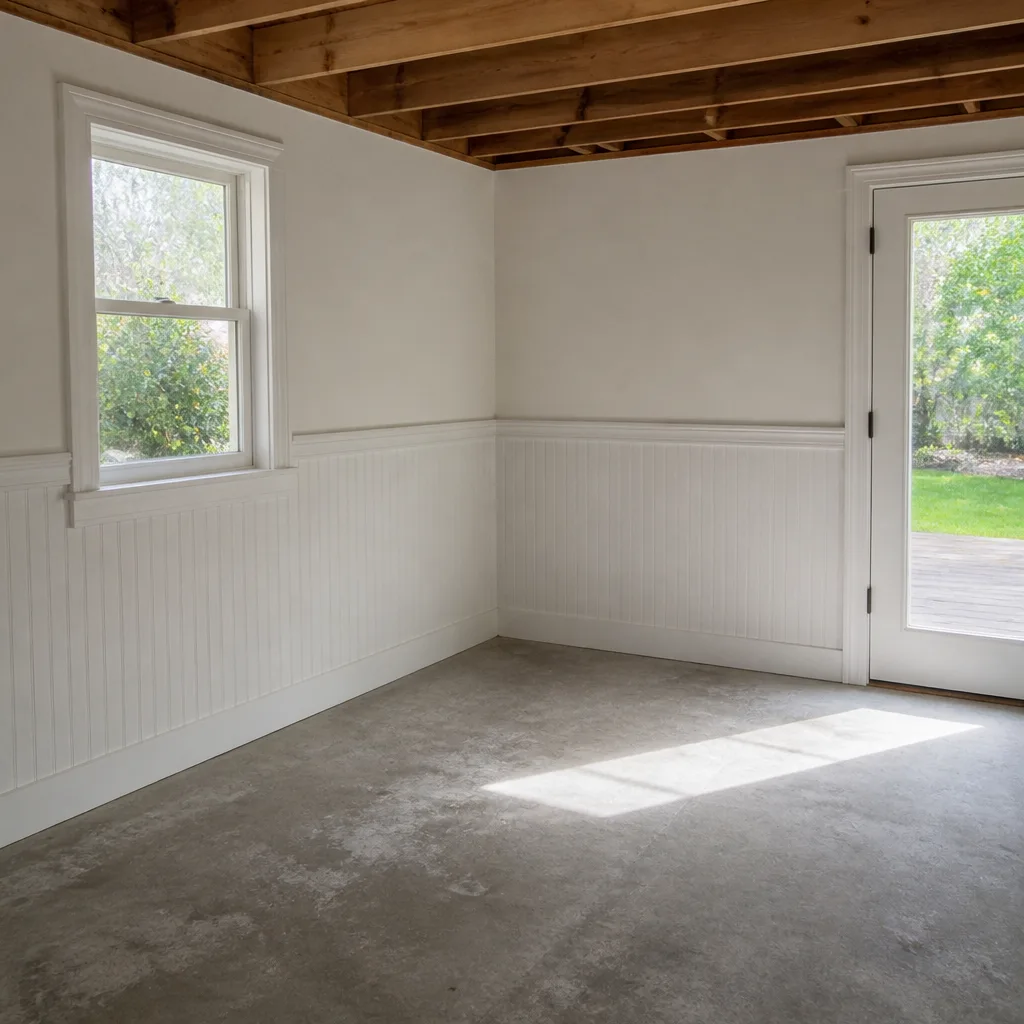 Mold remediation
 Storm response
 Sewage cleanup
 Reconstruction
Free visual inspection and a written scope of work before any mitigation begins - photos, moisture readings, and drying logs go in your claim file
The scope we write is the scope we bill. Anything new gets shown to you, in writing, before we touch it.
Get your free estimateFast, Reliable Mold Remediation Across Lake Forest
Mold remediation in Lake Forest typically runs $1,800 to $6,500 for a contained, documented removal, with bathroom-specific jobs starting around $900 and whole-cavity drywall pulls on foothill-edge homes reaching $12,000 when wind-driven water has wicked deep into framing. Most Lake Forest jobs we scope are same-week starts, and we carry response capacity for the 92630 zip code every day. If you’re seeing dark staining on drywall, a musty smell that won’t clear, or black spotting around bathroom vents and windows, call (833) 589-9161 and we’ll walk through what you’re looking at before we ever schedule a truck.
Our crews run Lake Forest streets weekly, from the townhome clusters off Trabuco Road up to the canyon-adjacent single-family tracts near Portola Parkway. We know the housing stock here: 1970s to 1990s construction, second-floor bathrooms over living space, patio covers and window flashing that have been fighting Santa Ana wind-driven rain for thirty or forty years. That’s not a generic mold profile. It’s a specific set of failure patterns, and it changes how we scope containment, how we map moisture, and what we quote.
Why Stonecrest Water Damage Is Lake Forest’s Preferred Mold Remediation Company
Lake Forest homeowners call us because the mold problem in a foothill-edge home is rarely just a mold problem. It’s a water-intrusion event that happened weeks or months earlier, slowly feeding the wall cavity until the spores finally bloom where you can see them. Our Mold Remediation team doesn’t start with the stain. We start with the moisture source, then work backward through containment, removal, antimicrobial treatment, and structural drying until the readings say the cavity is clean and stable. That’s the IICRC S520 standard, and it’s the only way we work.
We’re certified to IICRC standards and operate under RIA and IFA trade protocols. Neil Stratton runs our crews with the assumption that every Lake Forest job will be examined by an insurance adjuster, a third-party inspector, or both. So every job gets photo documentation, moisture logs, and a written scope before work starts. If your claim requires it, we coordinate directly with your adjuster. No homeowner in Lake Forest should have to translate drying psychrometrics to an insurance desk. That’s our job on every single file.
And because Lake Forest sits in a WUI fire-risk zone, we see a different mold pattern than the flat cities. Firefighting water and suppression lines soak wall cavities, then mold starts in the same framing the fire risk made vulnerable. That combination is familiar to us here in a way it isn’t two cities over.
Restoration work we handle
Mold Removal Contractor in Lake Forest
A Mold Removal Contractor in Lake Forest is hired when visible mold covers more than roughly 10 square feet, when the source is hidden inside a wall or ceiling cavity, or when a post-intrusion moisture event has left drywall saturated beyond simple cleaning. On a typical Lake Forest single-family home from the 1980s, that means pulling baseboards, drilling inspection ports, running a moisture meter across the affected wall, and setting containment before any drywall comes out. A contained bathroom removal off El Toro Road usually runs $1,200 to $2,800. A full cavity pull and structural drying where firefighting water or wind-driven rain soaked framing runs $4,000 to $9,000 depending on the square footage.
Containment and Source Removal
We set negative-air containment with HEPA-filtered exhaust before we cut. That’s non-negotiable on occupied homes. Once the barrier is up, we remove affected drywall, insulation, and any porous material that absorbed the intrusion. On Lake Forest townhomes with shared walls, containment also protects the neighboring unit from cross-contamination during removal.
Antimicrobial Treatment and Drying
After the affected material is out, we apply antimicrobial treatment to the cavity and run Dri-Eaz dehumidification with XPOWER air movers until structural moisture readings drop to the dry standard. We log those readings daily and hand you the data. If an adjuster asks for proof the cavity was dry before rebuild, you’ll have it.
Bathroom Mold Removal in Lake Forest
Bathroom Mold Removal in Lake Forest is the most common job we scope, and it usually starts with a ceiling stain below a second-floor bathroom. Most Lake Forest homes built between 1970 and 1995 have original builder-grade drain lines and wax ring seals, plus shower pans that have been separating at the curb for years. The water travels down through the subfloor, saturates the ceiling drywall below, and mold appears at the perimeter of the stain before anyone notices a leak. A typical bathroom mold removal with drywall replacement and antimicrobial treatment runs $900 to $2,200 in Lake Forest. If the subfloor or framing is involved, the scope grows from there.
Shower Pan and Drain Line Inspection
On any bathroom mold job, we check the shower pan, the supply connections, and the drain line before we touch the mold. If the pan failed, removing mold from the ceiling below without addressing the pan means the same stain comes back in 90 days. We’ll tell you upfront if the source is still active.
Ceiling Replacement and Air Quality
After source repair, we remove the saturated ceiling drywall, treat the framing, and re-dry the cavity before hanging new board. If mold spores have spread into the HVAC return path or the bathroom vent is venting into the attic instead of outside, we recommend air quality restoration so the problem doesn’t migrate through the house on the blower cycle.
Common Mold Remediation Problems We See in Lake Forest Homes
- Santa Ana wind-driven rain at 1980s flashing details. The patio covers and window flashings on homes along the foothill edge weren’t built for the wind pressures we get in a strong Santa Ana event. Rain gets driven sideways into the wall, the cavity stays wet for weeks, and mold flowers behind the stucco where nobody sees it until the drywall stains through.
- Second-floor bathroom leaks saturating ceiling cavities. Lake Forest’s 1970s to 1990s housing stock puts bathrooms directly above living space. A slow pan leak or wax ring failure drips for months, and by the time the ceiling stain appears, the cavity is a mold factory.
- Firefighting water and post-fire intrusion. After a WUI fire response, homes near the foothill edges can be soaked by suppression lines even when the structure didn’t burn. That water sits in the same framing the fire risk made vulnerable, and mold follows within days while the homeowner is still dealing with the fire claim.
- Ash and smoke odor misread as a separate problem. Ash residue from wildfire smoke is fine enough to enter wall cavities through vents and eave gaps. When it mixes with post-intrusion moisture, the odor and staining get misread as two different issues. They’re one combined mold-and-particulate problem, and treating only the mold leaves the smell.
See the difference
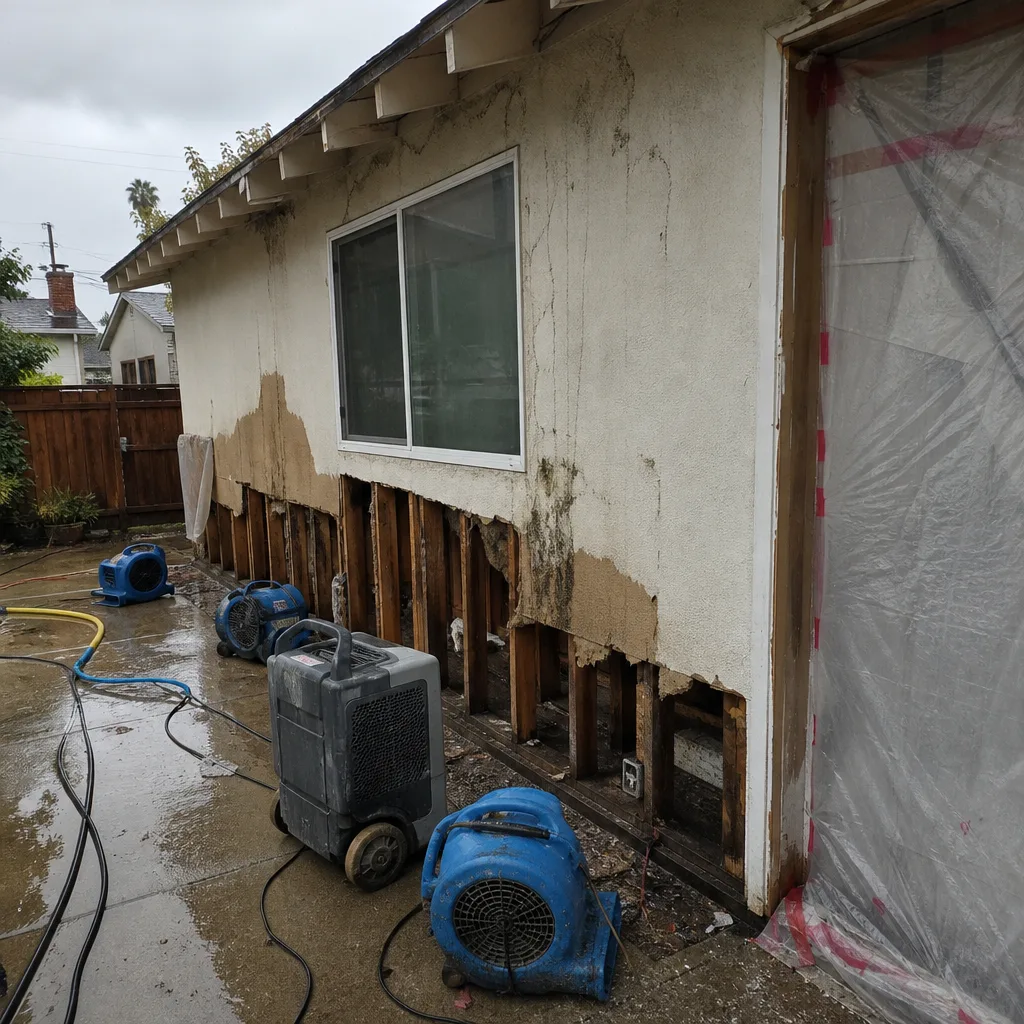 Before
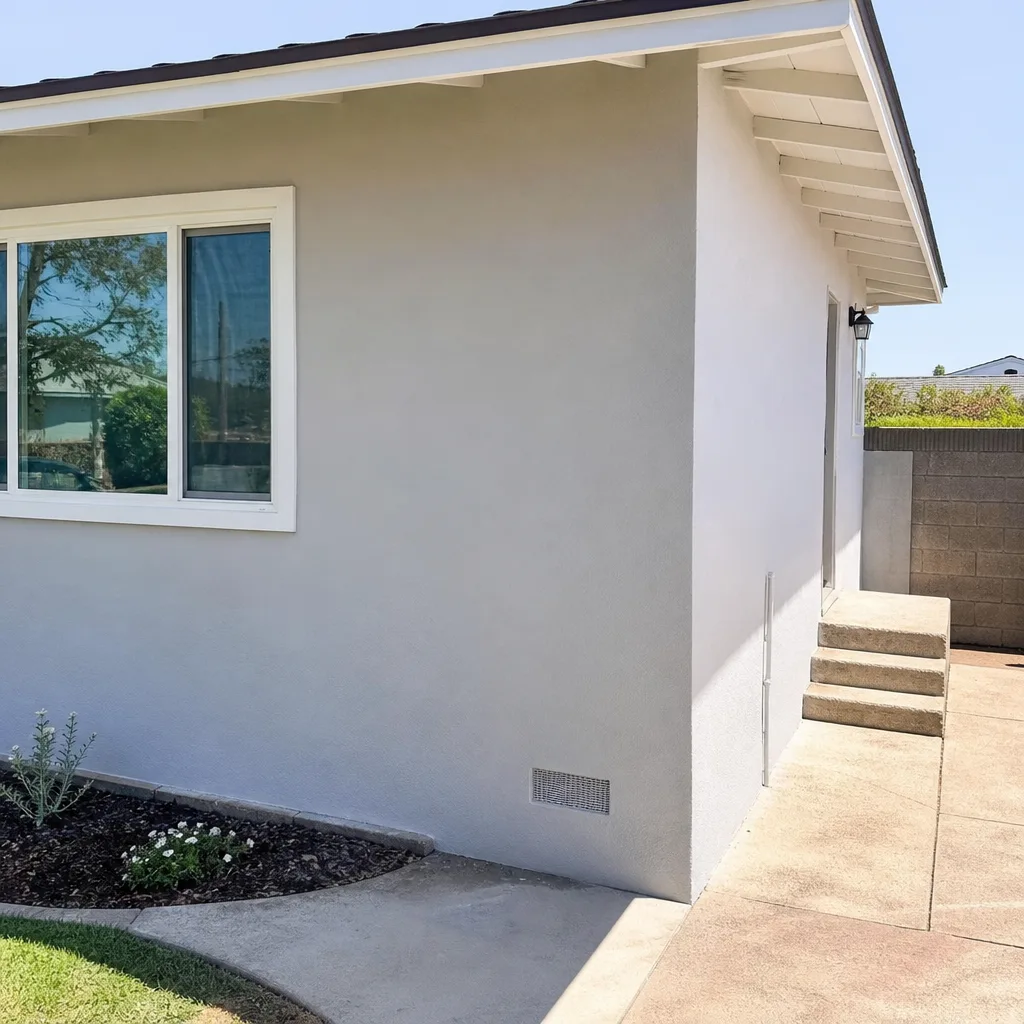 After
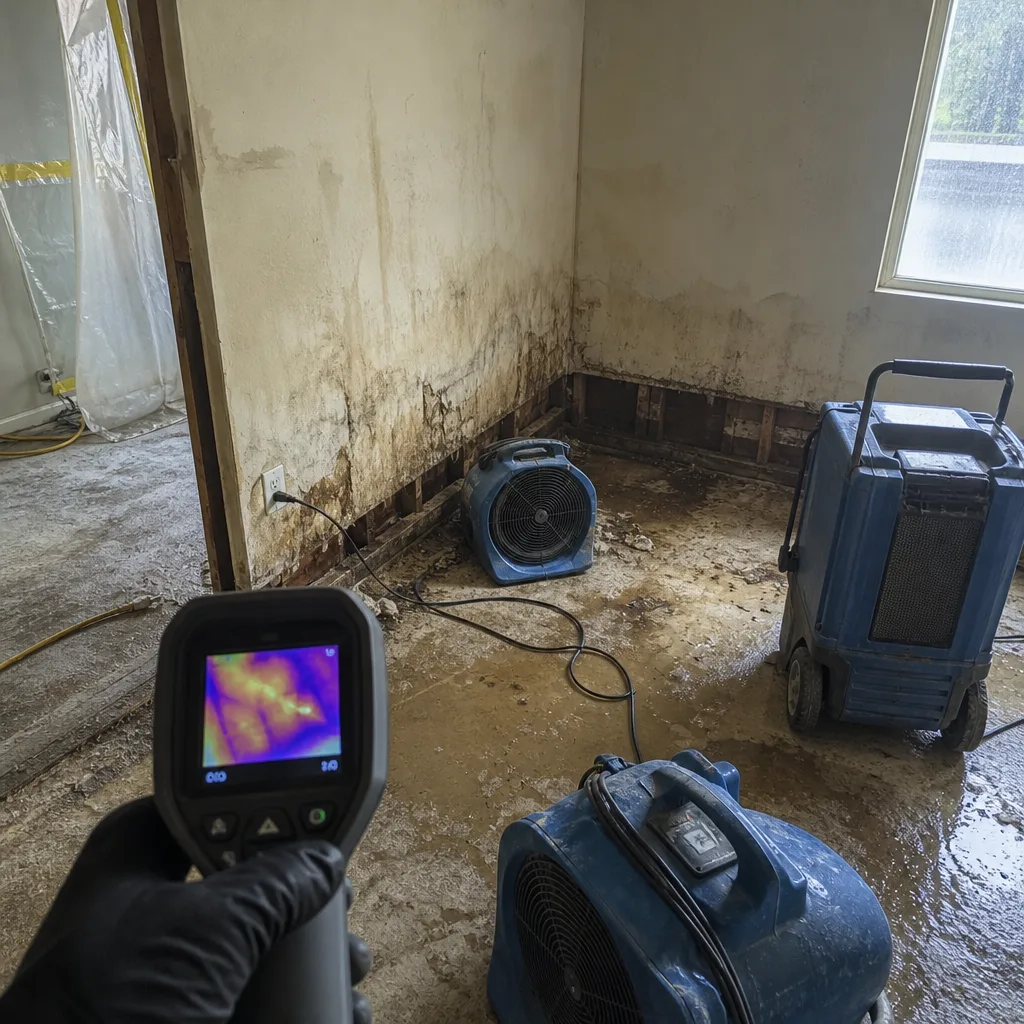 Before
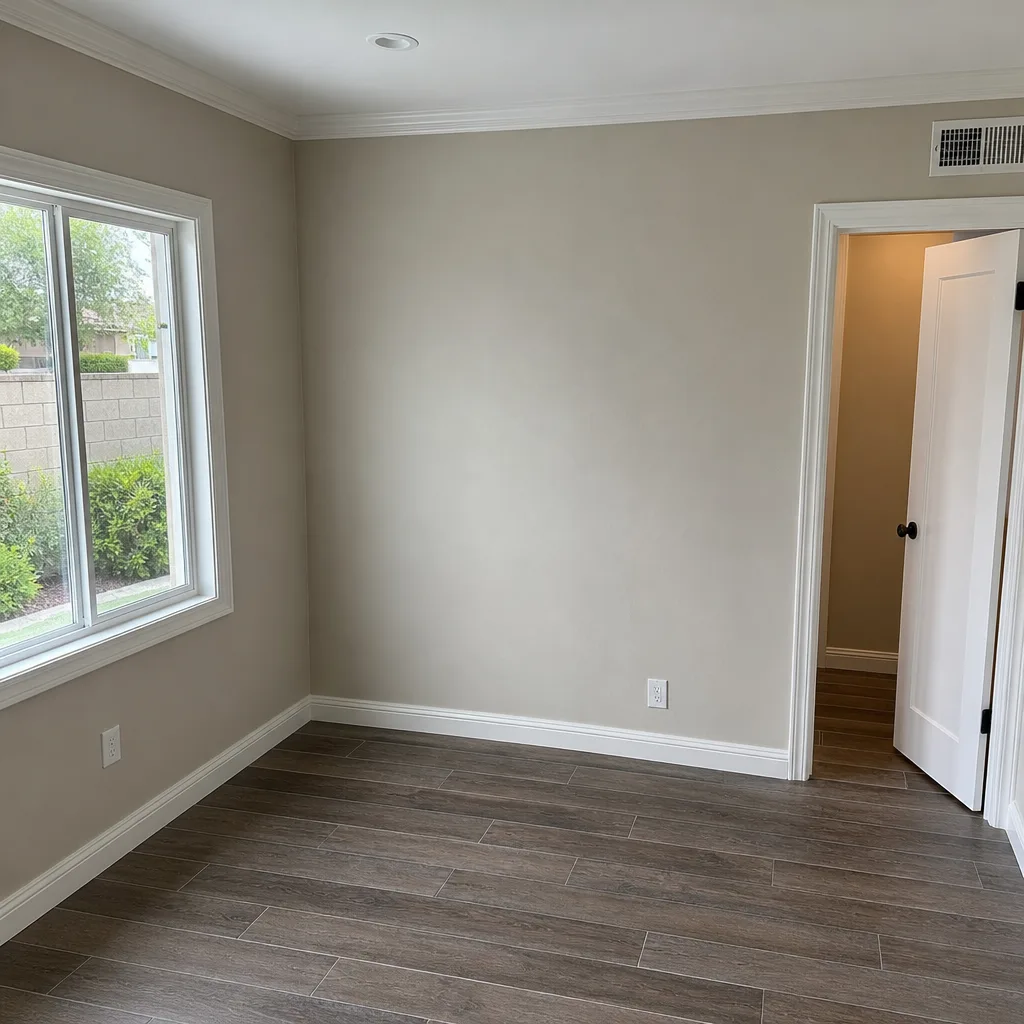 After
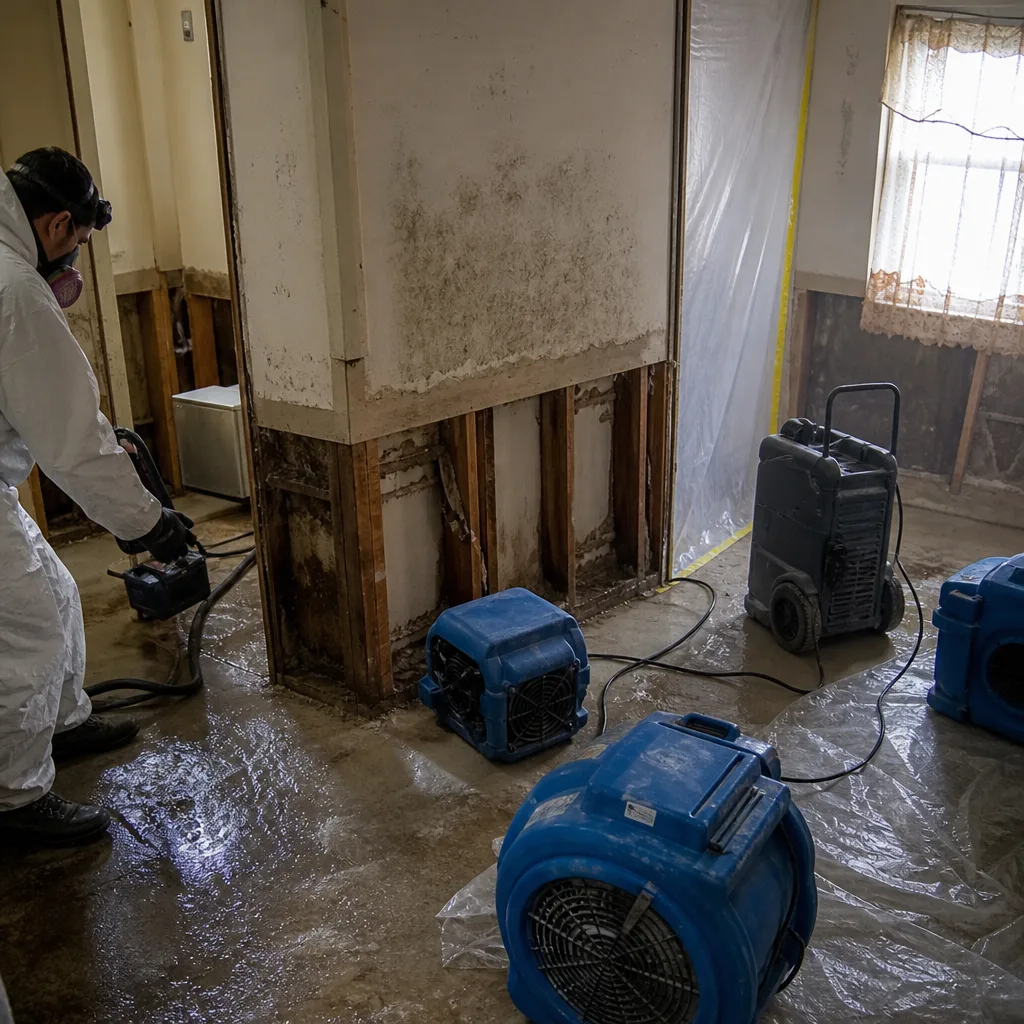 Before
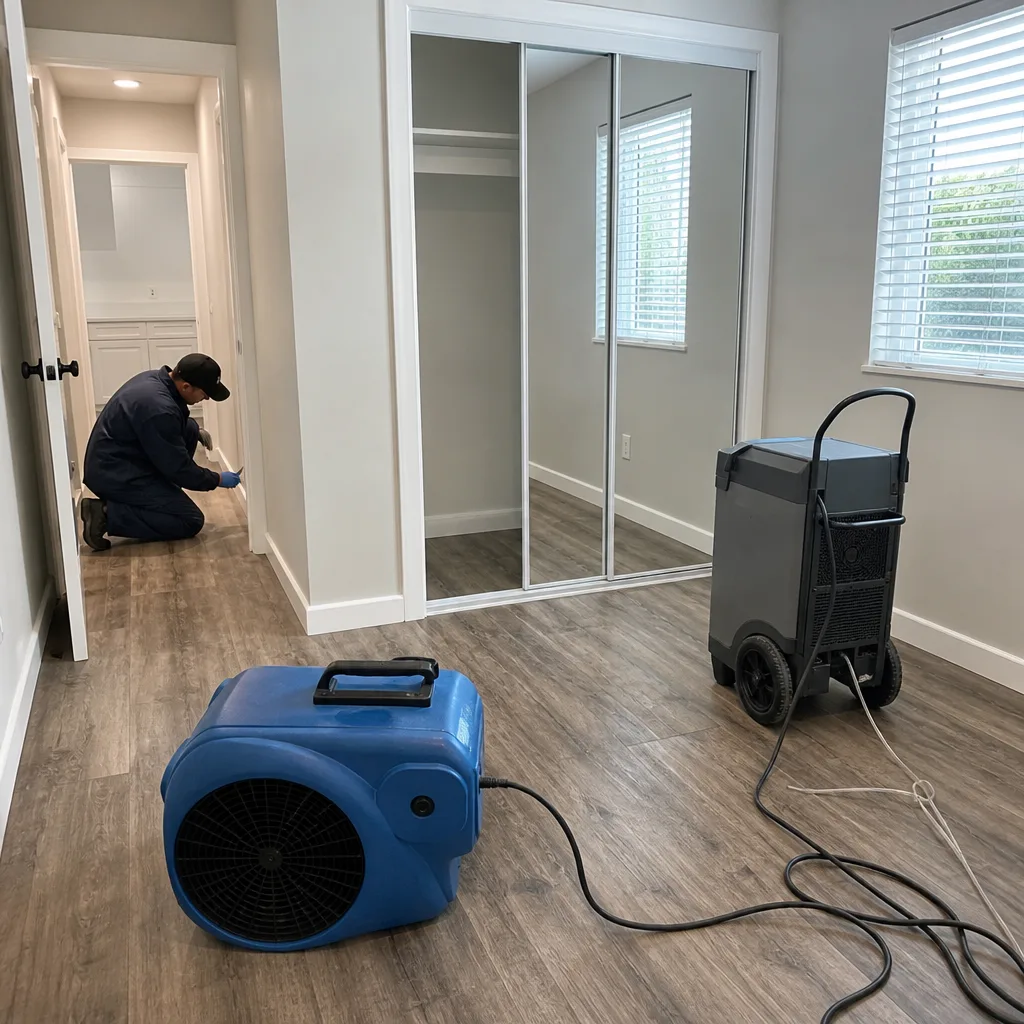 After
Pricing for Mold Remediation in Lake Forest, CA
Contained mold remediation in Lake Forest runs $1,800 to $6,500 for most single-room jobs, $900 to $2,200 for bathroom-specific removal, and $4,000 to $12,000 when wind-driven or firefighting water has wicked into framing and structural drying is required. What moves the number most is cavity access: a lake edge home with easy attic access costs less than a two-story foothill tract home where we’re pulling ceiling drywall and working around 1980s framing. We give you a written scope before work starts, with line-item pricing and no surprise add-ons after we open the wall. Call (833) 589-9161 for a free estimate. We’ll walk the property, map the moisture, and tell you honestly what needs to happen and what can wait.
Trusted Brands We Service in Lake Forest
We work on homes built in every Lake Forest tract from the 1970s through the 1990s, so we’ve seen the original copper supply lines, the builder-grade PVC drains, and the stucco details that era produced. When we open a Lake Forest wall, we know what we’re likely to find behind it. We run Injectidry systems for structural drying inside wall cavities without tearing out every panel, and Dri-Eaz dehumidification on every job where a cavity needs to hit the dry standard. That’s restoration-grade equipment, not rental-store gear, and it’s why our drying logs hold up when an adjuster reviews the file.
We Also Serve Cities Near Lake Forest
Stonecrest Water Damage covers Mold Remediation in Lake Forest and the surrounding Orange County foothill communities. We run crews regularly into Foothill Ranch, Portola Hills, Laguna Woods, and Laguna Hills. If your home is in any of those areas and you’re seeing mold, call (833) 589-9161 and we’ll get you scoped.
Serving Lake Forest, CA — Our Local Coverage Area
We’re based in the Lake Forest area and know this community well. Use the map below to see our service coverage — if you’re nearby, we can almost certainly help.
FAQs About Mold Remediation in Lake Forest
Because Lake Forest’s foothill and canyon-adjacent geography creates a different moisture profile than flat inland Orange County. Santa Ana winds drive rain sideways through 1980s patio covers and window flashing, soaking wall cavities that never see standing water. And when a WUI fire brings suppression lines, homes get soaked by firefighting water even when the structure didn’t burn. That hidden moisture, trapped in framing, starts mold growth within 48 hours while the homeowner is still focused on the fire or storm event. Call (833) 589-9161 if you suspect a post-event intrusion got into your walls.
Mold can begin colonizing in 24 to 48 hours after water sits in an enclosed wall cavity, especially in the warm post-Santa Ana conditions Lake Forest gets in September and October. The surface stain you see on drywall is usually weeks behind the actual moisture event. That’s why we recommend a moisture meter reading on any wall that took wind-driven rain, even if nothing looks wet.
Yes, and that’s one of the most common jobs we scope in the 92630 zip code. We open the ceiling below the bathroom, identify whether the source is a wax ring, shower pan, supply line, or drain line, repair it, then remove saturated drywall, apply antimicrobial treatment, and dry the cavity to the IICRC S520 standard. We’ve done this on townhome clusters off Trabuco Road and throughout the older Lake Forest tracts. Call for an exact quote; estimates are free.
It changes the moisture history we look for. In a flat inland city, mold usually traces to plumbing or roof leaks. In Lake Forest, we also look for firefighting water intrusion, wind-driven rain at the 1980s flashing details, and ash penetration through eave vents. We moisture-map those cavities and treat the intrusion plus the mold as a single job. Skipping the source in a WUI foothill home just resets the clock.
A proper scope includes containment with negative air, removal of affected drywall and any saturated insulation, antimicrobial treatment of the cavity, structural drying with Dri-Eaz dehumidification and XPOWER air movers, daily moisture logs, and photo documentation throughout. On a Lake Forest home, we also inspect for the envelope failure that started the problem, because if the flashing or shower pan isn’t fixed, the mold returns in the same cavity within months. Call (833) 589-9161 for a written scope on your home.
Written by Neil Stratton, Owner at Stonecrest Water Damage, serving Lake Forest and the surrounding Orange County foothill communities with certified mold remediation, water damage restoration, and fire damage restoration.