
 Water damage drying
 Fire & smoke cleanup
 Mold remediation
 Storm response
 Sewage cleanup
 Reconstruction
Free visual inspection and a written scope of work before any mitigation begins - photos, moisture readings, and drying logs go in your claim file
The scope we write is the scope we bill. Anything new gets shown to you, in writing, before we touch it.
Get your free estimateFast, Reliable Water Damage Restoration Across Garden Grove
Water damage restoration in Garden Grove, CA typically costs $1,800 – $7,500 depending on the affected square footage, water category, and whether structural drying inside walls is required. Most emergency extraction calls from Garden Grove homeowners can be answered the same day, often within 60 – 90 minutes from our Buena Park dispatch. If you’re looking at a failed supply line, a backed-up drain, or water migrating across original 1950s carpet, call (833) 589-9161 now and we’ll walk you through the first 30 minutes before a crew arrives.
Garden Grove’s housing stock presents restoration challenges that newer cities simply don’t have. The post-war tract homes packed into ZIPs 92840, 92841, 92842, 92843, and 92844 were built on slab foundations with galvanized supply lines that have now outlived their intended service life by two or three decades. When those lines fail, water doesn’t pool on the surface where you’d notice it. It wicks silently under carpet, through the pad, into the subfloor, and across room thresholds. That’s the pattern we respond to most in Garden Grove, and it’s why our Water Damage Restoration process starts with moisture mapping, not just water removal.
Why Stonecrest Water Damage Is Garden Grove’s Preferred Water Damage Restoration Company
We’ve spent enough time inside Garden Grove’s 1950s and 60s tract homes to know where water hides in them. The original slab-on-grade construction means there’s no crawlspace under most of these houses, so a failed galvanized line under the slab doesn’t announce itself. Moisture travels up through the concrete and into the original wall-to-wall carpet, and by the time a homeowner notices the stain, the damage is already in the adjoining room. Our technicians understand that this city’s restoration calls are about aging systems, not weather events. That changes where we probe, what we document, and how thoroughly we dry.
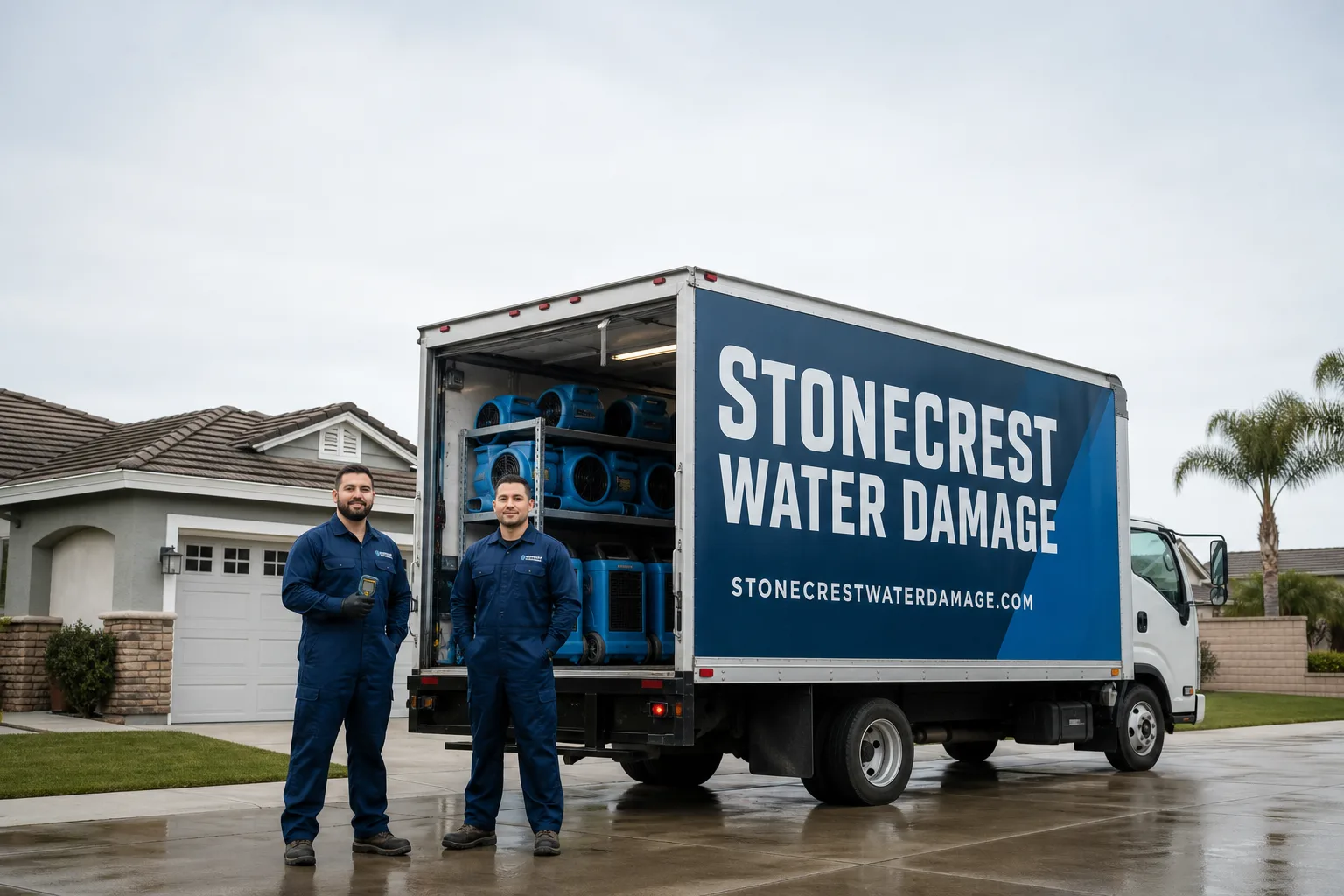
We’re certified to IICRC standards, which means every Garden Grove job we run follows the S500 water damage restoration protocol: assessment, classification, extraction, drying, monitoring, and documentation. Neil Stratton built Stonecrest Water Damage around measured, documented drying and commercial-grade equipment on every job. Garden Grove homeowners work with one team certified for water, mold, and fire, so there’s no gap between what the extraction crew finds and what the drying crew does about it. The equipment we bring into your home includes Dri-Eaz, Phoenix, XPOWER, and B-Air systems, plus Injectidry for drying inside wall cavities without tearing out drywall unnecessarily.
We answer calls from Garden Grove directly. When you call (833) 589-9161, you get a person who can talk through what you’re seeing, not a call center routing you to a generic contractor in another county. Response to Garden Grove neighborhoods like those along Chapman Avenue, Brookhurst Street, and the commercial district around Harbor Boulevard is typically under 90 minutes for emergency extraction. We carry the equipment needed to start pulling water on the first visit, not just assess and schedule a return trip.
Restoration work we handle
Water Mitigation in Garden Grove
Water Mitigation in Garden Grove means stopping the active water migration and starting the drying process before rot, warping, or mold takes hold in a home built when Eisenhower was president. It’s the first phase of any restoration, and in Garden Grove it’s usually driven by plumbing failures rather than storms. For most single-story Garden Grove tract homes, water mitigation runs $1,200 – $4,500 depending on how far the water has traveled and whether containment and cavity drying are required. The goal is to limit damage to what’s already wet, not let it spread to what’s still dry.
Source Stops and Emergency Extraction
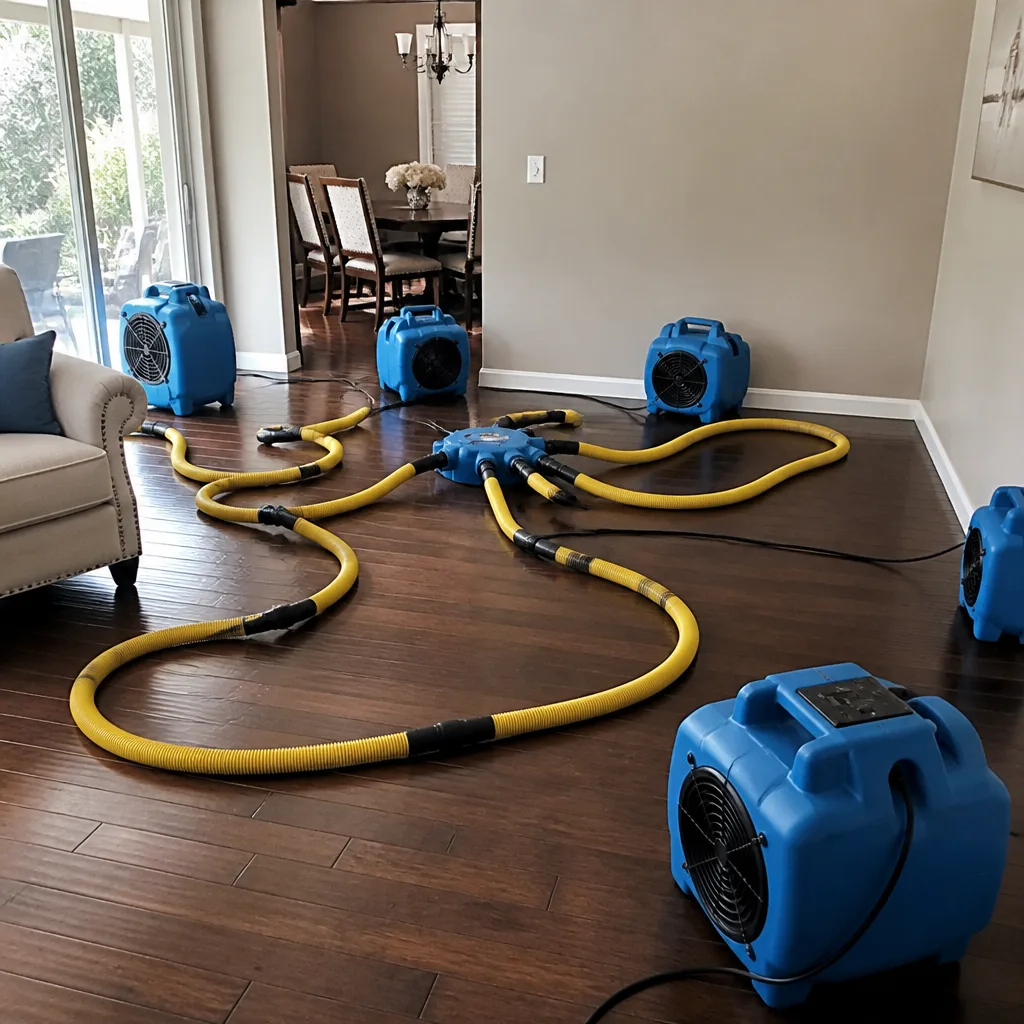
Mitigation starts with stopping the source. On Garden Grove’s original galvanized supply lines that often means shutting down at the main, especially when the failure is under the slab and the leak point won’t be visible for days. Once the source is controlled, our crews run truck-mounted and portable extraction on carpet, pad, and hard surfaces, then set air movers and dehumidifiers to drive moisture out of the structure. The original wall-to-wall carpet still common in these homes absorbs a lot of water before it shows a stain, which is why we check the pad and subfloor in adjacent rooms even when the visible damage looks contained.
Targeted Cavity Drying Without Unnecessary Demolition
Garden Grove’s stucco-on-wood-frame construction means water that gets into a wall cavity can sit against framing and sheathing for weeks. Our Injectidry system pushes controlled airflow into wall and floor cavities through small access points, drying the structure from inside without ripping out drywall and baseboards in an entire room. For slab-fed moisture, we pair this with drying mats that pull water up through the concrete. The point is restoration, not demolition. Where structure can be preserved and dried to IICRC standards, we preserve it.
Flooded Basement in Garden Grove
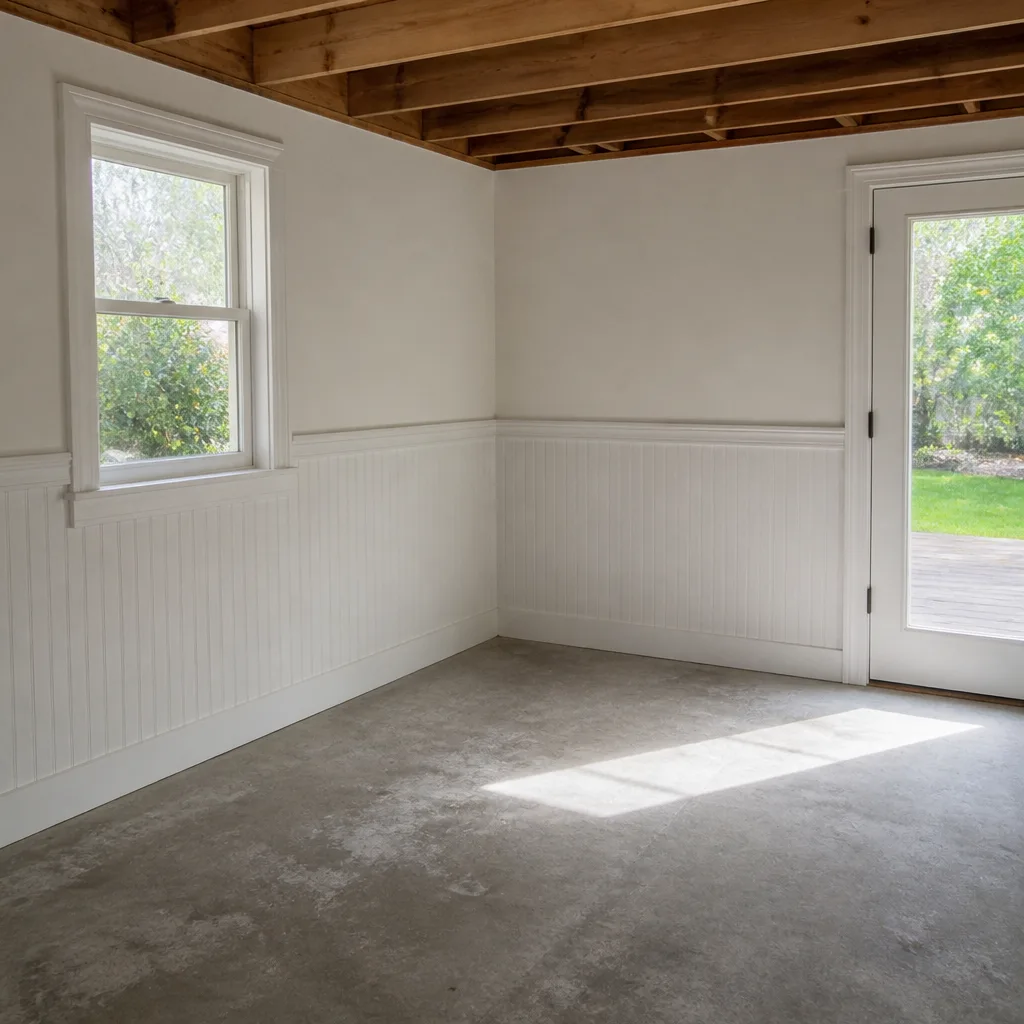
Flooded Basement calls in Garden Grove are less about basements in the Midwest sense and more about split-levels, sunken living rooms, and below-grade garages found in some of the city’s older custom homes and in portions of the 92844 ZIP. If you’ve got a below-grade space taking water in Garden Grove, it’s usually from a failed sump drain, a broken cast-iron pipe under the slab, or surface water finding its way through a compromised foundation seal after heavy rain. Basement or below-grade water removal in Garden Grove typically runs $1,800 – $6,000 including extraction and structural drying, with the higher end reflecting extensive cast-iron drain repairs or heavy contamination requiring antimicrobial treatment.
Category 2 and 3 Water Below Grade
Below-grade water in Garden Grove is rarely clean. Cast-iron drains crack and sewage backs up into spaces where water sits against the slab. That’s Category 2 or 3 water, and it means the scope includes disinfection, antimicrobial application, and often removal of saturated carpet and pad instead of drying them in place. We’re certified for that work and document every step so the insurance adjuster sees clean, defensible data rather than a claim that “we dried it.”
Slab Leak Detection and Drying in Tight Spaces
When a Garden Grove homeowner says “flooded basement” but the real issue is a slab leak, the water rarely rises above the carpet. It spreads horizontally, under flooring and into drywall wicks. Our moisture meters and thermal imaging identify the full wet perimeter, including areas that look dry to the eye. In tight Garden Grove lot lines where homes sit eight feet apart, drying equipment has to be placed carefully to work around the layout. We plan equipment placement around the structure’s airflow, not just floor space.
Trusted Brands We Service in Garden Grove
Our Garden Grove customers benefit from the fact that we run restoration-industry equipment, not rental-counter machines. We stock parts and maintain systems from Dri-Eaz, Phoenix, XPOWER, and B-Air, so when a dehumidifier or air mover fails mid-job, we swap it from our own inventory instead of waiting on a rental shop. The Injectidry system we deploy for in-wall drying is the same equipment used on commercial loss sites, mounted in Garden Grove’s narrow side yards and tight carports without issue. We service the full range of homes across Garden Grove regardless of what system the previous contractor installed, and we inspect for moisture problems that aren’t visible to the homeowner.
Common Water Damage Restoration Problems We See in Garden Grove Homes
- Original galvanized supply lines failing under slab foundations. In Garden Grove’s 1950s and 60s tracts, these pipes hit the end of their service life years ago, and when they go, water travels silently through concrete into carpet and subfloor. We find the wet perimeter with moisture meters before extracting anything.
- Cracked cast-iron drains under the slab. Old cast iron cracks with ground movement and age, and the water that leaks out is Category 2 or 3. These leaks brew below the flooring for weeks before a stain appears, which is why odor and cupping in hardwood are early warning signs we look for.
- Flat and low-slope roof leaks at the first strong storm. Garden Grove’s dry summers bake out roofing caulk and mastic, so the first real winter storm drives wind-blown rain into stucco walls and ceiling cavities. The leak shows up as a ceiling stain, but the water has usually been inside the wall cavity for days.
- Water wicking into adjoining rooms under original wall-to-wall carpet. In tightly packed Garden Grove tracts, a supply line failure in one room doesn’t stay in one room. Carpet and pad act as a wick, pulling moisture across thresholds into bedrooms and hallways before visible staining occurs. Our containment and drying plan accounts for that migration.
See the difference
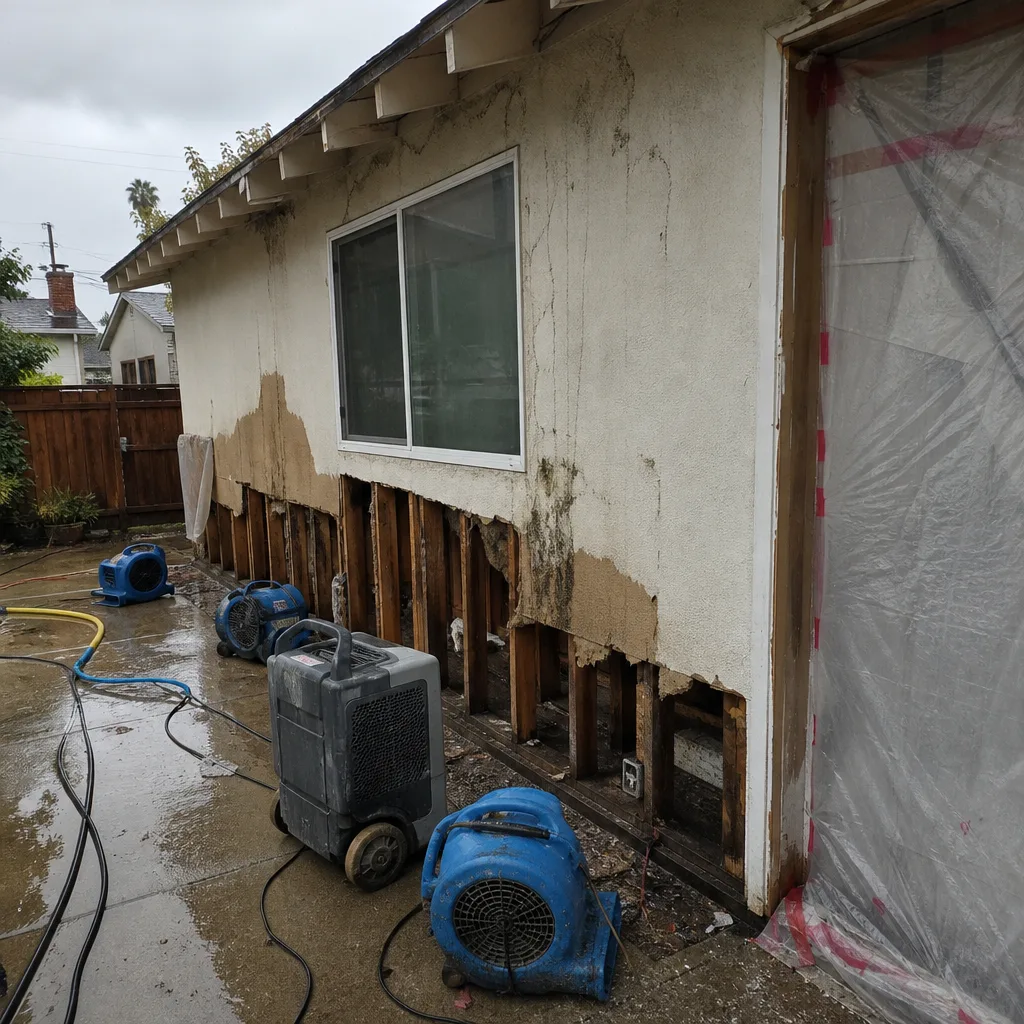 Before
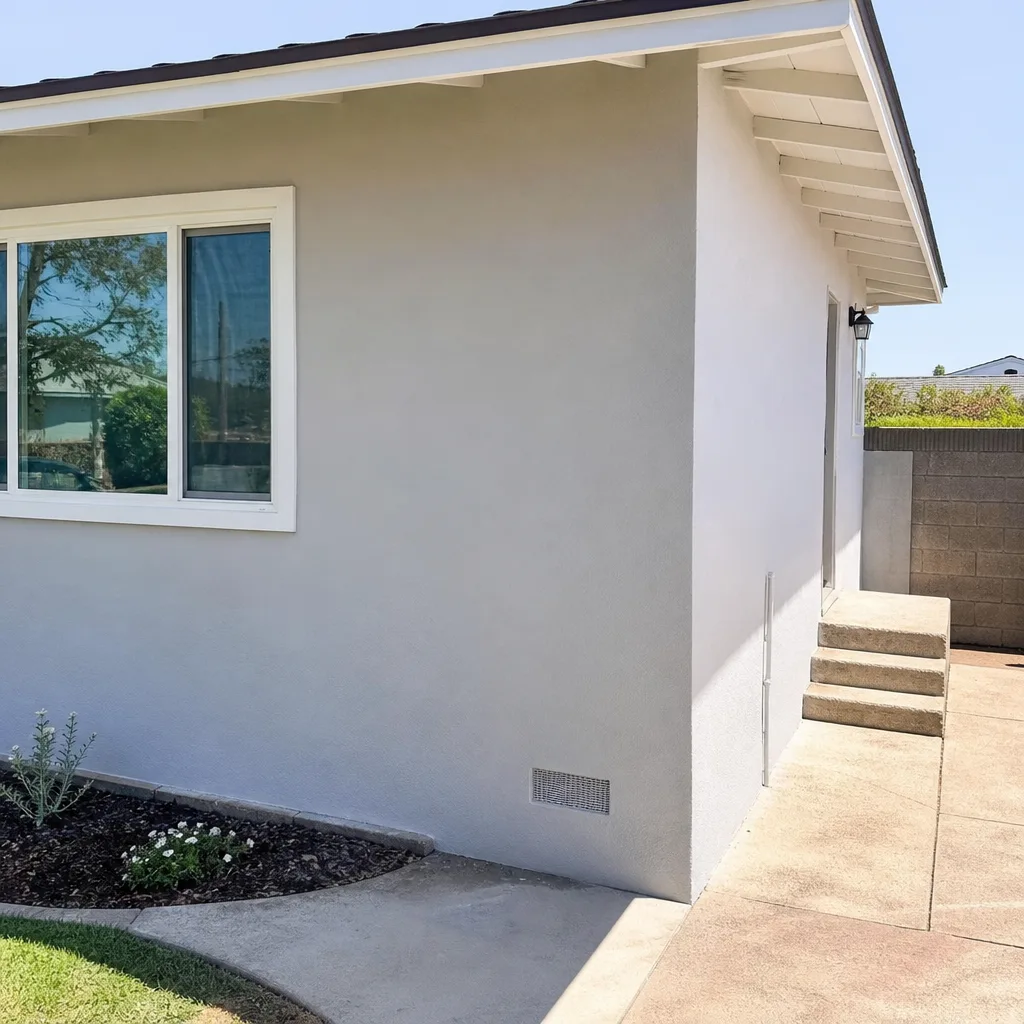 After
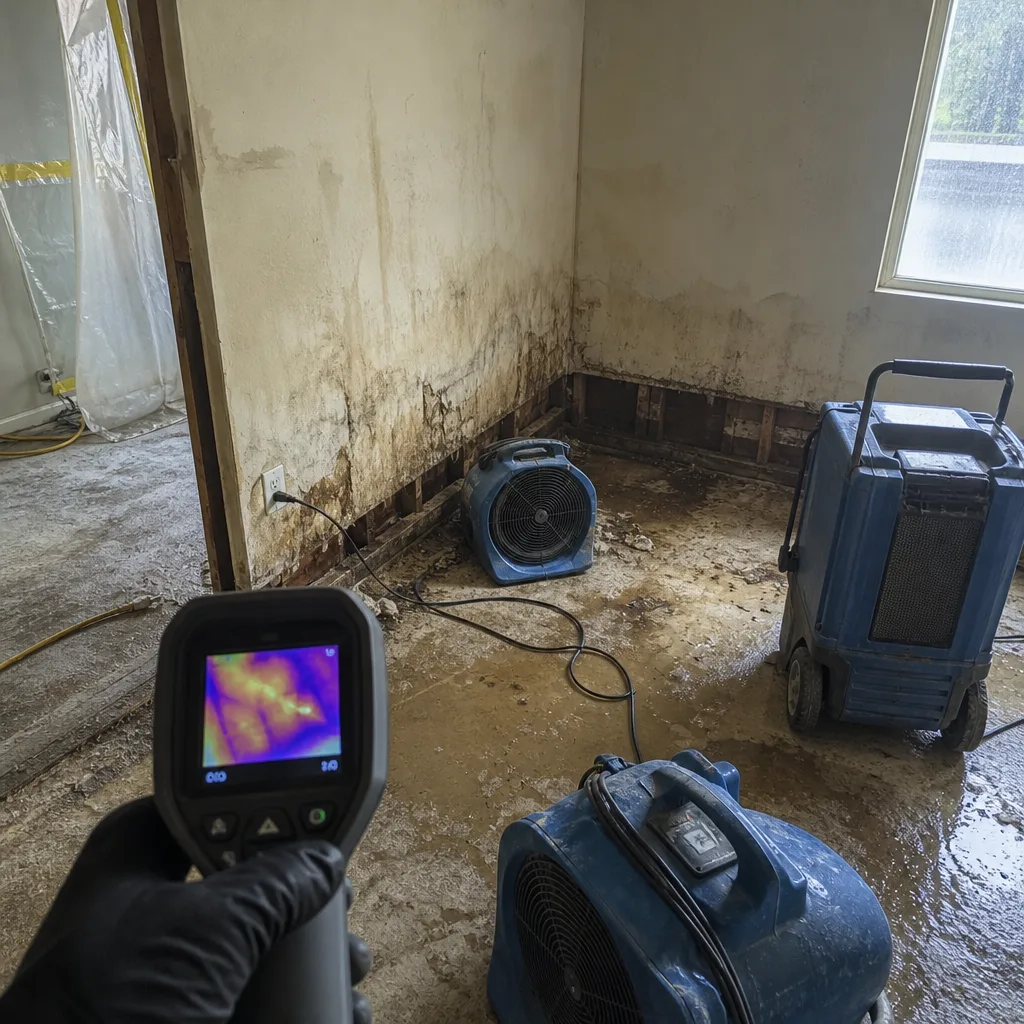 Before
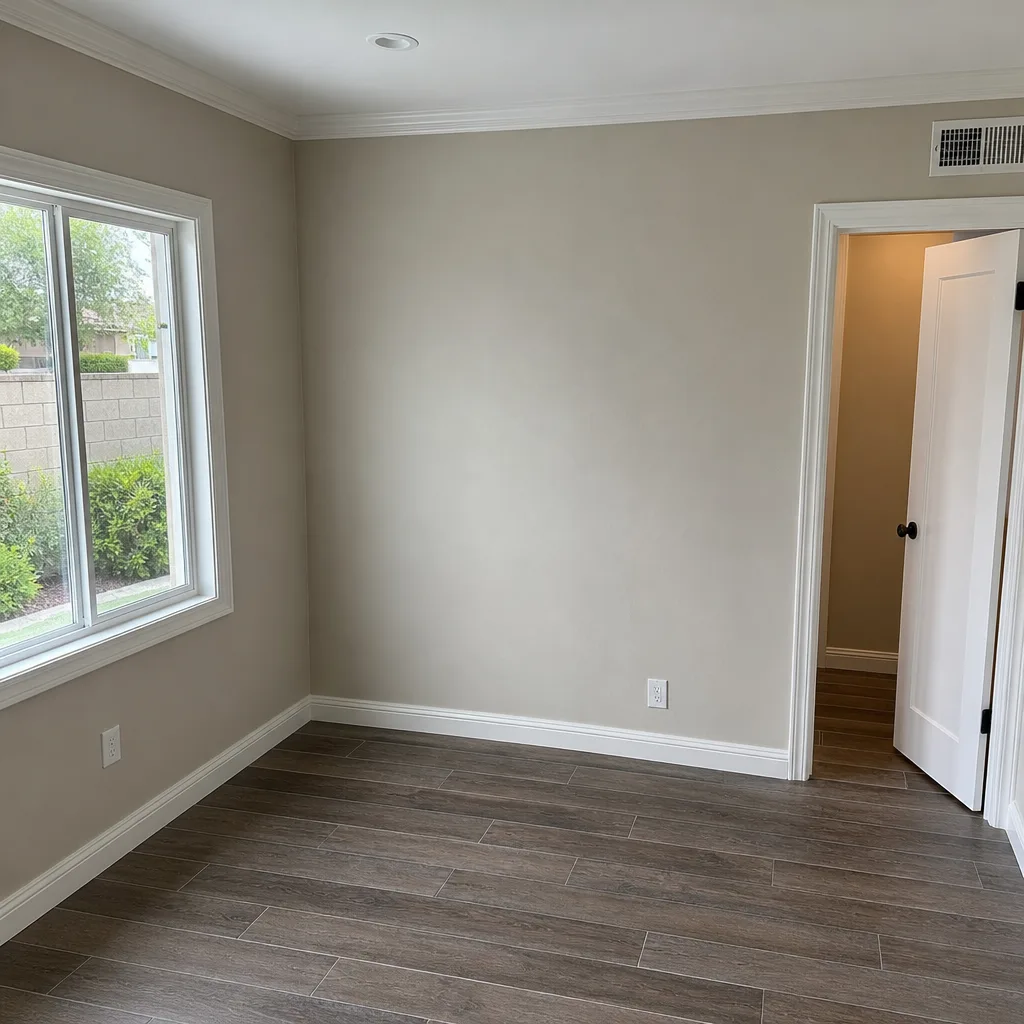 After
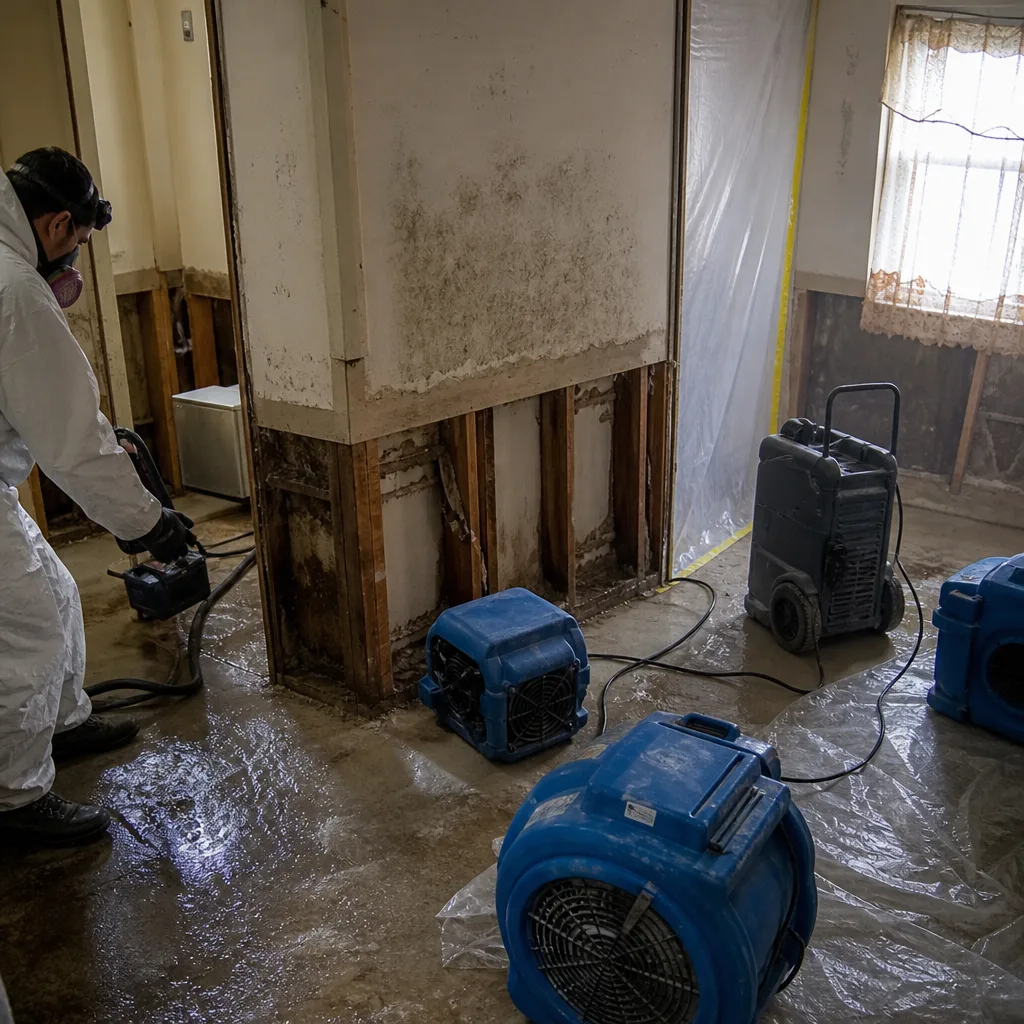 Before
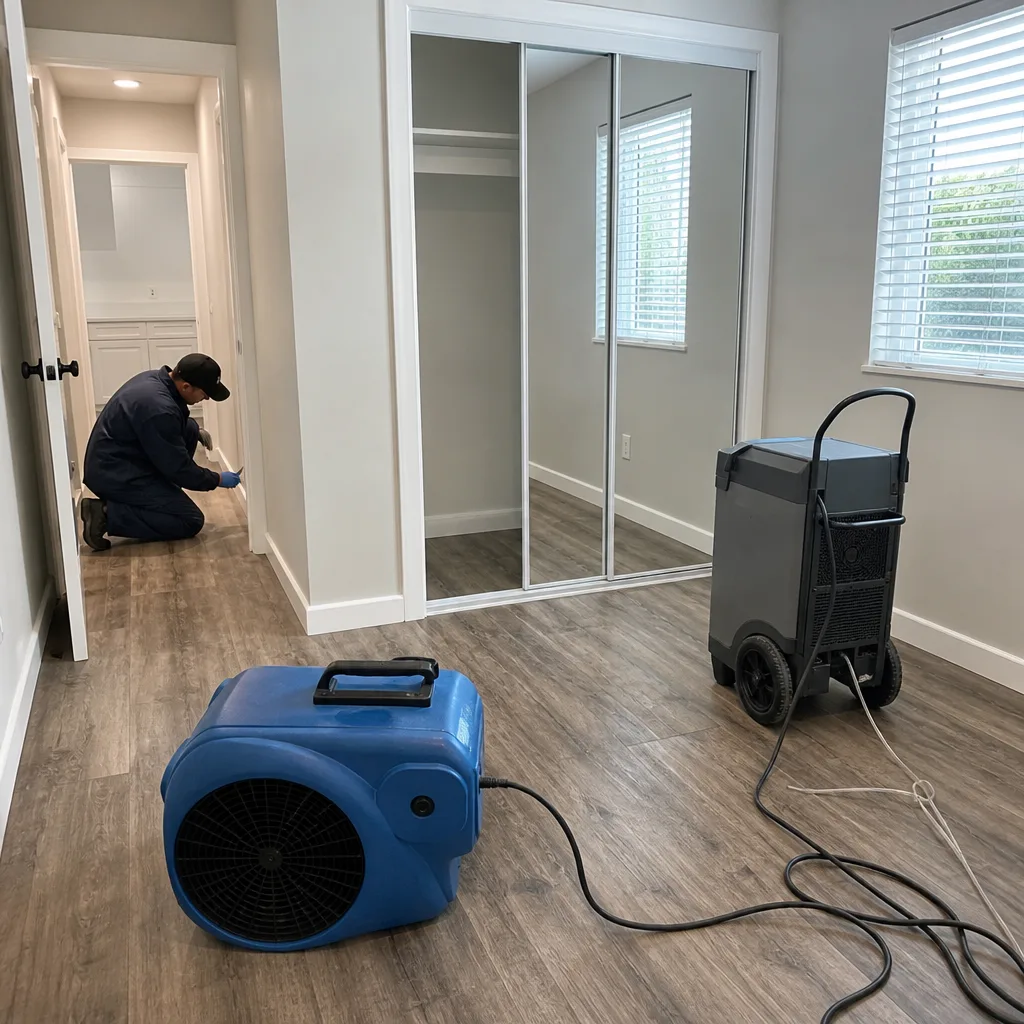 After
Pricing for Water Damage Restoration in Garden Grove, CA
Here’s what Garden Grove homeowners can expect from us, based on the work we most commonly perform in this city’s tract housing stock. Emergency water extraction in Garden Grove on a single affected room typically runs $900 – $2,200. Structural drying with air movers and dehumidifiers across 2 – 3 rooms runs $2,500 – $5,000. Slab leak restoration that requires wall cavity drying and floor-level drying mats runs $3,500 – $7,500. Category 3 sewage or drain backups requiring antimicrobial treatment, containment, and material removal run $4,000 – $9,000 depending on footage. The biggest variables are how far water migrated under floor coverings, whether original carpet and pad must be removed versus dried in place, and whether drywall needs cavity drying or cutting. We provide a written scope before we start any mitigation, not after. Call (833) 589-9161 for a free estimate specific to what you’re seeing in your Garden Grove home.
We Also Serve Cities Near Garden Grove
From Garden Grove, we regularly dispatch to water damage restoration in Garden Grove and the surrounding communities of Stanton, Westminster, Midway City, and Cypress. If your home is on the border of two cities, call us and we’ll tell you exactly who covers your street. One crew, one standard, no hand-offs.
Serving Garden Grove, CA — Our Local Coverage Area
We’re based in the Garden Grove area and know this community well. Use the map below to see our service coverage — if you’re nearby, we can almost certainly help.
FAQs About Water Damage Restoration in Garden Grove
Mold can begin colonizing within 24 – 48 hours on wet drywall, carpet pad, and subfloor in Garden Grove’s warm climate. The older the home, the more organic material is available, and original jute-backed carpet padding from the 1950s is an ideal food source. That’s why we treat any water event that’s been active for more than a day as a potential microbial issue and run antimicrobial treatment as part of mitigation. Call (833) 589-9161 and we’ll tell you whether your situation requires it.
The category refers to the contamination level of the water. Category 1 is clean, Category 2 is significantly contaminated, and Category 3 is grossly contaminated. In Garden Grove, a burst supply line is usually Category 1, but water that’s sat against original cast-iron drain pipe, or comes up from a backed-up drain, is Category 2 or 3. The category determines whether carpet and pad are dried in place or removed, and whether containment is required. Call (833) 589-9161 and we’ll classify the water during our assessment.
Those ZIPs hold the densest concentration of 1950s and early 60s tract homes in Garden Grove, built with galvanized supply lines run under slab foundations. Galvanized pipe corrodes internally over 60 – 70 years, thinning the walls until they fail under normal water pressure. The leak never surfaces; it saturates the slab and the floor above it. We see this failure pattern weekly in Garden Grove.
Garden Grove’s warm, semi-arid climate means most water events are plumbing-driven rather than storm-driven, which changes how restoration unfolds. Long dry spells bake caulking and roofing materials, so the first strong winter storm reveals leaks that have been developing for months. Meanwhile, indoor humidity in a closed-up Southern California home can drive mold growth inside walls even after the visible water is gone. Our drying plans and equipment placement are set for those conditions.
Yes. Containment is used when we encounter Category 2 or 3 water, visible mold growth, or when water exposure has exceeded 48 hours in a Garden Grove home. Negative air pressure keeps disturbed particulates from moving through the rest of the house while we remove wet materials. Antimicrobial treatment is applied to affected framing, subfloor, and wall cavities as part of the IICRC-standard process. We don’t skip it. Call (833) 589-9161 if you’re not sure what category your water damage falls into.
Written by Neil Stratton, Owner at Stonecrest Water Damage, serving Garden Grove since our founding in nearby Buena Park.
Contact Stonecrest Water Damage in Garden Grove
If water is moving through your Garden Grove home right now, don’t wait for the stain to spread. We answer calls from Garden Grove homeowners 24 hours a day, seven days a week, and we can have a crew on your street within 90 minutes on most calls. We’ll assess the damage, explain exactly what you’re looking at, and give you a written scope before any mitigation starts. One call to (833) 589-9161 gets a certified technician and commercial-grade equipment headed your way. Estimates are free.