 Water damage drying
 Fire & smoke cleanup
 Mold remediation
 Storm response
 Sewage cleanup
 Reconstruction
Free visual inspection and a written scope of work before any mitigation begins - photos, moisture readings, and drying logs go in your claim file
The scope we write is the scope we bill. Anything new gets shown to you, in writing, before we touch it.
Get your free estimateFast, Reliable Water Damage Restoration Across La Habra
If water is spreading through your La Habra home right now, here’s the direct answer: emergency water extraction in La Habra typically costs $1,200 to $3,800, structural drying runs $2,500 to $6,500, and a full Category 2 or 3 restoration project lands between $4,000 and $12,000 depending on square footage and materials affected. Our crews reach most La Habra neighborhoods within 45 to 60 minutes of your call to (833) 589-9161. We know the 90631, 90632, and 90633 zip codes well, and we know the older hillside homes north of Whittier Boulevard better than most, because that’s where the hardest water losses in this city tend to hide.
La Habra sits directly on the Whittier Fault, and that single fact rewrites how water damage shows up in your home. Unlike the flatland cities of inland Orange County, La Habra’s foothill neighborhoods experience amplified shaking that cracks stucco, slab foundations, and aging plumbing joints. Water follows those cracks. A pipe bursts after a seismic shift, and the water doesn’t pool on the floor where you’d see it. It migrates along fissures under original oak flooring, into wall cavities, behind baseboards. By the time a stain appears, the framing has been wet for days or weeks. That’s the kind of damage we’re built to find.
Why Stonecrest Water Damage Is La Habra’s Preferred Water Damage Restoration Company
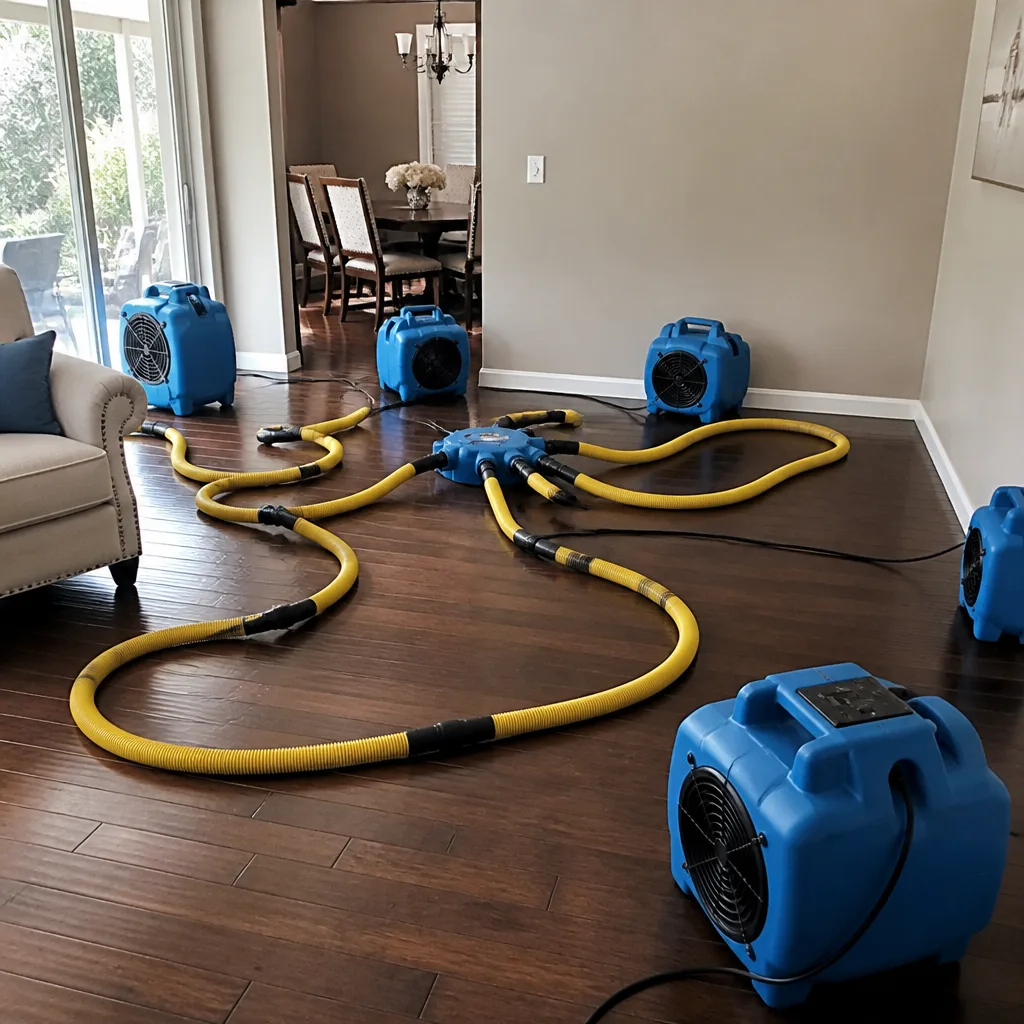
Stonecrest Water Damage runs commercial-grade drying systems from Dri-Eaz, Phoenix, XPOWER, B-Air, and Injectidry on every La Habra job, not rental-store machines. That distinction matters when you’re dealing with a 1962 slab-on-grade home where water has wicked into the subfloor through foundation cracks. Certified to IICRC standards and affiliated with RIA and IFA, our technicians work from documented, testable protocols. Moisture mapping, thermal imaging, and daily drying logs aren’t add-ons for us – they’re the baseline. The result is a restoration that an insurance adjuster can verify line by line.
Our team knows the local failure modes here. We know that original galvanized plumbing in 1950s and 1960s tract homes fails at joints after repeated seismic movement. We know that hillside lots above Whittier Boulevard have retaining walls and drainage systems that were never engineered for today’s short-duration, high-intensity rain bursts. And we know that a visual inspection after an earthquake will miss the hidden intrusion paths that a thermal camera won’t. That local knowledge, applied with IICRC-compliant processes, is why La Habra homeowners and property managers call us when the damage is worst.
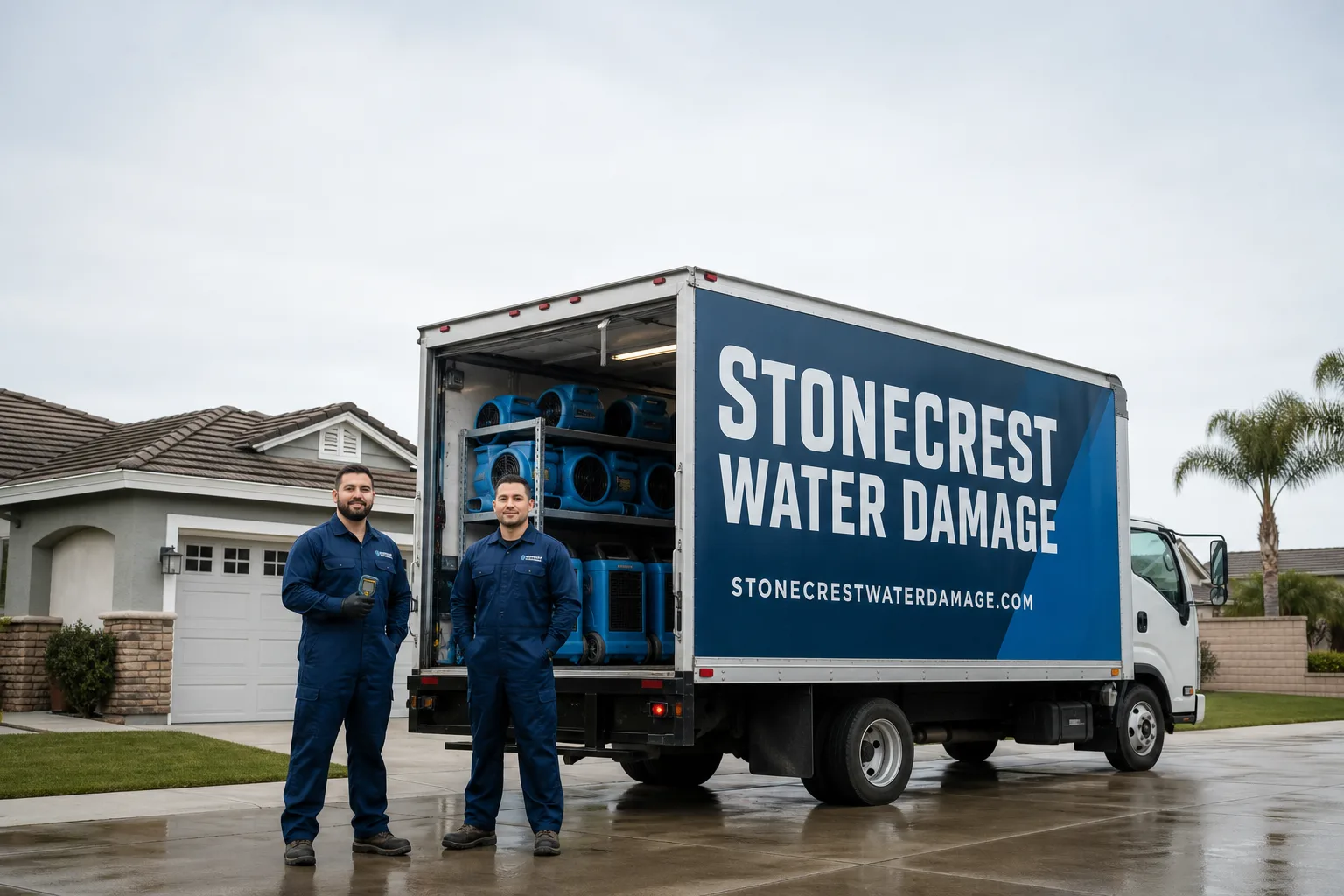
When you call (833) 589-9161, a live dispatcher answers. We dispatch directly from our Buena Park base to La Habra, which means the crew that arrives already knows the terrain. They know the slab-on-grade construction on Las Lomas and the older hillside lots near Coyote Hills. They know how to set up containment in a 1,400-square-foot tract home without making the situation worse. And they bring the equipment to start extraction and drying the same day, not the next morning.
Restoration work we handle
Water Damage Repair in La Habra
Water Damage Repair in La Habra means restoring a structure to pre-loss condition per IICRC standards, not patching drywall and hoping the framing dries on its own. In this city, repair work almost always intersects with the fault. A supply line bursts in a 1969 tract home near La Habra High School, and the repair isn’t just extracting standing water. It’s tracing the migration path along the slab crack, opening only what needs to be opened, and drying the cavities to documented moisture levels before reconstruction begins. Typical water damage repair projects in La Habra run $3,500 to $9,800 depending on whether flooring, cabinetry, or structural framing is involved.
Subfloor and Wall Cavity Repair
Slab-on-grade homes built in the 1950s and 1960s have no crawlspace to absorb water. When a pipe fails or a storm forces water under the slab edge, the moisture climbs into the bottom plates of interior walls and wicks under oak or laminate flooring. We use Injectidry systems to dry wall cavities and subfloor spaces without pulling every board. That preserves more of your original home and cuts reconstruction costs by avoiding unnecessary demolition.
Plumbing Leak and Seismic Damage Repair
Repeated small earthquakes on the Whittier Fault flex the ground under La Habra. Over decades, that flexing works hardened solder joints loose and cracked cast iron waste lines. The first sign is often a water bill spike, not a visible leak. We trace the source, document the affected materials, and dry the structure using measured, documented drying protocols that meet IICRC S500 standards.
Water Mitigation in La Habra
Water Mitigation in La Habra is the first-phase work that stops active damage and prevents secondary loss. It’s different from repair. Mitigation means extraction, containment, antimicrobial application where needed, and structural drying to stop mold before it starts. In La Habra, mitigation timing matters more than in most places because the winter rainy season can push water through roofing, window seals, and hillside drainage that’s already compromised from seismic cracking. A mitigation project in La Habra generally runs $2,800 to $7,200, with emergency extraction alone at $1,200 to $3,000.
Emergency Extraction and Containment
When water is actively flowing or standing, the first hours determine how much of your home gets saved. We set up containment barriers to isolate wet areas, pull standing water with truck-mounted extraction units, and position air movers and dehumidifiers from Dri-Eaz and Phoenix to begin drying immediately. In La Habra’s older homes, that first response also includes checking for water that’s already migrated behind stucco or under slab edges before it becomes a mold problem.
Structural Drying and Moisture Documentation
Drying isn’t guesswork. We place moisture probes in walls, subfloors, and framing, and we record readings daily. Those logs create the documentation your insurer needs to approve the restoration scope. In La Habra’s hillside neighborhoods, we also check for mud intrusion from failed drainage, which changes the water category and the required antimicrobial protocol.
Trusted Brands We Service in La Habra
La Habra homeowners call us about water damage involving a lot of different equipment brands, and we work across all of them. Whether your home has original cast iron plumbing from the 1960s, copper supply lines from the 1970s, or newer PEX that failed at a fitting, our team knows what we’re looking at. We stock common fittings and moisture barriers locally for La Habra jobs, which means less waiting on parts when a burst pipe has your kitchen torn open. Dri-Eaz and Phoenix drying equipment runs on every job, and our Injectidry capability lets us dry inside walls without gutting them. The brand of your plumbing matters less than the protocol we use to dry what got wet, and that protocol doesn’t change based on what failed.
See the difference
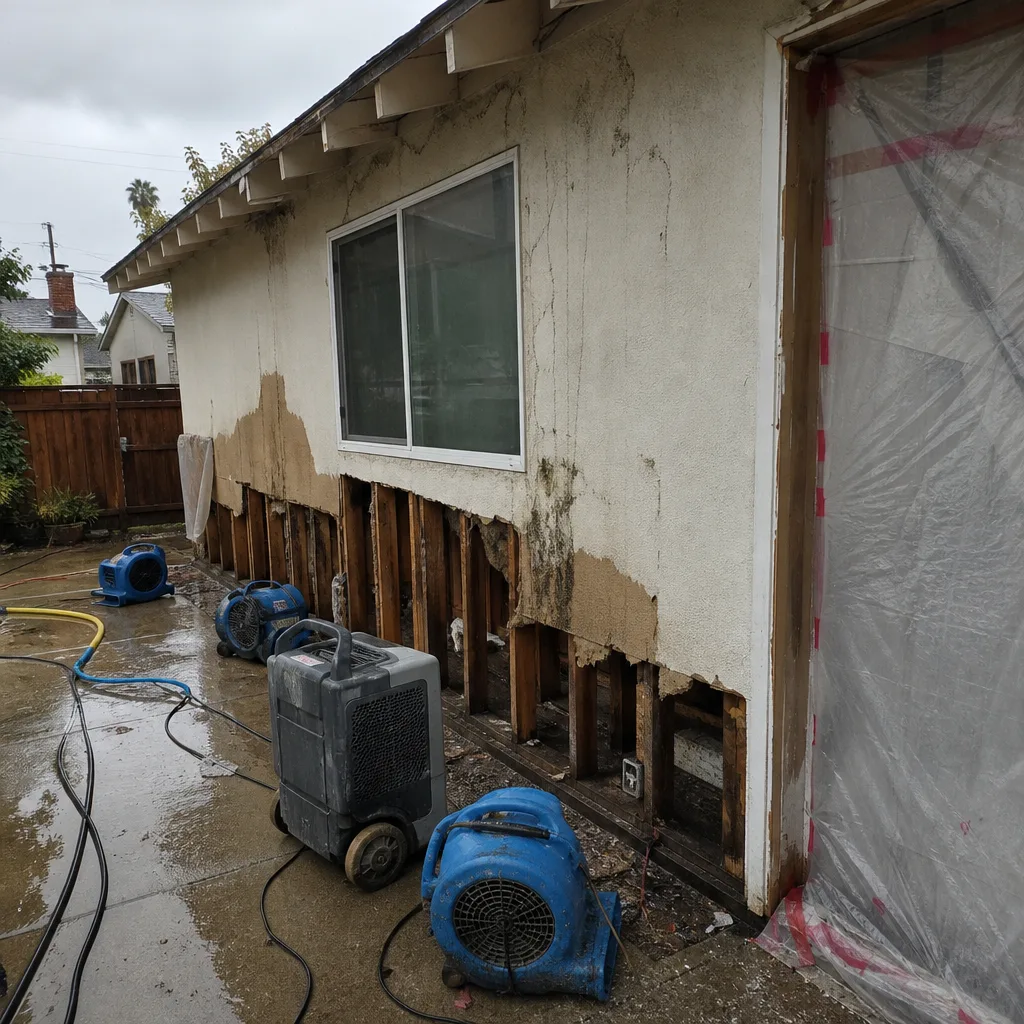 Before
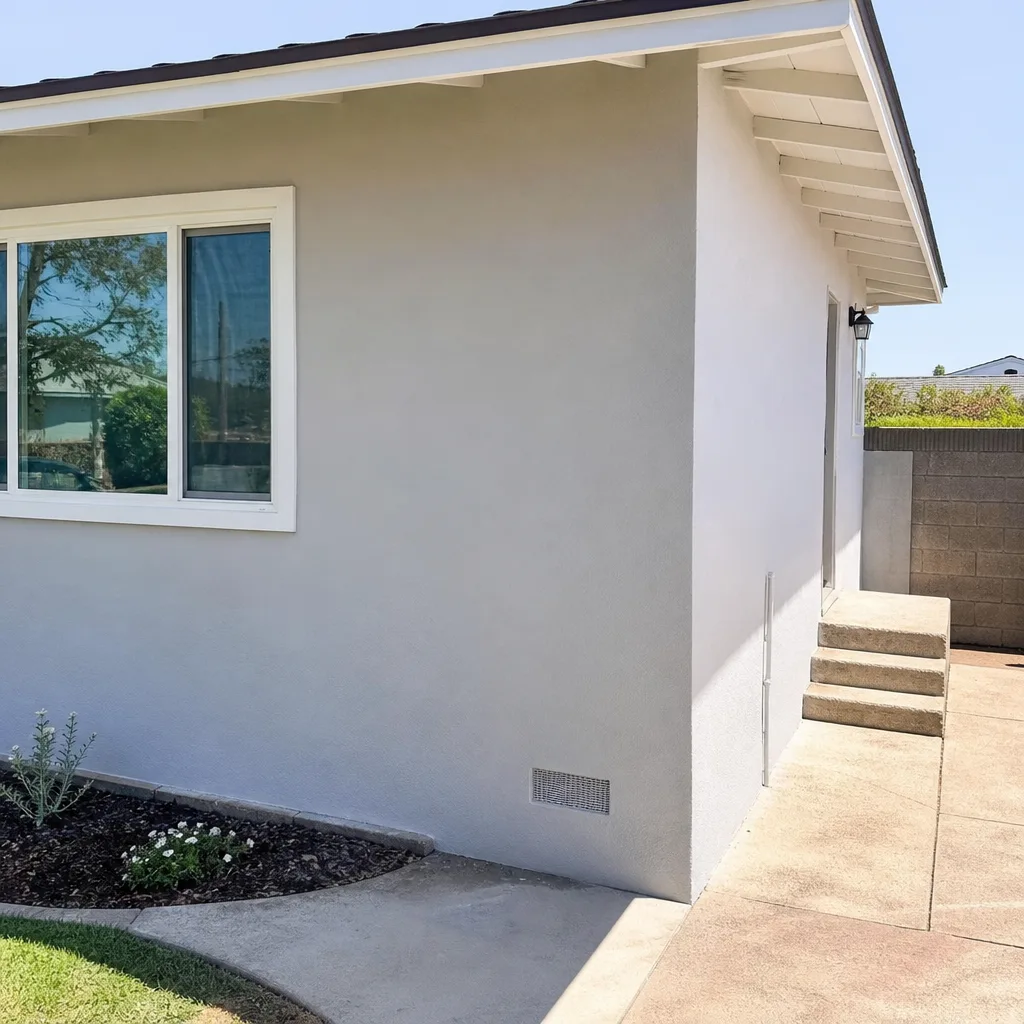 After
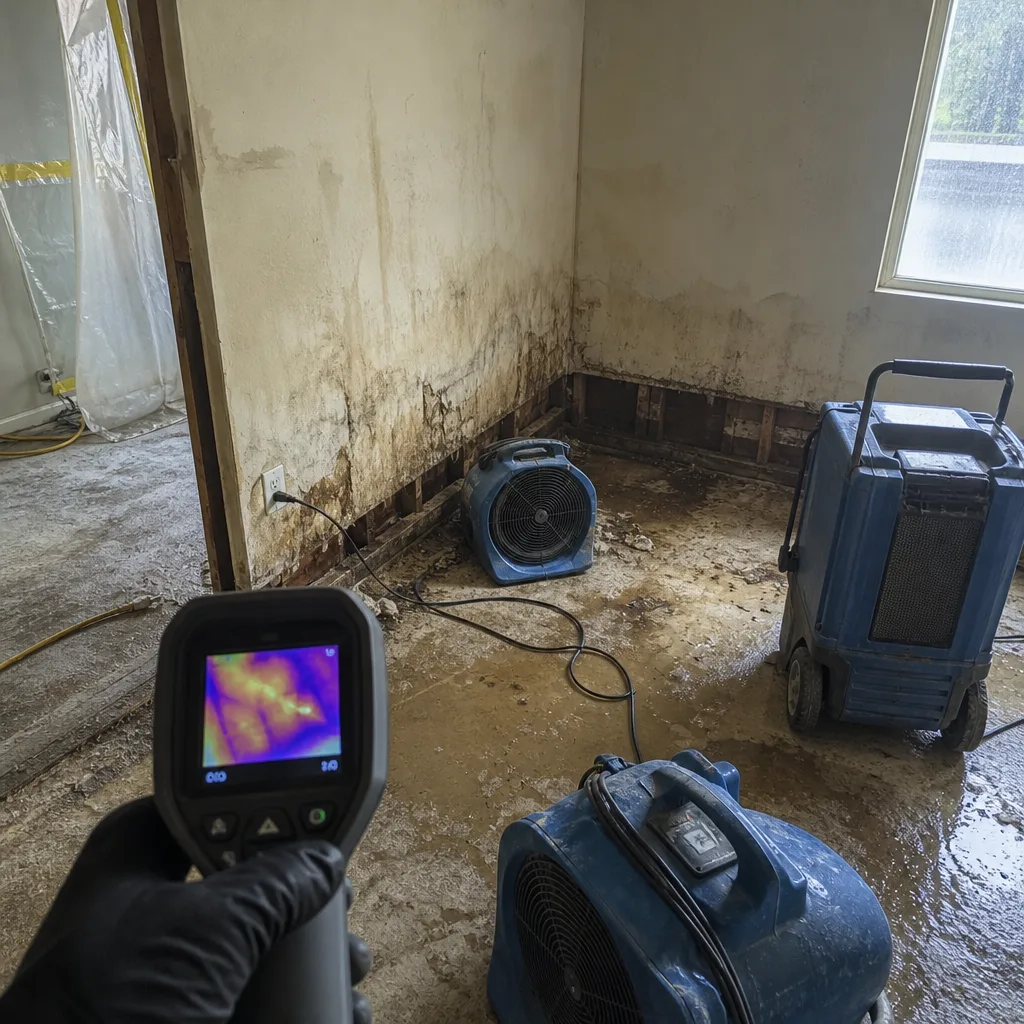 Before
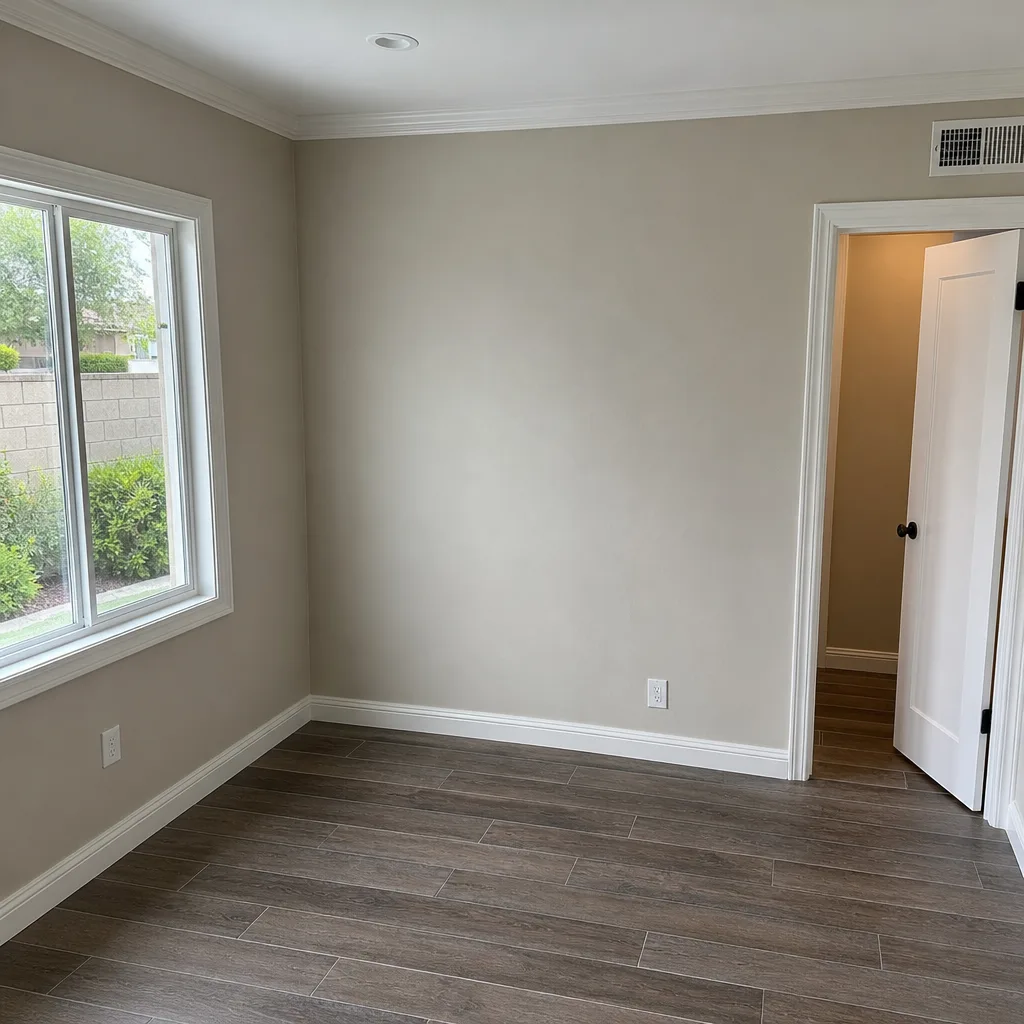 After
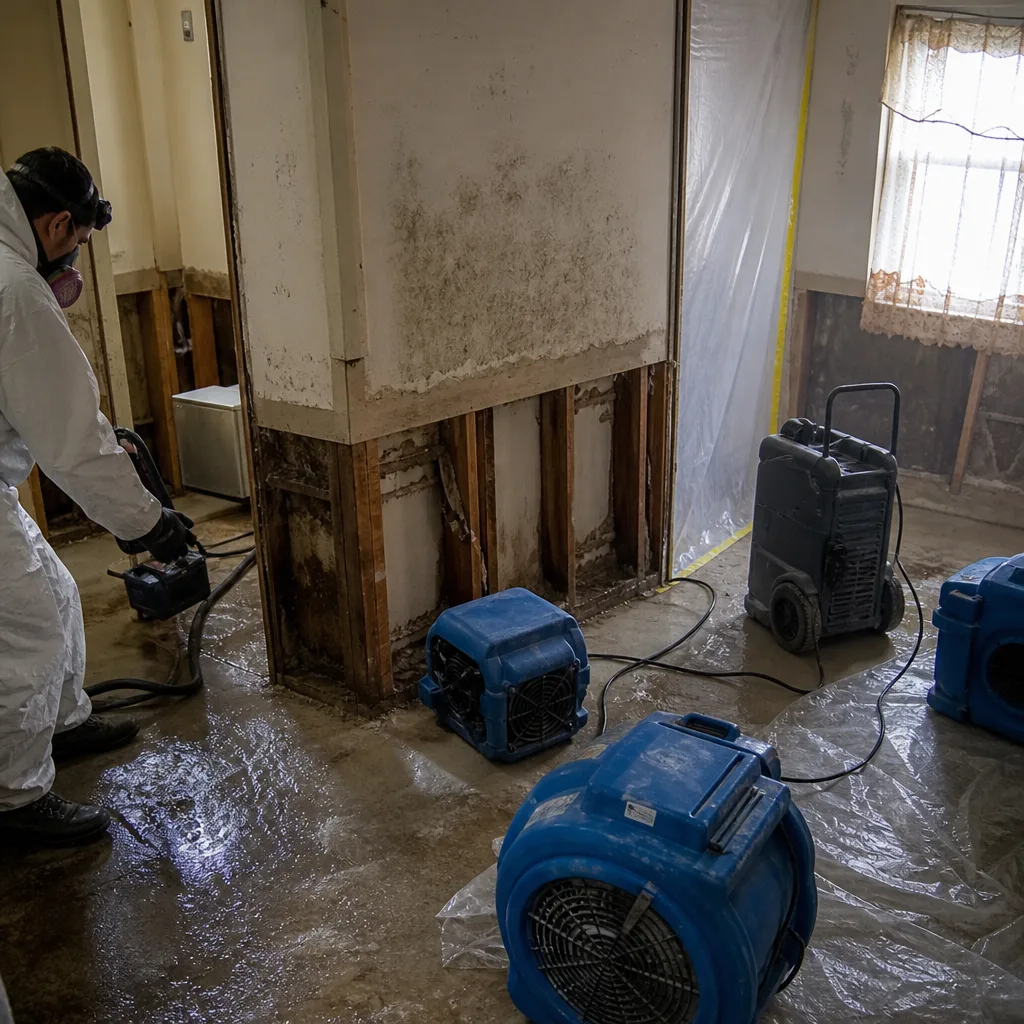 Before
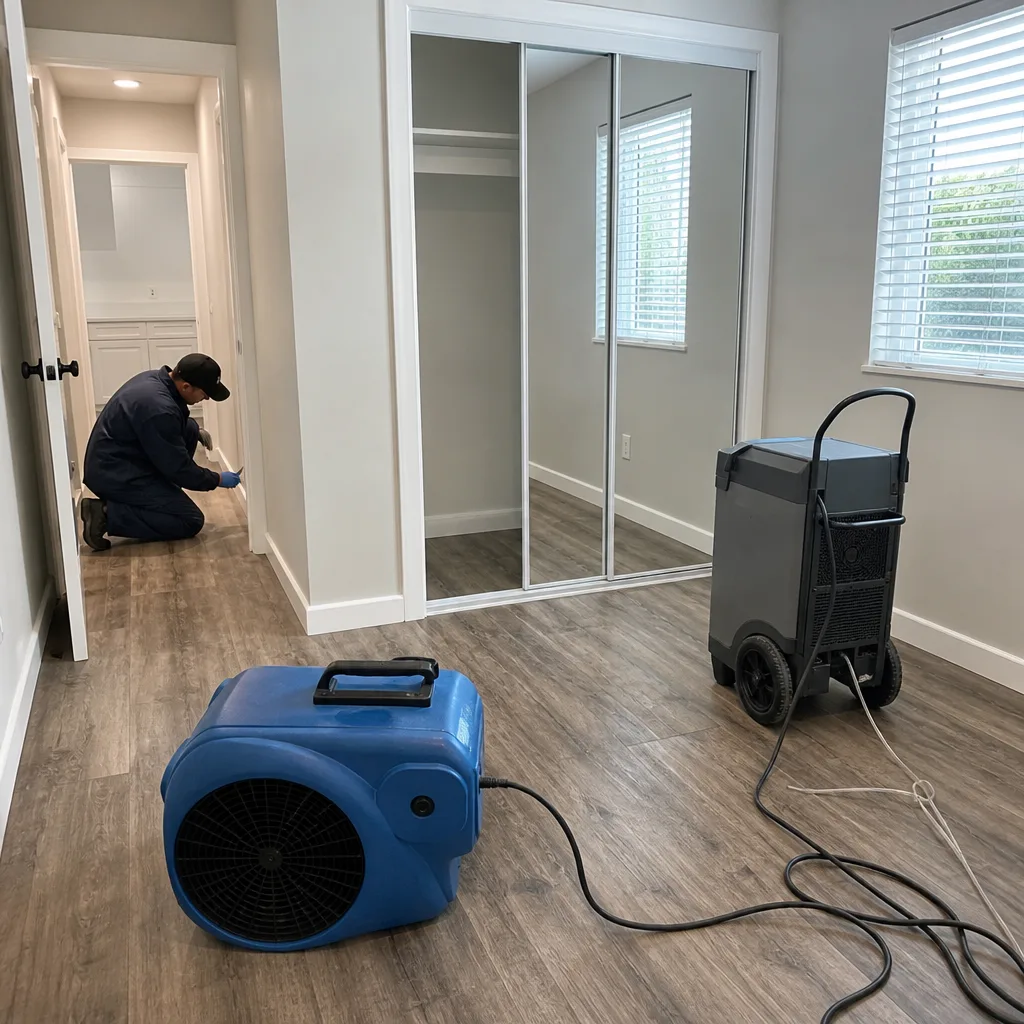 After
Common Water Damage Restoration Problems We See in La Habra Homes
- Galvanized pipe failure after seismic movement. Homes built between 1950 and 1975 in La Habra often still have original galvanized supply lines, and the Whittier Fault’s repeated shaking loosens threaded joints over time. The leak that follows is usually slow and hidden, wicking up stucco and rotting framing behind walls long before a stain appears.
- Hillside drainage overwhelmed by atmospheric river events. The graded lots north of Whittier Boulevard have retaining walls and drainage from the 1960s that can’t handle intense, short-duration rain bursts. A single storm can turn a dry slope into a mud-and-water path straight into a slab home’s foundation, creating Category 3 contamination that generic restoration companies misclassify.
- Post-earthquake stucco cracks that hide intrusion paths. After a quake, homeowners patch visible stucco cracks without realizing the crack extends into the wall cavity and slab edge. The next rain event sends water directly through that hidden path, and a visual inspection won’t catch it. Thermal imaging and moisture mapping will.
- Water migrating under original oak flooring on slab foundations. La Habra’s 1950s and 1960s tract homes often have original hardwood glued or nailed directly to the slab. When water gets under the slab edge through a foundation crack, it travels beneath the flooring undetected. By the time cupping or staining shows, the subfloor and bottom plates have been wet for weeks.
Pricing for Water Damage Restoration in La Habra, CA
Here are the ranges we quote on La Habra jobs, based on the work we’ve done across 90631, 90632, and 90633. Emergency water extraction alone runs $1,200 to $3,000 for a typical 1,200 to 1,800 square foot home. Structural drying with commercial dehumidifiers and air movers adds $2,500 to $6,500 depending on how many rooms and cavities are affected. A full Category 2 restoration that includes drywall removal, antimicrobial treatment, and rebuild prep lands between $4,000 and $12,000. Hillside homes with drainage-driven Category 3 intrusion often run higher because of soil contamination and the need for more extensive containment. Every estimate is free and includes a written scope. Call (833) 589-9161 and we’ll send a technician to La Habra to assess the damage in person.
We Also Serve Cities Near La Habra
Stonecrest Water Damage covers all of La Habra and the surrounding communities. We dispatch from Buena Park to Water Damage Restoration jobs in Fullerton, Brea, Buena Park, and Placentia. If you’re in a neighboring city and need a La Habra level of local expertise, call us, we’ll tell you honestly how fast we can get there.
Serving La Habra, CA — Our Local Coverage Area
We’re based in the La Habra area and know this community well. Use the map below to see our service coverage — if you’re nearby, we can almost certainly help.
FAQs About Water Damage Restoration in La Habra
Seismic movement on the Whittier Fault flexes your home’s structure and can crack supply lines, waste lines, slab foundations, and stucco walls without any water reaching the floor or a visible surface. Water then migrates through those new cracks into wall cavities and under flooring, where it sits against framing and subfloor for weeks. The first sign is often a musty smell, a water bill spike, or cupping hardwood, not a puddle. If you’ve felt a quake in the last few months and something smells off, call (833) 589-9161 and we’ll run thermal imaging and moisture mapping to find what a visual check would miss.
The hillside lots north of Whittier Boulevard sit on graded fill with older retaining walls and drainage systems that were never built for today’s intense rain bursts. When a storm hits, water and mud flow toward the home, not away from it, and that water picks up soil contaminants that make it Category 3, not Category 2. Restoration on these lots requires more aggressive containment, soil testing, and antimicrobial protocols than a flatland flood job. Our crews are familiar with the drainage patterns on the northern slope and plan drying around them.
Category 1 is clean water from a supply line or faucet. Category 2 is water with some contamination, like washing machine overflow or sump pump discharge. Category 3 is grossly contaminated water from sewage backups, soil intrusion, or flood water, and it’s common in La Habra’s hillside neighborhoods during heavy rains. The category determines whether materials need antimicrobial treatment, full removal, or just drying. A Category 1 pipe burst in a flatland tract home is a very different job from Category 3 mud intrusion into a hillside slab. We classify every job per IICRC standards and document it for your insurer.
We start with extraction and containment, then place moisture probes into the slab, subfloor, and bottom wall plates to map the migration path. Because slab-on-grade homes have no crawlspace, water under flooring and inside wall cavities has nowhere to drain, so we use Injectidry systems to create negative pressure inside those cavities and pull moisture out without tearing out every wall. Dri-Eaz and Phoenix dehumidifiers then condition the air to pull remaining moisture from structural materials. We document moisture reduction daily until readings meet IICRC dry standards, which typically takes three to five days in La Habra’s semi-arid climate.
If your home still has original galvanized plumbing from the 1950s or 1960s, and it has already failed once due to seismic movement, you should expect it to fail again. The question is usually not whether to replace it, but whether to do it now during restoration or phase it. We will give you an honest assessment based on what we find in the walls. For hillside drainage, retrofitting retaining walls and adding proper surface drainage is often the only way to prevent the next atmospheric river from pushing mud and water into your home again. Call (833) 589-9161 for a free assessment of your specific situation, we’ll tell you what’s urgent and what can wait.
Written by Neil Stratton, Owner at Stonecrest Water Damage, serving La Habra and the surrounding communities.
If water has found its way into your La Habra home through an earthquake crack, a failed pipe, or a hillside drainage failure, call (833) 589-9161 now. We’ll have a certified technician at your door fast, with commercial drying equipment and a written scope before any work begins.