 Water damage drying
 Fire & smoke cleanup
 Mold remediation
 Storm response
 Sewage cleanup
 Reconstruction
Free visual inspection and a written scope of work before any mitigation begins - photos, moisture readings, and drying logs go in your claim file
The scope we write is the scope we bill. Anything new gets shown to you, in writing, before we touch it.
Get your free estimateFast, Reliable Mold Remediation Across Corona
Mold remediation in Corona typically runs $1,800 – $6,500 depending on containment size, material removal, and structural drying required. Our crews reach most Corona neighborhoods within 60 – 90 minutes with commercial-grade drying and containment equipment. We work the 92877, 92878, 92879, and 92880 ZIP codes daily, which means we know exactly how Corona’s slab-built tract homes and older 91-corridor houses behave when hidden moisture finally shows itself. If you’ve spotted staining, warped baseboards, or that musty smell that won’t leave, call (833) 589-9161 and we’ll get a certified technician to your door with a moisture meter, not a guess.
Why Stonecrest Water Damage Is Corona’s Preferred Mold Remediation Company
Corona homeowners and property managers call us because we treat mold as a documentation problem as much as a removal problem. That’s the part most contractors miss. When a 92880 HOA subdivision needs remediation, the board wants a written scope before work starts and drying logs after it finishes. We deliver both. Our technicians work to IICRC S520 standards, and we’re affiliated with RIA and IFA, so the paperwork we hand an adjuster or an architectural review board actually holds up.
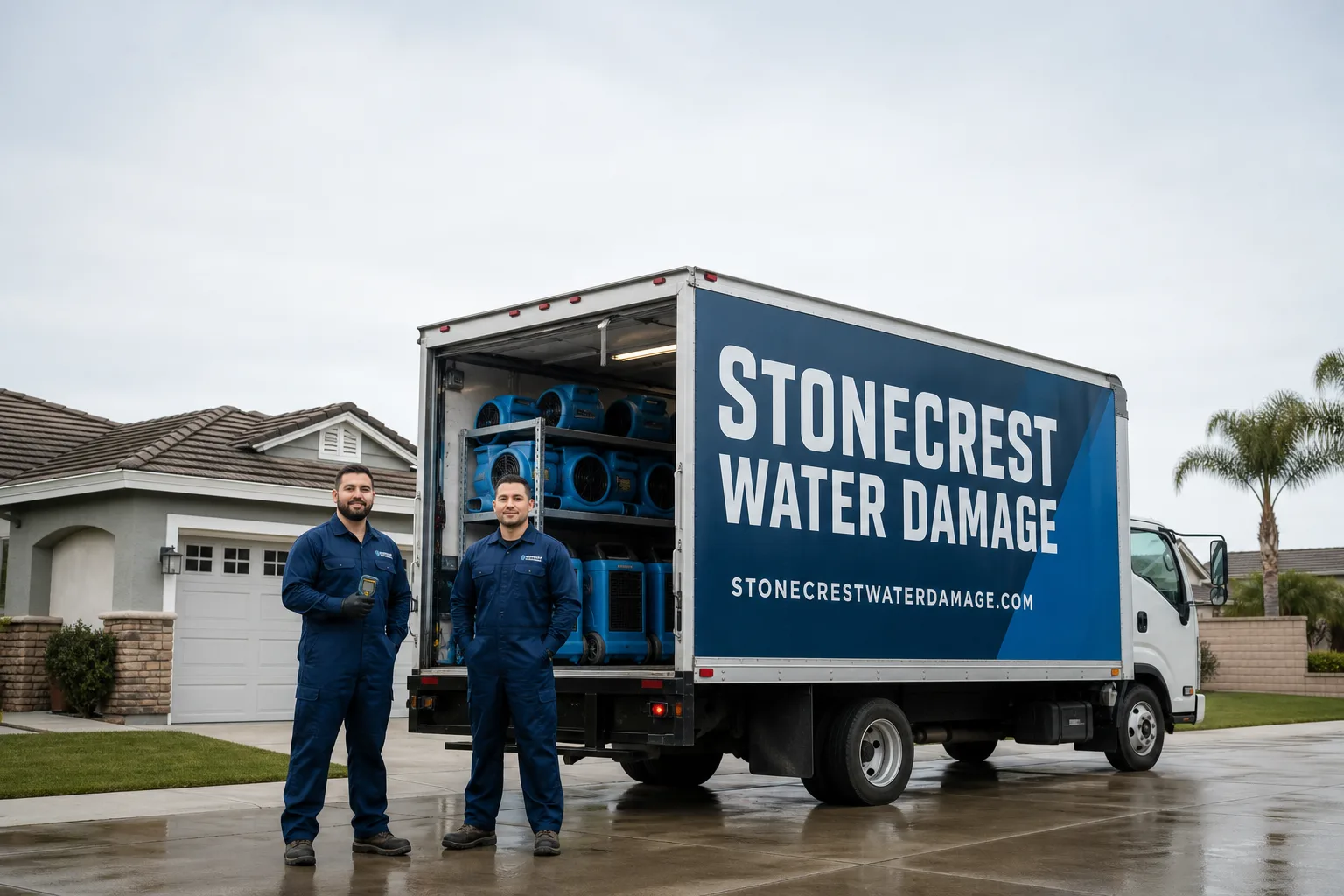
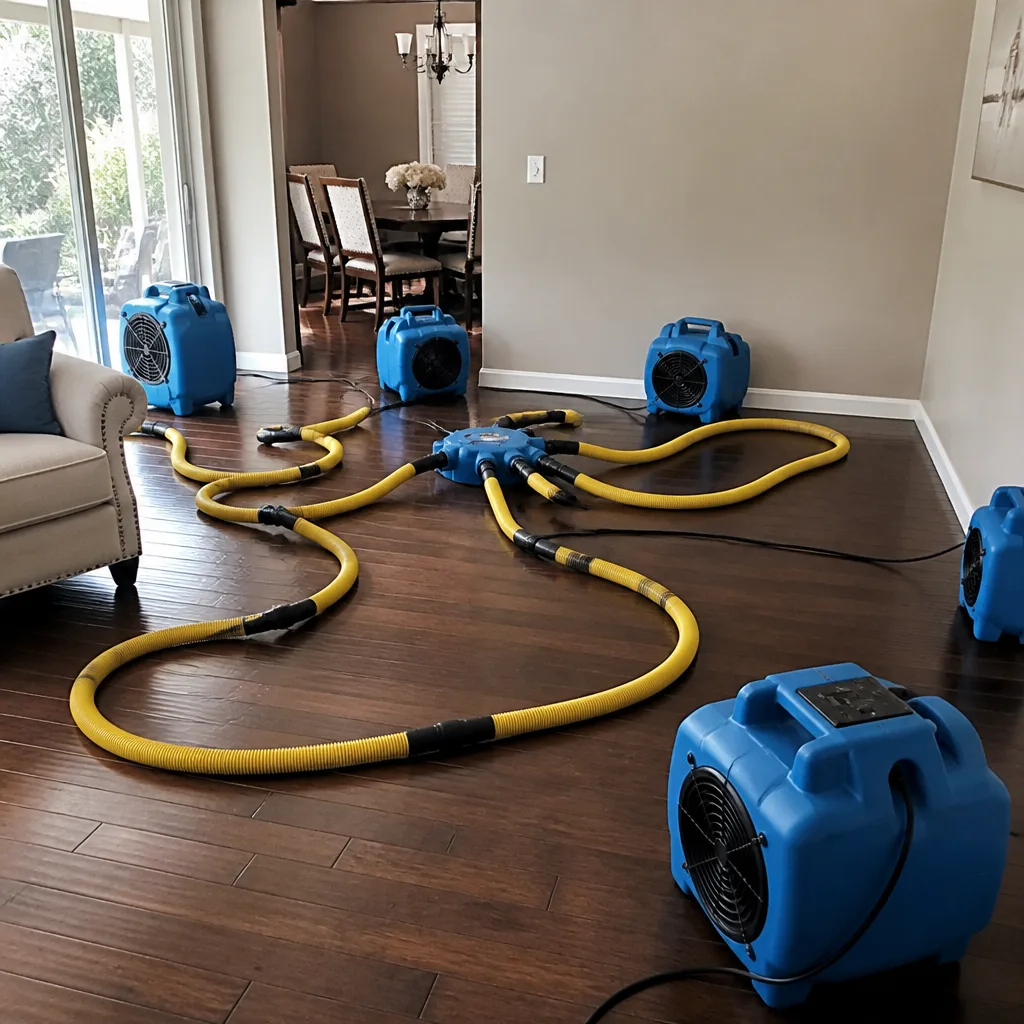
We run the same equipment on Corona jobs that large-loss commercial restoration companies use: Dri-Eaz dehumidifiers and air movers, Phoenix axial fans, and Injectidry systems for drying inside walls without tearing out drywall. That last part matters in Corona, where HOA rules often limit how much visible change a homeowner can make to the outside of a structure. Drying in place preserves more of the original build, and that keeps ARB complaints from piling up before the remediation even closes. Neil Stratton built Stonecrest Water Damage around that kind of equipment-grade restoration, not rental-store machines.
Restoration work we handle
Mold Removal Service in Corona
Mold removal in Corona means physically removing contaminated material and cleaning what can be saved, then drying the structure to a measured standard. The dry Santa Ana summers here hide problems that a straightforward visual inspection misses: an under-sink leak or slab supply line can drip for months, evaporate into the attic heat, and leave mold growing behind a cabinet while the wall board feels bone dry on the surface. When a winter atmospheric river finally saturates the same cavity, the growth gets reactivated and the homeowner sees it for the first time. So our mold removal service in Corona always pairs physical removal with moisture mapping into the slab and wall cavities. In the 92882 corridor near the 91, our crew opened the cabinet base of a 1960s single-family home after a winter storm re-wet a slab-supply leak the homeowner had never noticed during the dry summer. Moisture mapping flagged saturated drywall and framing that read dry on the surface. We set containment, ran air movers and dehumidification through structural drying, applied antimicrobial treatment, and pulled category 2 water-logged material before documenting pre-loss condition for the homeowner’s records.
Typical mold removal in Corona runs $1,200 – $3,800 for a contained cabinet or closet job, and $4,500 – $8,000 when the growth extends behind multiple walls or into the crawl space. We write the scope before we cut anything.
Containment and Removal
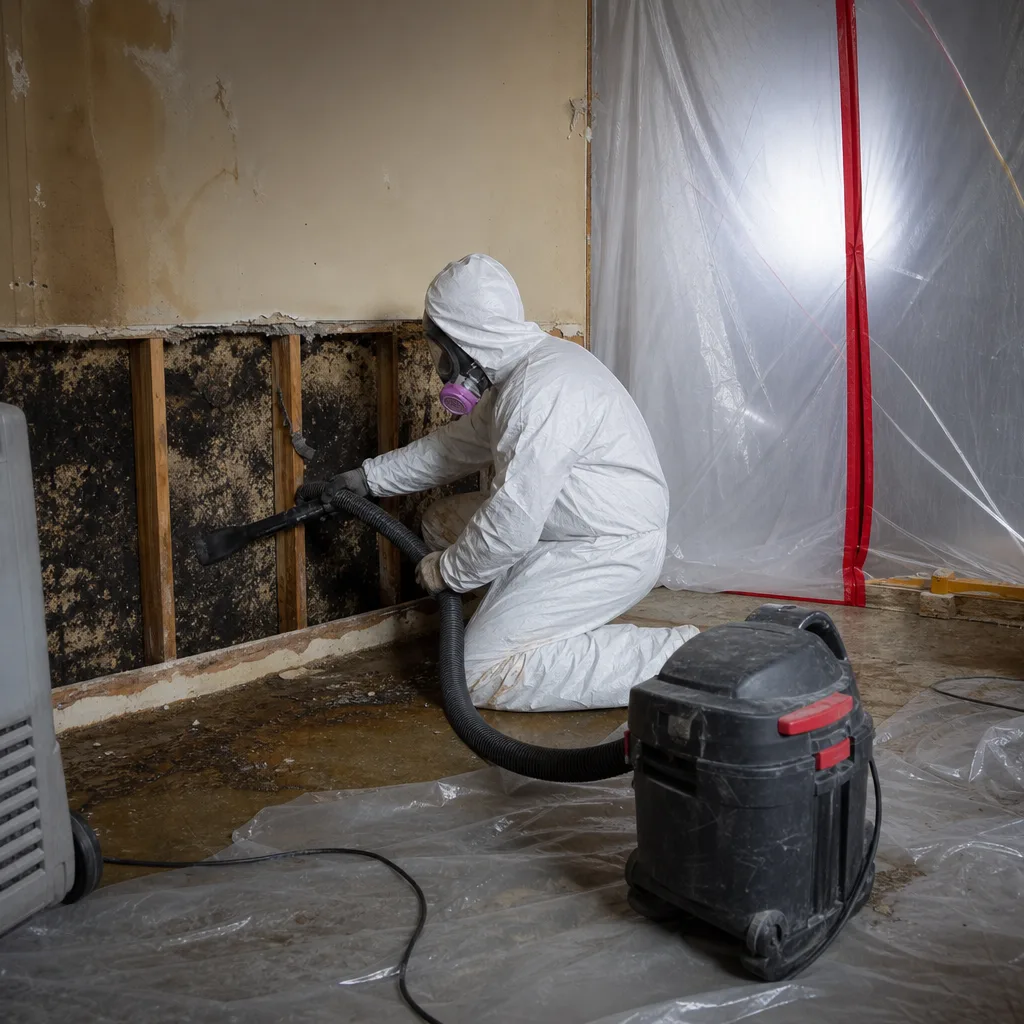
We seal off the affected area with negative-air containment, remove contaminated drywall or cabinetry, and double-bag the waste. No mold gets tracked through the rest of the house. The equipment we run is commercial-grade, which means the drying gets measured in grain depression, not hours of fan time.
Antimicrobial and Residual Prevention
After removal, we apply antimicrobial treatment to the exposed framing and dry the cavity to a documented moisture content. Corona’s dry-air summers work in our favor here: once we hit target readings, the structure usually stays dry unless the source leak returns. That’s why we verify the supply line and drain fitting before we close the wall.
Mold Remediation Services in Corona
Mold remediation services in Corona go beyond removal – they restore the home to a condition that won’t fail an HOA review or a follow-up insurance inspection. We bring the Mold Remediation and structural drying under one IICRC-compliant process, which means you’re not coordinating a mold company, a drywall crew, and a plumber across three different schedules. We handle the full scope: containment, material removal, in-wall drying with Injectidry, antimicrobial application, and rebuilding damaged drywall and panels to match the original tract-home build.
For a typical Corona remediation with moderate containment and panel replacement, expect $2,500 – $5,500 for a single bathroom or kitchen cabinet area and $6,000 – $12,000 for multi-room jobs where the growth has run through a slab cavity or crawl space. We never quote without moisture readings and a written scope, because Corona’s HOA communities in 92880 and the foothill tracts don’t accept verbal estimates when you’re asking for approval to start work.
HOA and Architectural Review Compliance
If your Corona neighborhood has an architectural review board, any visible repair from remediation has to match the community’s approved styles and colors. We photograph the original material, the replacement panel, and the finished repair so a homeowner can submit a clean ARB package. It’s faster than fighting a violation notice.
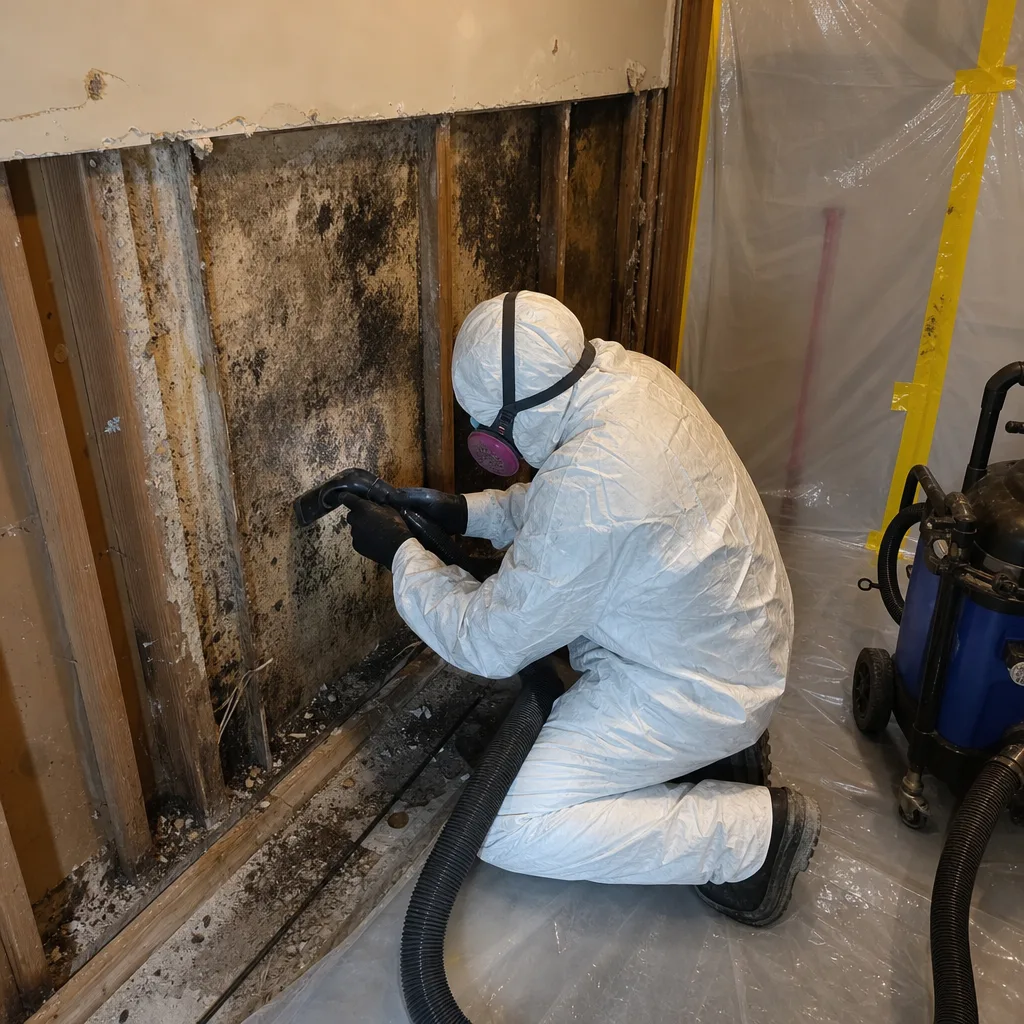
Structural Drying Without Unnecessary Demo
Injectidry lets us dry inside wall cavities and under slab-grade flooring without ripping out every sheet of drywall in the room. That’s a real advantage in Corona, where the outer walls of 1980s – 2000s tract homes are built tight and dry slowly. We preserve more original structure, which means fewer matching-panel headaches and a shorter HOA review window.
What happens when you call
- 1
A real person answersNo phone trees — you reach a local pro.
- 2
You get an upfront price rangeHonest numbers before anyone is dispatched.
- 3
A background-checked tech heads outLicensed & insured, dispatched right away.
- 4
You approve before work beginsNothing starts until you say go.
Trusted Brands We Service in Corona
Corona homeowners live in everything from 1960s single-story ranches in the 92879 corridor to 2000s master-planned subdivisions in 92880. We service all of them. That includes original galvanized and early copper supply lines in the older pockets and PEX and slab-on-grade systems in the newer tracts. Our crews stock common replacement panels, cabinet bases, and drywall matching materials used across Corona’s tract-home era, so turnaround on panel replacement and repair is faster than ordering from a remote supplier. We work on homes in the Eastvale-adjacent 92880 subdivisions, the 92881 and 92883 foothill tracts, and the 92879/92882 corridor along the 91. No matter which builder put up the original frame, we spec the remediation to match it.
See the difference
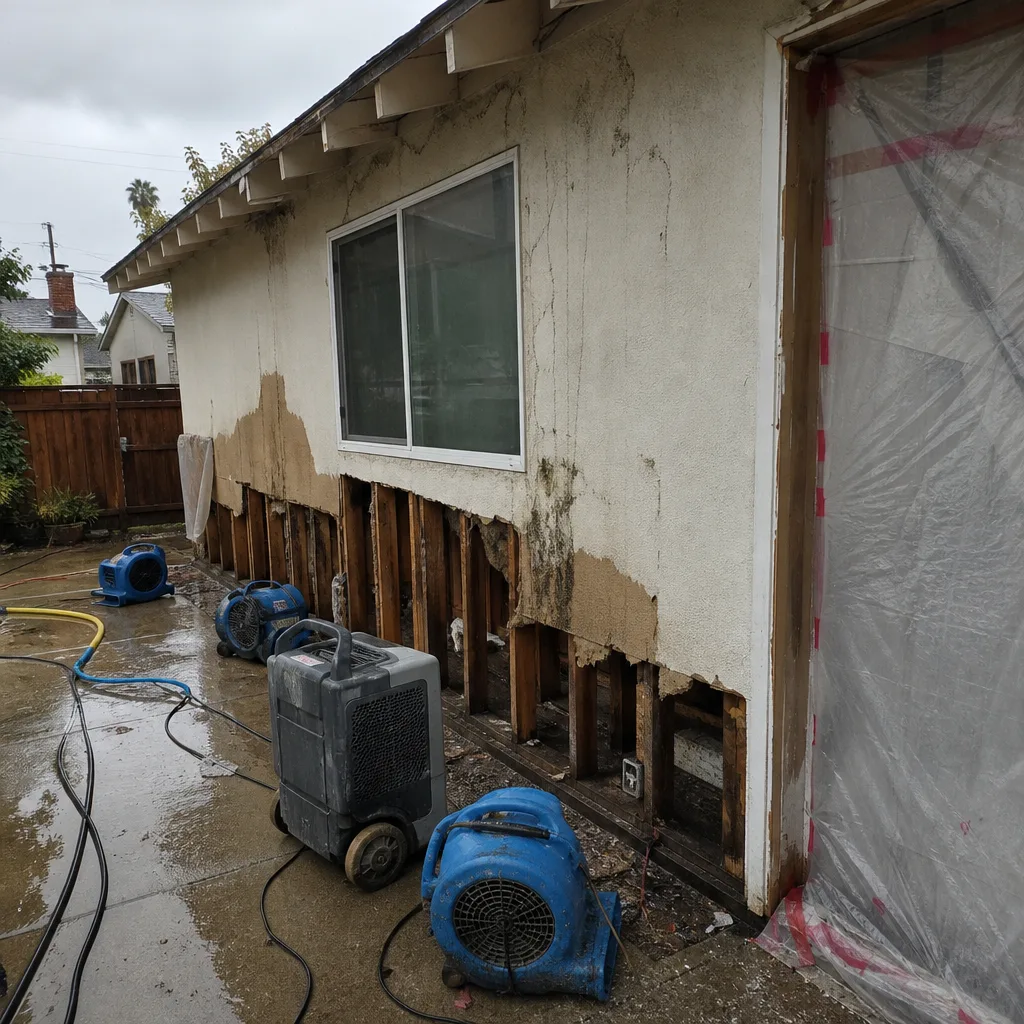 Before
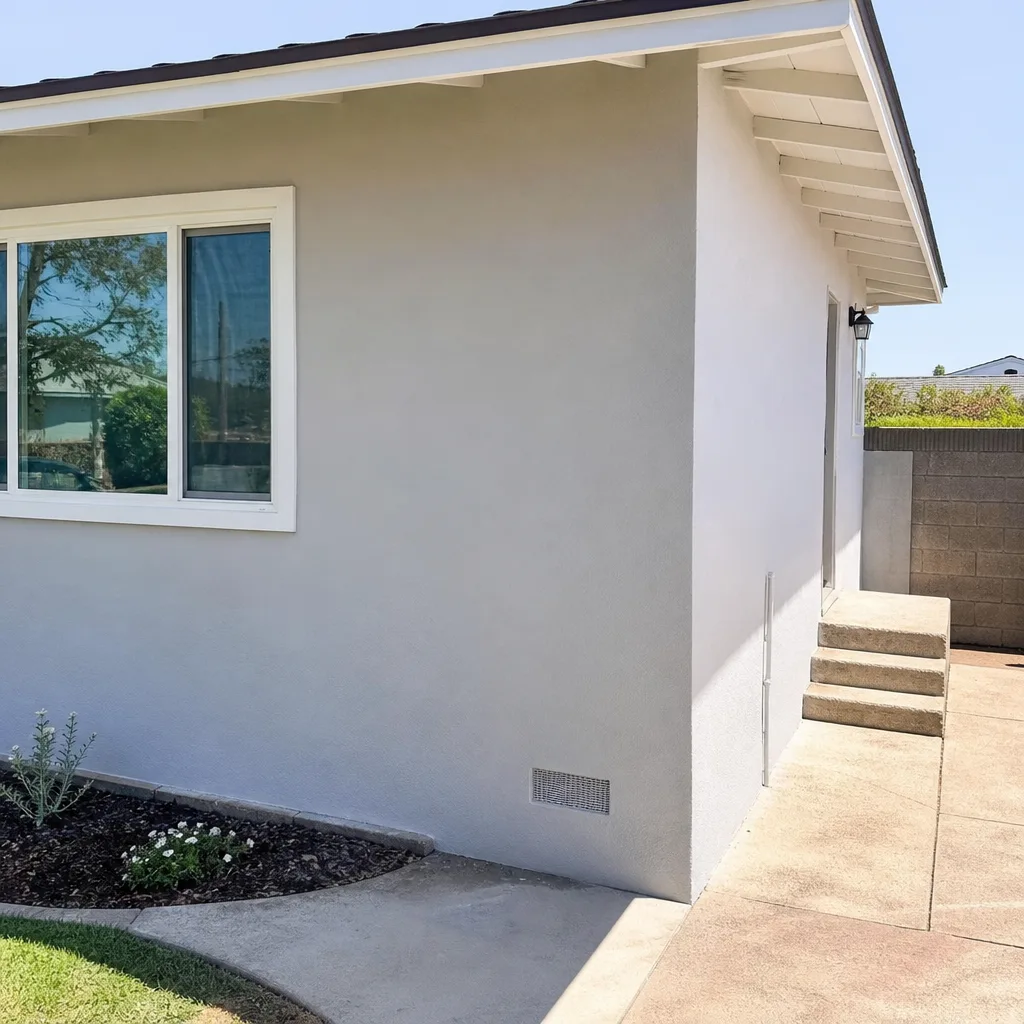 After
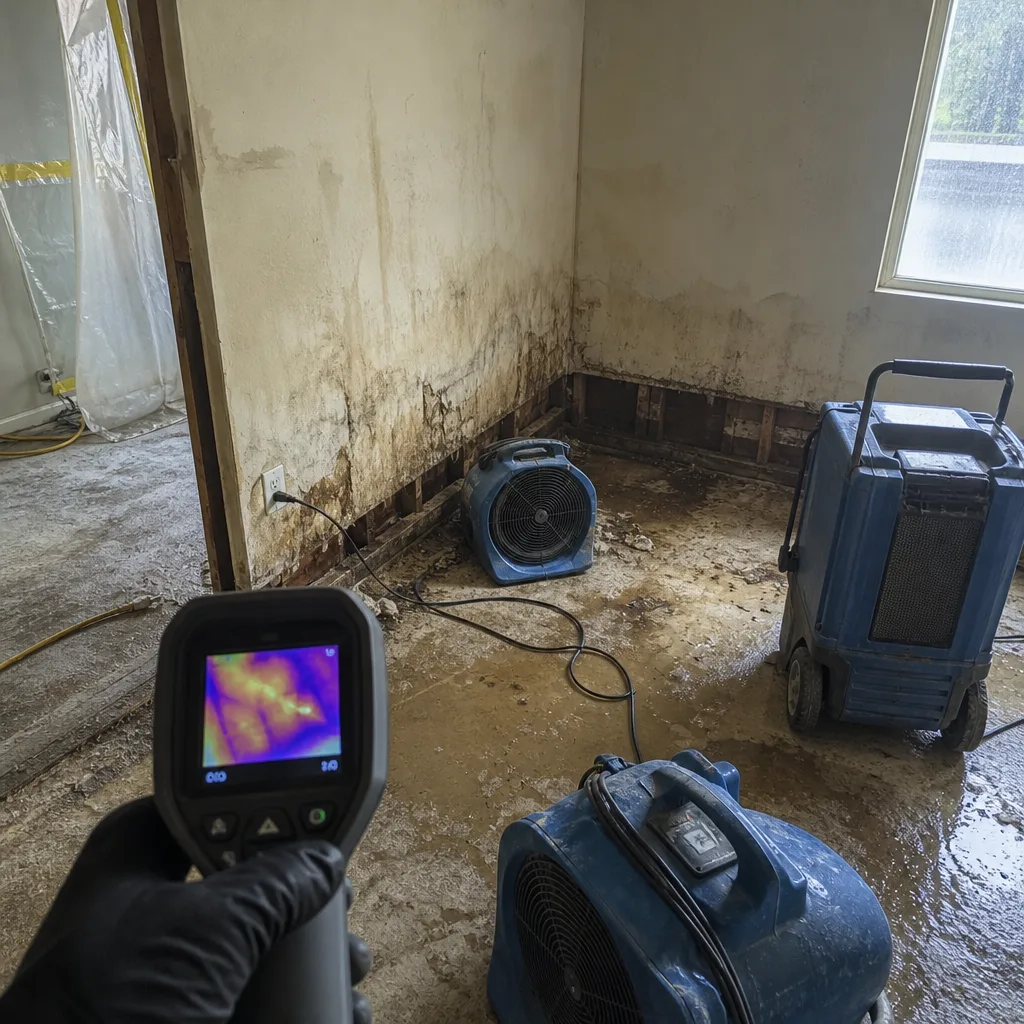 Before
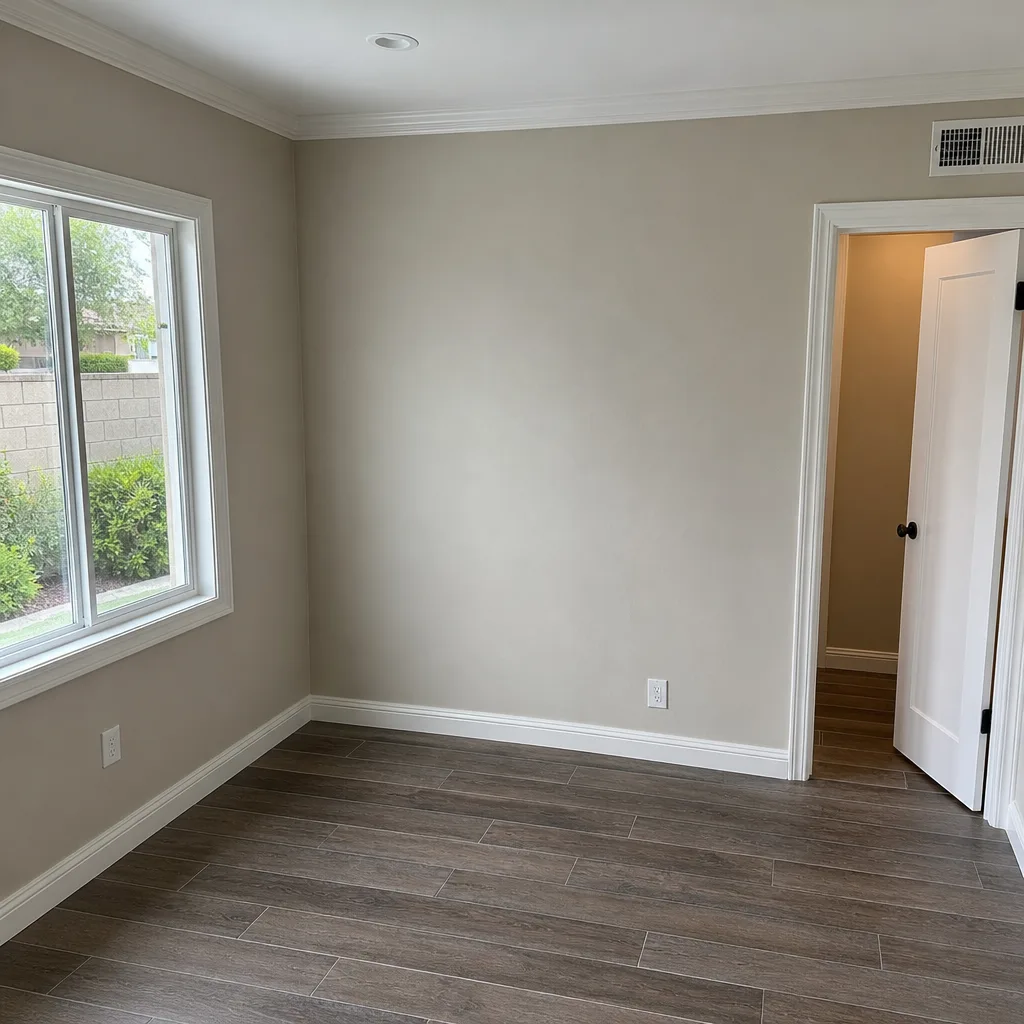 After
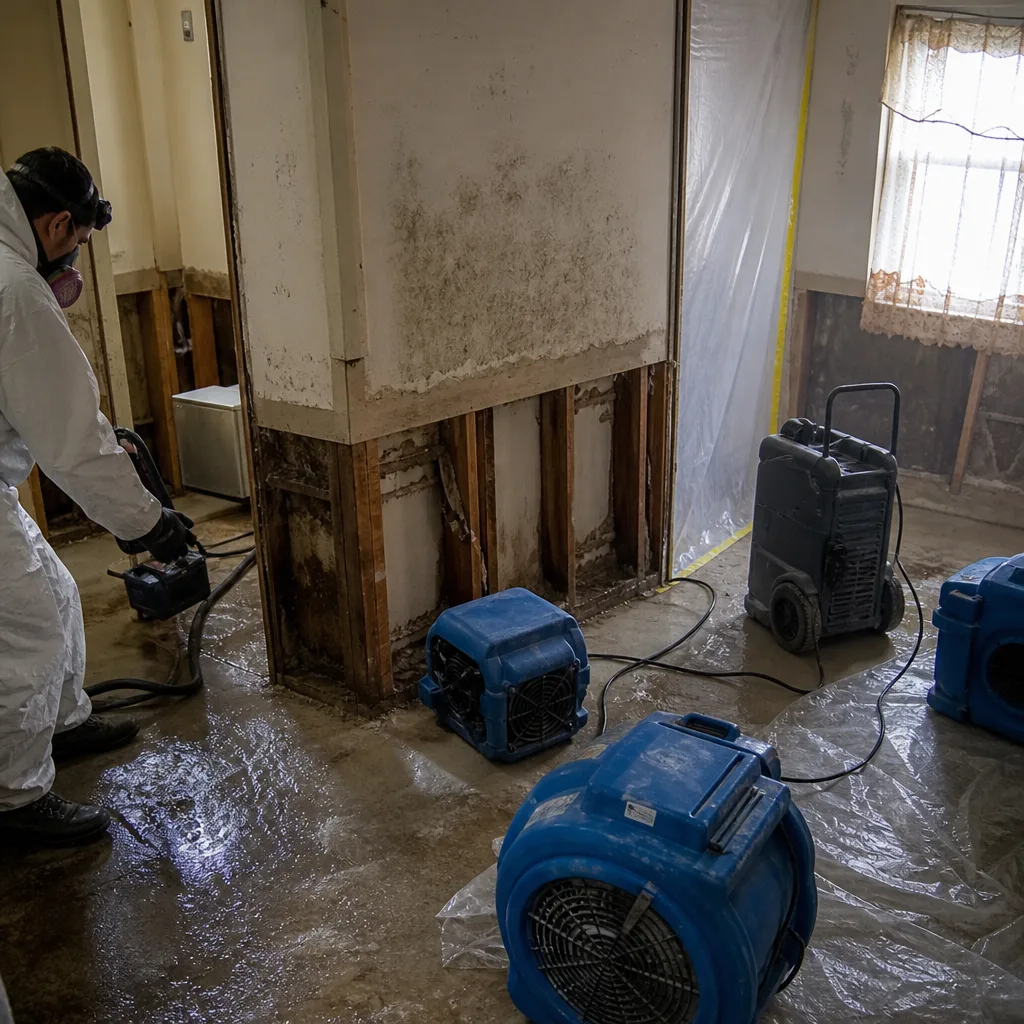 Before
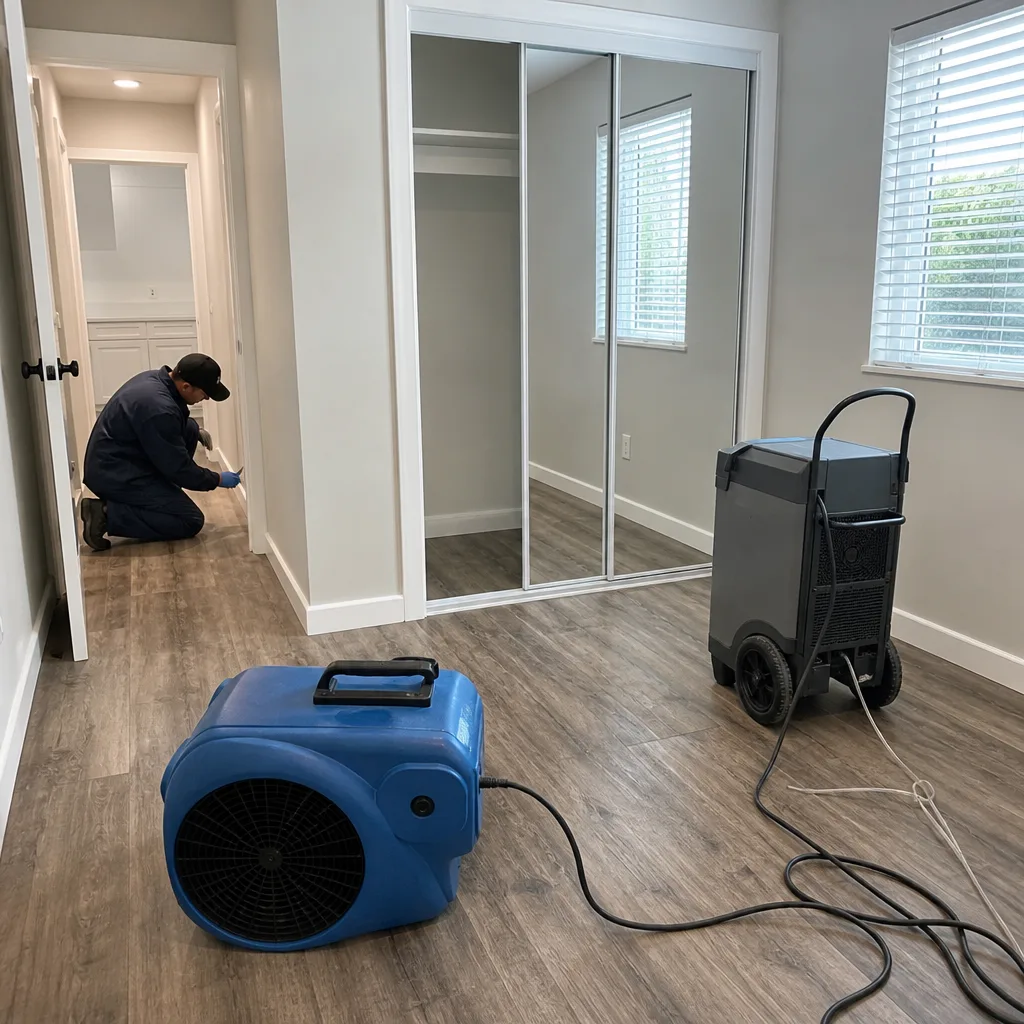 After
Common Mold Remediation Problems We See in Corona Homes
- Dry-season leaks that hide until winter storms. Corona’s Santa Ana summers pull moisture out of the air, so a slab-supply or under-sink leak can drip for months and never show a watermark. The mold grows behind cabinets in 92882-era homes during the exact months when everything looks dry. By the time a winter atmospheric river arrives, the cavity is saturated and the growth is months old.
- HOA panel-matching failures after remediation. When a remediation crew cuts out damaged drywall or cabinet bases and replaces them with off-the-shelf material that doesn’t match the tract home’s original build, the ARB flags it. Corona’s newer subdivisions are strict about architectural consistency. We photograph the existing panel profile before we touch anything.
- Slab-on-grade construction pushing water sideways. The 1980s – 2000s tracts in 92880 and the foothill areas were built slab-on-grade, which means a supply-line leak under the concrete can travel laterally into the wall cavity before it ever shows up on the slab surface. We moisture-map the entire perimeter, not just the visible stain.
- Short, intense water-loss events instead of chronic damp. Corona’s winter storms and monsoon bursts dump a lot of water in a few hours, then it dries out fast in the following Santa Ana window. The damage pattern looks different from coastal cities: short wet spikes that overwhelm drainage, then rapid evaporation. It means we often find multiple small dry-cavity mold pockets rather than one large saturated area.
Pricing for Mold Remediation in Corona, CA
Mold remediation in Corona runs about $1,800 – $6,500 across most single-family homes, measured by the size of the contained area and how many separate cavities we find. A contained cabinet or closet job in a 92879 ranch typically runs $1,800 – $2,800. A bathroom with structural drying and panel replacement lands around $2,500 – $4,500. When the growth runs through a slab cavity into two or more rooms, like what we see in the 92882 corridor after winter re-wetting, expect $5,000 – $8,000 and a longer drying window. Crawl space remediation in the foothill tracts usually adds $1,500 – $3,000 for full containment and post-treatment ventilation work. Call (833) 589-9161 and we’ll give you a written scope with line-item pricing before work starts.
We Also Serve Cities Near Corona
Our mold remediation crews cover the surrounding Inland Empire communities as part of our Mold Remediation service area. If you’re calling from Eastvale, Chino, Yorba Linda, or Los Serranos, we can dispatch the same IICRC-certified technicians and Dri-Eaz equipment that run our Corona jobs. The travel time is short, which means we can hold containment and keep drying logs continuous across the wider service zone. Corona is the anchor for this area, but the reach extends to the whole 91 and 71 corridor.
Serving Corona, CA — Our Local Coverage Area
We’re based in the Corona area and know this community well. Use the map below to see our service coverage — if you’re nearby, we can almost certainly help.
FAQs About Mold Remediation in Corona
Interior mold remediation that doesn’t change the exterior appearance of the home generally does not need ARB approval. What triggers a violation is visible exterior repair – replaced vents, stucco patch, or paneling that doesn’t match the community’s approved style and color. We document the original material profile and match the replacement to it, so the repair passes without a flag. If your HOA still wants a filing, our written scope and drying logs serve as the supporting paperwork.
Corona’s dry Santa Ana winds let slow slab-supply and under-sink leaks evaporate before they show on the surface. The moisture stays trapped inside the wall or under-cabinet cavity where mold grows unseen. A winter atmospheric-river storm adds enough water to the same cavity that the growth becomes active and visible for the first time. The mold was there all summer – it just needed the storm to reveal it.
Yes, and we coordinate the equipment schedule with the community’s quiet-operation rules where a court noise agreement applies. Dri-Eaz dehumidifiers and axial fans run at residential-friendly levels, and we can stage the loudest drying during daytime hours. The documentation we provide includes a drying schedule that an ARB or HOA manager can review if a complaint ever gets filed. Call (833) 589-9161 and we’ll lay out the equipment plan before we start.
Mold can begin growing in 24 – 48 hours in a warm, wet cavity. Corona’s dry air slows surface growth but doesn’t stop it inside enclosed spaces, particularly behind cabinets and under slab-grade flooring where evaporation is minimal. If you’ve had a water event, call us the same day. The first 48 hours determine whether we’re cleaning surface growth or cutting out structural material.
Yes. We track the original panel profile, texture, and paint code from the pre-remediation documentation, then source matching drywall and cabinet materials before we close the wall. In Corona’s 92880 subdivisions and the foothill tracts, this matters because the ARB will compare the repair to the original build. A mismatched panel gets sent back. We’d rather spend the extra hour sourcing the right match than put a homeowner through a violation cycle.
If you’re dealing with visible mold, that musty smell, or a water event that won’t dry out in Corona, call (833) 589-9161 for a free estimate. Our technicians will map the moisture, write the scope, and walk you through what’s actually needed before any work begins.
Written by Neil Stratton, Owner at Stonecrest Water Damage, serving Corona and the Inland Empire region.