

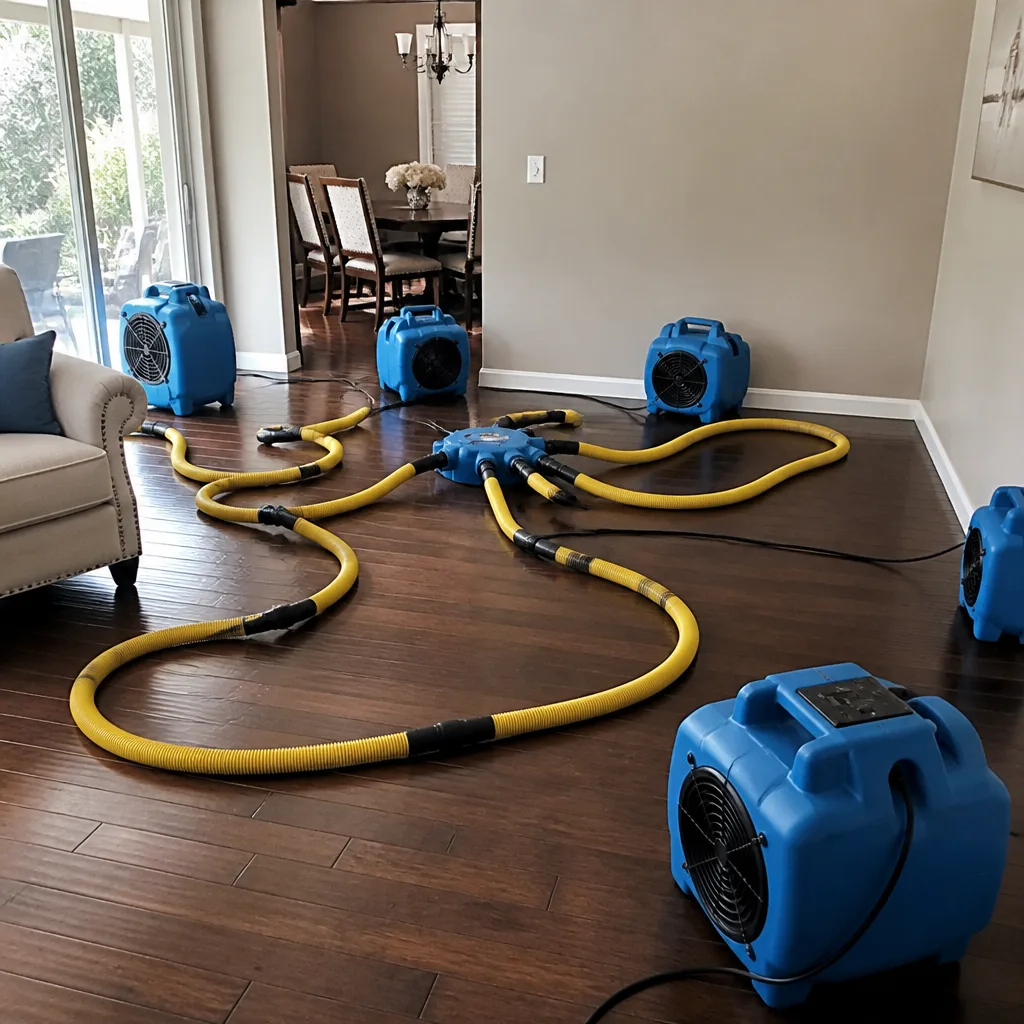
 Water damage drying
 Fire & smoke cleanup
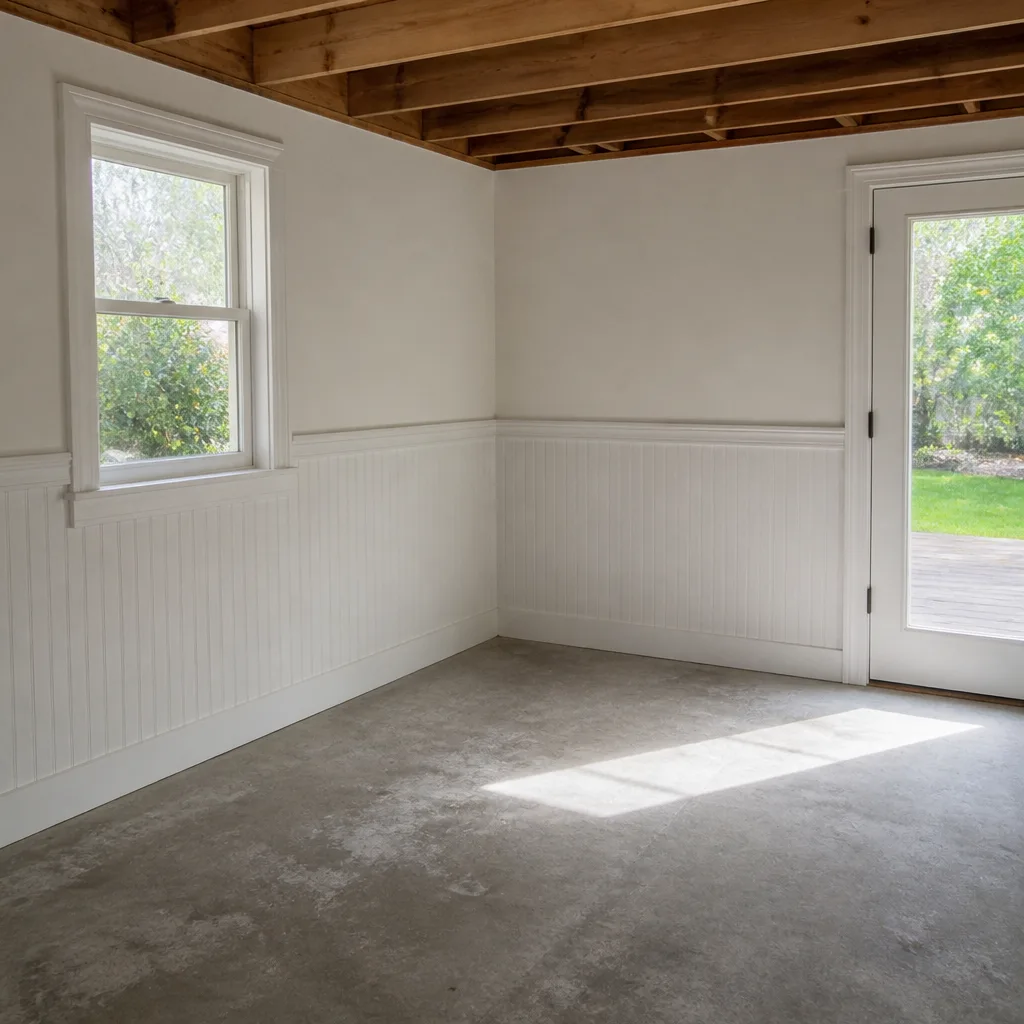 Mold remediation
 Storm response
 Sewage cleanup
 Reconstruction
Free visual inspection and a written scope of work before any mitigation begins - photos, moisture readings, and drying logs go in your claim file
The scope we write is the scope we bill. Anything new gets shown to you, in writing, before we touch it.
Get your free estimateMold Remediation in Brea: Fast Response, IICRC-Standard Removal
Mold remediation in Brea typically runs $2,800 – $6,500 depending on the affected square footage, whether structural drying is required, and whether containment is needed for hidden wall-cavity growth. A same-day inspection is available, and most jobs in Brea can be fully remediated within 3 – 7 days once the moisture source is stopped. Call (833) 589-9161 for a free estimate and a written scope before any work begins.
Stonecrest Water Damage has responded to mold in Brea’s 92821, 92822, and 92823 zip codes for long enough to know exactly what this city’s housing stock does when moisture gets trapped. That matters here. Brea is not a generic Orange County suburb. The flat, older core in 92821 is full of post-WWII tract homes on slab foundations with original cast-iron plumbing, while the northern 92823 edge sits against the Puente Hills and Carbon Canyon, where slope drainage creates an entirely different set of moisture problems. A mold company that treats those two zones the same is guessing. We don’t.
Key takeaways:
- Brea’s mold problems fall into two distinct patterns: legacy roof flashing failures in 92821 and slope drainage issues in 92823.
- IICRC-certified remediation processes, documented moisture mapping, and written scopes of work – not visual guesswork.
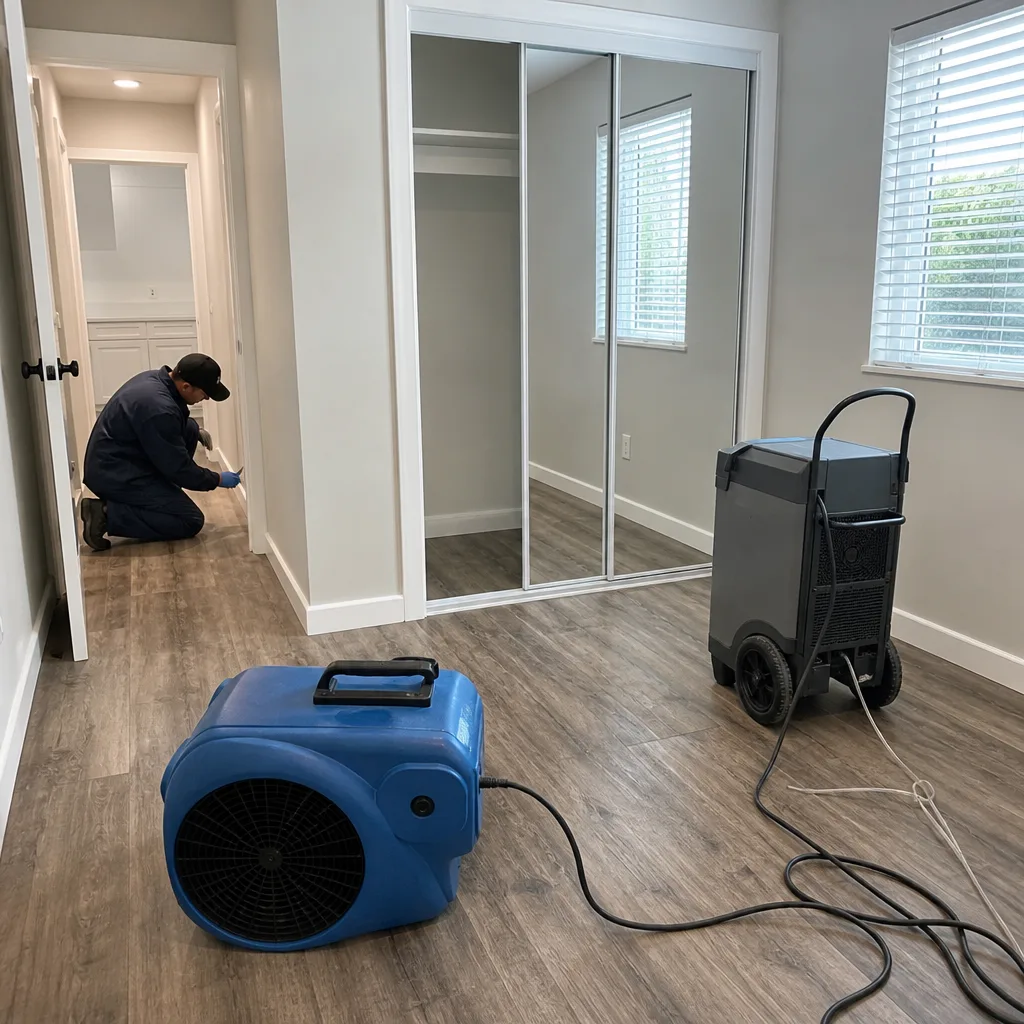
- Commercial-grade drying equipment from Dri-Eaz, Phoenix, and Injectidry on every job, including in-wall structural drying when demolition can be avoided.
- Photo documentation and direct adjuster coordination for insurance claims.
- One certified team handles water, mold, and fire – no subcontracting gaps between companies.
Why Mold Grows So Differently in Brea’s Two Zones
In Brea’s 92821 core, the mature eucalyptus and sycamore canopy over original flat-planed roofs creates a failure pattern we see constantly: a Santa Ana wind event or winter storm drops a limb onto aging roof-to-wall flashing, wind-driven rain saturates the wall cavity of a rear addition, and mold takes hold inside the framing before the homeowner ever sees a stain on the ceiling. This scenario plays out over and over across neighborhoods like the older tract homes around Brea Boulevard and Birch Street, and it’s almost never caught early because the leak is hidden behind stucco and original siding. By the time a musty odor shows up, the wall cavity has been wet for weeks.
The northern 92823 edge is a different story. Homes there sit on grading-dependent lots against the Puente Hills and Carbon Canyon. Slope drainage fails. Water migrates downslope into lower levels and crawl spaces. We’ve seen multiple Brea hillside homes where recurring basement or lower-floor mold was misdiagnosed as a one-time plumbing event, when the actual source was drainage water channeling toward the foundation every time it rained. Fixing the mold without addressing the grade and drainage is a guarantee that remediation will fail.
Information that only applies to Brea: In the 92821 neighborhoods, technicians doing mold assessments check ceilings of rear additions first – because that’s where original roof-to-wall flashing meets decades of tree canopy and the accumulated damage is most severe. No neighboring city has the same combination of flat-planed mid-century roofs and mature sycamore coverage at this density.
Restoration work we handle
Mold Removal Service in Brea
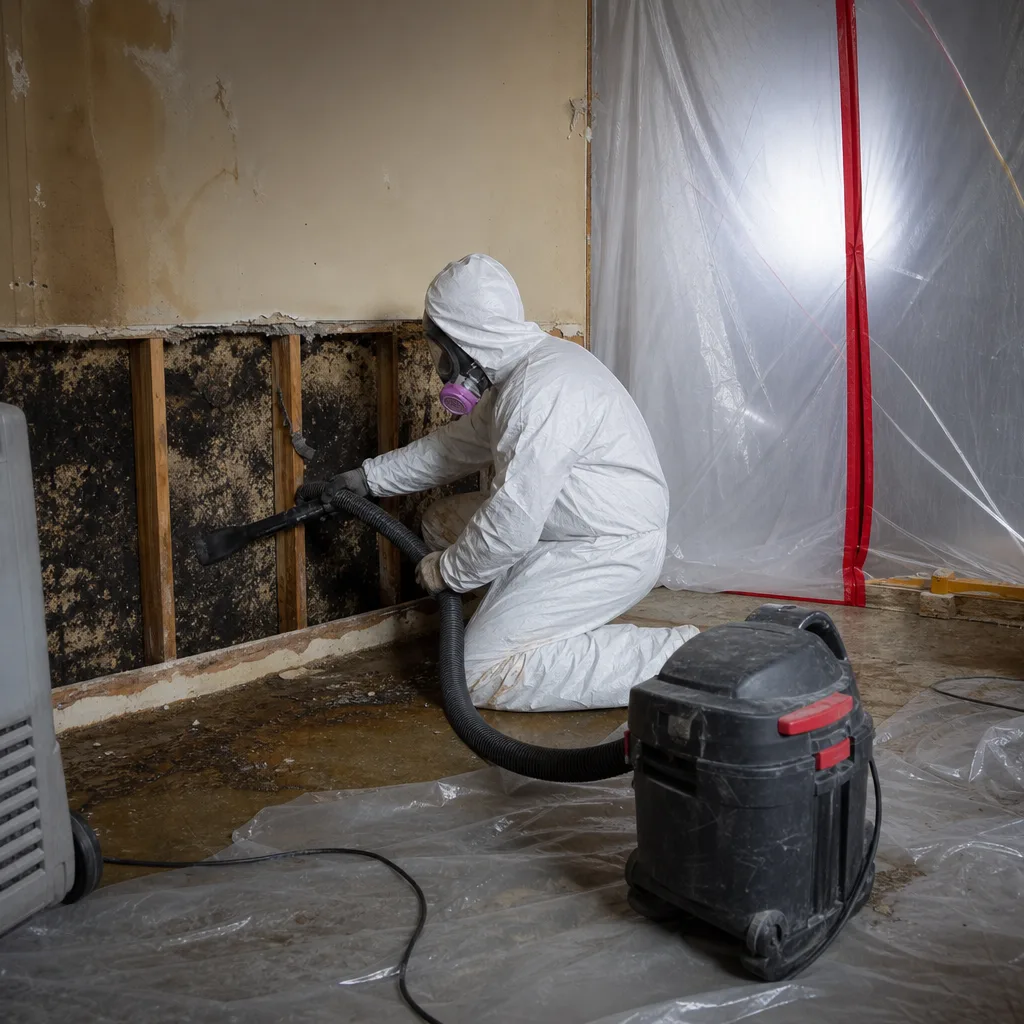
A Mold Removal Service in Brea is what you need when visible mold growth is confirmed on surfaces like drywall, framing, or insulation, or when a moisture event has created conditions where mold is almost certainly present even if you can’t see it yet. In Brea’s older tract homes, this often starts as a musty smell in a wall cavity behind a bathroom or a rear addition that’s been leaking slowly. A standard mold removal job in Brea runs $1,500 – $4,000 for contained areas up to about 100 square feet, with larger or multi-room jobs running higher. Removal includes containment, HEPA air filtration, controlled demolition of affected materials, antimicrobial treatment, and disposal of contaminated debris per IICRC S520 standards.
When Brea Homeowners Need Removal, Not Just Cleaning
Surface mold on tile or non-porous materials can sometimes be cleaned. But mold that has penetrated drywall, particleboard, or insulation in a Brea home needs removal – those materials are porous and can’t be salvaged once colonized. If you’re smelling mold but can’t see it, the growth is almost certainly behind a wall, under flooring, or in a ceiling cavity.
Removal in Brea’s Older Slab-Foundation Homes
Brea’s 92821 core has a recurring issue: original cast-iron plumbing buried in slab foundations. When those pipes fail, water seeps upward through the slab and into wall cavities and flooring, creating mold conditions that go undetected for months. We see this regularly – musty odors with no visible source, and the cause is a slab leak feeding mold inside the wall framing.
Mold Remediation Services in Brea
Mold Remediation Services in Brea go beyond removal to include the full scope of work: identifying and correcting the moisture source, measuring moisture levels with documented readings, containing the affected area, removing contaminated material, drying structural framing, applying antimicrobial treatment, and verifying the space meets clearance standards before reconstruction begins. A full mold remediation in Brea typically runs $2,800 – $6,500, with larger or multi-level jobs running higher. This is the difference between a contractor who patches the surface and one like Stonecrest – certified to IICRC standards, with a written scope agreed before work starts.
Documented Drying, Not Guesswork
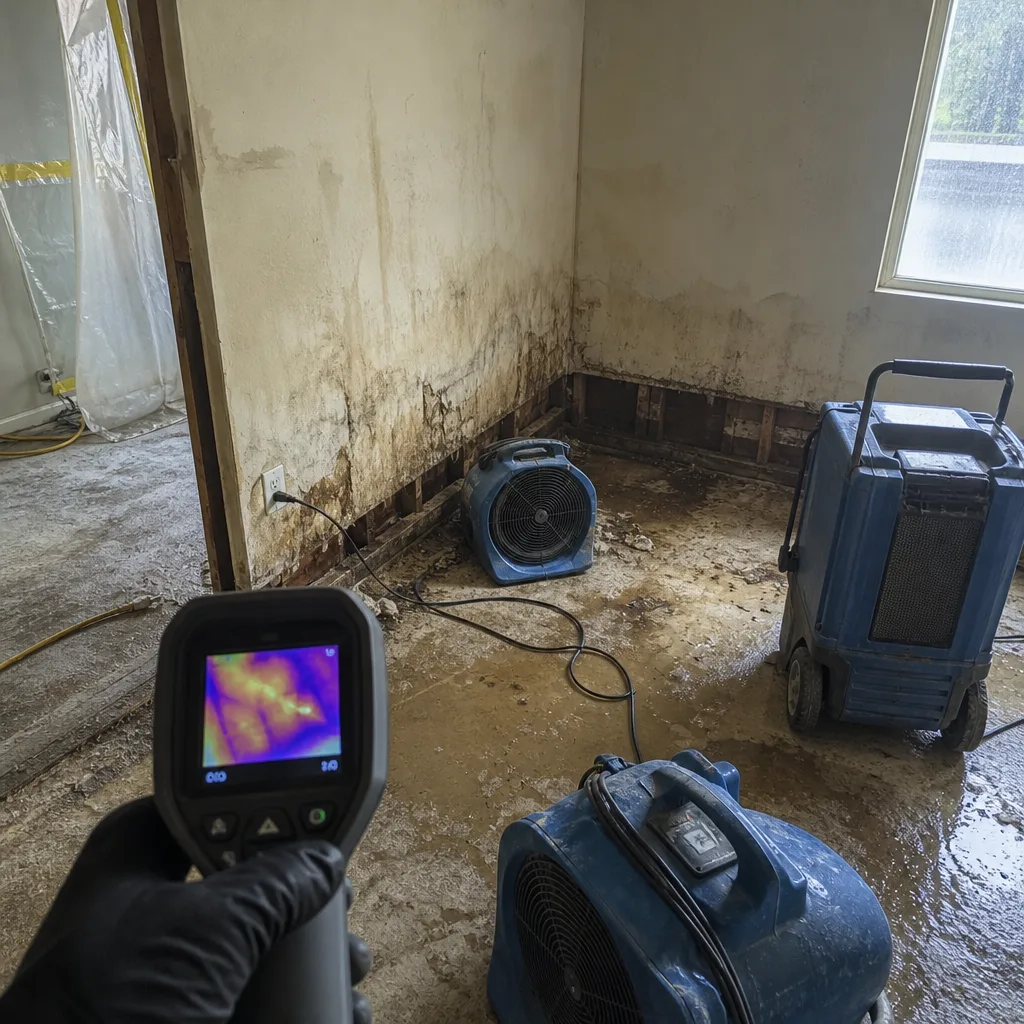
Every remediation we perform in Brea includes moisture mapping and documentation. We use Dri-Eaz and Phoenix drying equipment to reach IICRC S500/S520 moisture targets, with readings recorded at every stage. That documentation is what your insurance adjuster will ask for – and it’s what proves the work was done correctly rather than visually.
In-Wall Drying for Brea’s Hidden Wall Cavities
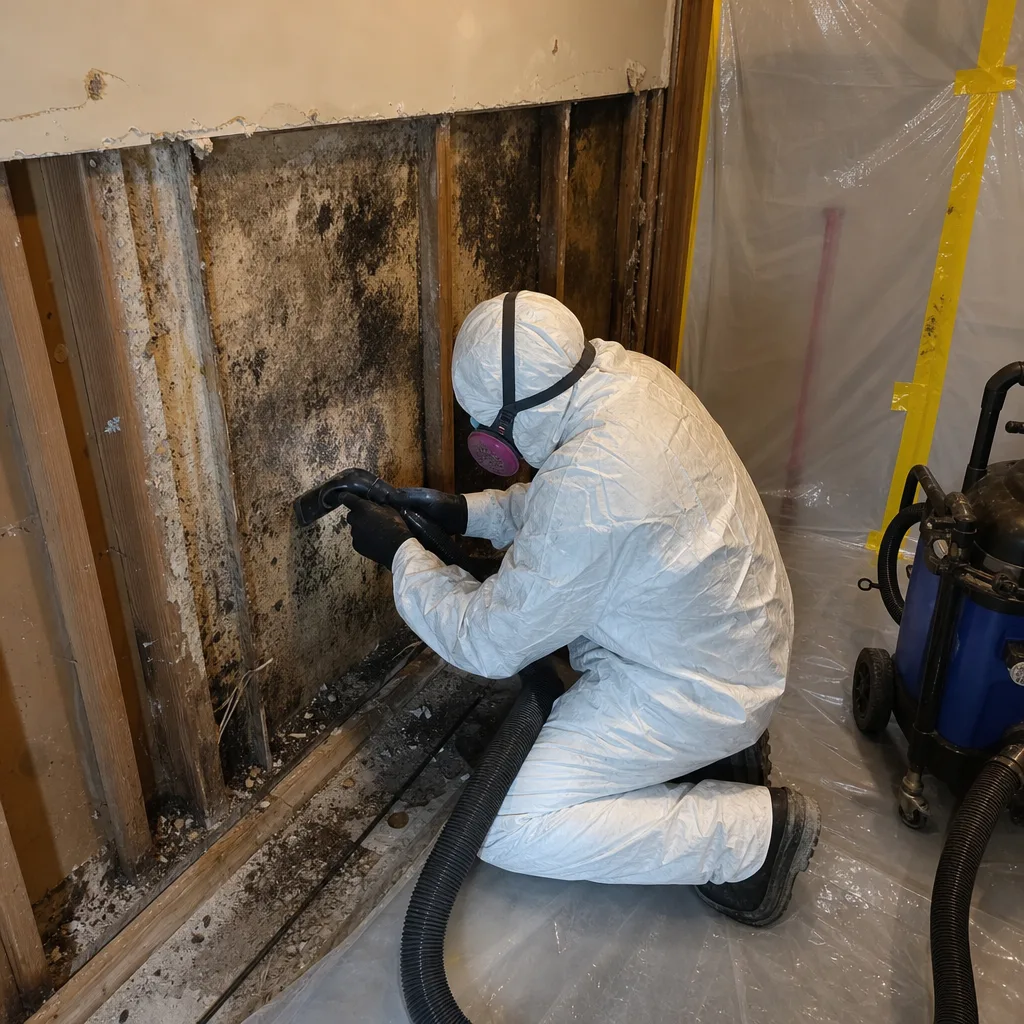
When Brea homes have mold inside wall cavities – especially rear additions with leaking roof-to-wall flashing – we use Injectidry systems to dry structural framing inside the cavity. This reduces unnecessary demolition and preserves more of the original structure. Where the framing is too far gone, we remove and replace it – but when it can be saved, we save it.
What happens when you call
- 1
A real person answersNo phone trees — you reach a local pro.
- 2
You get an upfront price rangeHonest numbers before anyone is dispatched.
- 3
A background-checked tech heads outLicensed & insured, dispatched right away.
- 4
You approve before work beginsNothing starts until you say go.
Trusted Equipment We Use on Brea Mold Jobs
Stonecrest Water Damage runs commercial-grade equipment from Dri-Eaz, Phoenix, XPOWER, B-Air, and Injectidry. These are the same systems used on large commercial loss sites, not rental-store machines. For Brea homeowners, that means drying targets are actually reached, not estimated. We stock common filters, HEPA media, and drying accessories locally, so there’s no multi-day wait for parts when a Brea job is mid-project. When you call for Mold Remediation in the 92821 or 92823 zip codes, the equipment that shows up is capable of doing the job the first time.
Common Mold Problems We See in Brea Homes
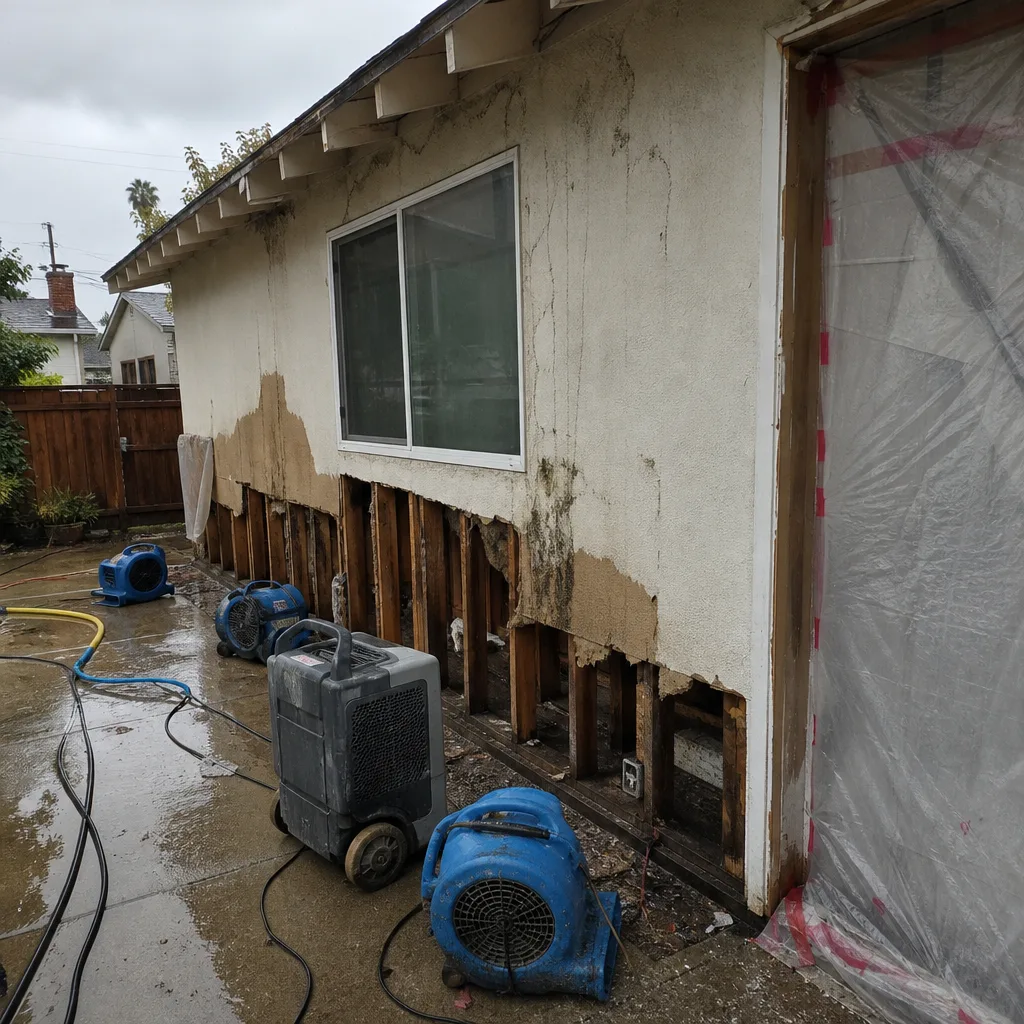
- Hidden wall-cavity mold behind rear additions with original flat-planed roofs. Aging roof-to-wall flashing fails under wind-driven rain or fallen limbs, often from mature eucalyptus and sycamore trees, and the wall cavity saturates silently for weeks before any visible sign appears.
- Mold from original cast-iron plumbing failures in 92821 slab foundations. These lines are 50 – 70 years old now. When they leak, water migrates up through the slab into wall cavities and flooring, and mold grows behind the surface where no one sees it until the odor gives it away.
- Slope drainage problems in Brea’s northern 92823 hillside homes. Grading-dependent lots against the Puente Hills and Carbon Canyon channel water toward foundations during storms. Lower levels and crawl spaces stay damp, and mold recurs until the drainage is corrected.
- Incomplete drying after water mitigation that misses moisture readings in rear additions and wall cavities. If a restoration crew skips the moisture map and just dries the visible surfaces, mold rebounds inside the framing weeks later. This is especially common in homes where the original leak was hidden.
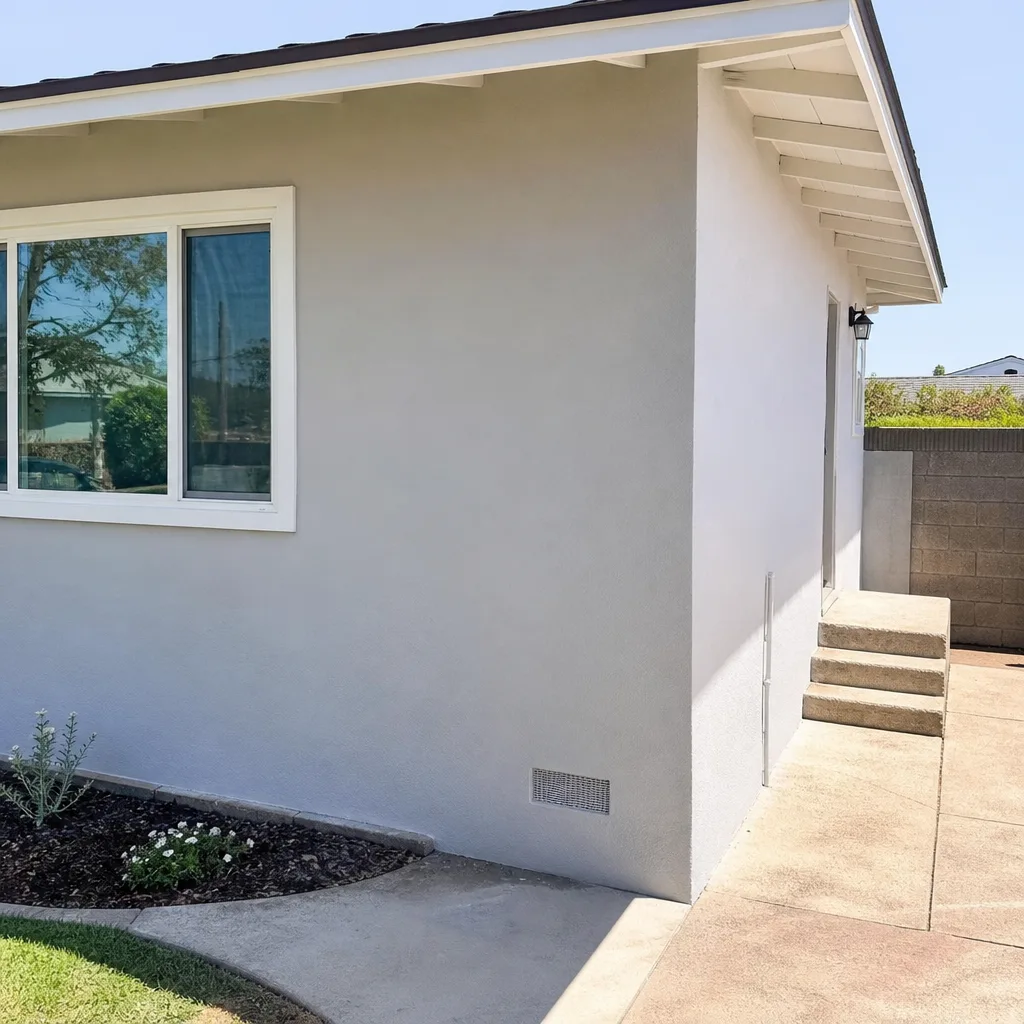
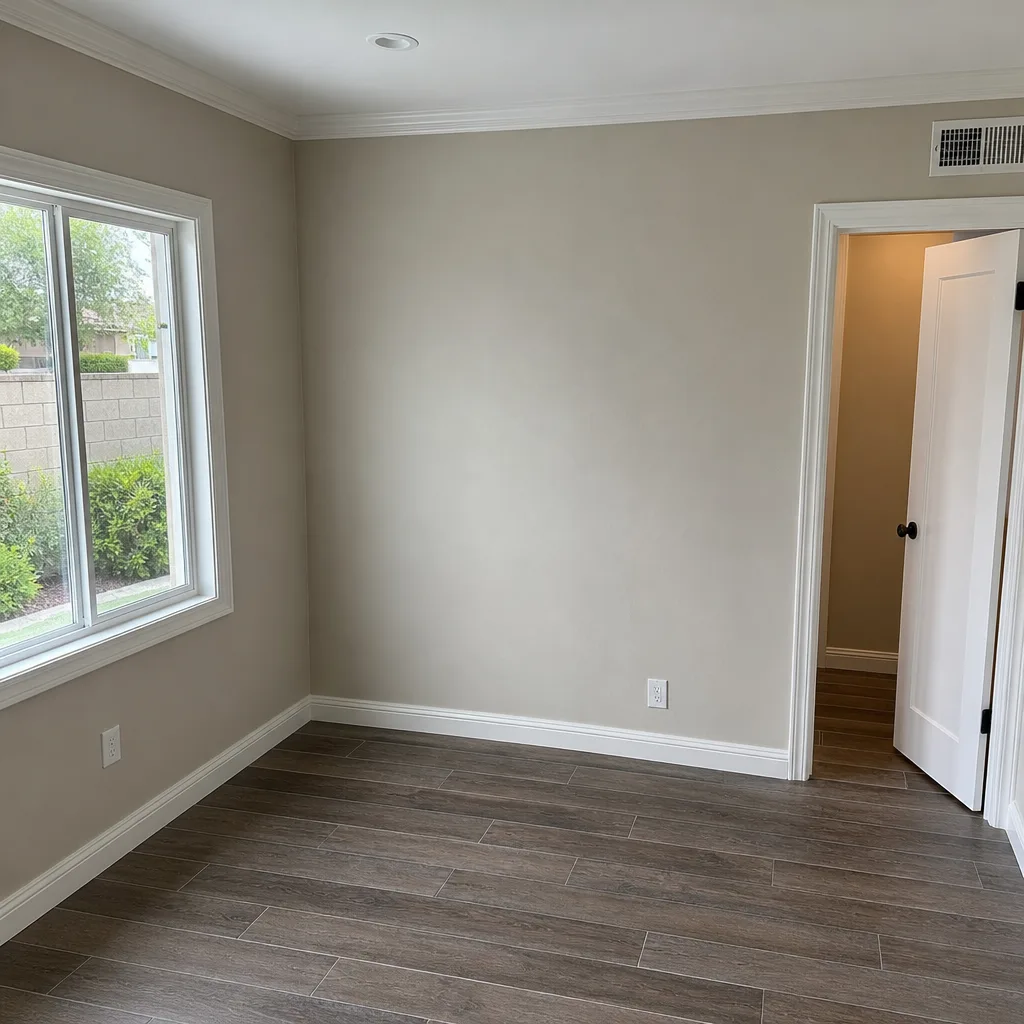
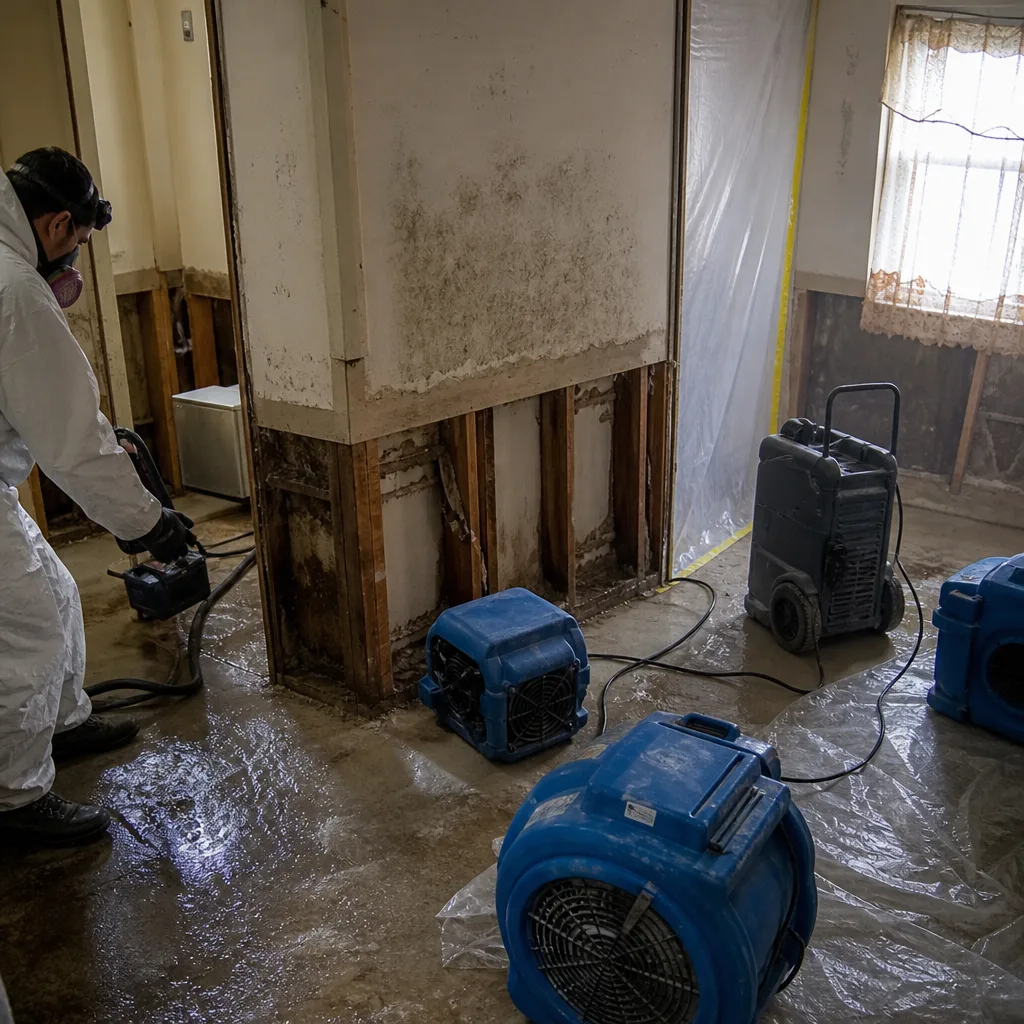
See the difference
 Before
 After
 Before
 After
 Before
 After
Pricing for Mold Remediation in Brea, CA
Here’s what Brea homeowners should expect for mold work, based on the scope we typically see in this city’s housing stock:
- Mold inspection & testing: $300 – $700 for a visual assessment with moisture readings and, when needed, air or surface sampling.
- Contained mold removal (under 100 sq ft): $1,500 – $4,000 including containment, HEPA filtration, demolition, treatment, and disposal.
- Full remediation with structural drying: $2,800 – $6,500 for multi-room work, wall-cavity drying, and clearance documentation.
- Crawl space mold treatment: $1,200 – $3,500 depending on square footage, access, and whether vapor barrier replacement is needed.
What actually moves the price in Brea: whether the moisture source is still active (slab leak, roof flashing failure, drainage issue), how much framing needs to be removed versus dried in place, and whether containment is required across multiple rooms or levels. Every estimate is free, and we put the scope in writing – including the moisture readings that justify each recommendation – before any work begins. Call (833) 589-9161 for an exact quote on your Brea home.
How Our Brea Mold Remediation Process Works
We don’t start a Brea mold job with demolition. We start with measurement. Here’s the sequence:
- 1
Inspection and moisture mapping. We identify the moisture source, take readings across affected and adjacent materials, and determine the full extent of contamination – including hidden cavities behind rear additions and under slab-leak paths.
- 2
Written scope of work. You get a documented plan with line-item pricing and the moisture data behind each recommendation. Nothing starts until you approve it.
- 3
Containment and air filtration. We set up negative-air containment with HEPA filtration so mold spores don’t spread through the rest of the Brea home during removal.
- 4
Removal and structural drying. Affected materials come out. Structural framing gets dried – often with Injectidry in-wall systems – until IICRC moisture targets are met.
- 5
Antimicrobial treatment and clearance. We treat all exposed surfaces, run final moisture readings, document everything, and confirm the space meets clearance standards.
We Also Serve Cities Near Brea
Stonecrest Water Damage is based in Buena Park and serves Brea plus the surrounding North Orange County cities, including Placentia, Fullerton, Yorba Linda, and La Habra. If you’re in one of those neighboring cities and dealing with mold, water, or fire damage, the same IICRC-certified team and commercial-grade equipment are available on the same schedule.
Serving Brea, CA — Our Local Coverage Area
We’re based in the Brea area and know this community well. Use the map below to see our service coverage — if you’re nearby, we can almost certainly help.
FAQs About Mold Remediation in Brea
Brea’s semi-arid climate means roofs and stucco crack during long dry spells, then leak dramatically when atmospheric-river storms arrive. In 92821, the original flat-planed roofs on 1950s – 1970s tract homes are especially vulnerable – especially rear additions where roof-to-wall flashing has aged under decades of eucalyptus and sycamore canopy. A single limb strike or wind-driven rain event saturates the wall cavity, and mold establishes within 48 – 72 hours in Brea’s warm temperatures. If you notice a musty smell after a storm, call (833) 589-9161 immediately – the growth is already active behind the surface.
We treat the moisture source first, not the mold alone. In Brea’s 92823 hillside homes against the Puente Hills and Carbon Canyon, that means identifying how slope drainage is channeling water toward the foundation or crawl space. We assess grading, downspout discharge, and drainage systems as part of the remediation scope. If drainage isn’t corrected, the mold will return regardless of how thorough the removal is. Our team can coordinate drainage corrections with the remediation work so the whole problem is addressed in one scope.
Yes. A full repipe is rarely required for mold remediation. What matters is stopping the active leak. In many 92821 slab-foundation homes, that means pinpointing the leaking cast-iron section and repairing or replacing just that segment. We coordinate with a licensed plumber to stop the moisture source, then proceed with drying and remediation. The repipe decision is separate from the mold scope – and we won’t push one on you unless the plumbing condition genuinely warrants it.
In Brea’s 92821 core, the mold we see most often traces to Category 1 clean-water sources that sat in place long enough to become a problem: slab-leak plumbing failures, roof flashing leaks from wind-driven rain, and overflow events that soaked into drywall and wall cavities. Left unattended for more than 48 – 72 hours, clean water becomes a mold breeding ground. The issue isn’t the water’s contamination level at the source – it’s the time the moisture spent hidden inside Brea’s wall assemblies.
Mold doesn’t return after remediation unless moisture returns. In Brea’s semi-arid climate, the prevention plan is specific to your home’s zone: in 92821, that means repairing or replacing aging roof-to-wall flashing on rear additions and checking for slab leaks in original cast-iron lines; in 92823, it means correcting slope drainage and downspout discharge before the next storm season. We document moisture readings at every stage so you have proof the structure was dry when we finished. That documentation matters – for your own peace of mind and for any future disclosure or insurance claim.
Contact Stonecrest Water Damage for Mold Remediation in Brea
If you’re dealing with mold in a Brea home – whether it’s a musty odor in a 92821 tract house, visible growth after a storm in a rear addition, or recurring moisture in a 92823 hillside property – call (833) 589-9161 for a free estimate. We’ll send a certified technician to assess the situation, document the moisture readings, and give you a written scope before any work begins. No subcontracting, no guesswork, and no pressure. Just measured, documented mold remediation done to IICRC standards.
Written by Neil Stratton, Owner at Stonecrest Water Damage, serving Brea and the surrounding North Orange County communities with IICRC-certified mold remediation, water damage restoration, and fire damage restoration.