
 Water damage drying
 Fire & smoke cleanup
 Mold remediation
 Storm response
 Sewage cleanup
 Reconstruction
Free visual inspection and a written scope of work before any mitigation begins - photos, moisture readings, and drying logs go in your claim file
The scope we write is the scope we bill. Anything new gets shown to you, in writing, before we touch it.
Get your free estimateFast, Reliable Water Damage Restoration Across Villa Park
Water intrusion in Villa Park rarely stays contained to one room, or even one structure. The winding private lanes off Santiago Boulevard and Villa Park Road have no storm sewers, so a winter rain event sends hillside runoff straight toward low-lying rear additions, detached casitas, and pool houses across the city’s half-acre-plus estates. That’s why our Water Damage Restoration crews approach every Villa Park job as a multi-structure drying project, not a single-room cleanup. We stage out of Buena Park and can typically reach any address in the 92861 ZIP within 45 to 60 minutes, even on the narrow, unlit driveways that make equipment logistics harder here than in nearby tract-home cities. Call (833) 589-9161 and we’ll walk you through what’s happening and what comes next.
Why Stonecrest Water Damage Is Villa Park’s Preferred Water Damage Restoration Company
Villa Park homeowners don’t call a restoration company casually. Most properties are 1960s to 1990s custom-built ranch and estate homes with original tile roofs, flat or low-slope roof sections, and extensive slab foundations. Additions, casitas, barns, and pool houses mean water events spread across outbuildings that a general contractor would overlook. Our technicians understand this housing stock. We know that a detached pool house with a wind-rated door that fails at the threshold can hide saturated wall cavities for days before anyone notices. And we know that the private lanes off Santiago Boulevard won’t fit a standard staging trailer, so we bring equipment sized for tight access.
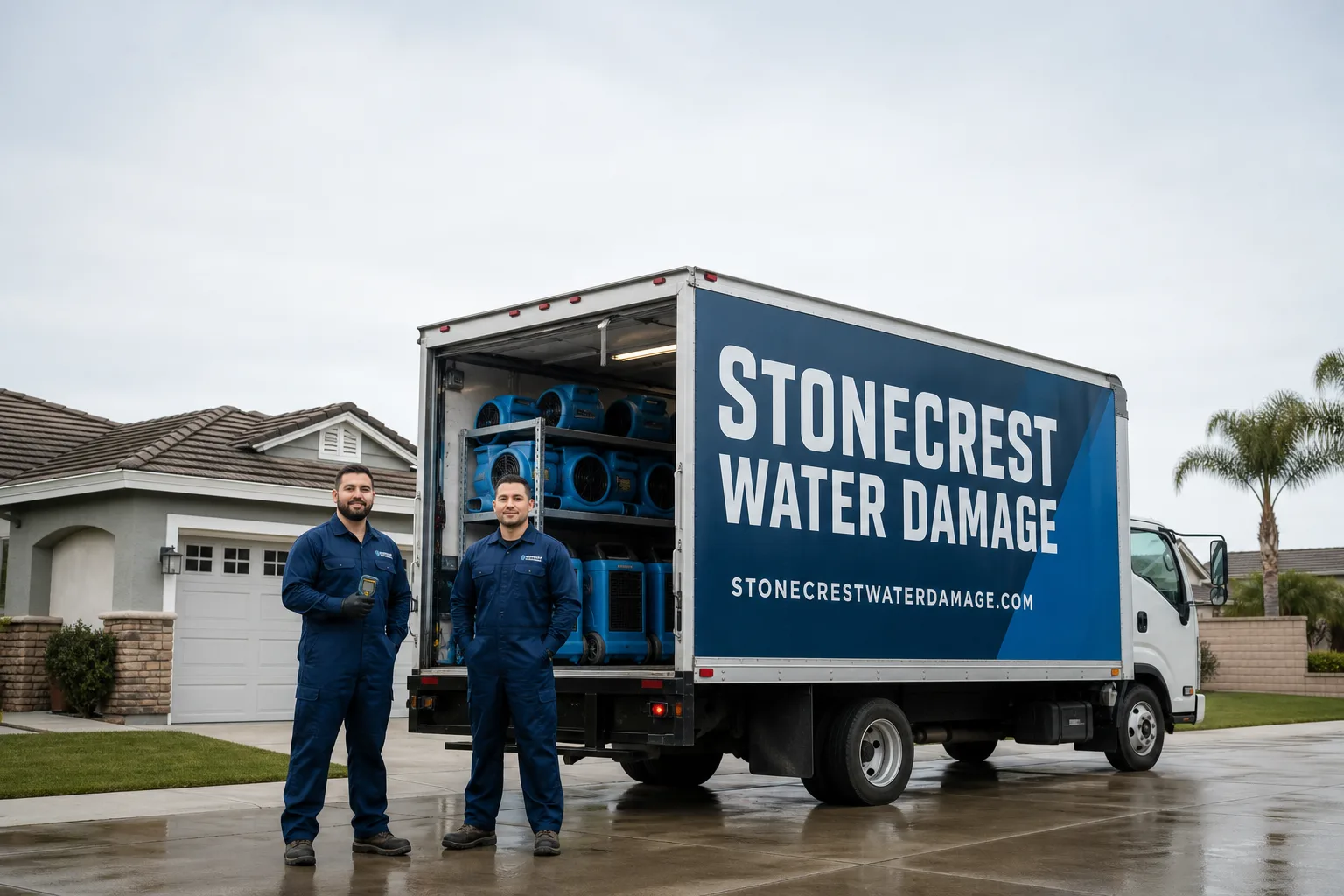
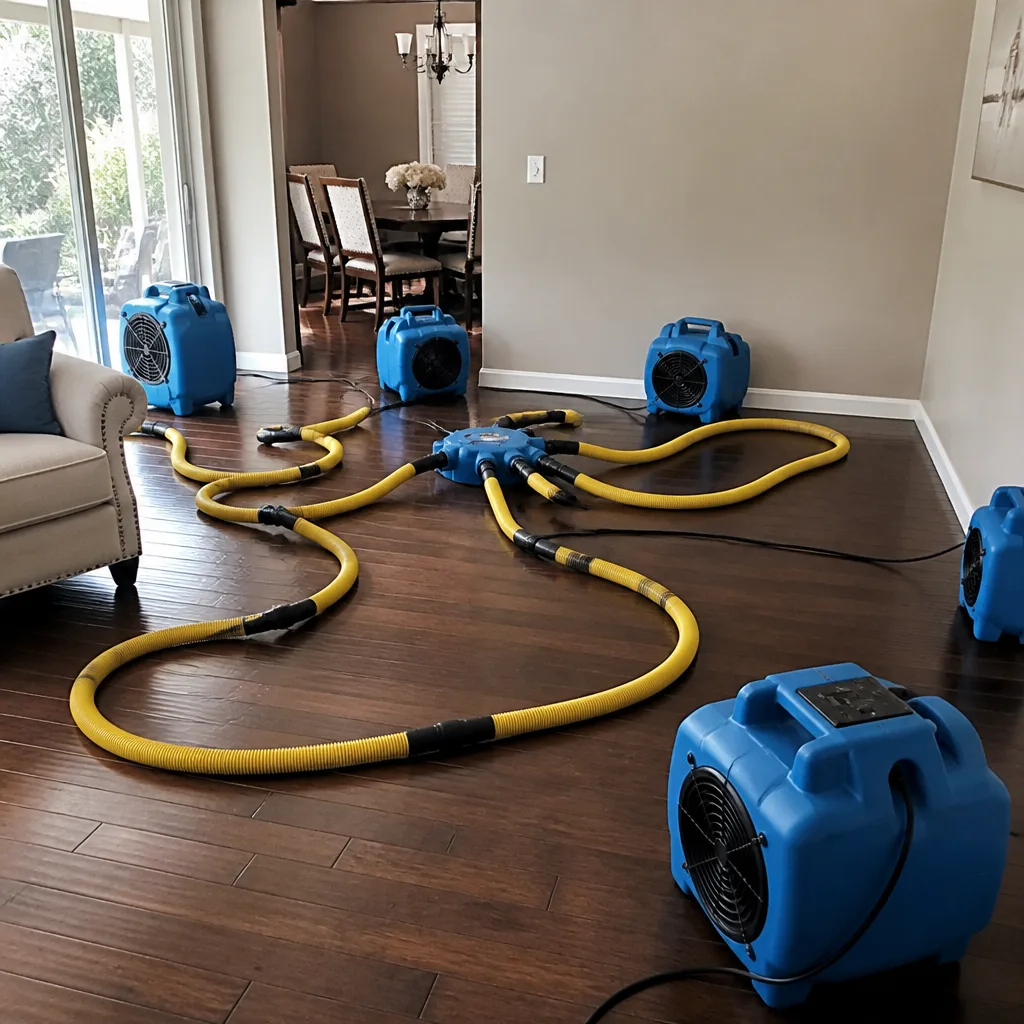
Certified to IICRC standards, our team runs commercial-grade drying systems from Dri-Eaz and XPOWER, not rental-store machines. We document every moisture reading, every drying log entry, and every scope item in writing because we know Villa Park homeowners are often working through an adjuster who expects verifiable data. Neil Stratton leads our crews with a simple standard: restore to pre-loss condition per IICRC S500/S520, with records that hold up to third-party inspection. That’s the difference between a dry structure and a documented dry structure.
Restoration work we handle
How Much Does Water Damage Restoration in Villa Park Cost?
- Water extraction, single room: $450 – $900
- Water extraction plus structural drying, main house: $1,200 – $2,600
- Multi-structure storm runoff (main house + casita/pool house): $1,800 – $4,200
- In-wall drying via Injectidry, per affected wall cavity: $300 – $700
- Category 3 storm water remediation with antimicrobial treatment: $2,500 – $5,500
These are for mitigation only. Reconstruction, flooring replacement, and finish work are scoped separately and priced in writing before any materials are ordered. Call (833) 589-9161 for a free estimate. We’ll come out, map the moisture, and give you a scope of work you can hand to your adjuster.
Emergency Water Extraction in Villa Park
Emergency water extraction in Villa Park is the first move after a storm pushes runoff into a low-lying addition or a burst supply line lets go inside a wall. We show up with truck-mounted and portable extraction units, pull the standing water, and start mapping moisture across the slab and wall cavities. The goal in the first four hours is to stop category 1 water from degrading to category 2 or 3, which happens faster in Villa Park’s semi-arid heat but still moves quickly when water sits against drywall and framing.
Why Villa Park’s No-Storm-Sewer Lanes Change the Math
When Santiago Canyon rain events send water off the hillsides and through the groves, it arrives at your rear addition carrying silt, organic matter, and whatever the runoff picked up from horse facilities and mature landscaping along the way. That’s rarely clean water. We treat post-storm extraction in Villa Park as category 2 by default until testing confirms otherwise. We also know that access on private lanes off Villa Park Road means staging extraction units closer to the rear of the property, not at the curb, because there often is no usable curb.
Extraction Logistics on Private Lanes and Long Driveways
We’ve worked driveways in Villa Park that run 100 feet or more from the street with no hydrant access and no room to turn a trailer around. We plan for that. Our crews carry portable XPOWER extraction units and compact dehumidifiers that go in through side gates and around pool equipment, not through the front door. The time saved by not fighting the driveway is time spent pulling water out of your casita.
Emergency Water Removal in Villa Park
Emergency water removal in Villa Park means getting standing water out of a structure that’s still receiving runoff, which changes the sequence. We often set up temporary barriers and diversion channels while extraction is underway on large estate lots, because if the water source is still moving, every hour of pumping buys less than the last. We’ve done this on canyon-edge properties near Irvine Lake where winter storms drive water down natural drainage paths that were never engineered for the current roofline.
When a Detached Pool House Becomes the Problem
A wind-rated or impact-rated door that fails at the threshold during a storm lets water wick into the wall cavity silently. By the time you see staining on the baseboard, the cavity is saturated and the bottom plate is wicking moisture up into the framing. We open small access points rather than gutting the wall, then run Injectidry in-wall drying to pull moisture from the cavity without removing the original wood. On a 1970s pool house with original siding, that’s the difference between a repair and a partial rebuild.
Moisture Mapping Before Anyone Tows a Dryer
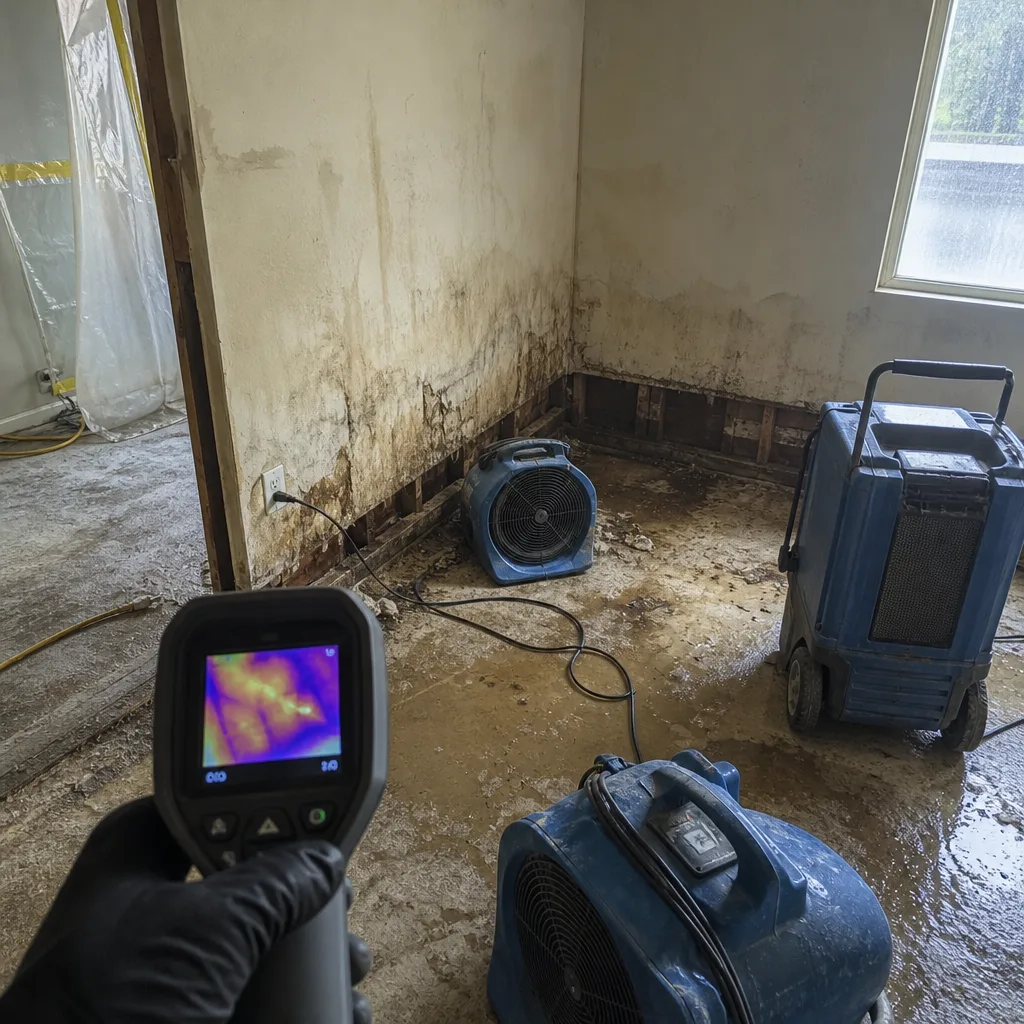
We don’t set equipment until we know where the water is. Thermal imaging and penetrating moisture meters tell us how far the water has traveled under the slab, behind the baseboard, and into the wall cavities. That data drives equipment placement and gives your insurance adjuster a documented baseline. In Villa Park, where detached structures mean water can sit unnoticed for days, that baseline is the only way to prove what the storm did versus what was already there.
Trusted Brands We Service in Villa Park
We maintain a local parts and equipment inventory for Villa Park homeowners, including replacement thresholds, weatherstripping, and gaskets for wind-rated and impact-rated doors, plus the full range of XPOWER and Dri-Eaz drying components. If your pool house door failed at the threshold during a Santa Ana wind event, we can typically source the matching threshold and reinforce the frame without waiting on a specialty order. Our affiliation with RIA and IFA maintains a chain of accountability for parts provenance and installation standards, which matters when an insurance claim depends on documentation that the repair was done to spec.
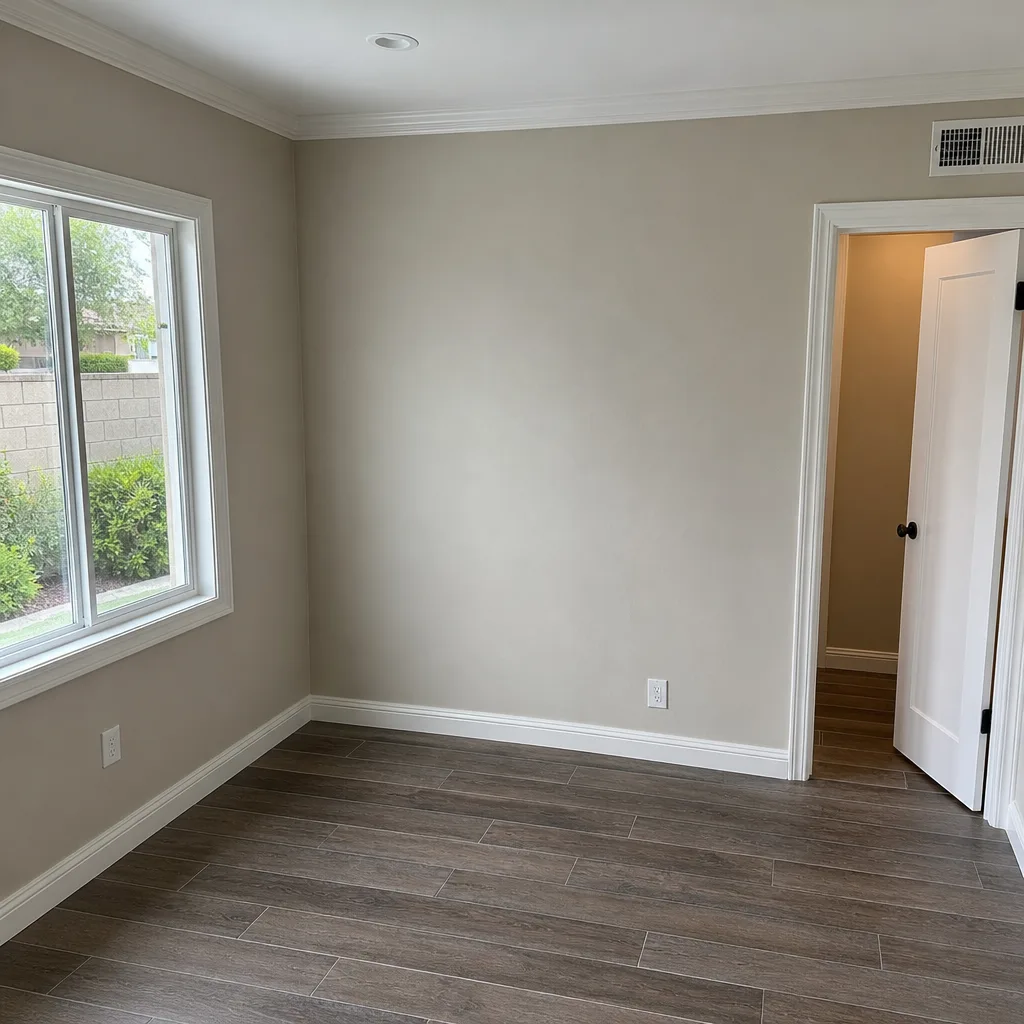
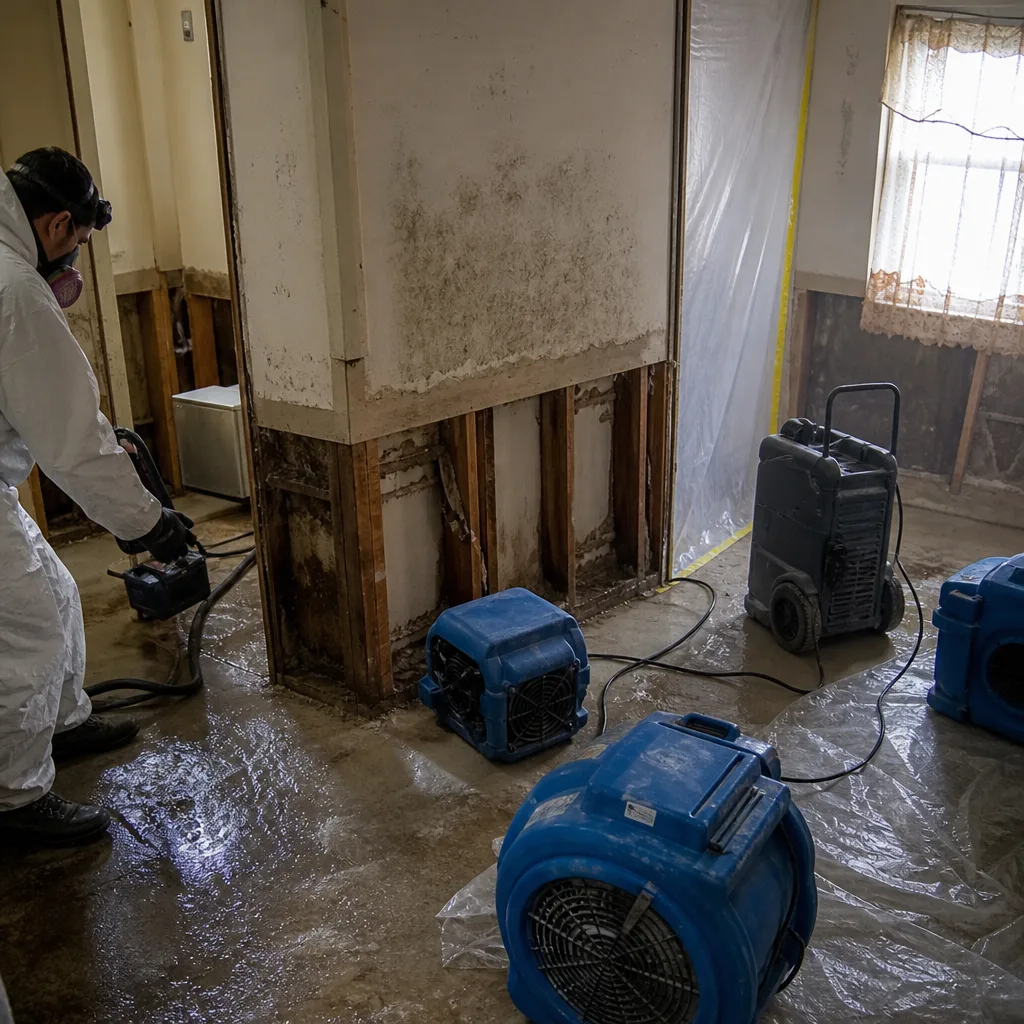
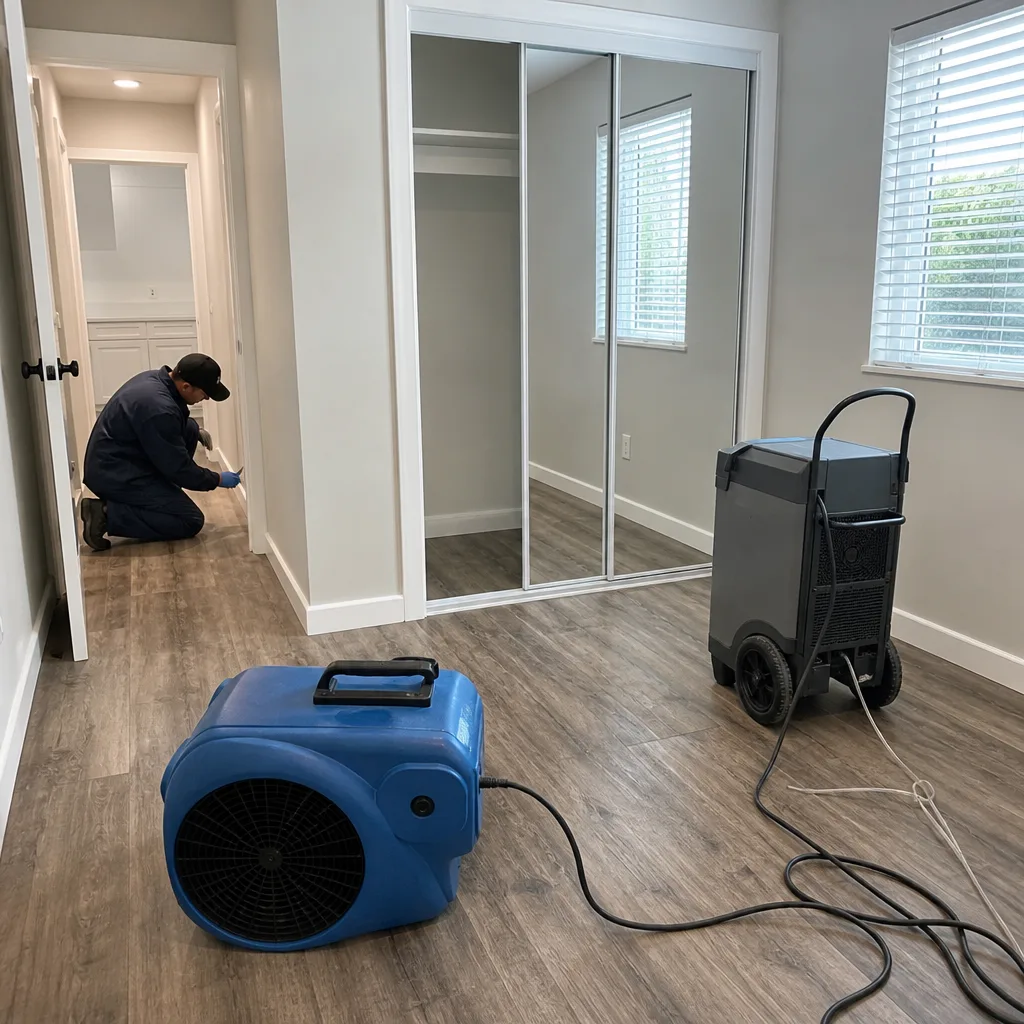
See the difference
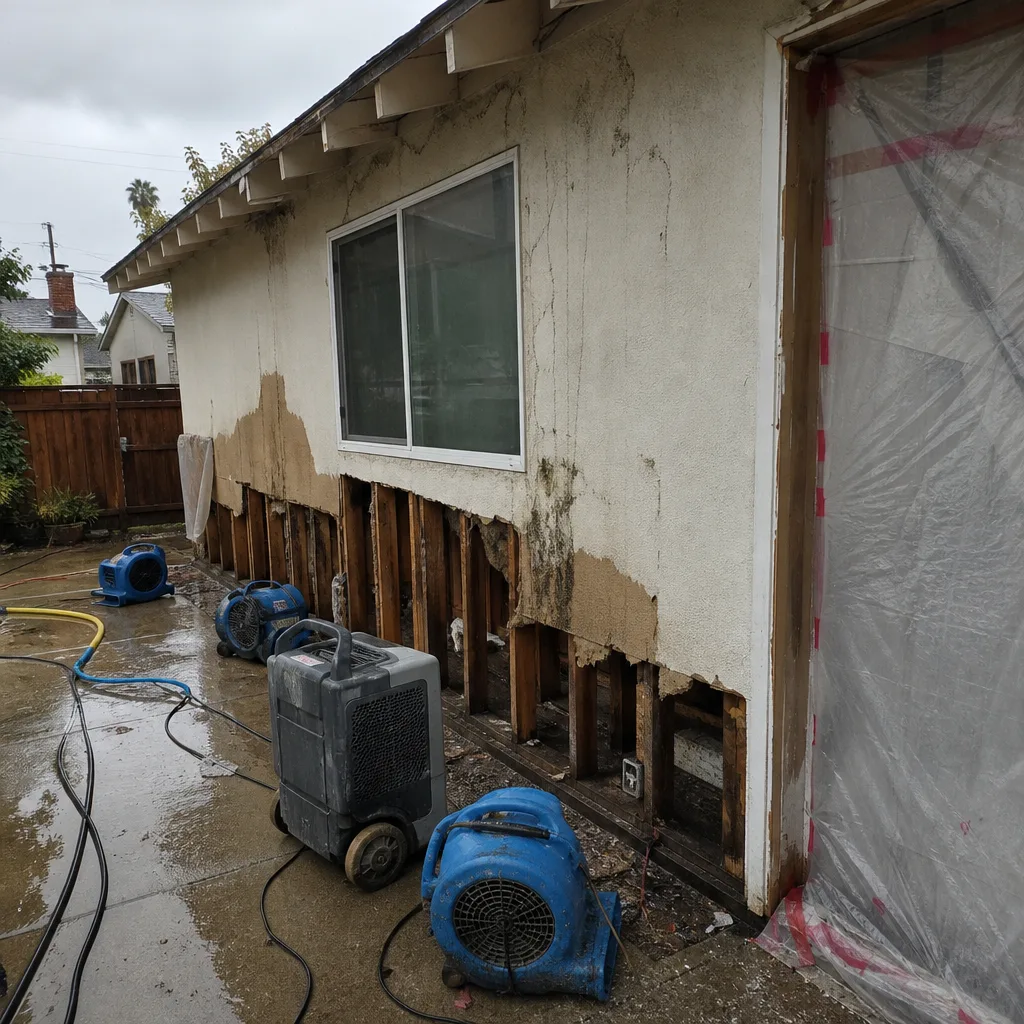 Before
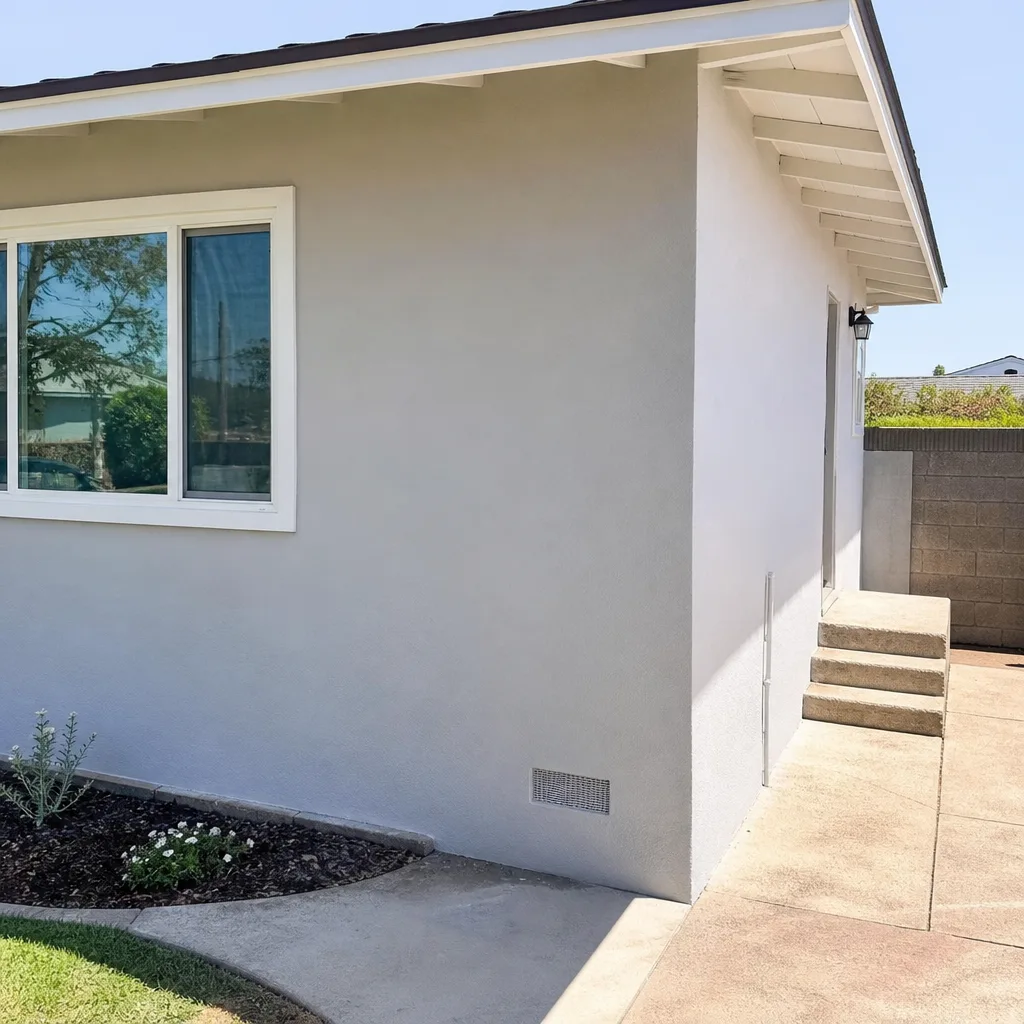 After
 Before
 After
 Before
 After
Common Water Damage Restoration Problems We See in Villa Park Homes
- Runoff overwhelming older drainage on large lots. When a winter storm drops two inches in an afternoon, the natural drainage paths from the hillsides and groves can’t keep pace, and water funnels toward the lowest point, which is often a rear addition or sunken pool house built decades after the original grading was done.
- Wind-rated doors failing at the threshold, not the panel. The slab joint, the weatherstripping, and the threshold seal are the weak points. We regularly find saturated wall cavities behind doors that still look structurally sound from the outside, which is why we check thresholds on every post-storm assessment in Villa Park.
- Detached structures masking the true scope of a water event. A homeowner calls us for a wet carpet in the main house, and we find the casita took runoff through a side door that nobody checked because nobody was sleeping in there. Multi-structure estates need a full property assessment after a storm, not a room-by-room look.
- Category 1 water degrading while equipment staging stalls. On narrow private lanes without hydrant access, the extra 30 to 45 minutes it takes to position equipment can be the difference between water you can extract and water that requires antimicrobial treatment. We pre-stage smaller, portable units when our dispatch knows the address is on a driveway-only lane.
Pricing for Water Damage Restoration in Villa Park, CA
We Also Serve Cities Near Villa Park
Our crews work throughout northern and central Orange County, which means Villa Park homeowners get a team already familiar with the local housing stock and storm patterns. We serve Villa Park plus Orange, North Tustin, Placentia, and Anaheim. If you manage properties in multiple nearby cities, one call covers the full route.
Serving Villa Park, CA — Our Local Coverage Area
We’re based in the Villa Park area and know this community well. Use the map below to see our service coverage — if you’re nearby, we can almost certainly help.
FAQs About Water Damage Restoration in Villa Park
After a storm, how quickly should I address water intrusion in a detached pool house or casita in Villa Park?
Within 24 hours, and ideally within 8. Category 1 storm water that sits in a detached structure in Villa Park’s heat begins degrading to category 2 within a day or two, especially if it picked up grove debris or horse facility runoff on the way in. After 72 hours, you’re likely looking at antimicrobial treatment and possible wall cavity access work. Call (833) 589-9161 the moment you see standing water in an outbuilding, even if the main house feels dry.
Why do wind-rated doors matter for water damage in Villa Park’s canyon-edge estates?
Wind-rated and impact-rated doors in Villa Park are designed to hold up to the Santa Ana wind loads that sweep off Santiago Canyon, but the failure point is almost always the threshold seal and the slab joint, not the panel. When wind drives rain horizontally, water is pushed under the door and into the wall cavity, where it wicks silently. We inspect and reinforce thresholds as part of every post-storm mitigation because a door that looks fine from the outside is often the source of an entire wall cavity’s saturation. Call (833) 589-9161 for a threshold assessment before the next wind event.
Can you stage equipment on narrow private lanes off Santiago Boulevard?
Yes. We plan Villa Park access as a compact, portable operation because many lanes off Santiago Boulevard and Villa Park Road have no storm sewers, no hydrants, and no street parking to speak of. Our crews bring XPOWER portable extraction units and compact dehumidifiers sized to go through side gates and around pool equipment rather than through the front entry. That’s a standard part of our Villa Park dispatch planning.
What’s the difference between category 1, 2, and 3 water in a Villa Park home?
Category 1 is clean water from a supply line or a failed water heater. Category 2 is gray water with contaminants, which includes storm runoff that has crossed grove soil, horse facilities, or mature landscaping before entering your structure. Category 3 is grossly contaminated water, typically from sewage or long-standing flood water. In Villa Park, post-storm intrusion is rarely category 1, which is why we treat runoff events as category 2 by default and adjust based on testing. Call (833) 589-9161 if you’re unsure what you’re dealing with.
Do you provide drying logs and a scope of work for insurance after storm damage?
Yes, in every case. We document initial moisture readings, equipment placement, daily drying log readings, and final moisture content, all in a format insurance adjusters and third-party inspectors recognize. Villa Park storm claims often involve multiple detached structures, so we separate the scope by building and include photo documentation of each. Call (833) 589-9161 and we’ll send a scope of work you can submit to your adjuster directly.
Written by Neil Stratton, Owner at Stonecrest Water Damage, serving Villa Park and surrounding Orange County communities.