 Water damage drying
 Fire & smoke cleanup
 Mold remediation
 Storm response
 Sewage cleanup
 Reconstruction
Free visual inspection and a written scope of work before any mitigation begins - photos, moisture readings, and drying logs go in your claim file
The scope we write is the scope we bill. Anything new gets shown to you, in writing, before we touch it.
Get your free estimateFast, Reliable Water Damage Restoration Across Orange
Water damage restoration in Orange typically costs $1,800 – $6,500 depending on the water category, affected square footage, and whether structural cavities need drying. Most jobs in Orange can have a crew on-site within 60 – 90 minutes, and extraction usually starts the same day you call. If you’re dealing with a burst supply line, an overflowing washing machine, or storm water pushing into a raised foundation, call (833) 589-9161 now. We know Orange’s housing stock, its tight Old Towne streets, and its crawlspaces. That local knowledge means we don’t waste hours figuring out your house while water keeps moving through it.
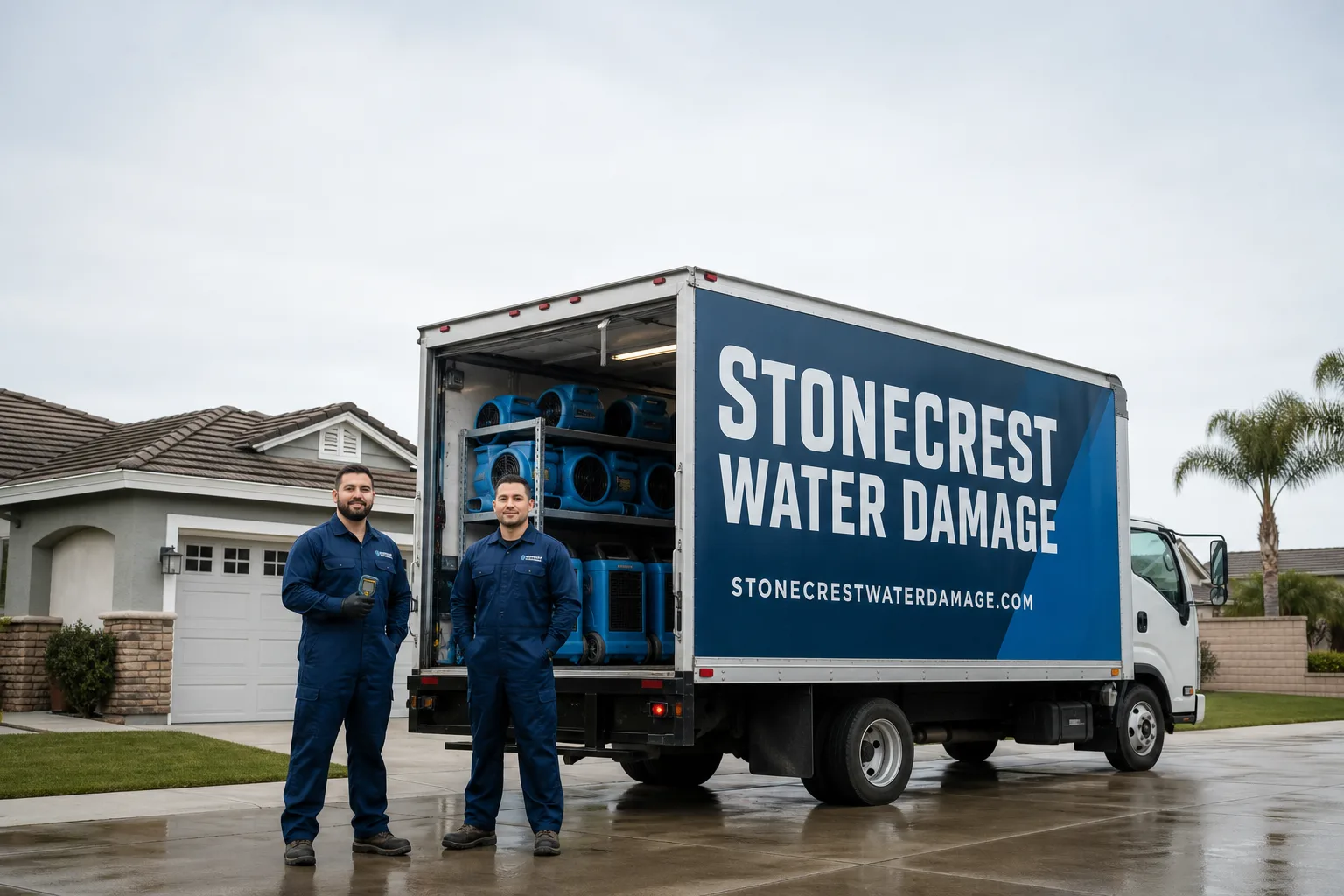
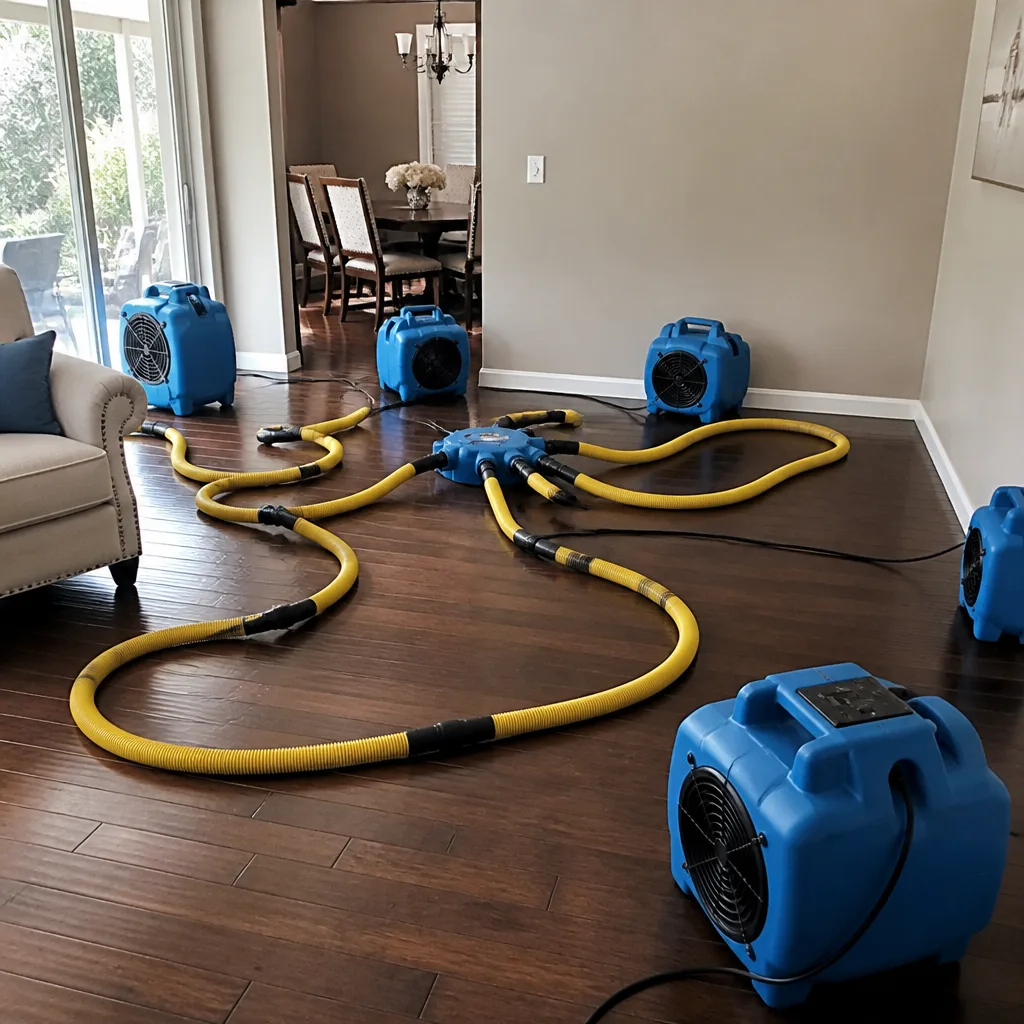
Stonecrest Water Damage runs commercial-grade drying systems, not rental-store fans. Our Water Damage Restoration team carries Dri-Eaz and Phoenix equipment on every truck, and we document moisture levels with meters and thermal imaging before, during, and after drying. The goal isn’t just to make it look dry. It’s to get the structure back to a measurable, documentable standard that an insurance adjuster or third-party inspector will sign off on.
Why Stonecrest Water Damage Is Orange’s Preferred Water Damage Restoration Company
Orange homeowners call us because we treat this city’s housing stock as its own restoration category. A 1910 Craftsman near the Plaza and a 1965 ranch in east Orange share a ZIP code, not a drying strategy. Old Towne’s lath-and-plaster walls hold water differently than drywall over a raised foundation. If a crew treats both the same way, one of them gets torn out unnecessarily or left wet behind the surface. We run moisture mapping before we set a single air mover, and we calibrate drying to the materials we’re actually dealing with. That’s the difference between a restoration and a patch job, and Orange homeowners feel it in the final result.
We’re certified to IICRC standards and affiliated with RIA and IFA. Neil Stratton, who leads Stonecrest Water Damage, built the company around documented drying protocols, not guesswork. That matters in a city where pre-1970s homes can hide asbestos in plaster and lead in old paint. You want a crew that knows how to contain those materials, not one that rips into the wall without checking. Orange residents have told us they appreciate that we explain the moisture readings, show them the numbers, and walk them through what the adjuster will need. We handle water, mold, and fire under one roof, so if water damage in an older Orange home uncovers a secondary issue, the same certified team addresses it without a subcontracting handoff.
Restoration work we handle
Water Mitigation in Orange
Water Mitigation in Orange is the first-phase work that stops water from spreading and starts pulling moisture out of building materials. A typical mitigation job in Orange runs $1,200 – $4,000, with more complex cavity drying in historic homes pushing toward the higher end. You need this service the moment water has soaked into drywall, flooring, subfloor, or wall cavities. Waiting even 24 hours lets category 1 clean water degrade toward category 2 or 3, which then changes what can be saved and what has to be cut out.
Controlled Cavity Drying
Older Orange homes rarely have modern air sealing, so water moves through wall cavities, under floors, and up into attics in ways newer construction resists. We use Injectidry panels to dry inside walls and structural cavities without gutting the room. The system pulls moisture out slowly and evenly, which protects original plaster keys and old-growth framing. High-heat air movers cracked plaster in a lot of historic homes before moisture mapping and controlled drying became standard.
Moisture Mapping Before Equipment Placement
Before a single air mover goes down, we map the water path with penetrating and non-penetrating meters and thermal imaging. This tells us where the water actually went, not just where it started. In a raised-foundation tract home, that path often runs down into the crawlspace while the main floor looks damp but manageable. Missing that means drying the surface while the subfloor rots from below. We document every reading, which gives your adjuster the data they need and gives you a record that the structure was actually dried, not just wiped down.
Flooded Basement in Orange
A Flooded Basement in Orange is less common than in other parts of the country, but when it happens it’s usually tied to a failed water heater, a washing machine overflow, or a winter storm pushing water into a below-grade room. Basement and crawlspace water removal in Orange typically runs $900 – $3,200 depending on how much standing water is present and whether the water reached finished walls or flooring. The first step is extraction, then we get air moving and set dehumidification. Delaying this lets water wick up into wall framing and flooring, which multiplies the cost and the scope.
Raised Foundation and Crawlspace Intrusion
Many east Orange homes sit on raised foundations, which means water doesn’t just pool on a concrete slab. It runs under the house. We inspect and dry the crawlspace as part of any subfloor water job, because leaving that space wet guarantees mold, wood rot, and a musty smell that never goes away. The crawlspace access is often tight, but our equipment is sized for it. This is one of the places where Stonecrest’s commercial-grade gear makes a real difference: smaller units in a confined space still move enough air to dry, while big-box rentals can’t fit and can’t keep up.
Historic Basement Conditions
Older Orange homes near Old Towne sometimes have partial basements or cellars with original brick or stone walls. These spaces hold moisture differently than modern concrete. We monitor relative humidity and wall moisture content daily, not just at setup, and we keep drying calibrated so we’re not pulling moisture out so fast that old mortar and plaster crack. Documentation matters as much here as anywhere, because a flooded cellar in a 1912 home is a preservation problem as well as a water problem.
Trusted Brands We Service in Orange
We stock and service equipment from the restoration industry’s proven names, including Dri-Eaz and Phoenix. When you call us for water damage in Orange, you’re getting the same systems used on large commercial loss sites, not the rental-store machines that struggle with structural drying. Because we run these units daily across the city, our crews know their strengths and limitations in Orange’s specific conditions, like drying a plaster wall during a hot Santa Ana stretch without over-drying and cracking keys. That kind of local calibration comes from repeated work in the same housing types, not from a generic drying chart.
See the difference
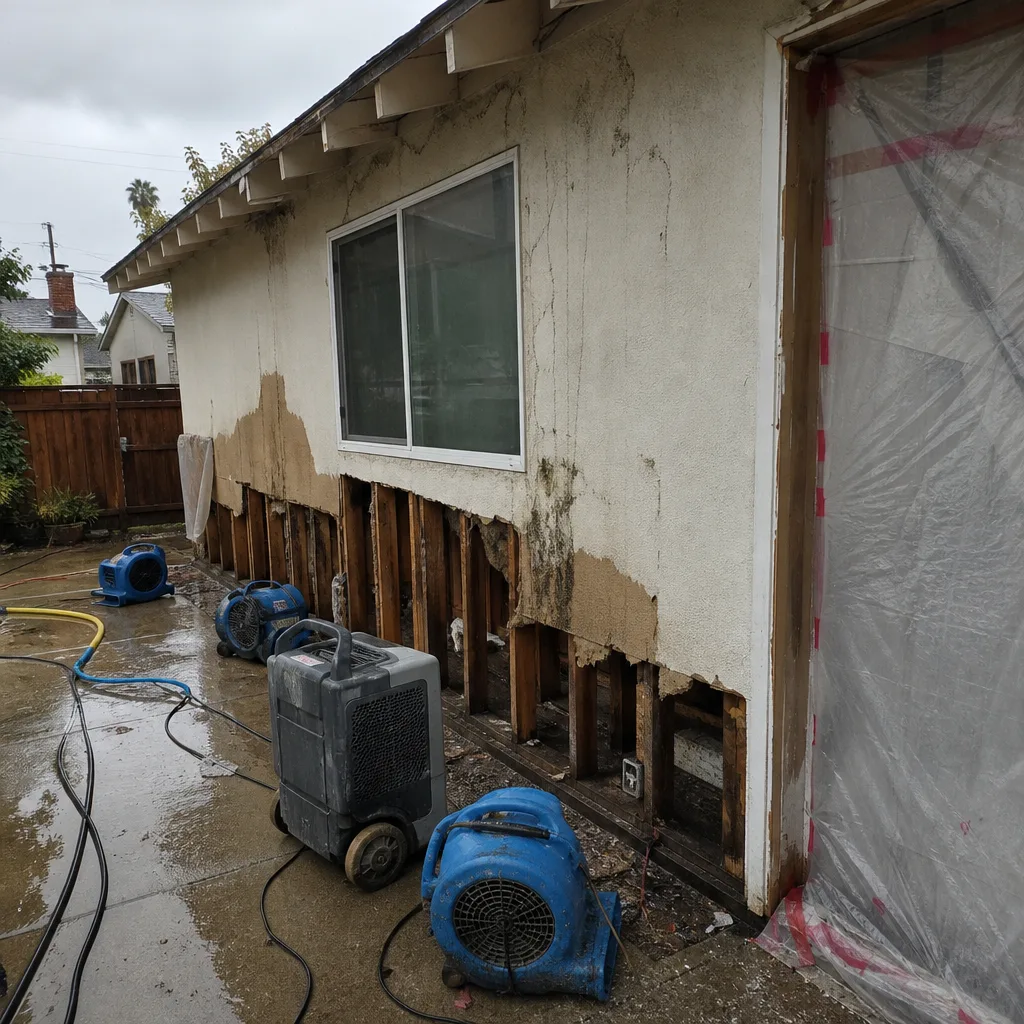 Before
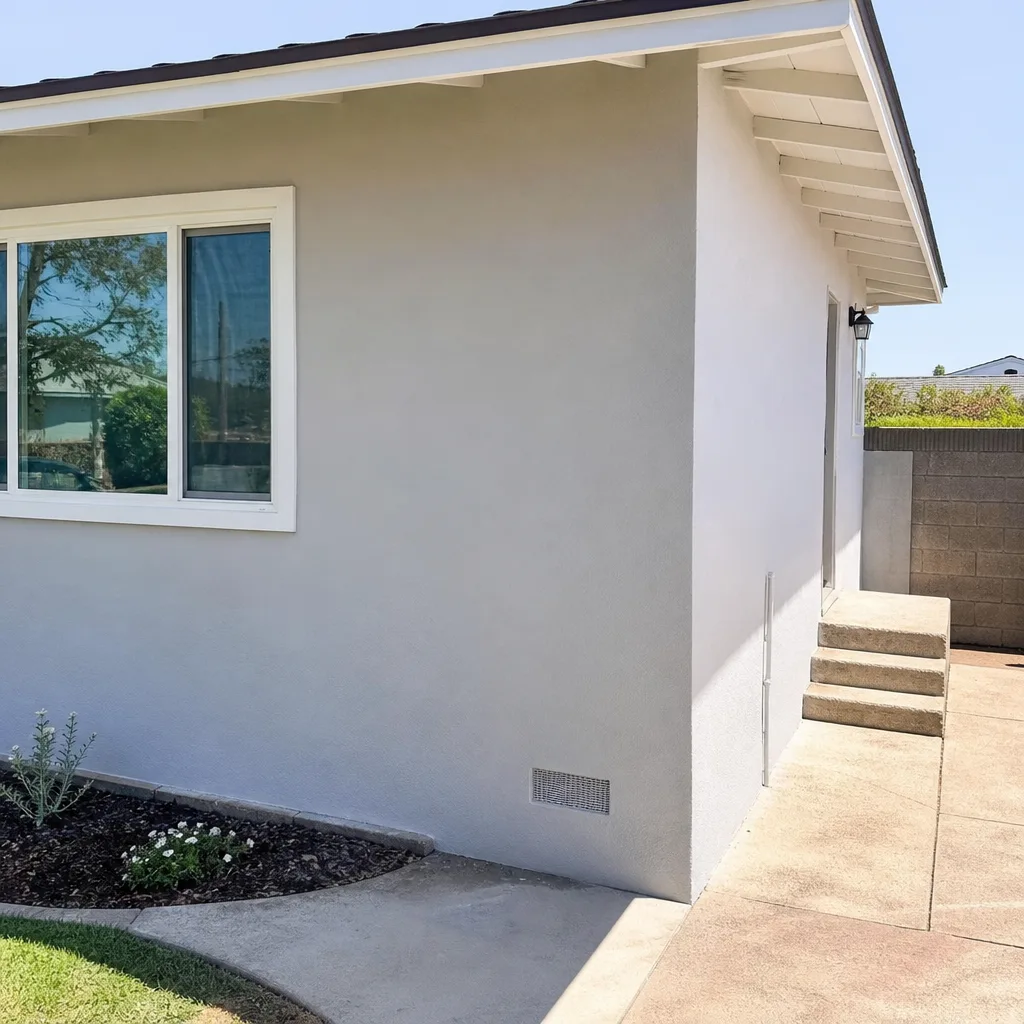 After
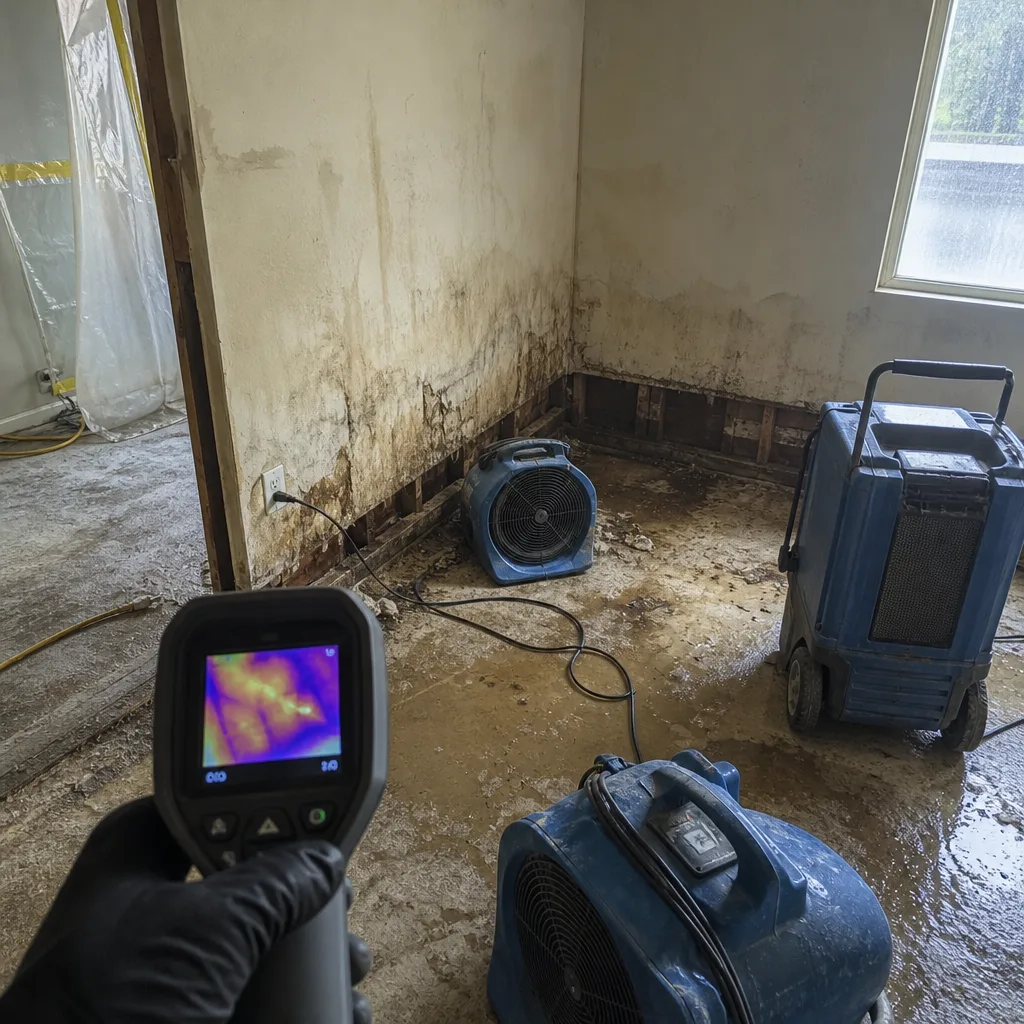 Before
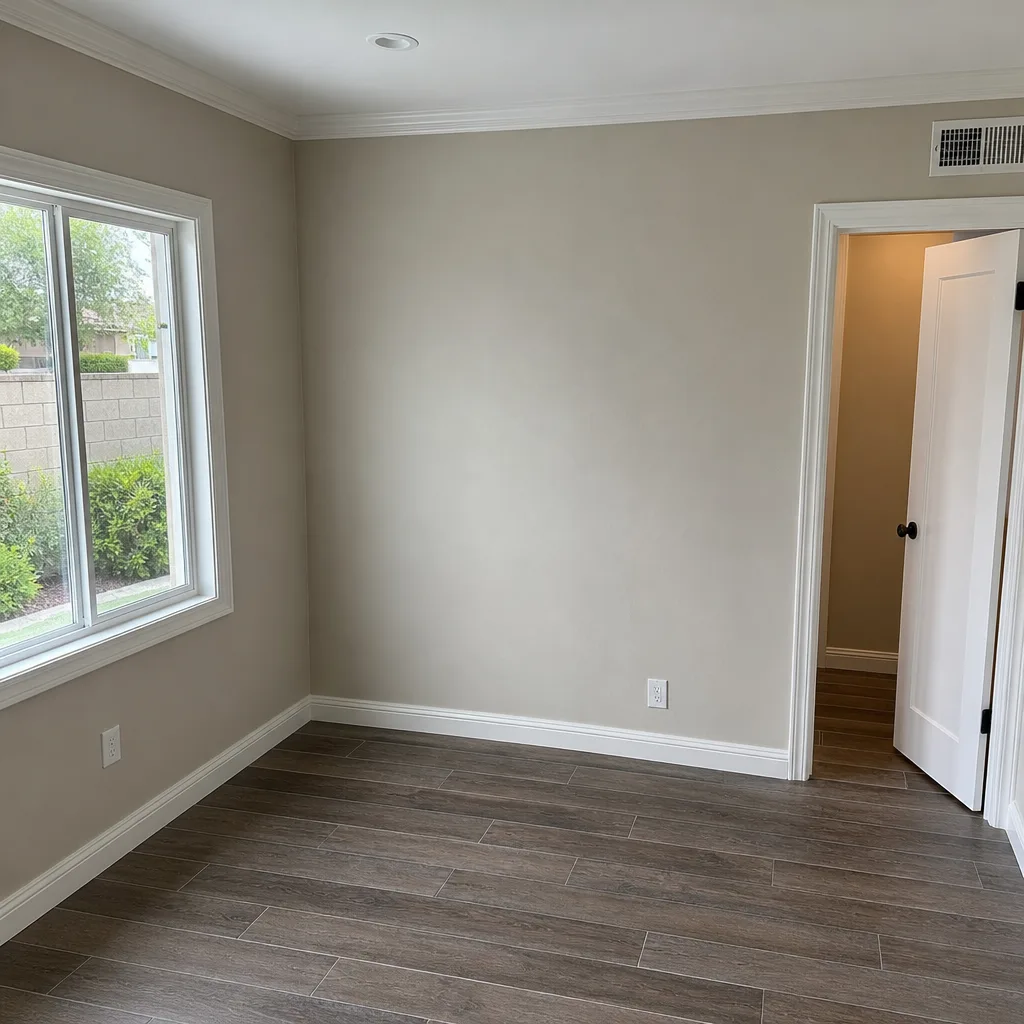 After
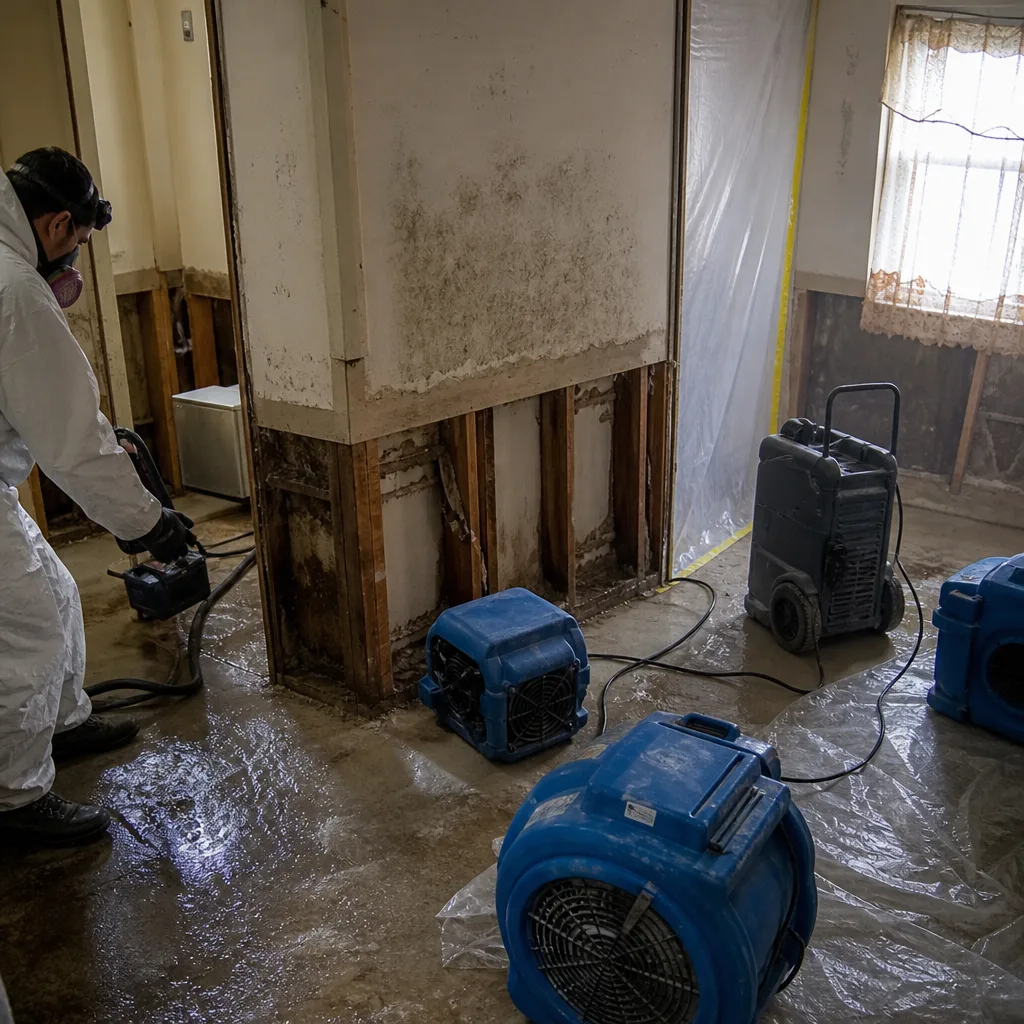 Before
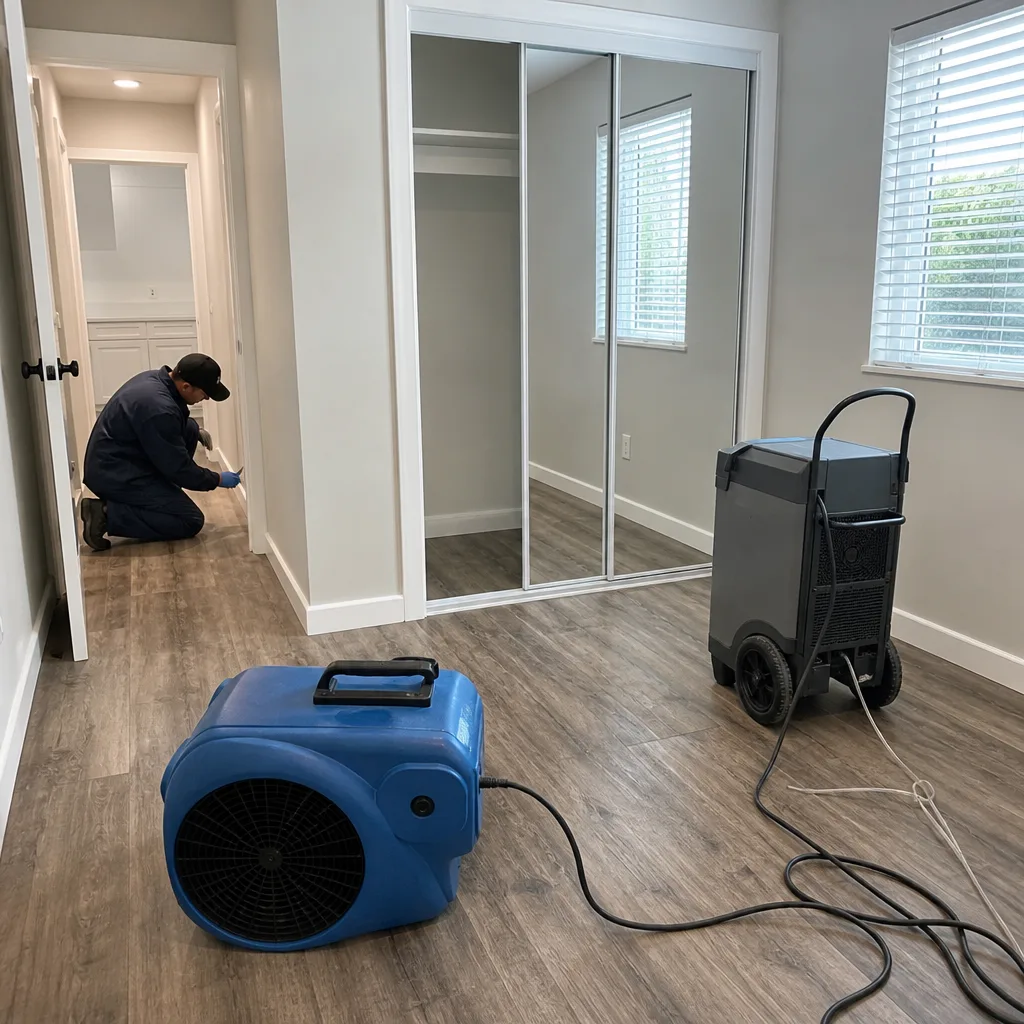 After
Common Water Damage Restoration Problems We See in Orange Homes
- Plaster over-drying in Old Towne bungalows. Crews without historic-home experience run air movers too hot and fast, which cracks the plaster keys that hold the wall to the lath. We use cavity drying and containment to pull moisture gradually, preserving the original plaster instead of forcing a full gut.
- Missed crawlspace water in raised-foundation tract homes. Water from a supply line or appliance failure runs down through the floor framing into the crawlspace. If the crew never goes under the house, the subfloor stays wet and category 3 conditions develop out of sight. We inspect the crawlspace on every subfloor water job in east Orange.
- Electrical hazards hidden in knob-and-tube wall cavities. Older Orange homes often have original knob-and-tube wiring sharing wall cavities with water. Skipping moisture mapping on these buildings means driving water toward aging electrical, which is a serious safety risk. We identify these conditions before drying begins and coordinate with electricians when needed.
- Santa Ana smoke and soot complicating water work. After a wind event, ash and soot infiltrate attics and wall cavities through original venting and loose windows in Orange’s older homes. When water damage happens in the same structure, the soot and moisture interact in ways that require both water extraction and residue treatment. We handle both, because separating those scopes across different contractors slows down the restoration.
Pricing for Water Damage Restoration in Orange, CA
Water damage restoration in Orange runs from $900 for a small, contained leak with no structural saturation up to $6,500 or more for a whole-room flood with cavity drying, crawlspace work, and content handling. Emergency water extraction in Orange is typically $350 – $800 as a standalone service, but most jobs need drying afterward, which adds $1,000 – $2,500 depending on square footage and materials. What moves the number is water category, how far the water traveled, and whether your home is a lath-and-plaster historic build or a standard drywall tract home. Historic materials cost more to dry correctly and more to restore if they’re over-dried. Every estimate is free, and we put the scope in writing before we start. Call (833) 589-9161 and we’ll walk the property with you and give you real numbers, not a vague range.
We Also Serve Cities Near Orange
Our Water Damage Restoration in Orange crew also covers Villa Park, North Tustin, Tustin, and Anaheim. If your property sits near the Orange border or you manage units across multiple nearby cities, one call to (833) 589-9161 gets the same certified team, the same equipment, and the same documentation standards on every job. We don’t hand off work to third-party subs when the call crosses a city line.
Serving Orange, CA — Our Local Coverage Area
We’re based in the Orange area and know this community well. Use the map below to see our service coverage — if you’re nearby, we can almost certainly help.
FAQs About Water Damage Restoration in Orange
An Old Towne bungalow has lath-and-plaster walls that crack under aggressive drying and often hides knob-and-tube wiring in the same cavities, so we use controlled cavity drying with Injectidry panels and run moisture mapping before any equipment goes in. An east Orange tract home on a raised foundation routes water down into the crawlspace, so the drying plan has to include subfloor and under-house air movement. The materials and the water path are completely different, which means the drying strategy has to change too. Call (833) 589-9161 and we’ll tell you which category your home falls into before we touch a wall.
Within the first 24 to 48 hours for clean water, and faster than that if the water came from a sewage backup or exterior flooding, because category 2 and 3 water degrades materials quickly and increases what has to be removed. Every day of delay extends drying time, raises the chance of mold, and pushes a restore-able material into a tear-out. Our Orange response time is typically 60 – 90 minutes during normal hours, and we dispatch same-day in most cases. Call (833) 589-9161 as soon as you see standing water or active dripping.
Santa Ana winds drive ash and soot into wall cavities and attics through original venting and loose windows, especially in Orange’s pre-1930 homes, and that residue complicates a water drying job because soot and moisture interact and need treatment together. The wind season also brings lower humidity, which can speed surface drying but trick crews into thinking a cavity is dry when the inner material is still wet. Our drying plans account for both the wind-driven contamination and the ambient humidity shifts. If you’ve had wind-season water damage, call (833) 589-9161 for a moisture assessment.
Category 1 is clean water from a supply line or plumbing failure, and most affected materials can be dried and saved if we start fast; category 2 is gray water with some contamination, which limits what can stay; category 3 is black water from sewage or exterior flooding, and saturated porous materials like carpet pad, drywall, and insulation typically have to be removed and replaced. The category affects your insurance claim too, because the adjuster will want documentation of which materials were dried versus removed. We log water category, affected materials, and moisture readings throughout the job. Call (833) 589-9161 and we’ll assess the category on-site before any work starts.
Yes, our equipment is sized for tight Orange crawlspaces and partial basements, and we’ve done enough work under raised foundations in this city to know how to get air moving in a space where a full-size air mover won’t fit. We inspect the entire water path, including under the house, before we call the job dry. Tight access doesn’t excuse a wet subfloor. For a flooded basement or crawlspace in Orange, call (833) 589-9161 and we’ll send a crew that can actually get under your house.
Written by Neil Stratton, Owner at Stonecrest Water Damage, serving Orange and surrounding communities.