
 Water damage drying
 Fire & smoke cleanup
 Mold remediation
 Storm response
 Sewage cleanup
 Reconstruction
Free visual inspection and a written scope of work before any mitigation begins - photos, moisture readings, and drying logs go in your claim file
The scope we write is the scope we bill. Anything new gets shown to you, in writing, before we touch it.
Get your free estimateFast, Reliable Water Damage Restoration Across San Joaquin Hills
Water damage restoration in San Joaquin Hills typically runs between $2,800 and $6,500 for a contained category 1 or 2 loss, with flooded basements and whole-room extraction landing closer to $4,000 to $8,500 once drying equipment, containment, and finish protection are factored in. This is the market reality for 92657, where homes are better built and more expensive to restore than the Orange County average. We respond to San Joaquin Hills calls day or night, and our crews know the gate codes, the HOA expectations, and the construction methods used in these canyon homes. Call (833) 589-9161 when water is where it shouldn’t be. We’ll walk you through the first 30 minutes before the truck even rolls.
Why Stonecrest Water Damage Is San Joaquin Hills’s Preferred Water Damage Restoration Company
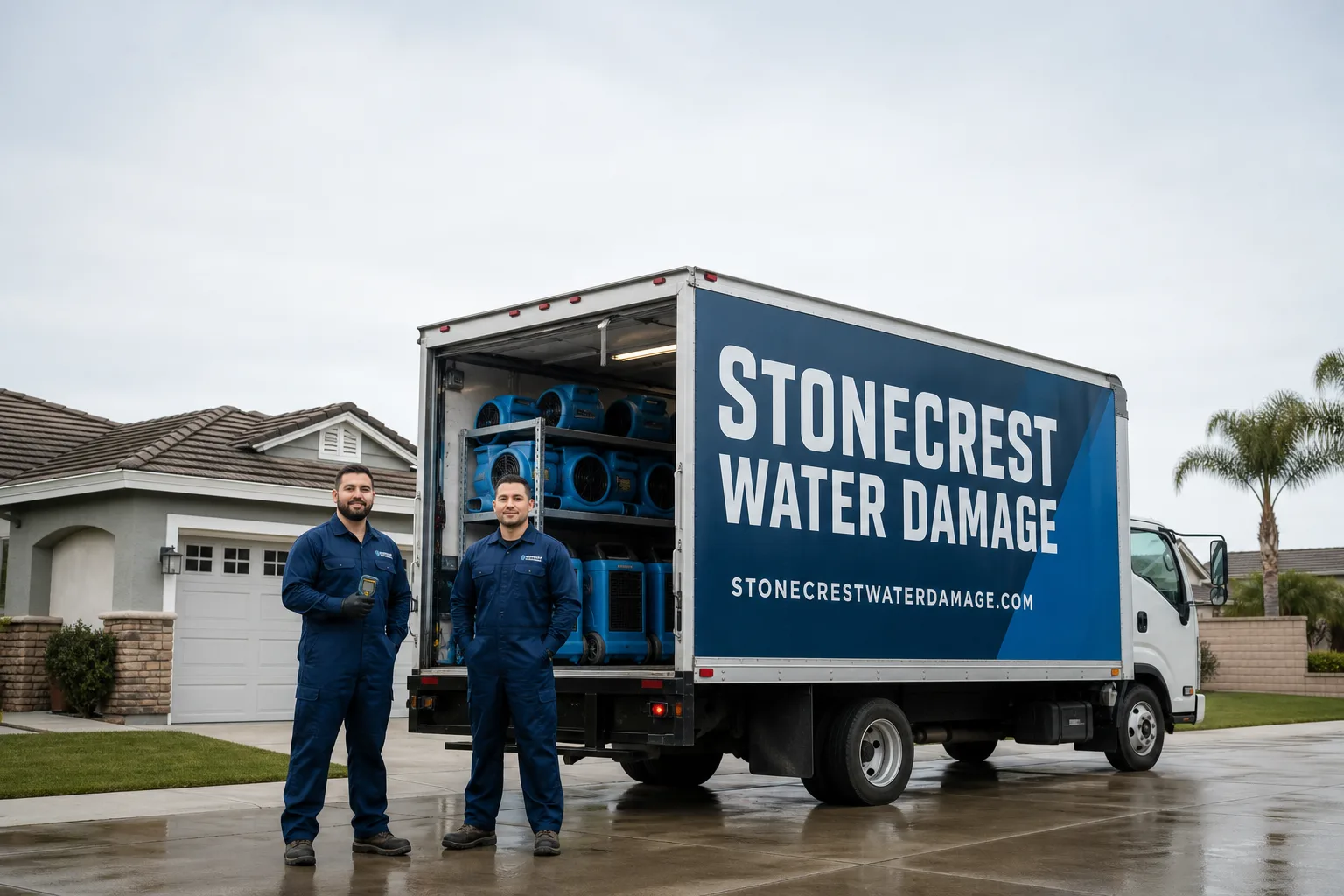
San Joaquin Hills is not like the tract-home neighborhoods north of the 405. These are custom and semi-custom builds from the 1980s through the 2000s, most in Mediterranean or Spanish style, with stucco-over-frame walls, clay tile roofs, and interiors finished in travertine, wide-plank hardwood, and millwork you can’t just order from a supplier. We know this because we’ve worked inside these homes. Our Water Damage Restoration team runs the same Dri-Eaz and Phoenix drying systems you’ll find on large-loss commercial jobs, because the finish threshold in San Joaquin Hills doesn’t allow for rental-store machines and crossed fingers.
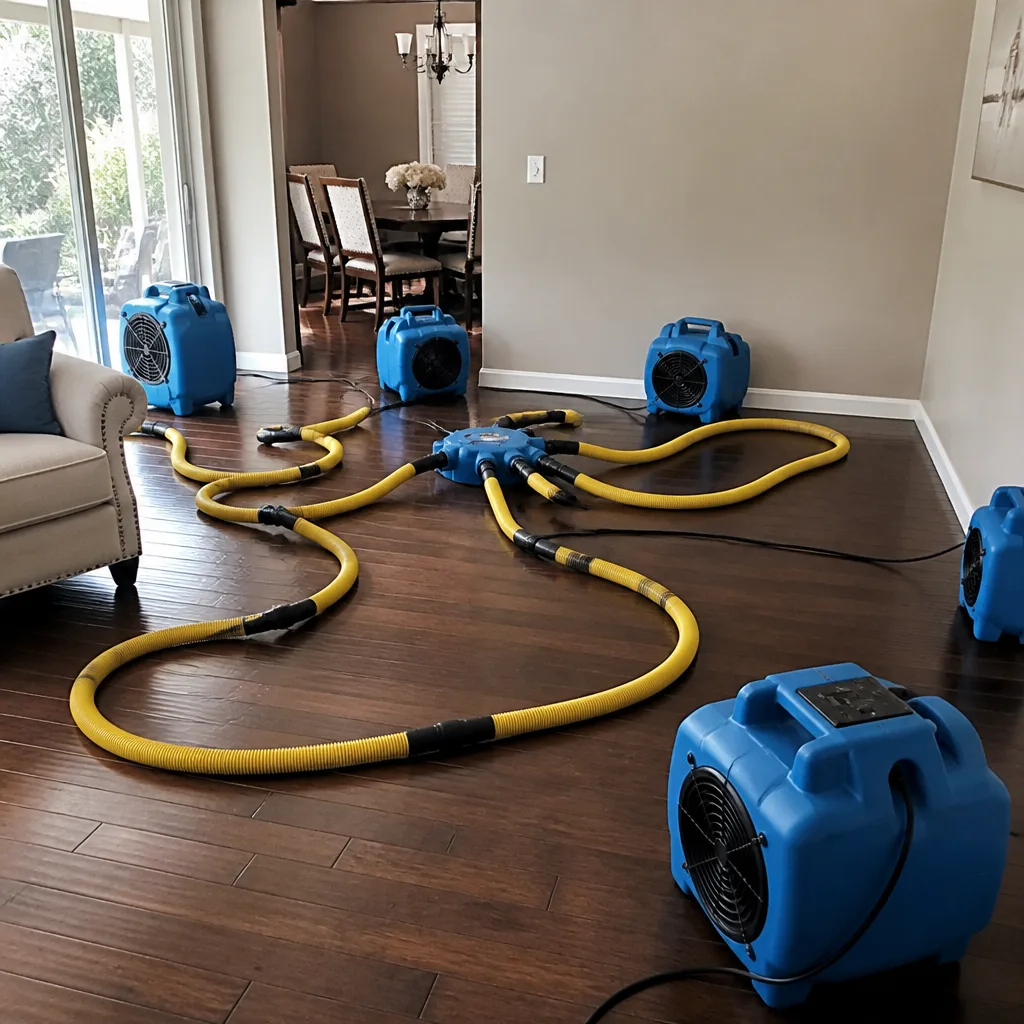
The difference shows up in documentation. IICRC-certified processes mean every moisture reading, every drying log, every photo is recorded to a standard an insurance adjuster can verify. In a guard-gated community where claims often involve custom finishes and imported materials, that documentation matters. We show up with commercial-grade air movers, dehumidifiers, and Injectidry panels for in-wall drying so we’re not defaulting to demolition when a cavity can be saved. The homes off Ridge Park Road, Spyglass Hill, and the canyon-edge lots above Newport Beach Demand precision, not just promptness. That’s the work we do.
Restoration work we handle
Flooded Basement in San Joaquin Hills
Flooded basements in San Joaquin Hills are a specific kind of problem: many of these hillside properties are built on descending lots, so a lower level isn’t always a true below-grade basement but a walk-out lower floor that collects every drop of gravity-fed water from a supply line failure, a water heater rupture, or a stucco leak at grade. When it happens, the water doesn’t pool politely. It runs through door sills, wicks into baseboards, and settles under cabinetry. We’ve seen category 1 supply-line failures turn into category 2 situations in under 48 hours because water migrated through wall cavities before anyone noticed. The first visible sign in a San Joaquin Hills home is often warped hardwood or lifted travertine, not a puddle.
Extraction First, Always
Our process on a flooded basement starts with standing water removal using truck-mounted extraction, then the drying science takes over. In the San Joaquin Hills climate, the semi-arid air can work in our favor, but the stucco-over-frame construction traps moisture in cavities that never see airflow. We map the moisture with meters, set containment, and calculate the drying load against IICRC S500 standards. A lower-level flood in a 92657 custom home typically runs $3,500 to $7,500 for extraction, drying, and finish protection, depending on square footage and how long the water sat.
Finishes Matter Here
The reason you don’t want a generalist crew on a flooded basement in San Joaquin Hills is what the water damages: travertine with specific grout profiles, engineered hardwood from a long-gone batch, custom cabinetry with integrated panels. We photograph and document every affected finish before we move a single piece, because the scope of work has to account for materials that can’t be matched at a big-box store. That documentation is also what your adjuster needs to approve the right restoration, not just the cheapest patch.
Water Extraction in San Joaquin Hills
Water extraction in San Joaquin Hills is the first, most time-sensitive move when a supply line lets go behind a kitchen wall or a water heater splits on a second floor. The goal is simple: remove standing water before it migrates into structural cavities and saturates materials that were never meant to get wet. In these homes, that means acting fast in spaces where the water is already running behind high-end finishes. A delayed response turns a $2,500 extraction into a $9,000 structural remediation. Time is not a metaphor here; the drying window shrinks with every hour.
What Extraction Involves
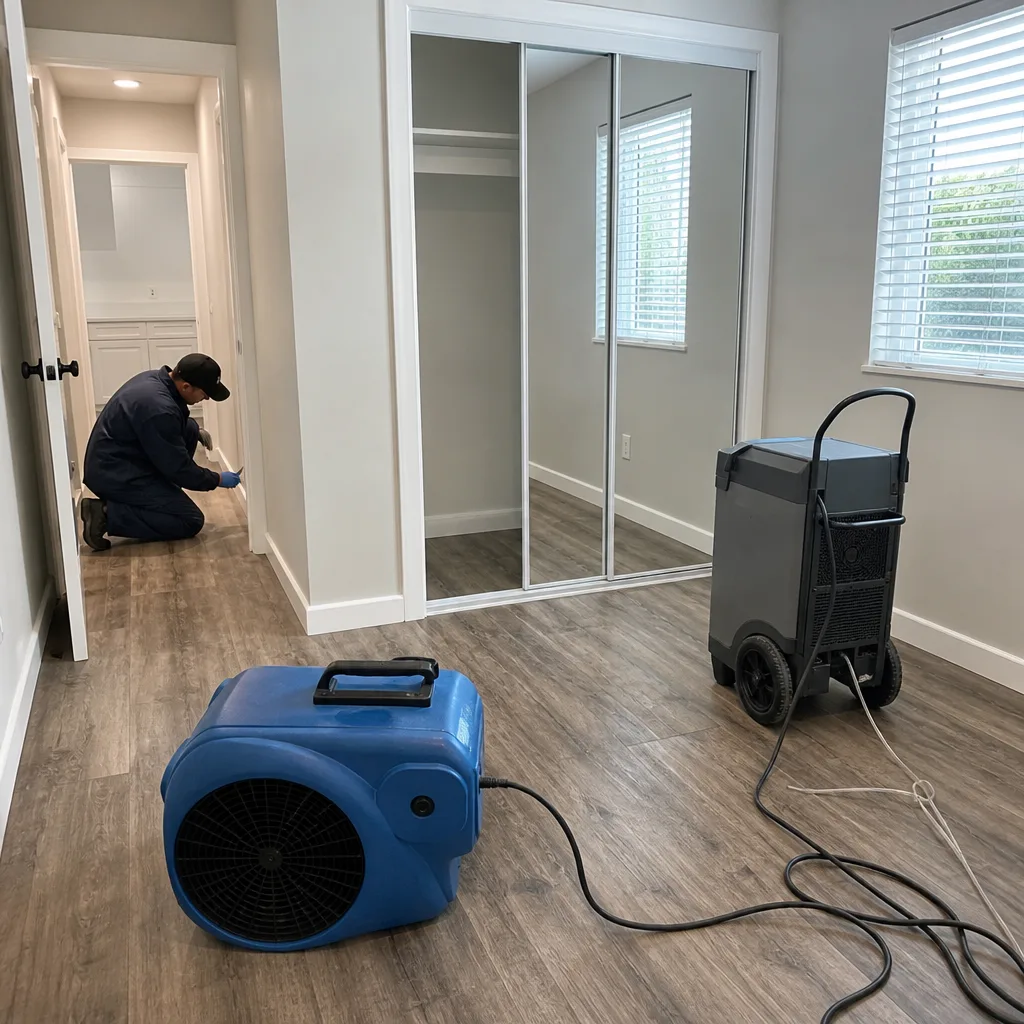
We bring truck-mounted extraction equipment that removes water at a rate no portable wet-vac can match. Then we set containment and place Dri-Eaz air movers and Phoenix dehumidifiers in a calculated layout based on the room’s cubic footage and the materials involved. On a typical San Joaquin Hills extraction covering a 400-square-foot room, costs run $1,800 to $3,800. The range depends on whether we’re pulling water from hardwood, tile, carpet, or a combination, and whether the water reached base cabinetry or wall cavities.
Injectidry for In-Wall Drying
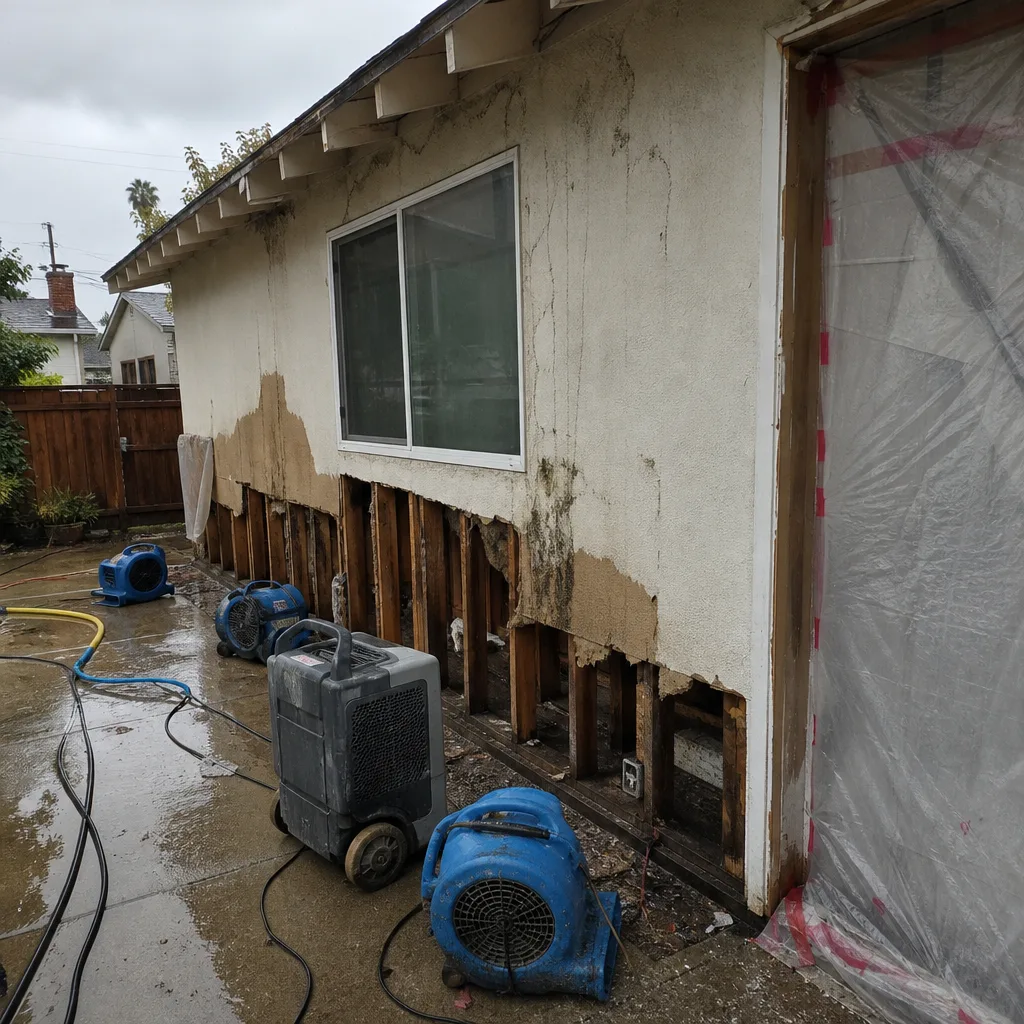
When water gets behind finished walls, the old-school answer was to cut them open. Our Injectidry system dries inside wall cavities through existing openings or small access points, pulling moisture out without removing drywall, baseboards, or custom paneling. In a San Joaquin Hills home where the wall in question might be finished with hand-troweled plaster or designer wallpaper, this changes the entire scope. We preserve more of the original structure, which keeps the claim process cleaner and the rebuild smaller.
Trusted Brands We Service in San Joaquin Hills
The equipment we run on every San Joaquin Hills job is chosen for one reason: it produces measurable, defensible drying data. Dri-Eaz dehumidifiers and air movers, Phoenix systems, and Injectidry wall-drying panels are the same brands used on large commercial losses. We don’t use rental-store gear, because a San Joaquin Hills custom home with travertine floors and custom millwork deserves equipment that can hit the drying targets IICRC standards require. If you have a specific finish or system in the home that requires coordination, our crews document everything and test before they demobilize. Call (833) 589-9161 and ask about our equipment list before you decide who to trust.
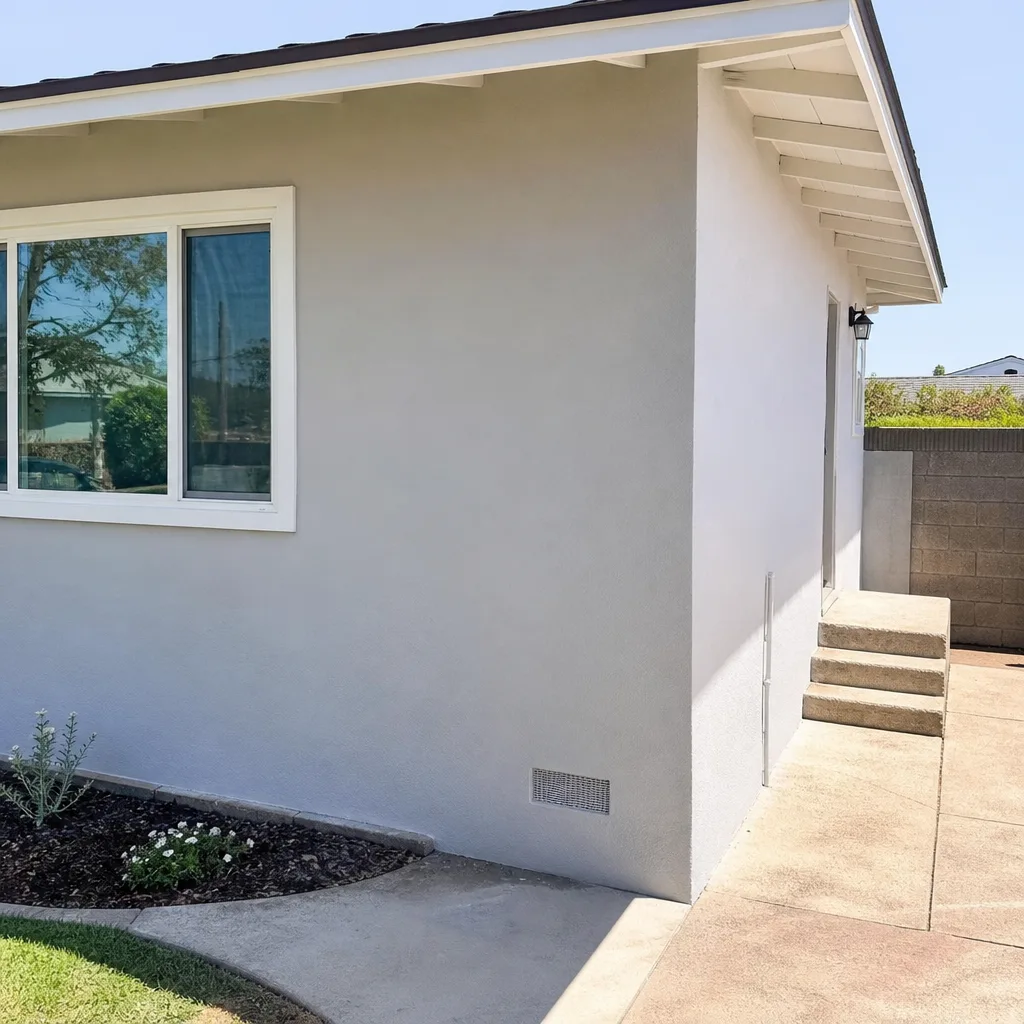
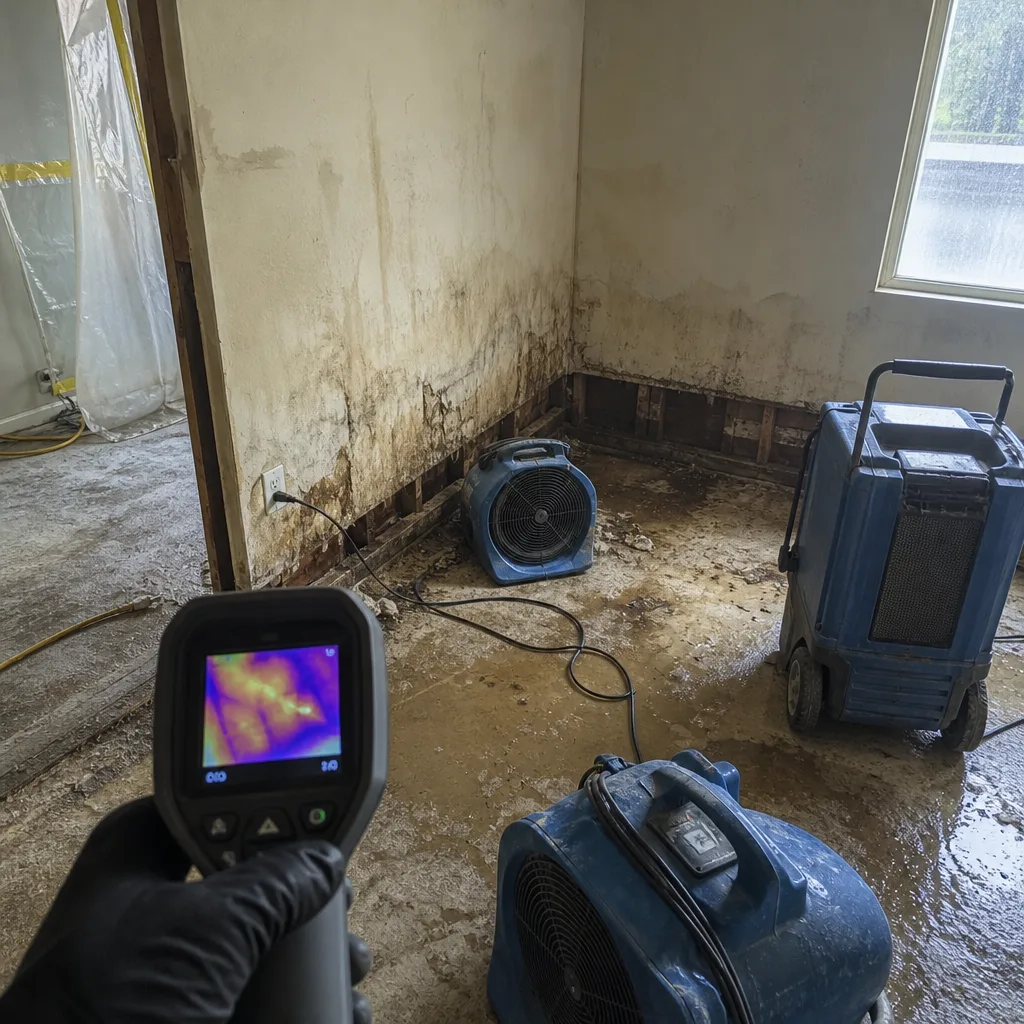
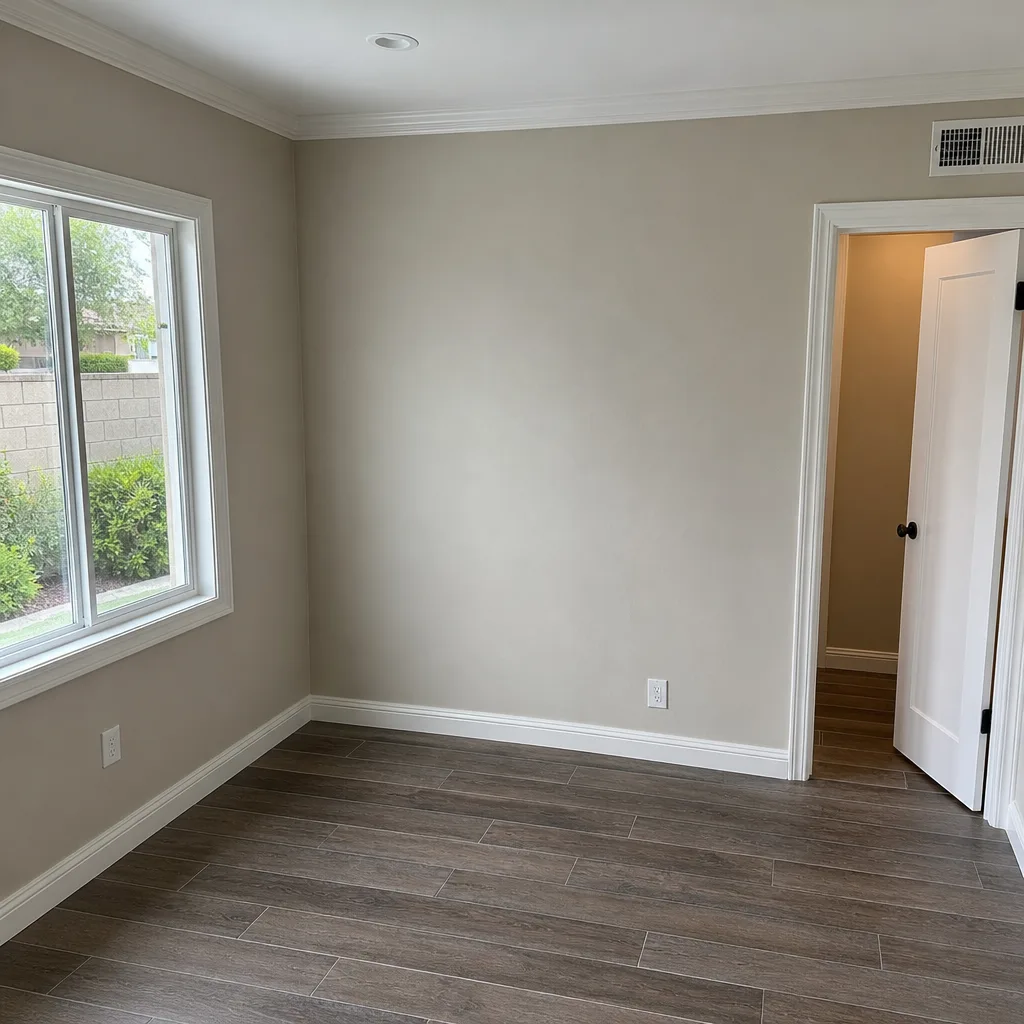
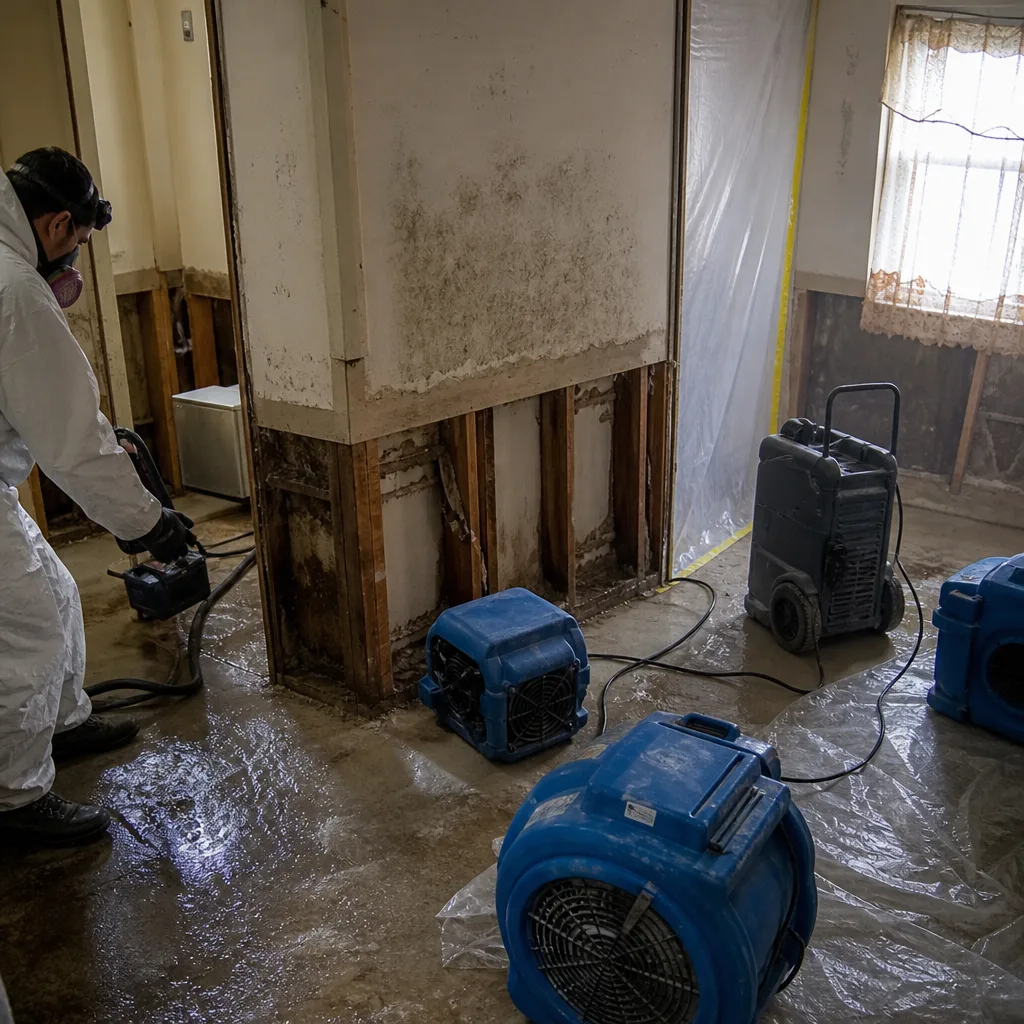
See the difference
 Before
 After
 Before
 After
 Before
 After
Common Water Damage Restoration Problems We See in San Joaquin Hills Homes
- Builder-grade supply lines buried behind custom finishes. The shutoffs and lines installed when these homes were built in the 1990s and 2000s have a service life, and most have exceeded it. When a line fails behind a travertine bathroom wall, the first sign is often water staining on the ceiling below, not a visible leak.
- Santa Ana ash intrusion leading to secondary water problems. Ember-driven ash gets pulled into attic vents and HVAC returns during wind events. When that ash meets condensation or fire-suppression water, it becomes a category 2 or 3 contamination problem that homeowners mistake for a simple cleaning job. Moisture mapping reveals what odor masks.
- Stucco envelope and clay tile roof failures. The Mediterranean-style exteriors that define San Joaquin Hills are beautiful, but stucco cracks and tile underlayment failures let water in slowly. By the time someone notices a ceiling stain, water has likely been moving through the wall assembly for weeks or months.
- Gate and HOA coordination delays. We pre-coordinate access with guard gates and HOA management before a loss happens. Crews that don’t lose hours at the gate while water sits on hardwood and the drying window closes. In a 92657 emergency, that lost time is the difference between restoration and replacement.
Pricing for Water Damage Restoration in San Joaquin Hills, CA
We Also Serve Cities Near San Joaquin Hills
While this page focuses on San Joaquin Hills, our crews work throughout the coastal corridor. Water Damage Restoration in San Joaquin Hills is our core here, but we also handle losses in Newport Beach, Laguna Beach, Irvine, and Costa Mesa. If your property sits in one of these neighboring cities, the same equipment, certifications, and documentation standards apply.
Serving San Joaquin Hills, CA — Our Local Coverage Area
We’re based in the San Joaquin Hills area and know this community well. Use the map below to see our service coverage — if you’re nearby, we can almost certainly help.
FAQs About Water Damage Restoration in San Joaquin Hills
How fast does water damage turn into a mold problem in a San Joaquin Hills home?
In San Joaquin Hills, mold colonization can begin within 24 to 48 hours on wet organic materials like drywall and hardwood, especially during warmer months when indoor temperatures stay elevated. The canyon microclimate, with its dry days and cool nights, can mask early mold growth behind walls because surface materials dry slowly while cavities stay damp. We recommend moisture mapping within 24 hours of any water event. Call (833) 589-9161 if you suspect hidden water; the earlier we test, the smaller the scope.
Does guard-gated access slow water damage restoration here?
Guard-gated access does slow restoration work if the crew hasn’t pre-coordinated with the gate and HOA. We maintain working relationships with the management companies serving 92657 and its guard gates, so our crews typically clear entry without a wait. If you’re in a gated community in San Joaquin Hills, give us the gate code or management contact when you call, and we’ll handle the rest before the truck arrives. The time saved keeps category 1 water from degrading.
Why do Santa Ana wind events lead to water damage calls in this canyon terrain?
Santa Ana winds push ember, ash, and fine particulate into attic vents, soffit gaps, and HVAC returns across San Joaquin Hills. That intrusion often leads homeowners to try cleaning surfaces, but the ash that settles in the attic meets condensation or fire-suppression moisture and becomes a wet, contaminated slurry. The result is a category 2 or 3 problem that shows up as odor, staining, or both. We’ve seen this pattern repeatedly in canyon-edge homes along the ridgelines.
Can you dry a flooded basement in a San Joaquin Hills custom home without ripping out finishes?
In many cases, yes. Our Injectidry system dries inside wall cavities and under cabinets through small access points, which means we can often save travertine, hardwood, and custom millwork that a demo-first crew would remove. The decision comes down to how long the water sat and what materials absorbed it. Every San Joaquin Hills job starts with moisture mapping so we know exactly what can be saved before anyone cuts anything.
What does a scope of work look like for water damage in a high-end San Joaquin Hills home?
A scope of work from our team includes the affected areas, the category of water, the drying plan with target moisture levels, equipment count and placement, containment details, finish protection measures, and a line-item cost breakdown. We document pre-existing conditions before work starts and update the file as drying progresses. For San Joaquin Hills properties, we also note finish matching or custom material concerns by name so your adjuster sees exactly why a surface can’t be replaced with an off-the-shelf equivalent. Call (833) 589-9161 and we’ll prepare a written scope, free of charge.
Written by Neil Stratton, Owner at Stonecrest Water Damage, serving San Joaquin Hills and the surrounding Orange County coastal communities.