
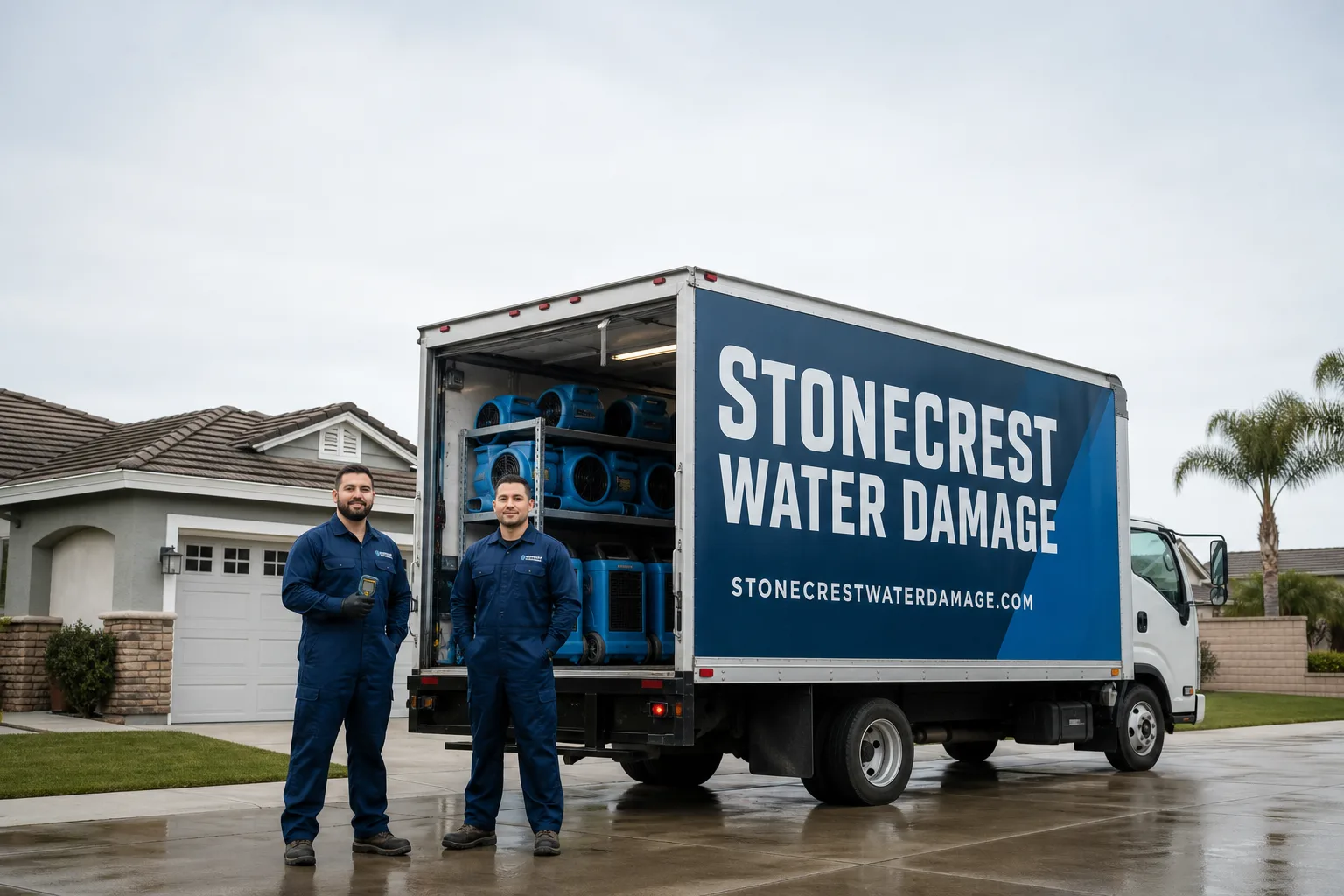
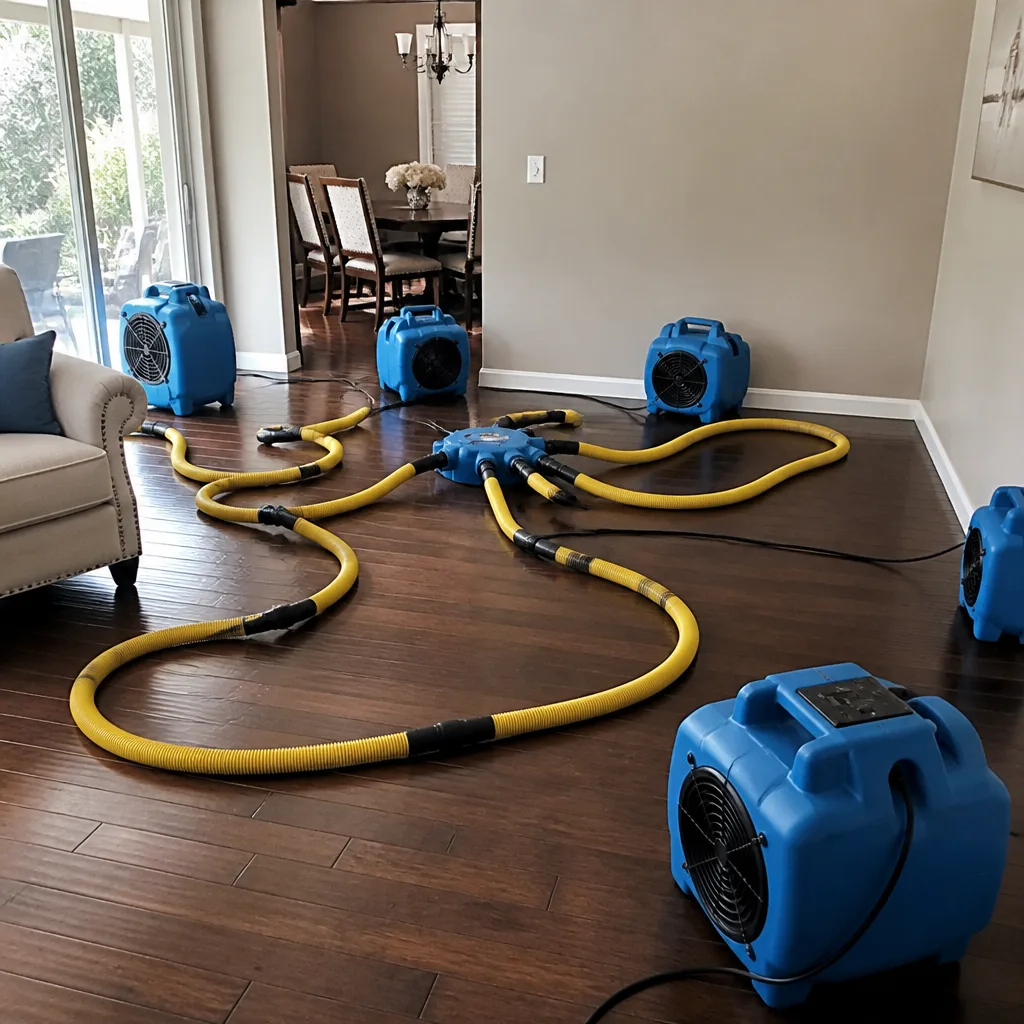
 Water damage drying
 Fire & smoke cleanup
 Mold remediation
 Storm response
 Sewage cleanup
 Reconstruction
Free visual inspection and a written scope of work before any mitigation begins - photos, moisture readings, and drying logs go in your claim file
The scope we write is the scope we bill. Anything new gets shown to you, in writing, before we touch it.
Get your free estimateFast, Reliable Water Damage Restoration Across Stanton
Water damage restoration in Stanton, CA typically costs between $2,500 and $7,800 for a standard single-room loss, with emergency extraction running $450 – $1,100 depending on square footage and how long water has sat. Most Stanton jobs we handle are complete in 3 – 6 days of active drying, not weeks. If you’re standing in water right now, call (833) 589-9161 and we’ll have a certified crew dispatched to your Stanton address within the hour.
Stanton is a city we know block by block. The 90680 zip covers just over 3 square miles, which means our Buena Park based team can be on-site fast, whether you’re near Stanton Park, off Beach Blvd, or in the apartment corridors along Katella. That response time matters when water is moving through shared walls or soaking into original mid-century drywall. We’re not learning your neighborhood on the way in. We already know what to expect.
Why Stonecrest Water Damage Is Stanton’s Preferred Water Damage Restoration Company
Homeowners and property managers in Stanton call us for one reason more than any other: we dry to documented standards, not to a visual guess. Our technicians work under IICRC-certified protocols, and every job gets a moisture map before and after. That matters in a city where a lot of properties have original 1950s drywall that holds water longer than newer board. You don’t want a crew that pulls equipment too early and tells you it feels dry. You want readings. We provide them.
Neil Stratton runs our restoration team, and he’s built our process around equipment that would be familiar on a commercial loss site. We run Dri-Eaz dehumidifiers, Phoenix axial air movers, and Injectidry panels for in-wall drying. That’s not rental-store gear. In Stanton’s shared-wall apartments, that distinction is the difference between drying one unit properly and missing moisture that carries into the neighbor’s wall cavity. One company, one scope of work, no finger-pointing between water and mold and rebuild contractors.
Restoration work we handle
Emergency Water Removal in Stanton
Emergency water removal in Stanton starts at $450 for a contained single-room extraction and climbs to $900 – $1,100 when multiple rooms or adjoining units are involved. The first hour is about stopping the source and getting standing water out before it saturates structural materials. In Stanton’s older tract homes, that window is shorter than most people expect. Original plaster and drywall from the 1950s and 60s wicks moisture aggressively, and adjacent shared-wall units mean one delay can create two claims instead of one.
Standing Water and Saturation Assessment
We arrive with truck-mounted and portable extraction units, then map moisture in walls, flooring, and the cavities behind baseboards. In Stanton’s single-story stucco homes, hidden saturation typically sits lower in walls than visual inspection would suggest. That’s because water follows the framing down to the sole plate, then travels horizontally into adjacent rooms. Thermal imaging shows us what the eye can’t.
Containment and Immediate Drying Setup
Once the standing water is gone, we set commercial-grade dehumidifiers and air movers according to the room’s cubic footage and the material’s saturation level. If a wall cavity is wet, Injectidry panels go in before we open anything. This is particularly important in Stanton apartments where we’re trying to minimize disruption to occupied units while still drying thoroughly. Our goal is always the smallest necessary opening, not the biggest billable one.
Flood Damage Restoration in Stanton
Flood damage restoration in Stanton runs $3,200 – $8,500 for a typical single-story home where storm water, a slab leak, or a ruptured supply line has affected two or more rooms. If the flood crosses into a shared wall and requires a second unit’s scope, expect the job to add 40 – 60% over single-unit pricing. Heavy winter rain is the trigger most people think of, but in Stanton the more common flood sources are aging galvanized supply lines and slab leaks under original tile or linoleum floors.
Slab Leaks and Hidden Flood Sources
Stanton’s mid-century homes often have original copper or galvanized supply lines running through the slab. When a pinhole leak develops, water travels upward through unsealed penetrations and wicks into walls, cabinets, and flooring. A quick extraction that doesn’t map the moisture path misses the source. We trace the water, not just the puddle. On multiple Stanton slab leak jobs, the visible damage in one room was fed by a leak 20 feet away.
Storm Water and Exterior Intrusion
When heavy winter rain hits Orange County, Stanton’s low-pitch roofs and older window flashing take a beating. Water enters through roof penetrations, edges, and old stucco cracks, then runs down inside wall cavities before showing up on the ceiling or floor. By the time it’s visible, the water has usually passed through insulation and framing. Flood restoration here means finding the entry point, stopping it, and drying the full travel path, not just the stain.
Trusted Brands We Service in Stanton
Stonecrest Water Damage runs equipment from the restoration industry’s core manufacturers. You won’t see a big-box rental fan on one of our Stanton jobs. Our fleet includes Dri-Eaz desiccant and refrigerant dehumidifiers, Phoenix air movers, B-Air units for smaller containment spaces, and Injectidry panels for structural cavity drying. We keep our equipment maintained to manufacturer spec and bring the right tool for the specific material. Original 1950s plaster dry-out needs a different approach than modern gypsum board, and our techs know when to swap equipment rather than just leaving it running longer.
See the difference
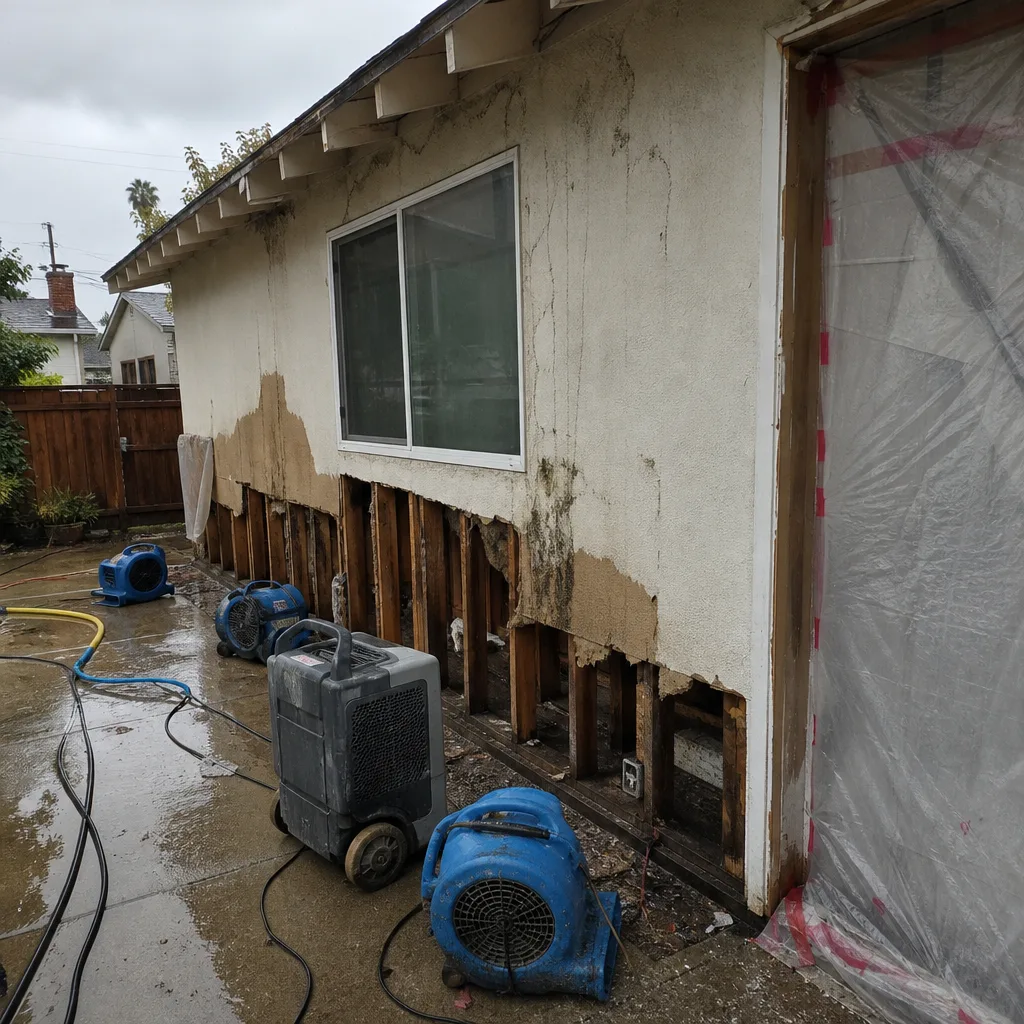 Before
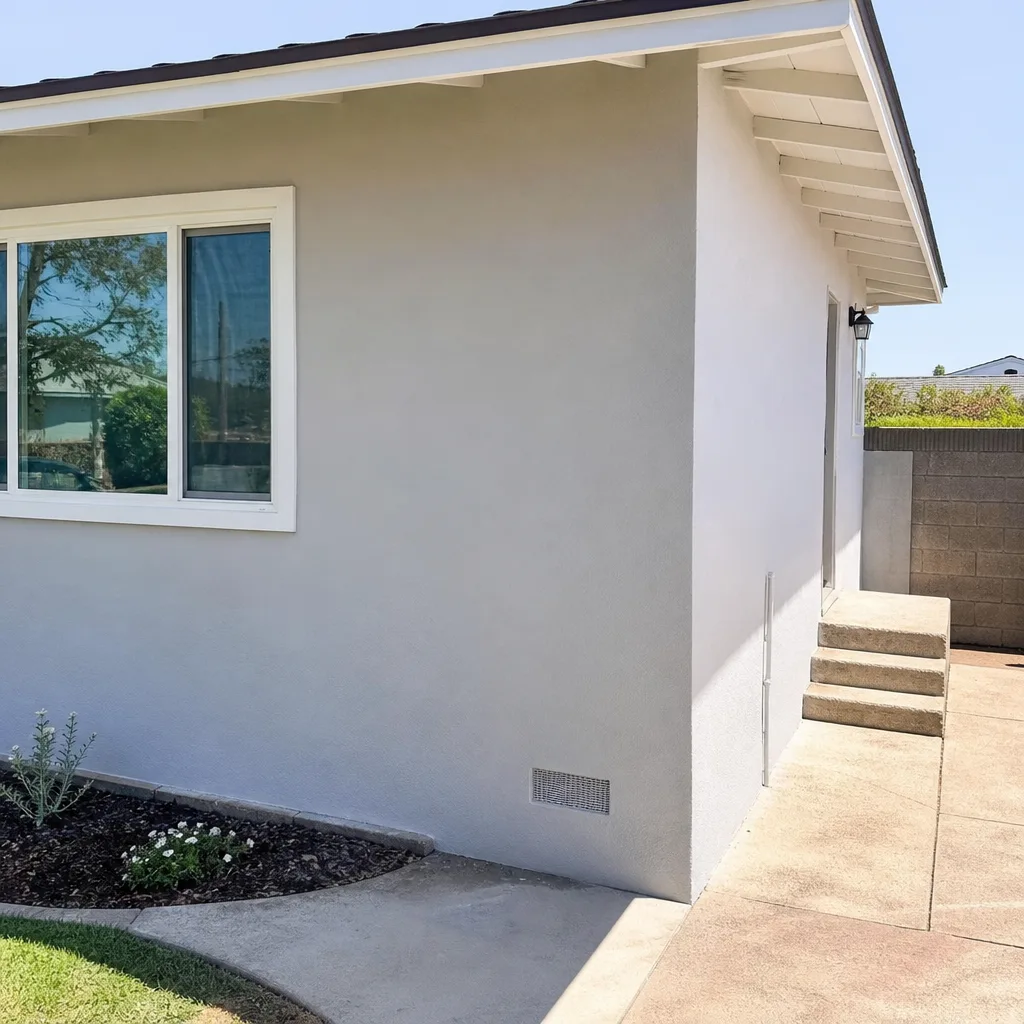 After
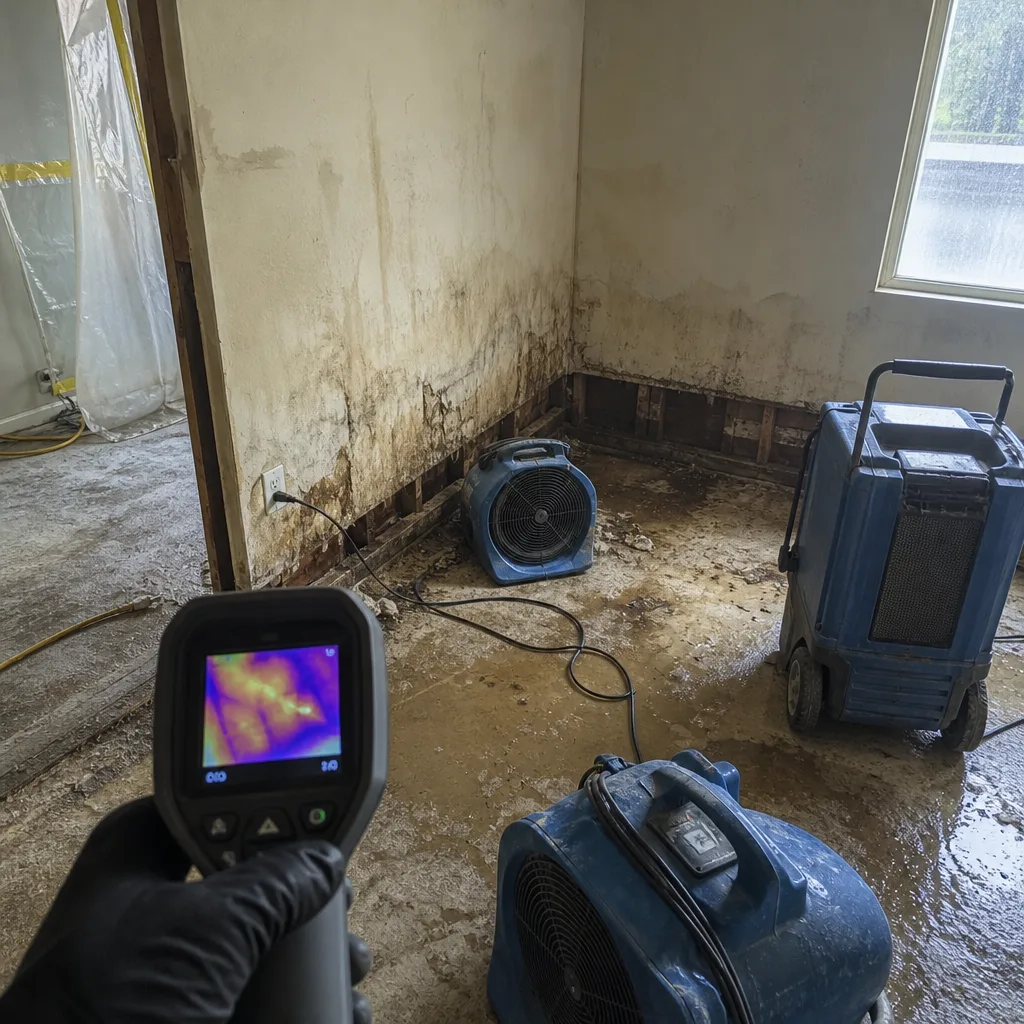 Before
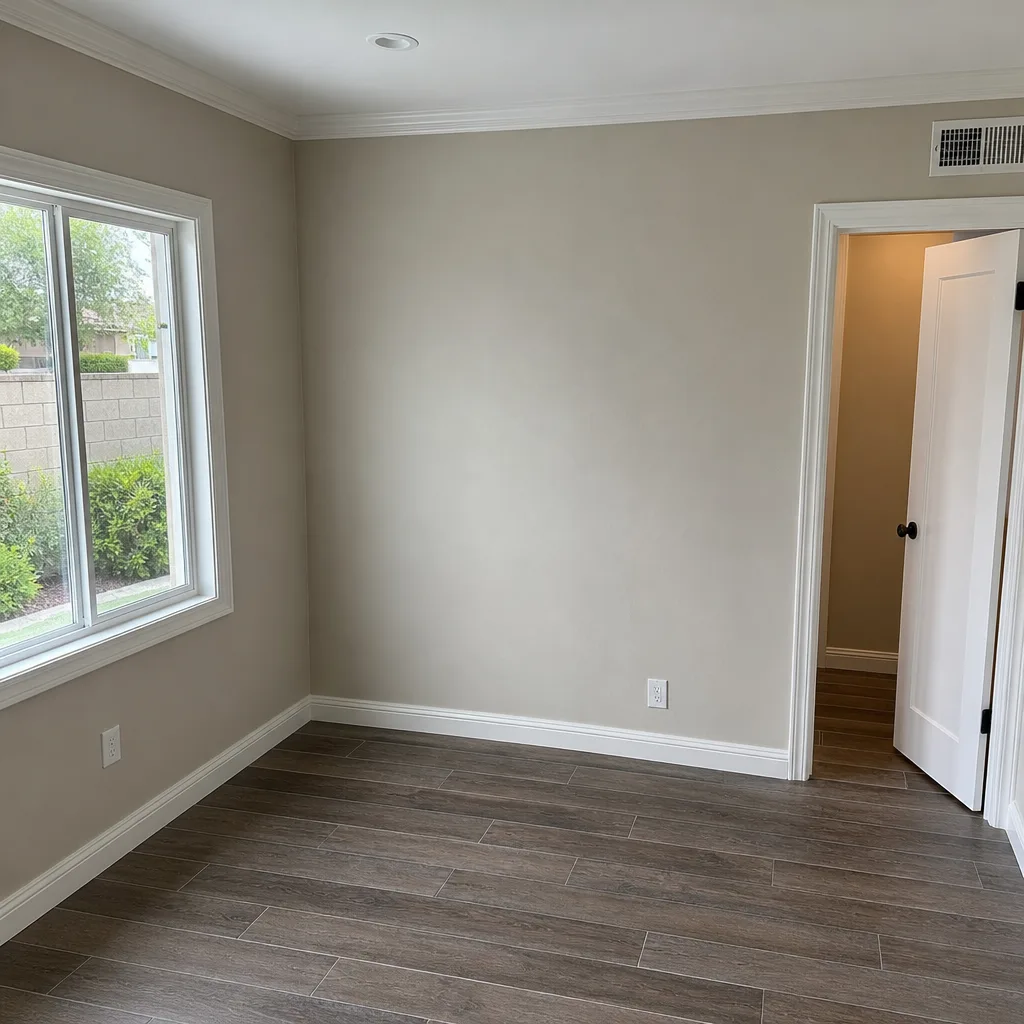 After
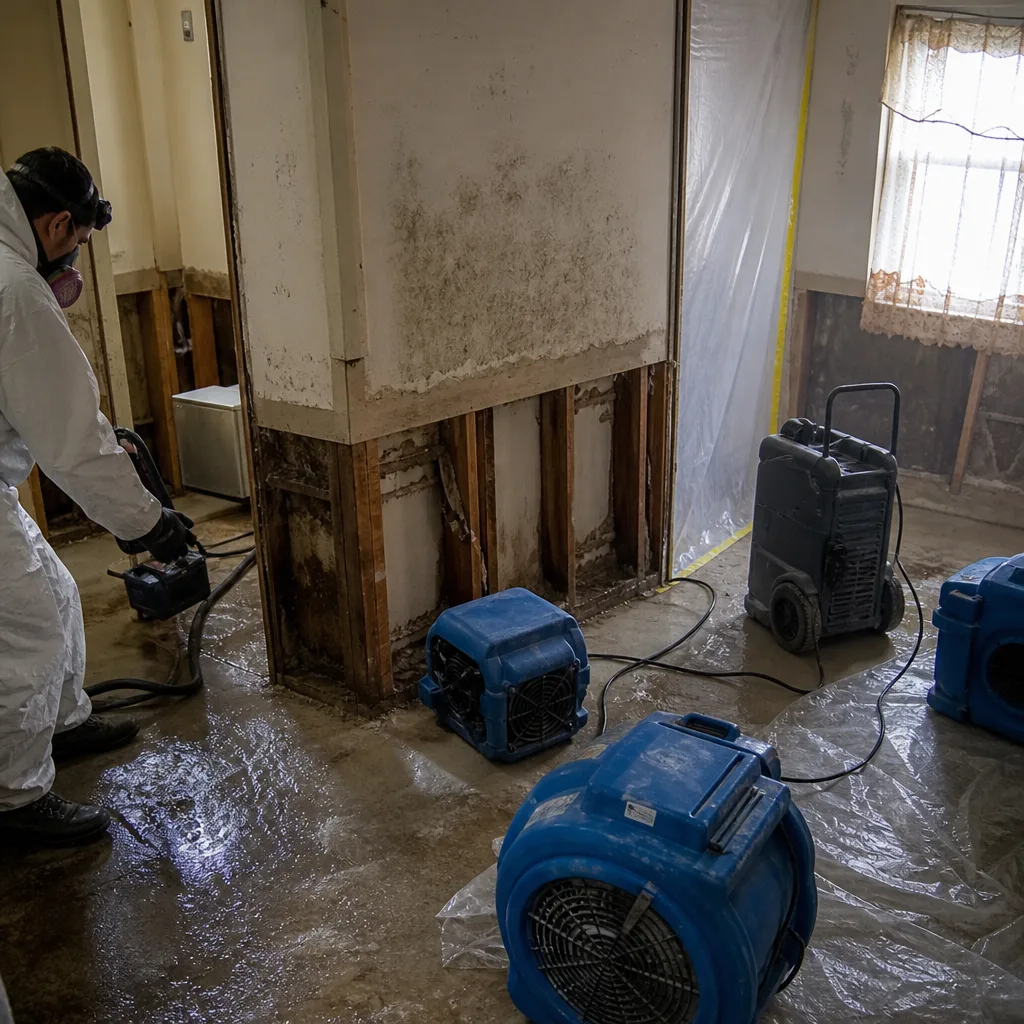 Before
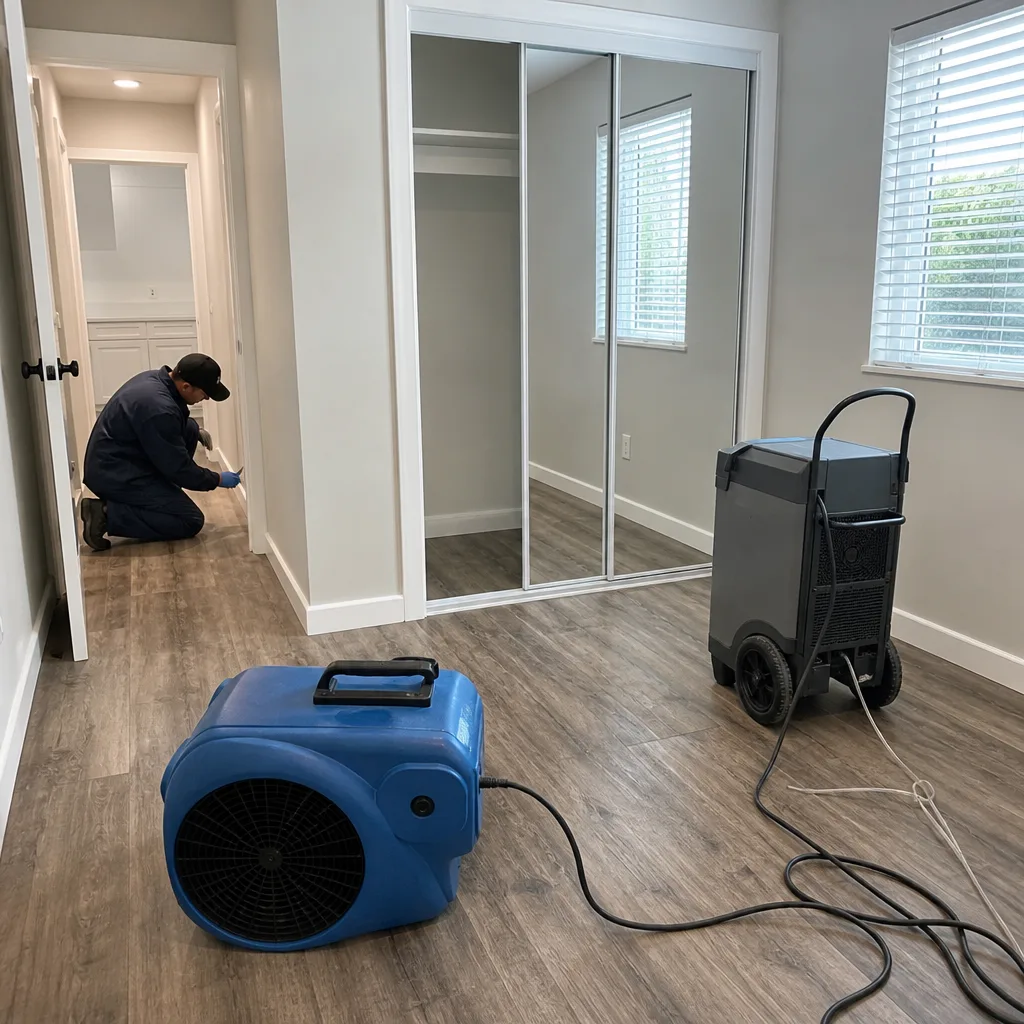 After
Common Water Damage Restoration Problems We See in Stanton Homes
- Shared-wall moisture migration in apartments and closely spaced homes. A single slab leak or burst supply line in one unit regularly wicks through the wall cavity into the neighboring apartment. If thermal imaging and a dual-unit check aren’t done at the start, the second unit’s damage shows up as a mold complaint a month later. We scope adjoining units on every shared-wall Stanton loss.
- Deferred maintenance on original 1950s – 70s plumbing. Many Stanton homes still run on original galvanized supply lines or copper that’s overdue for failure. The damage isn’t from a dramatic burst but from a slow pinhole leak that’s been saturating the same wall or slab for weeks before anyone noticed. Moisture mapping finds what a visual check misses.
- Water hiding behind original tile and linoleum. Old flooring installed over unsealed slab penetrations lets water travel underneath and come up somewhere unexpected. We often find saturated substrate under tile that looks completely fine from above. Removing only the visible wet material leaves the source intact, and the call comes back.
- Drying being cut short on aging drywall and plaster. Original mid-century materials hold moisture longer than modern gypsum board. If a crew packs up based on surface feel, mold blooms behind the baseboard within 48 hours. We dry to documented IICRC S500 moisture content standards and provide the readings to prove it.
Pricing for Water Damage Restoration in Stanton, CA
Here’s what Stonecrest Water Damage typically charges on Stanton jobs. Emergency extraction runs $450 – $1,100. Structural drying and dehumidification for a single room lands at $1,800 – $4,200. Flood cleanup on a two-room slab leak is $3,200 – $7,500. If you’re dealing with a shared-wall situation where a second unit needs scoping and drying, add roughly 40 – 60% to the single-unit figure. The factors that move your cost: square footage, how long water sat, whether wall cavities are involved, and whether original materials need extended drying. Call (833) 589-9161 and we’ll give you a written scope and a number before any work starts. No one in Stanton should sign anything without a documented plan first.
We Also Serve Cities Near Stanton
Our crews work across Stanton and the surrounding Orange County communities. You’ll find us in Stanton daily, and we regularly run jobs in Garden Grove, Cypress, Westminster, and Midway City. If you’re a property manager with units spread across these cities, one phone call covers the whole portfolio. Same team, same equipment, same documentation standard on every job.
Serving Stanton, CA — Our Local Coverage Area
We’re based in the Stanton area and know this community well. Use the map below to see our service coverage — if you’re nearby, we can almost certainly help.
FAQs About Water Damage Restoration in Stanton
We start with a dual-unit scope. On a shared-wall Stanton loss, our first step is thermal imaging in both units to map where the water actually traveled. If the adjacent unit shows moisture, we notify that resident or property manager, document the path, and set containment in both spaces. We then dry both units to IICRC standard and produce a single scope of work that covers the shared-wall damage. Having one certified team, not two separate contractors each claiming the other’s wall, keeps the claim moving and prevents the repeat mold call. Call (833) 589-9161 if you’re in the middle of this right now.
Yes, significantly. Original mid-century drywall and plaster absorb more water, hold it longer, and dry slower than modern gypsum board. We extend drying times on Stanton homes with original materials and monitor moisture content daily rather than relying on a standard timer. Cutting drying short on these materials, even if the surface feels dry, leads to mold behind the baseboard within 48 hours. Our documentation shows the actual readings, so you and your adjuster both know the wall is actually dry, not just dry-ish.
Yes, and it’s a regular part of our Stanton work. A substantial portion of the city’s housing is rental units, and restoration here means coordinating with the property owner, the property manager, the tenant, and often multiple insurance carriers. We communicate directly with whoever authorizes the work and keeps the tenant informed on the timeline for reentry. Our scopes are written so a property manager can approve them without a site visit, which keeps a damaged unit from sitting wet while paperwork gets sorted.
The first step is getting the water shut off at the source or the main, then extracting standing water immediately. After that, we map the moisture. In Stanton’s single-story tract homes, a supply line burst in a bathroom wall often carries water through the sole plate into the adjoining bedroom and sometimes into the neighboring unit. We document that full path with thermal imaging and moisture meters before we set equipment. Skipping the mapping step is how damage gets missed and mold shows up later. If you’re dealing with a burst line right now, call (833) 589-9161 and we’ll walk you through the shutoff while a crew is en route.
Yes, we apply EPA-registered antimicrobial treatments to affected surfaces after drying, and it’s standard practice on our Stanton jobs. Older homes with original framing and decades of accumulated dust and organic material make good conditions for mold once moisture is present. The antimicrobial application isn’t a substitute for proper drying, but it’s a necessary follow-up, especially on materials that have been wet for more than 24 hours. We’ll include it in your written scope and document which treatment was applied.
If you’re dealing with water damage in Stanton, call (833) 589-9161 for a free estimate. Neil Stratton and our certified team will get a technician to your door fast, with commercial-grade equipment and a written scope before any work starts.
Written by Neil Stratton, Owner at Stonecrest Water Damage, serving Stanton and surrounding Orange County communities.