
Last updated October 31, 2026
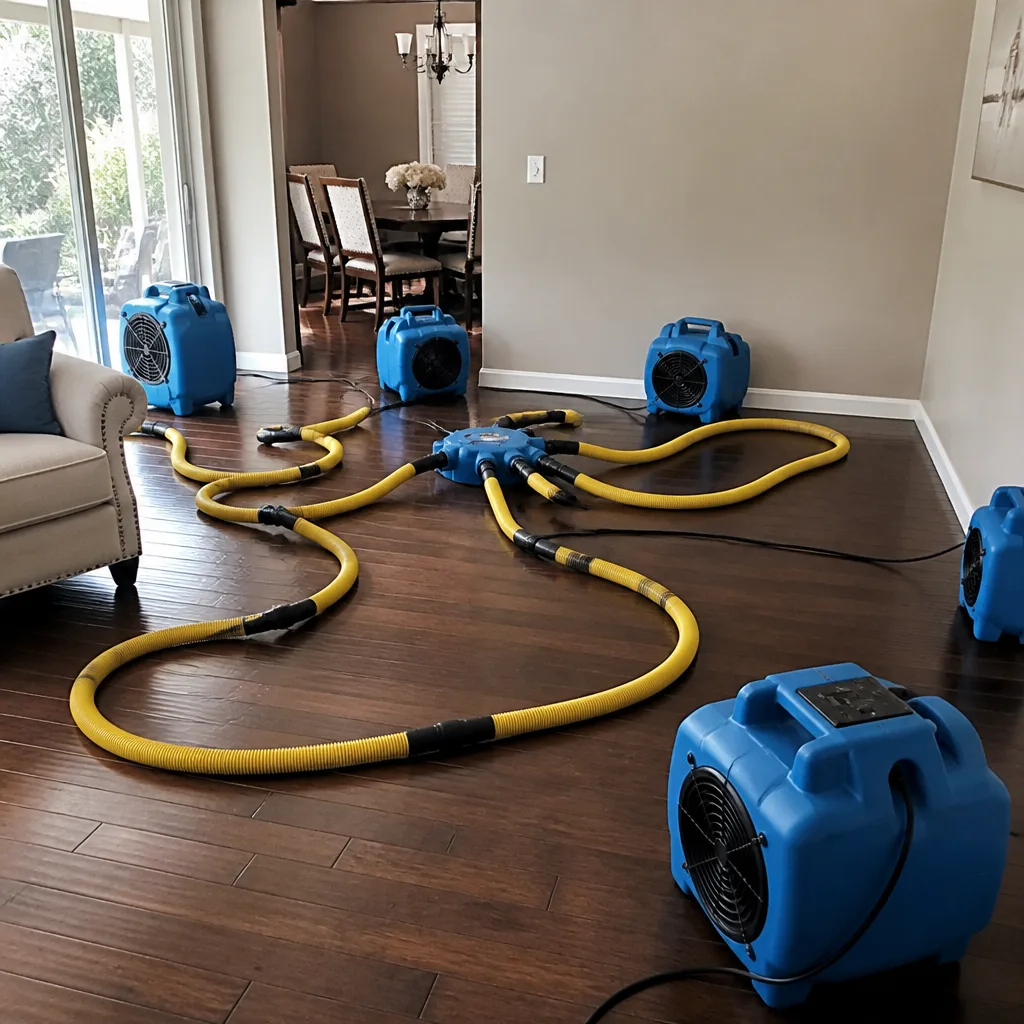 Water damage drying
 Fire & smoke cleanup
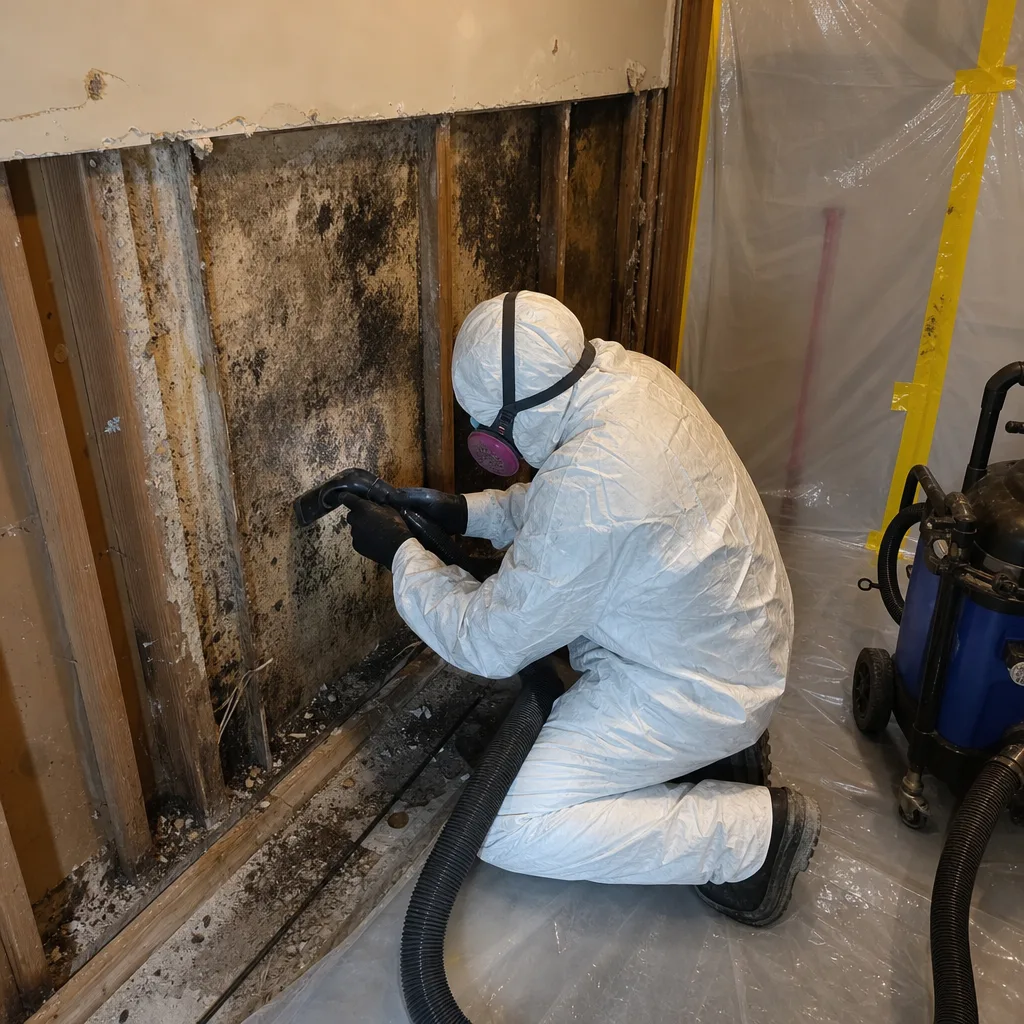
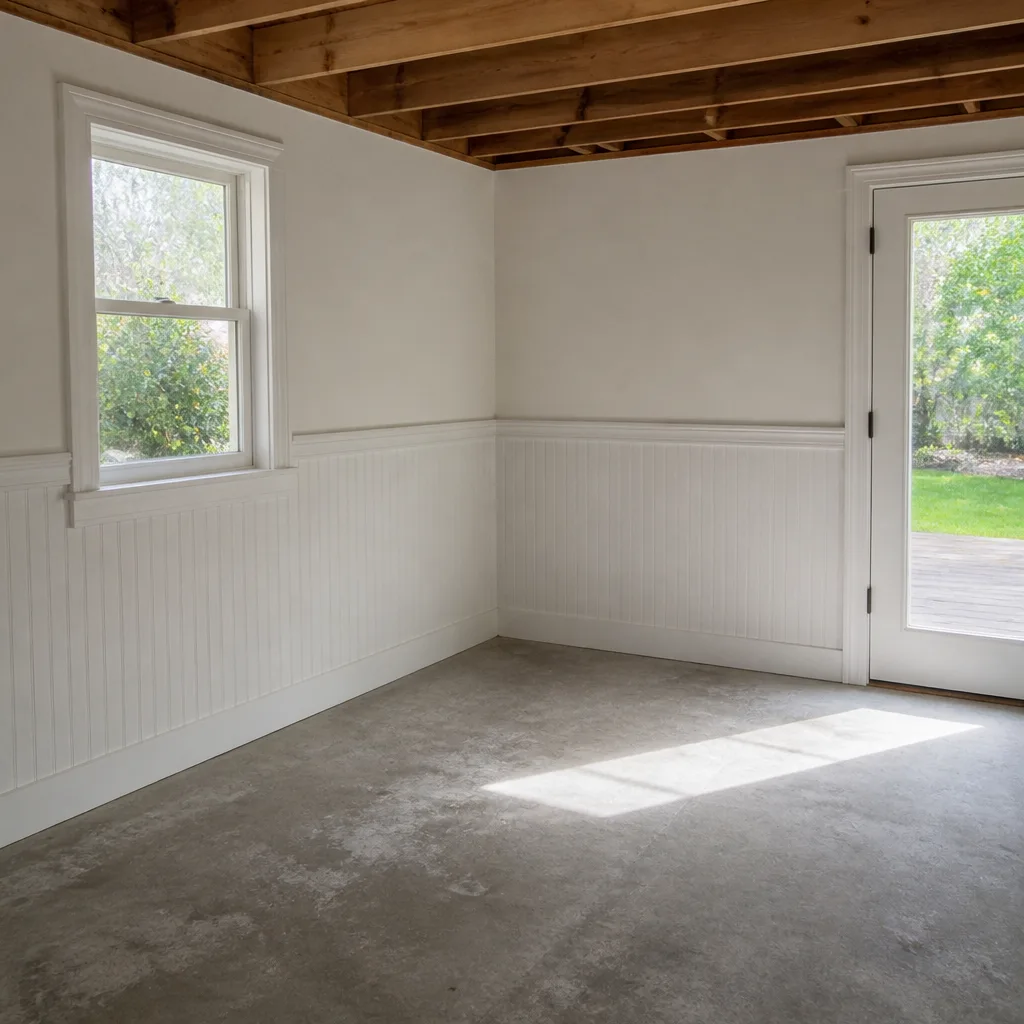 Mold remediation
 Storm response
 Sewage cleanup
 Reconstruction
Free visual inspection and a written scope of work before any mitigation begins - photos, moisture readings, and drying logs go in your claim file
The scope we write is the scope we bill. Anything new gets shown to you, in writing, before we touch it.
Get your free estimateDamage Restoration Warning Signs: A Buena Park Homeowner’s Reference Guide
By the time you can smell mold in a wall cavity, the colony is typically 2 to 3 weeks old and occupying 10 or more square feet of surface area. The warning signs that preceded it were there all along, but they weren’t visible to anyone who wasn’t looking at the right surfaces with the right questions in mind. This guide is written for Buena Park homeowners who want to catch water intrusion, mold growth, and structural compromise before they become insurance claims, health hazards, or five-figure remediation projects, and you can find more guides & resources on our blog. We’re going to translate what professional moisture meters and thermal imaging cameras detect into observable signals you can spot with an untrained eye. Because in our experience, the difference between a $600 drying job and a $14,000 mold remediation in this city often comes down to about ten days.
Quick Answer
The earliest water damage warning signs in a Buena Park home are thermal bridging patterns on interior walls during cool mornings, paint bubbling or delamination in specific geometric patterns, subtle changes in how flooring sounds and feels underfoot, efflorescence on concrete surfaces, and rust streaking at drywall fasteners. None of these require professional equipment to detect. All of them indicate moisture is present inside a wall assembly, slab, or ceiling cavity and should trigger a documented moisture assessment before visible mold or standing water ever appears.
Restoration work we handle
Table of Contents
- Thermal Bridging: What Cold Spots on Interior Walls Actually Reveal
- Paint and Finish Behavior: Reading Bubbling, Cracking, and Delamination
- Flooring Deflection and Sound Changes: The Systematic Tap-and-Walk Test
- Biological Indicators Beyond Visible Mold: Efflorescence, Rust Streaking, and Fungal Staining
- Odor Mapping: Using Your Nose as a Diagnostic Tool
- Why Buena Park Homes Face Specific Moisture Risks
- Documentation: What to Record Before You Call Anyone
- Common Mistakes to Avoid
Thermal Bridging: What Cold Spots on Interior Walls Actually Reveal
Thermal bridging is a phrase that sounds technical but describes something any Buena Park homeowner can observe on a cool morning between November and March. Walk through your house before the heat kicks on and place your palm flat against interior walls, especially walls shared with bathrooms, kitchens, or exterior-facing plumbing chases. A healthy wall assembly has relatively uniform surface temperature. A wall with moisture trapped inside the cavity will feel distinctly cooler in specific bands or geometric patterns, because water conducts thermal energy significantly faster than dry gypsum, dry lumber, or fiberglass insulation.
What you’re feeling is not the moisture itself. You’re feeling the path heat takes as it escapes through material that has become thermally conductive. In Buena Park’s climate, where late-night temperatures regularly drop into the 40s during winter months while daytime highs climb into the 70s, the temperature differential between conditioned interior space and exterior wall cavities can be 25 degrees or more. That differential is what makes moisture inside a wall detectable by touch.
Here’s what we’ve learned from hundreds of moisture investigations in Orange County homes:
- Vertical cold stripes running floor-to-ceiling along an interior wall often indicate water traveling down a stud bay from a roof leak, a plumbing supply line leak in the wall above, or condensation accumulating in the cavity.
- Cold rectangles corresponding to the space between studs suggest insulation has been saturated and compressed, losing its thermal resistance and transmitting exterior temperature inward.
- Cold halos around electrical outlets or switches on exterior walls indicate air infiltration carrying moisture, which condenses inside the wall cavity when it hits the cooler backside of the drywall.
- Cold bands along baseboards on slab-on-grade homes, which are common throughout Buena Park’s older neighborhoods, point to water wicking upward through the concrete slab and saturating the bottom plate of the wall framing.
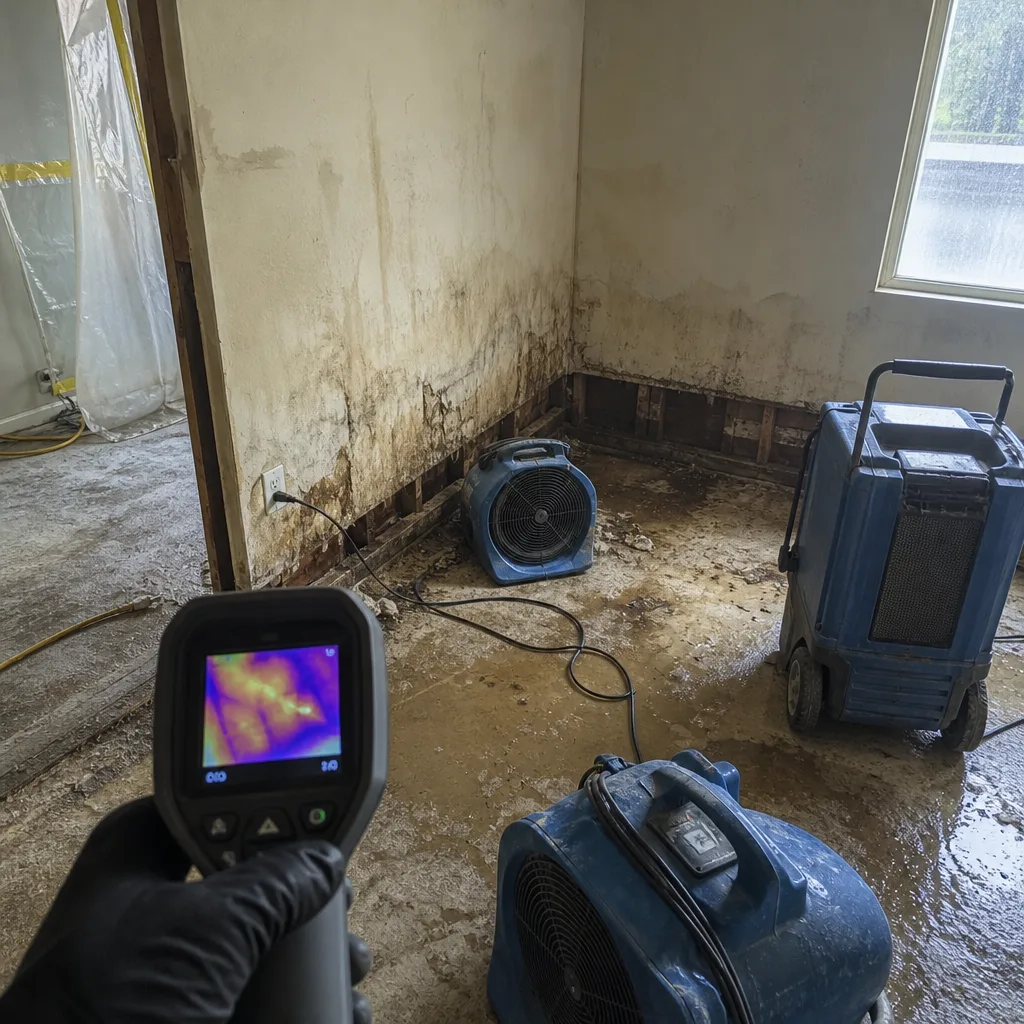
A palm test is not a substitute for thermal imaging. But it costs nothing, takes ten minutes, and has identified moisture problems in Buena Park homes years before visible damage became obvious. If you find a cold spot that doesn’t match anything on the other side of the wall, call a restoration contractor certified to IICRC standards and ask for a documented moisture assessment. The Stonecrest Water Damage home team runs thermal imaging and pin-type moisture meters on every water investigation, which converts what your palm suspects into documented readings an insurance adjuster can act on.
Paint and Finish Behavior: Reading Bubbling, Cracking, and Delamination
Paint failure is the most common early warning sign homeowners dismiss as cosmetic. The key is understanding that moisture-driven paint failure follows specific patterns that are different from normal aging, settling, or poor surface preparation. When a home in Buena Park experiences frame movement from the area’s expansive clay soils, you’ll see straight-line cracks at drywall seams and corners, often running vertically or diagonally from door and window corners. That’s settlement. When moisture is the culprit, the paint behaves differently.
Moisture-driven paint failure follows these patterns:
- Bubbling or blistering in irregular patches: Water vapor pushing through the substrate lifts the paint film off the drywall or plaster. The bubbles are typically concentrated in a defined area rather than evenly distributed, which tells you moisture is entering at a specific point and spreading laterally.
- Delamination in sheets: When the moisture source is consistent, such as a slow plumbing leak inside a wall cavity, the paint loses adhesion in large continuous sections that peel away in flexible sheets rather than flaking off as small chips. Flexible peeling means the underlying surface is wet enough to have softened the drywall paper.
- Crazing or crackle patterns: Fine, interconnected cracks that resemble a dried mud flat indicate repeated wetting and drying cycles. Each cycle stresses the paint film until it fractures in this distinctive pattern.
- Staining that bleeds through fresh paint: If you’ve repainted a ceiling or wall and a brownish or yellowish stain returns within days or weeks, you’re not dealing with a stain. You’re dealing with an active moisture source that is drawing contaminants through the material. Paint is acting as a moisture indicator, not a solution.
In Buena Park’s older housing stock, particularly homes built before 1980, you’ll sometimes see what looks like paint bubbling on exterior stucco walls. This is often confused with water intrusion from outside, but in our experience, the more common culprit is interior moisture from bathroom exhaust fans venting into wall cavities or attic spaces rather than through the roof. The fix is not repainting. The fix is locating and eliminating the moisture source, then drying the assembly to IICRC S500 standards before any cosmetic repair happens. For water damage that has spread beyond a single room, our Water Damage Restoration in Brea process applies equally here in Buena Park, using commercial-grade drying systems that measure progress in moisture content readings, not visual dryness.
Flooring Deflection and Sound Changes: The Systematic Tap-and-Walk Test
Most Buena Park homes sit on concrete slab foundations. This is true of the tract developments that spread across the city between the 1950s and 1980s, and it’s still true of many newer builds. Slab foundations present a specific moisture vulnerability: water traveling beneath or within the slab has no visible drainage path, so it wicks upward through the concrete and into the flooring materials installed above it. Hardwood, engineered wood, laminate, and even tile all respond to that moisture in ways you can detect with a systematic walk-through.
Here’s the protocol we recommend, refined from what our technicians do with moisture meters on every assessment:
- Remove your shoes and walk slowly through every room. Hardwood and laminate will feel spongy or soft underfoot when the subfloor or the wood itself has absorbed moisture and expanded. What you’re feeling is the flooring lifting slightly off the slab or the substrate compressing. Healthy flooring feels rigid.
- Tap flooring with a knuckle at regular intervals. Dry hardwood over a healthy slab produces a sharp, high-pitched tap. Wet or delaminated flooring produces a dull thud. The sound difference is subtle at first, but once you hear it in one room and compare it to a known-dry room, it becomes unmistakable. Tile over a properly bonded substrate rings. Tile that has debonded from a wet slab sounds hollow.
- Check for lippage or edge lifting at tile grout lines. Moisture causes the thin-set mortar bond to fail from the center of the tile outward. You’ll notice edges of tiles sitting slightly higher than their neighbors, often accompanied by hairline cracks in the grout that run parallel to the tile edges rather than crossing them.
- Look for cupping or crowning on hardwood planks. Cupping, where plank edges rise higher than the center, means moisture is being absorbed from below. Crowning, where the center rises, typically indicates surface water exposure. Both are signs your floor is saturated enough to need professional drying, possibly including Injectidry system drying of the slab itself.
- Walk the perimeter of each room, then the center, in a grid pattern. Moisture rarely enters flooring uniformly. You’re mapping the boundaries of the wet area, which tells you where the water source is located and how far it has spread. Start with a slow lap around the outside edge, then walk straight lines across the room in both directions.
One Buena Park-specific factor: many homes here have had flooring replaced with floating luxury vinyl plank over the original slab. Floating floors mask deflection better than nail-down hardwood, but they don’t mask odor. If you have LVP flooring and you smell a persistent musty or earthy odor that follows the floorplan, the slab underneath is almost certainly the source, and the LVP is acting as a vapor barrier trapping moisture beneath it. Peel back a corner in an inconspicuous area and smell the underside. If it’s musty, call a certified restoration team before the problem spreads to baseboards and wall cavities.
Biological Indicators Beyond Visible Mold: Efflorescence, Rust Streaking, and Fungal Staining
Visible mold is a late-stage indicator. By the time you see black, green, or white colonies on a surface, the growth has typically been active for two to three weeks and has established a root system penetrating the material it’s growing on. What appears earlier are the chemical and mineral byproducts of moisture, and Buena Park homeowners can learn to read them just as we do.
Efflorescence is the white, chalky, crystalline deposit that appears on concrete block, poured concrete foundations, brick, and sometimes grout. It’s not mold, but it’s not harmless either. Efflorescence forms when water moves through a cementitious material, dissolving mineral salts, and then evaporates at the surface, leaving the salts behind. It’s a moisture map. In Buena Park, where many homes have raised foundations with concrete stem walls or slab foundations with exposed edges in garages, efflorescence on a stem wall tells you water is moving through that concrete on a regular basis. The source could be landscape irrigation, a leaking pool line, poor drainage at the foundation perimeter, or a plumbing leak under the slab. Efflorescence on a garage slab edge points to water wicking from soil moisture, often caused by downspouts discharging too close to the foundation.
Rust streaking at fasteners is one of the most overlooked early warning signs in drywall assemblies. Drywall is attached to framing with screws or nails. Those fasteners are steel. When moisture reaches the backside of the drywall and saturates the paper facing, the fastener heads begin to rust. That rust bleeds through the paint as small, circular, orange-brown stains, often with a small dimple at the center. In Buena Park homes built before 1990, you’ll sometimes see this on ceilings below plumbing fixtures, on walls adjacent to exterior hose bibs, or in garages below second-story bathrooms. Each rust spot is a moisture event that has already compromised the fastener’s holding power and started degrading the drywall around it.
Fungal staining in attic framing presents differently depending on the fungus and the wood species. What homeowners describe as “dark streaks” or “grayish patches” on rafters and trusses is often not mold but a cosmetic fungus known as sap stain or blue stain. However, it indicates the wood has been wet enough to support fungal activity at some point. In Buena Park, where summer attic temperatures regularly exceed 140 degrees, active attic mold growth is less common than in coastal Orange County cities, but staining from winter condensation is widespread. Look for staining that follows specific patterns: linear streaks along the top chord of trusses indicate condensation dripping from roofing nails, while circular patches around roof penetrations indicate leaks that have since dried or been repaired. If you see staining accompanied by white, cottony growth, that’s active mold and requires professional assessment. Our Mold Remediation in Brea team uses IICRC S520 protocols for exactly this type of attic contamination, and the same standards apply to Buena Park homes.
Odor Mapping: Using Your Nose as a Diagnostic Tool
Most people experience a musty odor as a single, room-level phenomenon. They smell it, light a candle, and hope it goes away. But odor is directional and consistent, and with a methodical approach, you can use it to narrow down a moisture source to a specific wall cavity, floor section, or ceiling bay. This matters because the precise location of the moisture determines the restoration approach, the scope of demolition, and the final cost.
Here’s the systematic approach we use, adapted for a homeowner doing a first pass:
- Stop masking. Do not run air fresheners, candles, or ozone generators for 48 hours before you map odors. You need your nose at baseline sensitivity, and masking agents interfere with your ability to detect concentration gradients.
- Close all windows and exterior doors for two hours. This allows any odor being released from structural materials to accumulate in the indoor air rather than being diluted by ventilation. Then enter the home and note which rooms smell strongest immediately.
- Map the house room by room. Stand in the doorway of each room for 15 seconds and breathe normally. Rate the odor intensity on a 1-to-3 scale. Then move to the center of the room and repeat. What you’re looking for is not just “where it smells” but where it smells strongest, because odor concentrates near its source.
- Go low. Musty odors from slab moisture are strongest at floor level. Get down on your hands and knees and smell along baseboards, especially along exterior walls and around floor vents. If the odor is stronger at the floor than at chest height, the moisture source is below the flooring or in the wall base.
- Go high and follow dimples. In bathrooms and kitchens, remove the cover plates from electrical outlets and switches on the wall you suspect is wet. Carefully sniff the opening. You’re not smelling the outlet; you’re sampling air from the wall cavity, where moisture accumulates out of sight. Replace the cover immediately after.
- Enter the attic last. If the odor is strongest near the ceiling or in upper-floor rooms, access the attic and check the insulation. Wet fiberglass insulation has a distinct smell, but more telling is the visual condition: compressed, matted, or discolored insulation indicates a leak above. In Buena Park, roof leaks are most common after winter storms, particularly on older composition shingle roofs with worn flashing around plumbing vents and chimneys.
Odor mapping works because microbial volatile organic compounds, the chemicals released by actively growing mold and bacteria, are heavier than air in enclosed spaces and concentrate near their release point. Your nose mapped that concentration before you knew what you were doing. Now you’re doing it deliberately.
Why Buena Park Homes Face Specific Moisture Risks
Buena Park sits at the intersection of several climate and soil factors that make moisture intrusion more common here than in neighboring Orange County cities to the south, and our Seasonal Damage Restoration Care for Buena Park: Year-Round Homeowner’s Guide breaks down what to watch for each season. Understanding these factors helps homeowners recognize which warning signs to prioritize.
First, the soil. Much of Buena Park sits on expansive clay soils that shrink and swell dramatically with moisture content. During dry periods, the soil contracts and pulls away from foundations. During wet winters, it expands and presses against them. This cyclical movement creates hairline cracks in slabs and stem walls, and those cracks become pathways for water. It also creates stress on plumbing lines running beneath slabs, which is why we see more under-slab plumbing leaks in Buena Park than in communities built on sandier soils.
Second, the age of the housing stock. Large portions of Buena Park were developed in the post-war decades, and many homes still have original steel or cast iron plumbing. These materials corrode over 50 to 70 years, and the failure often begins as a pinhole leak that releases water slowly behind walls or under floors for months before it’s noticed. The warning signs described in this guide are particularly relevant for homeowners in the older neighborhoods bounded by Beach Boulevard, La Palma Avenue, and Knott Avenue.
Third, landscape irrigation. Buena Park has a relatively hot, dry summer climate, and homes here depend on irrigation to keep landscaping alive. Sprinkler heads placed too close to foundations, drip lines that run underneath slabs, and overly aggressive watering schedules all contribute to the soil moisture that wicks into concrete and up through flooring. In our assessments, we regularly find that irrigation adjustments solve moisture problems that would otherwise require structural drying.
Fourth, the coastal influence. While Buena Park is inland, it’s close enough to the coast to receive morning marine layer moisture during late spring and early summer, often called May Gray and June Gloom. This raises relative humidity in crawl spaces and attics, and combined with warm daytime temperatures, creates conditions where condensation forms on cool surfaces inside wall cavities. Homes with poor ventilation or missing vapor barriers are most vulnerable.
If you’re seeing any of the warning signs described in this guide and need a professional assessment, the Fire Damage Restoration in Brea page describes one of our service lines, but for moisture concerns specifically, the water damage and mold remediation services are what apply. The geographic overlap between Buena Park and Brea matters because our service area covers both, and we dispatch the same certified crews with the same Dri-Eaz and Phoenix drying equipment to both cities.
Documentation: What to Record Before You Call Anyone
If you’ve identified one or more warning signs, the next step is documentation. This serves two purposes: it gives the restoration contractor a starting point for their investigation, and it creates a record that insurance adjusters will want to see. Insurance claims are evaluated on evidence, and your photos, notes, and timeline become part of that evidence.
Here’s what to record:
- Date-stamped photos of every warning sign you’ve identified. Use your phone’s timestamp feature or hold a written date in the frame. Take wide shots that show the location in context, then close-ups that show the detail.
- Your odor map, written down. Which rooms rated 1, 2, or 3 on your intensity scale, and at what height the odor was strongest. This matters more than you’d think when a technician is deciding where to start drilling inspection holes.
- Floor plan annotations. Draw or print a simple floor plan and mark where each warning sign appears. The spatial pattern often reveals the moisture source faster than any individual sign.
- A timeline. When did you first notice each sign? What changed in the weeks before, like a storm, an irrigation adjustment, or a plumbing repair? What’s the home’s history of leaks or water events?
- Utility bill context. An unexplained spike in your water bill during a month with no known increase in usage is a strong indicator of a hidden leak. Buena Park water rates make even a small continuous leak noticeable on a bimonthly bill.
Stonecrest Water Damage offers free estimates in Buena Park, and when we arrive, we’ll do our own documentation with moisture meters, thermal imaging, and photo evidence. Your records give us a head start, and they demonstrate to your insurer that you acted promptly and responsibly when you observed the warning signs.
Common Mistakes to Avoid
- Painting over moisture-damaged surfaces. Paint seals the surface, trapping moisture inside the wall or ceiling assembly where it accelerates mold growth and structural degradation. The stain will return, and you’ll have spent money making the problem worse.
- Assuming a dried stain means the problem is solved. Water can dry at the surface while moisture remains trapped in the substrate. A stain that looks dry to the touch may still indicate 20 to 30 percent moisture content in the drywall behind it. Only a moisture meter confirms actual dryness.
- Running a dehumidifier indefinitely without finding the source. A consumer dehumidifier can lower the humidity in a room, but if water is actively entering a wall cavity or slab, the dehumidifier is masking the symptom, not solving the problem. You’ll waste electricity and delay remediation.
- Ignoring the first cold spot or paint bubble because it’s small. Moisture spreads laterally through gypsum and wood at rates that surprise most homeowners. A 6-inch paint blister on a Buena Park bathroom wall can grow to a full wall replacement in three weeks.
- Cutting out the visible mold without addressing the moisture. Mold remediation that doesn’t include finding and eliminating the water source is a waste of money. The mold will return, often within weeks, because the conditions that supported it haven’t changed.
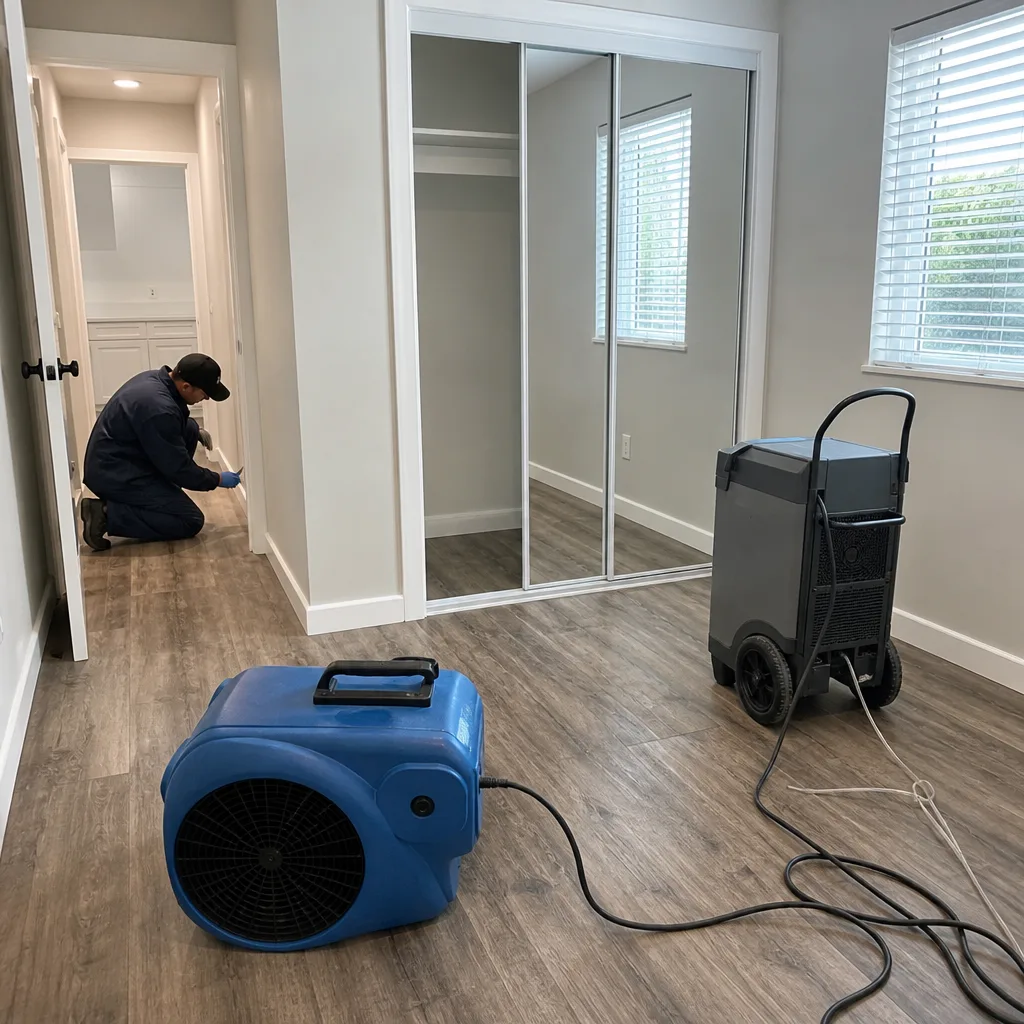
- Trusting a handyman or general contractor to handle moisture issues with a shop vac. Structural drying requires knowledge of psychrometry, the science of air and moisture movement. General contractors are often excellent at rebuilding, but drying a wet structure properly requires IICRC-certified protocols and commercial-grade equipment like the Dri-Eaz and Phoenix systems we run on every job.
- Filing an insurance claim without documentation. Your insurer will ask when you noticed the problem, what you did about it, and whether you can prove the timeline. If you haven’t documented your observations, you’re relying on memory and good faith. Document first, call second.
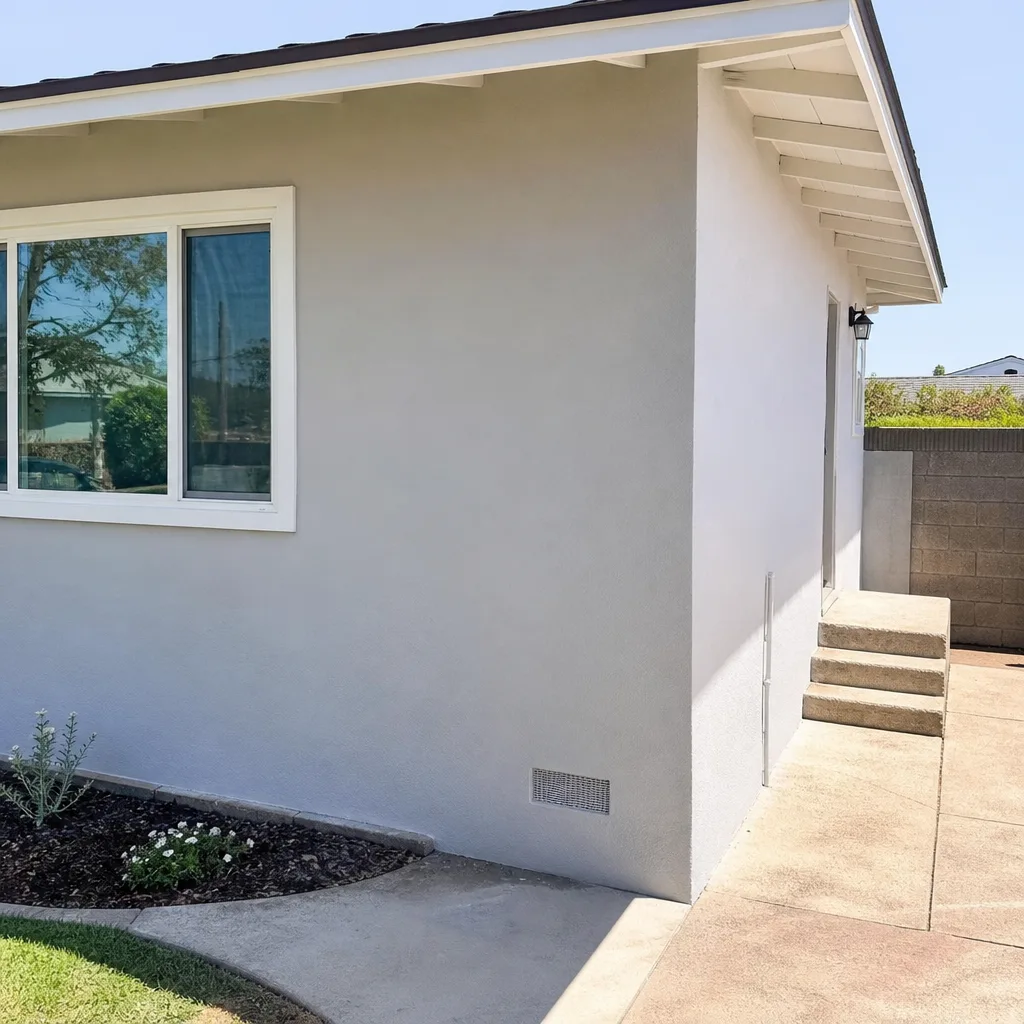
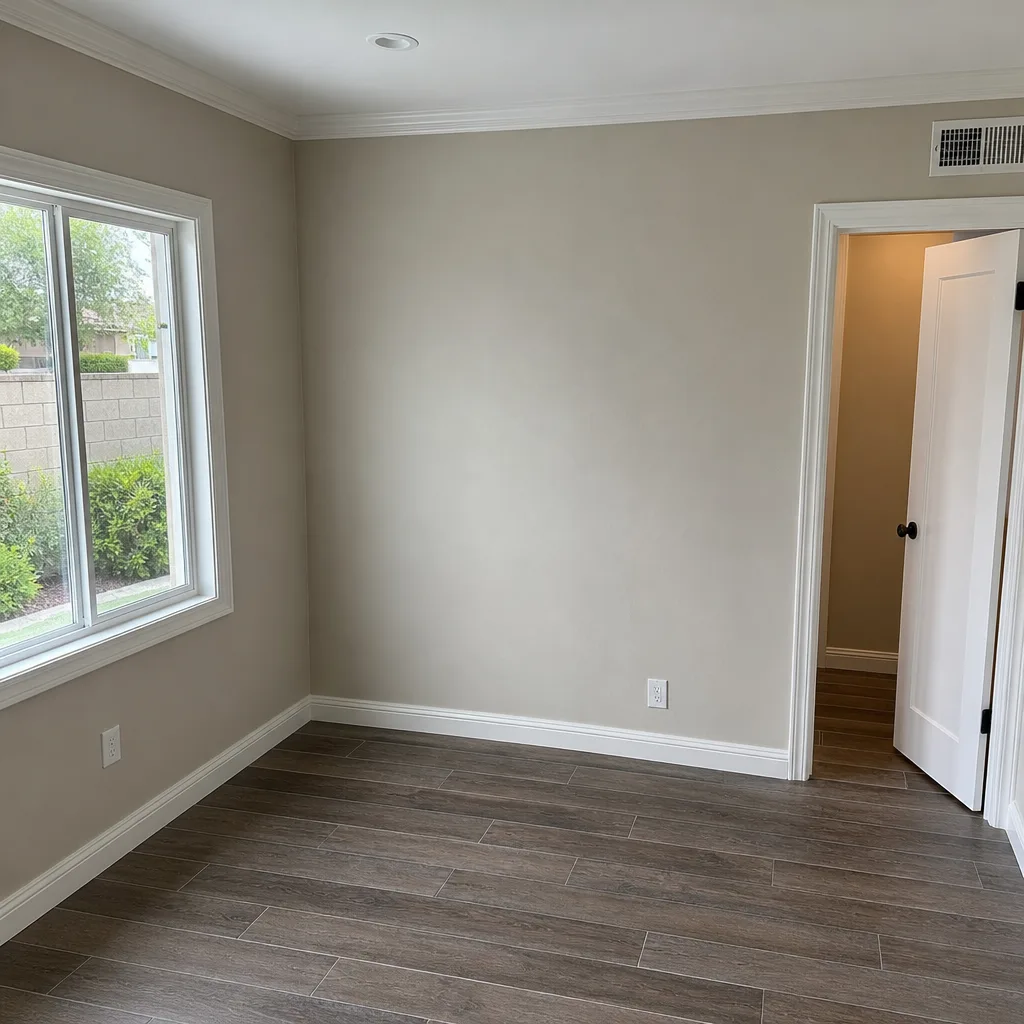
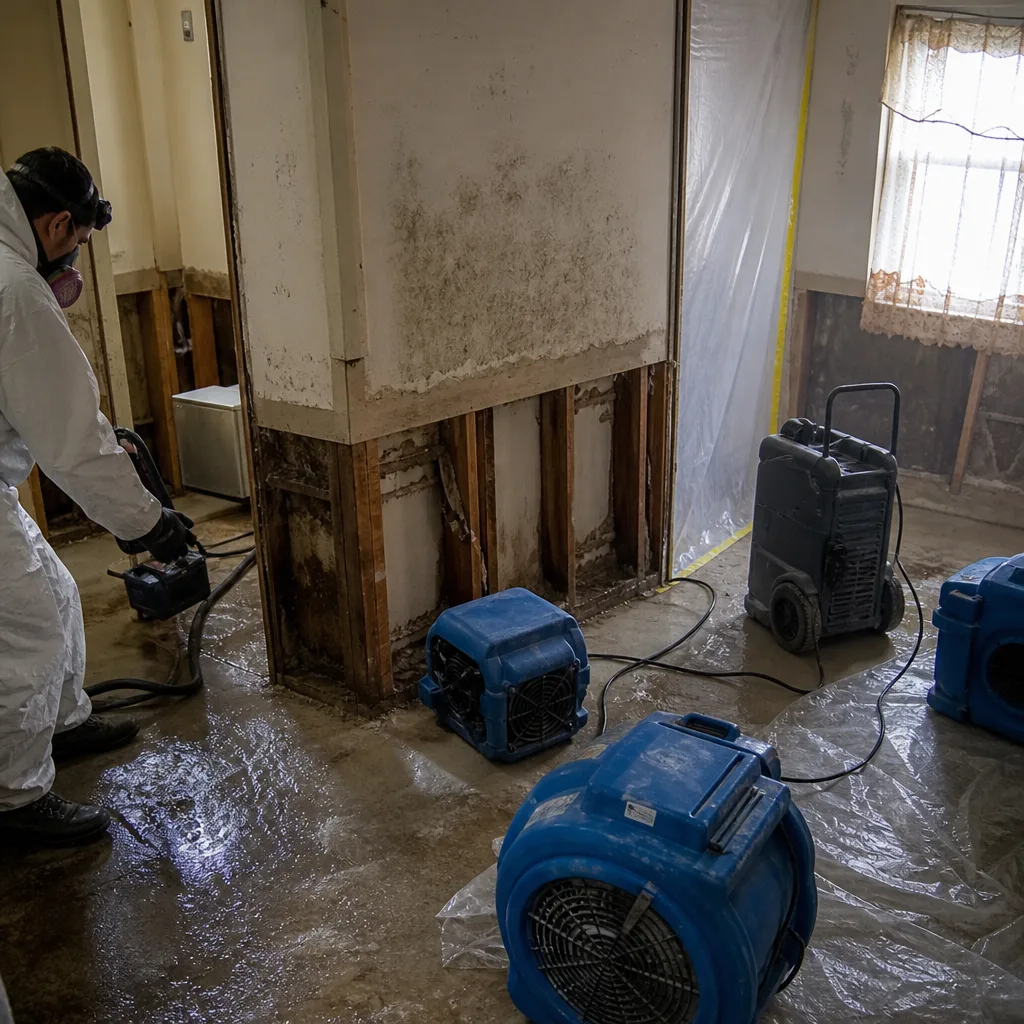
See the difference
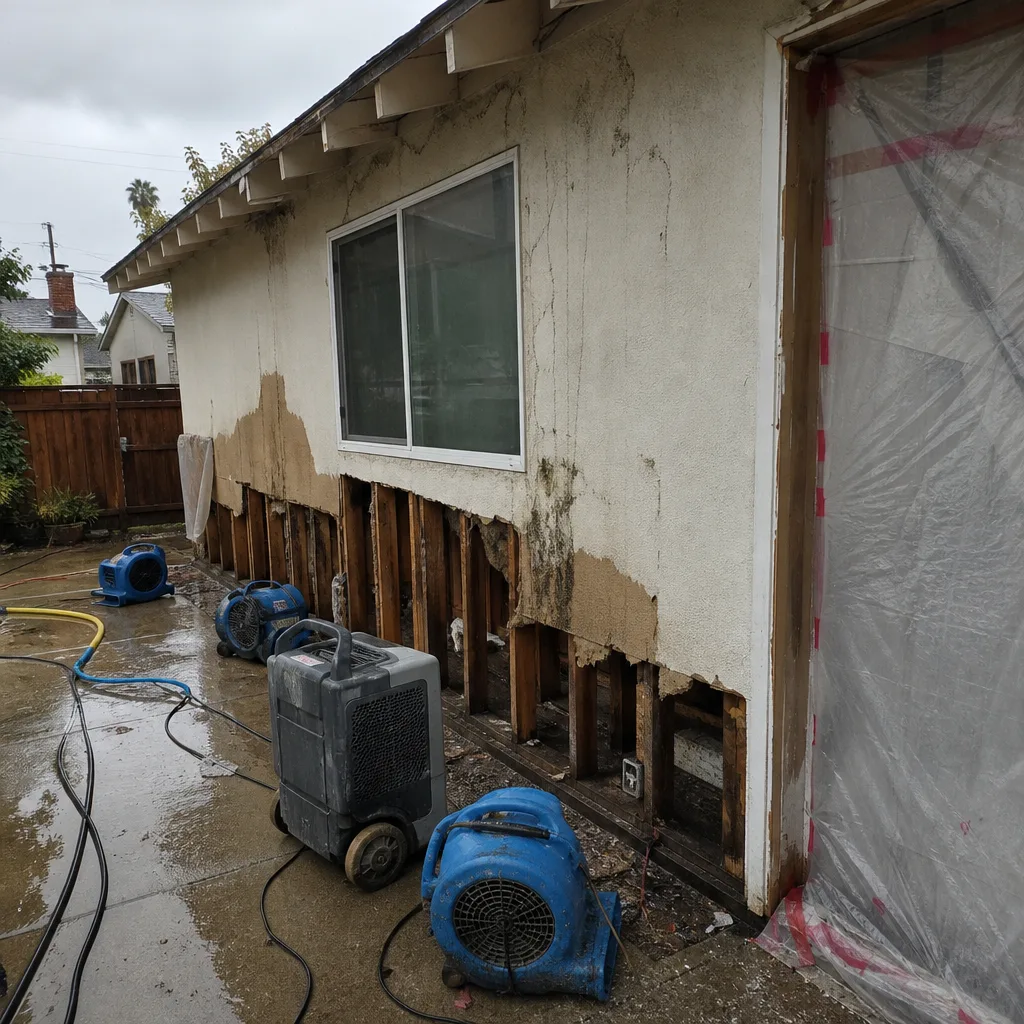 Before
 After
 Before
 After
 Before
 After
When to Call a Professional
Call a restoration professional when any of these conditions are present: a cold spot that doesn’t respond to HVAC adjustments and persists for more than a day; paint bubbling or delamination covering more than a square foot; flooring that feels spongy or sounds hollow over a defined area; efflorescence that reappears after cleaning; rust stains at drywall fasteners; odor that persists after ventilation and maps to a specific location; or any visible mold growth larger than a dinner plate. If you’re unsure whether to tackle the issue yourself, read our DIY vs Professional Damage Restoration: The Buena Park Homeowner’s Decision Guide. Stonecrest Water Damage offers free estimates in Buena Park, and our technicians arrive with commercial-grade moisture detection equipment from Dri-Eaz and Phoenix. We document everything we find, explain what it means in plain language, and give you an honest assessment of whether professional drying is needed or whether the issue is something you can monitor. Call (833) 589-9161.
Frequently Asked Questions
The earliest signs are thermal bridging patterns on interior walls, paint bubbling or delamination in specific geometric patterns, flooring deflection or sound changes underfoot, efflorescence on concrete surfaces, and rust streaking at drywall fasteners. These signs appear days to weeks before visible mold or standing water, because moisture inside wall assemblies and slabs changes thermal conductivity, paint adhesion, and flooring behavior before it produces visible growth.
Yes, consumer-grade pin-type moisture meters are available for under $50 and can detect elevated moisture content in drywall, wood, and flooring. However, pin-type meters only measure at the contact point and won’t detect moisture deeper in a wall cavity. Professional assessment uses pinless meters that read through materials without puncturing them, plus thermal imaging to map the full extent of moisture spread. Your meter may confirm a problem exists, but a professional assessment determines the scope and the drying plan.
Mold germination can begin within 24 to 48 hours of water exposure under the right conditions. Buena Park’s warm summer temperatures accelerate growth, and by the time mold is visible or producing a detectable odor, it has typically been growing for two to three weeks. The colonies you see on a surface represent only a fraction of the total contamination, because the root system extends into the material itself.
Most homeowners policies cover sudden and accidental water damage, such as a burst pipe or storm intrusion, and the resulting mold remediation when it’s a direct result of the covered event. Gradual damage from long-term leaks or lack of maintenance is typically excluded. The documentation you keep, including photos, timelines, and professional assessments, strengthens your claim regardless of the cause. We work directly with insurance adjusters and provide the moisture readings and photo evidence they require.
Professional structural drying typically takes three to five days when the proper equipment is used and the moisture source has been eliminated. This timeline varies based on the materials affected, the depth of saturation, and the ambient conditions in the home. Drying is complete when moisture content readings confirm the structure has returned to its pre-loss condition per IICRC S500 standards, not when surfaces feel dry to the touch.
No, a musty odor can also come from bacteria thriving in wet insulation, decaying organic matter in a wall cavity, or simply high humidity in a poorly ventilated space. However, the odor-producing conditions are the same: moisture is present where it shouldn’t be, and biological activity is occurring. Treat the odor as a moisture indicator and locate the source rather than masking the smell. If you can’t find the source on your own, a professional moisture assessment will.
Homes in Buena Park’s older neighborhoods, particularly those built before 1980 with original plumbing, experience more water damage from pipe failures than newer developments. Areas with heavy clay soils, common throughout the city, see more slab-related moisture issues. Homes with mature landscaping and irrigation systems close to foundations also present elevated risk regardless of age. The warning signs described in this guide apply throughout the city.
The Bottom Line
Water damage and mold growth in Buena Park homes follow a predictable progression, and the earliest stages are detectable without professional equipment if you know what to look for. Cold spots on interior walls, specific paint failure patterns, changes in flooring sound and feel, efflorescence, and rust streaking all precede visible mold by days or weeks. Odor mapping can narrow the source before demolition starts. Document everything you observe, and call a certified restoration contractor when the signs point to active moisture. Stonecrest Water Damage offers free estimates in Buena Park at (833) 589-9161, and we show up with commercial-grade drying equipment, thermal imaging, and the documentation your insurance company will ask for. The earlier you act, the less it costs, and the more of your original structure gets preserved.
Written by the team at Stonecrest Water Damage, serving Buena Park since 2013.