
Emergency Water Damage Restoration Near Me: What Buena Park Homeowners Should Do First
If you have water spreading through your Buena Park home right now, shut off the water source first, cut power to affected areas only if you can do so safely from a dry location, then call a restoration team that arrives with moisture meters, not just a shop vac. The first four hours determine whether you’re looking at a three-day drying project or a three-week demolition and mold remediation job. If you’d rather not navigate this alone, call Stonecrest Water Damage at (833) 589-9161 and we’ll walk you through it from the first phone call.
Why the First Four Hours Decide Everything
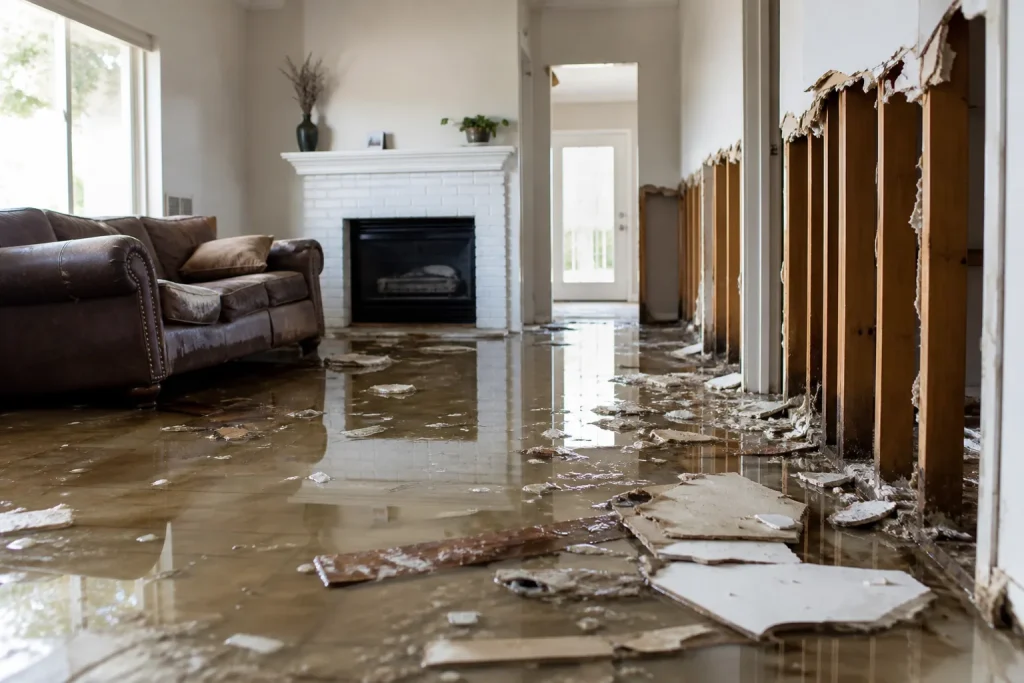
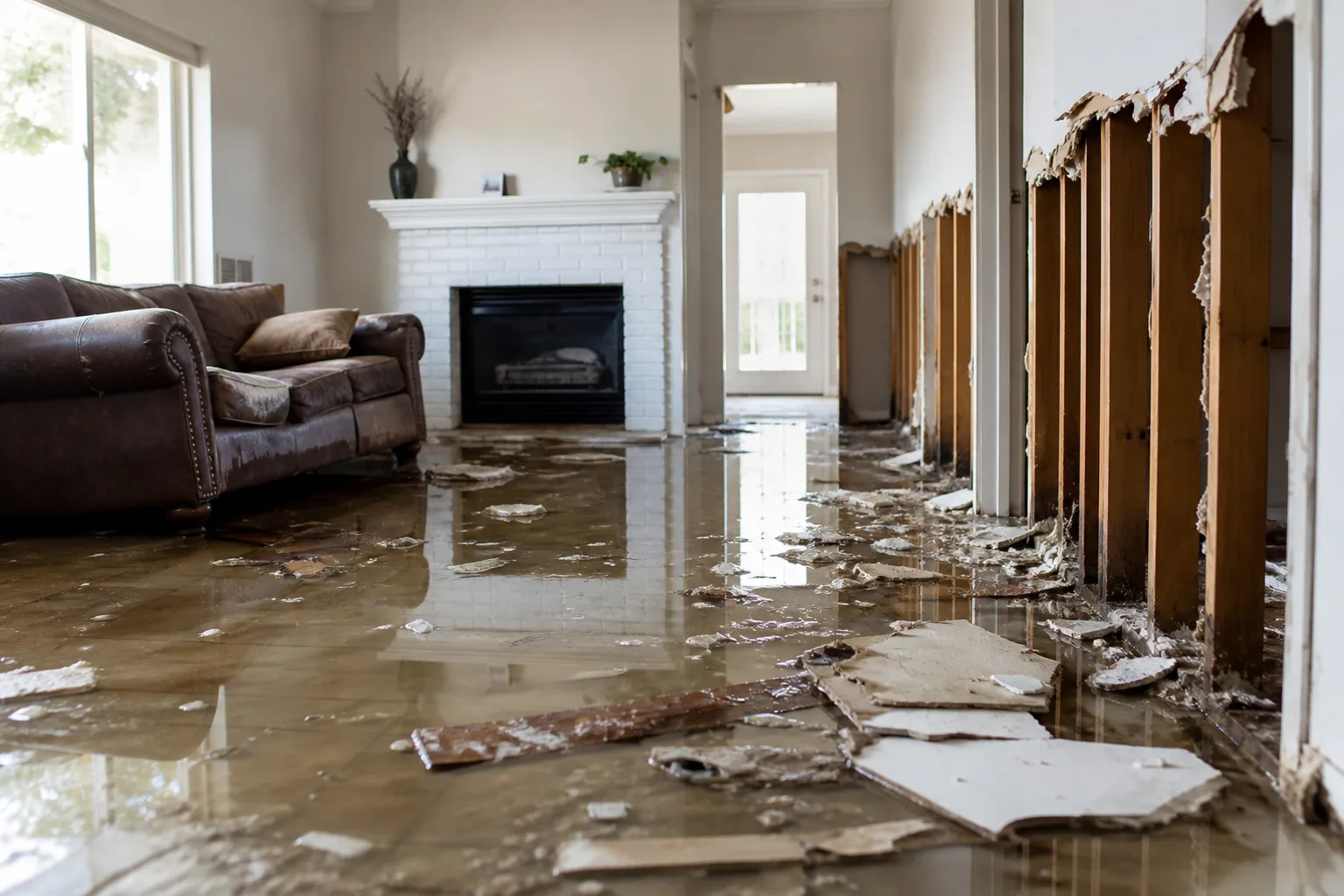
Water damage in Buena Park homes follows a predictable timeline, and it doesn’t wait for business hours. Sheetrock wicks moisture upward at roughly an inch per hour. Laminate flooring starts swelling within two hours. Particle board and MDF baseboards begin delaminating by hour three. And mold spores, which are already present in every home, only need 24 to 48 hours of elevated humidity to colonize. What most homeowners don’t realize is that the clock doesn’t start when you notice the water. It started when the water first touched building material.
In our experience running water losses across Buena Park, from the older ranch houses north of the 91 to the newer construction near Knott’s Berry Farm, the jobs that stay small are the ones where someone made the right calls in the first hour. The jobs that turn into full gut-outs and mold remediation are almost always the ones where a homeowner waited a day to see if it would dry on its own. It doesn’t. It just soaks deeper.
What Most Homeowners Get Wrong in the First Hour
Turning on ceiling fans after a pipe bursts feels productive. It isn’t. If the water came from anything other than a clean supply line, those fans can aerosolize contaminated droplets and push bacteria into rooms that were never wet. The same goes for opening windows on a humid Buena Park day. You’re not drying anything. You’re feeding the moisture load.
Here’s the sequence that actually protects your home:
- Shut off the water source. If it’s a supply line break, close the nearest fixture valve or the main shutoff. If it’s an appliance, kill the dedicated shutoff behind it. If you can’t find it, call us at (833) 589-9161 and we’ll talk you through it while our crew is en route.
- Assess electrical safety from a dry position. If water has reached outlets, appliances, or the breaker panel area, do not walk through standing water to flip breakers. Call a professional. If the panel is dry and accessible, shut off breakers to affected rooms.
- Move what you can without spreading the water. Furniture legs can stain carpet and wick moisture upward. Lift what’s liftable and place foil or plastic under legs. But leave wet carpet in place. Pulling it up yourself destroys the moisture pattern that tells us where the water actually traveled.
- Photograph everything before you touch it. Adjusters look for time-stamped photos showing the full extent of standing water, affected baseboards, and any visible waterline. Take wide shots first, then close-ups. Ten minutes of documentation now saves weeks of dispute later.
We worked a job off Beach Boulevard a few months back where the homeowner had already pulled up half his living room carpet and piled it in the garage before we arrived. The insurance adjuster couldn’t verify the original water path, and the claim took three extra weeks. Leave the carpet down. Let the moisture mapping tell the story.
Category Classification: Why the Water Source Changes What You Touch
The restoration industry classifies water damage into three categories, and in Buena Park we see all three every week. Understanding the difference matters because it changes what you should and shouldn’t handle before a technician arrives. This is the exact framework IICRC-certified crews use, and it’s the same standard your insurance adjuster will reference.
Category 1: Clean water. This comes from a supply line, a broken faucet connector, or a failed water heater. It’s the least risky to handle, but it degrades fast. After 48 hours, it becomes Category 2. After 72, it’s effectively Category 3. The water doesn’t get cleaner sitting on your floor.
Category 2: Gray water. This is water with some contamination: washing machine discharge, dishwasher overflow, sump pump failures. You should not be walking through this barefoot, and you shouldn’t be fan-drying it. It carries biological load that needs professional decontamination.
Category 3: Black water. Sewage backups, toilet overflows from beyond the trap, flood water. This is a health hazard. Do not touch it. Do not attempt extraction. Evacuate the area and wait for a crew with proper PPE and containment protocols. In Buena Park, sewer line backups can happen after heavy rain events when the municipal system gets overloaded, particularly in lower-lying areas near the Fullerton Creek channel. When a Category 3 loss hits, the restoration scope includes not just drying, but disinfection and controlled demolition.
The practical takeaway: if you know the water is clean and the leak is stopped, you can safely do basic things like moving furniture and propping up upholstery. If you’re not sure about the source, or if it’s gray or black water, don’t DIY anything. Call (833) 589-9161 and let us classify it properly before you risk making the situation worse.
How to Document Damage Like an Adjuster Needs You To
Insurance adjusters don’t process feelings. They process documentation. The difference between a smooth claim and a contested one in Buena Park usually comes down to what the homeowner captured in the first hour before the restoration crew touched anything.
Here’s what actually strengthens a claim:
- Time-stamped photos and video. Your phone records the time automatically. Use it. Walk the entire affected area slowly, narrating what you’re seeing: which rooms are wet, where the water is coming from, what’s been damaged. That video becomes your record when memory gets fuzzy.
- Photos of the source. If it’s a burst supply line under a sink, photograph it. If it’s a leaking appliance connection, photograph the connection. The adjuster’s first question is always where the water came from, and a photo answers it in a second.
- Photos of the waterline on walls and baseboards. This shows the extent of wicking. A visible waterline on drywall is evidence of Category progression and saturation depth. Don’t wipe it off for aesthetics.
- Serial numbers and model info for damaged appliances. This sounds tedious, but it’s the difference between replacement-cost and actual-cash-value on a water heater claim.
- Any pre-existing condition photos you happen to have. If you photographed a room before the event, that’s gold. It establishes a baseline.
One more thing that helps in Buena Park specifically: note the weather conditions if rainwater is involved. Summer monsoonal moisture events and winter atmospheric river storms hit this area differently, and your adjuster may need climate context for the claim.
Red Flags: What a Bad Emergency Response Looks Like
The emergency restoration industry has a quality-control problem, and homeowners in Buena Park pay the price when they land on the wrong company’s phone line. The worst offenders are the out-of-area contractors who buy leads on water damage searches and dispatch whoever’s closest, regardless of training. Here’s what should make you hang up:
A final price quoted over the phone before anyone sees the job. Legitimate restoration pricing is based on psychrometric readings, square footage of affected material, and the equipment needed to reach a documented drying standard. Anyone quoting $1,500 or $8,000 sight unseen is guessing, and they’ll adjust the scope on you later. A real estimate comes after moisture mapping, not before it.
A crew that shows up without metering equipment. If the technician walks in with a shop vac and a couple of fans from Home Depot, you’ve hired a cleanup crew, not a restoration contractor. Professional water damage work in Buena Park requires a different class of tool, and IICRC standards call for specific instruments to measure moisture content, humidity, and temperature before, during, and after drying. If they don’t pull out a meter in the first ten minutes, they’re not doing restoration. They’re doing expensive janitorial work.
No written drying plan. After the initial assessment, a legitimate company hands you a document that says: this is where the water went, this is the category, this is the target moisture content, this is the equipment we’re placing, and this is the expected duration. No written plan means no accountability, and no accountability means corners get cut.
Pressure tactics. Anyone who tells you to sign a work authorization immediately because the damage will be catastrophically worse in an hour is using fear to bypass your judgment. A professional restoration company answers your questions and lets the documentation speak.
What a Legitimate Emergency Response Actually Looks Like in Hour One and Two
When we respond to a water loss in Buena Park, the first two hours follow a sequence that was written into the IICRC S500 standard for a reason. Here’s what you should expect from any company you call:
Hour one: assessment and documentation. The crew arrives with thermal imaging, penetrating and non-penetrating moisture meters, and a thermo-hygrometer for humidity and temperature readings. They map the water’s spread through the structure, not just across the floor. Water travels horizontally through floor systems and vertically through wall cavities. A wet spot in the kitchen can mean saturated joists under an adjacent hallway. The mapping process tells us exactly which materials are wet and how wet, and establishes the psychrometric baseline that every drying decision is built from.
Hour one continued: containment and source confirmation. If the water category requires it, containment barriers go up before anything else. This protects unaffected rooms from aerosolized contamination during extraction and air movement. It’s the same protocol used on commercial losses, and it should be standard on residential work in Buena Park too.
Hour two: extraction and equipment placement. Extraction happens with truck-mounted or high-powered portable units, not a wet-dry vac. The goal is removing as much free water as possible before drying equipment takes over. Then we position air movers and dehumidifiers based on the moisture map. Brands like Dri-Eaz and Phoenix are the standard here because they move meaningful air volume and remove water from the air at a rate that actually reduces drying time. This is not the equipment section of a big-box store. This is the same fleet you’d see on a commercial loss in an Irvine office building.
If the water penetrated wall cavities, we may deploy Injectidry systems to dry inside those cavities without tearing out sheetrock. That capability matters in Buena Park because so many homes have shared walls and minimal replacement drywall stock for older textures. Less demolition means less reconstruction and fewer days out of the house.
For context on how this same standard applies to other situations, visit our page on Water Damage Restoration in Brea for a full walkthrough of the process, or see how water and mold overlap on our Mold Remediation in Brea page.
When to Stop DIY and Call a Professional
There’s a line between what a Buena Park homeowner can safely handle and what requires a certified crew. You cross that line when any of these apply: the water is gray or black water, the affected area is larger than one room, water has reached wall cavities or subfloor, electrical systems are involved, or it’s been more than 24 hours since the water first appeared. At that point, the cost of professional intervention drops below the cost of waiting, every single time.
We pulled a job out of a 1950s ranch near Buena Park Downtown last winter where the homeowner had let a slow under-sink leak run for three days. The visible damage was a warped cabinet base and some discolored vinyl. The hidden damage was saturated subfloor across three rooms and mold starting in the wall cavity behind the cabinet. The final mitigation scope was three times what it would have been if we’d gotten there on day one. That’s not an exception. That’s the rule with delayed water loss response.
The same principles apply to fire and smoke damage, which often involves water damage secondary to fire suppression efforts. If you’re dealing with a broader property loss, our Fire Damage Restoration in Brea page covers that integrated protocol.
Why Buena Park Homes Need a Different Drying Approach
Buena Park’s climate does us no favors on water losses. Summer temperatures regularly hit the mid-90s with humidity that’s manageable but not negligible. Winter brings atmospheric river events that dump inches of rain in hours and push groundwater through slab foundations. And because much of Buena Park’s housing stock dates to the 1950s and 1960s, we’re often dealing with construction materials and building assemblies that respond to moisture differently than newer construction.
Older homes here frequently have pier-and-beam or slab-on-grade foundations with vintage copper supply lines and cast iron drains. Copper develops pinhole leaks as it ages, and cast iron eventually corrodes. Those are the quiet leaks that run for months before anyone notices. When we respond to those calls, the moisture mapping usually reveals far more extent than the visible stain suggests. That’s normal for the age of housing in this city, and it’s why the drying plan has to be built on measurements, not eyeballing.
Newer construction in the developments south of the 91 and near the entertainment corridor tends to use PEX supply lines and engineered lumber, which handle water differently. PEX fails at fittings, not mid-run, and engineered joists delaminate when saturated. Both require the same documented, measurement-driven approach, but the drying targets differ. A crew that treats every Buena Park home the same is already making mistakes.
The Bottom Line
The first four hours after water intrusion determines whether a job stays a Category 1 drying project or escalates to a full demolition and mold remediation, and most of that outcome is controlled by decisions you make before any contractor arrives. Shut off the source. Assess safety. Photograph everything. Don’t turn on fans unless a professional tells you the water category supports it. And don’t trust anyone who quotes a price before they’ve put a moisture meter on your wall.
If you’re in Buena Park and water is moving through your home right now, call Stonecrest Water Damage at (833) 589-9161. We’ll talk you through the first steps on the phone, dispatch a certified crew, and handle the insurance documentation from the first moisture reading to the final drying certificate. Free estimates, IICRC-standard process, commercial equipment on every job. That’s not a sales pitch. That’s what the job requires.
Related services in Buena Park: Stonecrest Water Damage home | Mold Remediation in Brea | Fire Damage Restoration in Brea
Frequently Asked Questions
Shut off the water source immediately, then assess electrical safety from a dry location. Do not walk through standing water if outlets, appliances, or the breaker panel are affected. Once the source is stopped and the area is safe, photograph everything with time-stamped photos, then call a certified restoration company. The first call matters more than any other single action.
Only if you’re dealing with confirmed clean water from a supply line and the leak is fully stopped. In that case, remove small wet items and move furniture onto dry surfaces. Do not run fans, open windows on humid days, or pull up carpet. If the water source is uncertain or contaminated, do nothing except document and wait. The wrong early action makes professional drying take longer.
The source tells you. Clean supply lines (faucets, toilet supply lines, water heater supply) produce Category 1 water. Washing machine discharge, dishwasher overflow, and sump failures are Category 2, gray water with biological load. Sewage backups and toilet overflows from beyond the trap are Category 3, black water, and require professional containment, disinfection, and controlled demolition. When in doubt, treat it as contaminated and call (833) 589-9161 for classification.
Most standard policies cover sudden and accidental water damage from burst pipes, supply line failures, and appliance malfunctions. They typically do not cover gradual leaks, seepage, or flood water unless you carry a separate flood policy. The best way to protect your claim is with thorough time-stamped documentation taken before any cleanup begins. A professional restoration company can coordinate directly with your adjuster to align the drying documentation with what your policy requires.
A legitimate emergency response crew should be able to reach most Buena Park addresses within an hour or two of the call. The first visit includes moisture mapping, category classification, containment setup if needed, and initial extraction. That first response stops the damage from advancing, and the full drying plan follows from the measurements taken in that first visit. Call (833) 589-9161 and we’ll give you a straight answer on our current dispatch time.
Written by the team at Stonecrest Water Damage, serving Buena Park since 2013.
Need Damage Restoration Help?
Call Stonecrest Water Damage — licensed & insured, here with fast after-hours help in Brea.
(833) 589-9161