
Last updated October 31, 2026
 Water damage drying
 Fire & smoke cleanup
 Mold remediation
 Storm response
 Sewage cleanup
 Reconstruction
Free visual inspection and a written scope of work before any mitigation begins - photos, moisture readings, and drying logs go in your claim file
The scope we write is the scope we bill. Anything new gets shown to you, in writing, before we touch it.
Get your free estimateWater Damage Restoration Troubleshooting: Common Problems and How to Fix Them
If your hardwood floor re-cups six weeks after restoration was declared complete, the drying was never finished – it was just stopped. Cupping is a moisture gradient, not a mystery. In Buena Park, where summer humidity hovers around 65 percent and crawl spaces trap ground moisture year-round, we see this pattern repeat weekly: a restoration crew packs up, the property looks dry, and then the telltale symptoms return. This guide walks through the physical evidence your home leaves behind when drying falls short, what those symptoms actually mean, and how to verify whether your Water Damage Restoration reached structural equilibrium or simply ran out the clock.
Quick Answer
Most post-restoration problems – cupping floors, bubbling paint, returning odor – are diagnostic evidence that the original drying job never reached structural equilibrium. Incomplete cavity drying, premature equipment removal, Category misclassification, and skipped demolition are the four failures behind nearly every callback we investigate. You can verify the problem with a consumer-grade moisture meter, document it for your insurance file, and request a second-opinion inspection that follows IICRC S500 drying standards. For more guides & resources on navigating this process, see our blog.
Restoration work we handle
Table of Contents
- Understanding Structural Equilibrium: What “Dry” Actually Means
- The Four Restoration Failures We See Most Often
- How to Use a Moisture Meter to Test Your Home After Restoration
- Why Odor Returns After Restoration (And What It Actually Means)
- How to Document Ongoing Problems for Insurance and Contractors
- When to Request a Second-Opinion Moisture Inspection
- Buena Park-Specific Considerations: Climate, Construction, and Crawl Spaces
- Common Mistakes to Avoid
- When to Call a Professional
- Frequently Asked Questions
Understanding Structural Equilibrium: What “Dry” Actually Means
Here’s the uncomfortable truth: a surface can feel bone-dry while the structure behind it still holds enough moisture to warp wood, feed mold, and break down adhesives. The restoration industry has a term for the target state of a properly dried building – structural equilibrium. It means building materials have returned to the moisture levels they held before the water event occurred, not just the levels that feel acceptable to a palm pressed against drywall.
Drywall that reads 17 percent moisture with a meter may feel dry. But the IICRC S500 standard, the restoration industry’s core drying protocol, sets the dry standard for most gypsum board between 6 and 12 percent depending on the region and the material’s baseline. If your drywall is at 17 percent, it is not dry. It is holding moisture deep in the gypsum core, and eventually that moisture migrates to the surface, lifts paint, softens texture, and creates conditions for microbial growth.
The same logic applies to hardwood flooring. In Buena Park’s climate, oak flooring should typically read between 6 and 9 percent moisture content. At 12 to 14 percent, the wood begins to cup or crown. At 15 percent and above, you may see crowning severe enough to lift nails. The visible distortion is simply wood responding to a moisture imbalance – a language, not a defect.
What this means for troubleshooting is simple. If symptoms are returning weeks or months after the restoration company left, the question is not whether new water appeared. The question is whether the original water ever fully left. That distinction changes everything about how you approach the fix.
The Four Restoration Failures We See Most Often
In our experience responding to post-restoration callbacks, four patterns account for nearly every recurring problem. Each produces a distinct set of physical symptoms. Learning to recognize them tells you exactly what to inspect and what to ask your contractor – or your second-opinion inspector – to verify.
1. Incomplete Cavity Drying
Water travels behind baseboards, behind vapor barriers, inside wall cavities, and beneath subflooring. If the drying plan only addressed the visible surface – the top of the carpet, the face of the drywall – the hidden layers retained moisture. This is the single most common cause of returning odor, re-warping floors, and bubbling paint.
Symptoms to watch for: floor edges darkening at the perimeter, baseboards separating at the miter joints, a persistent damp smell near the bottom of walls. In Buena Park’s slab-on-grade homes from the 1950s and 60s, concrete slabs can wick ground moisture upward into flooring for weeks if the slab was never tested or dried beneath the surface.
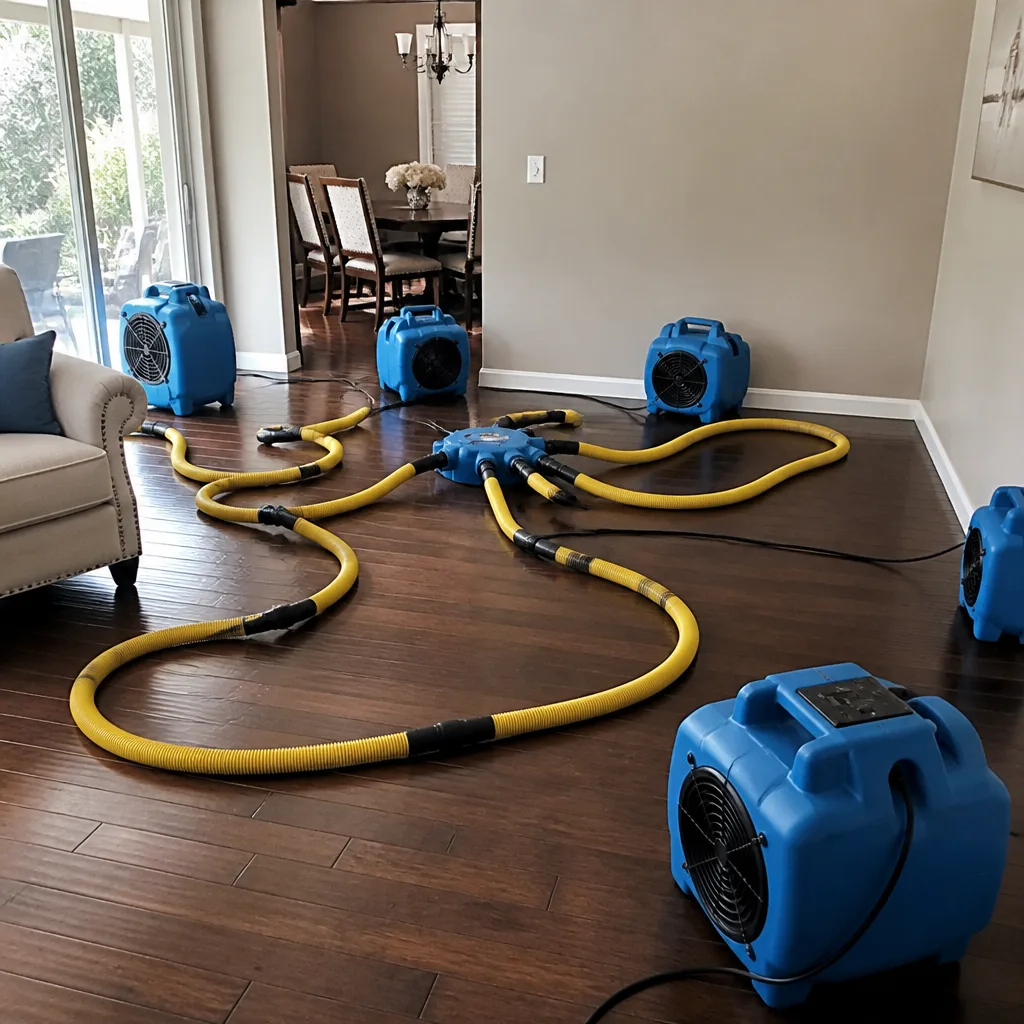
Equipment-grade cavity drying exists for exactly this problem. Injectidry systems, for example, push dry air directly into wall and ceiling cavities without tearing out drywall. When drying plans skip this step, the moisture simply waits. It moves slowly. It reappears.
2. Premature Equipment Removal
Drying equipment should come off a job when moisture meter readings across all affected materials – including structural components – reach the dry standard defined for that material. Not when the rental period ends. Not when the homeowner expresses frustration with the noise. Not when another job is waiting.
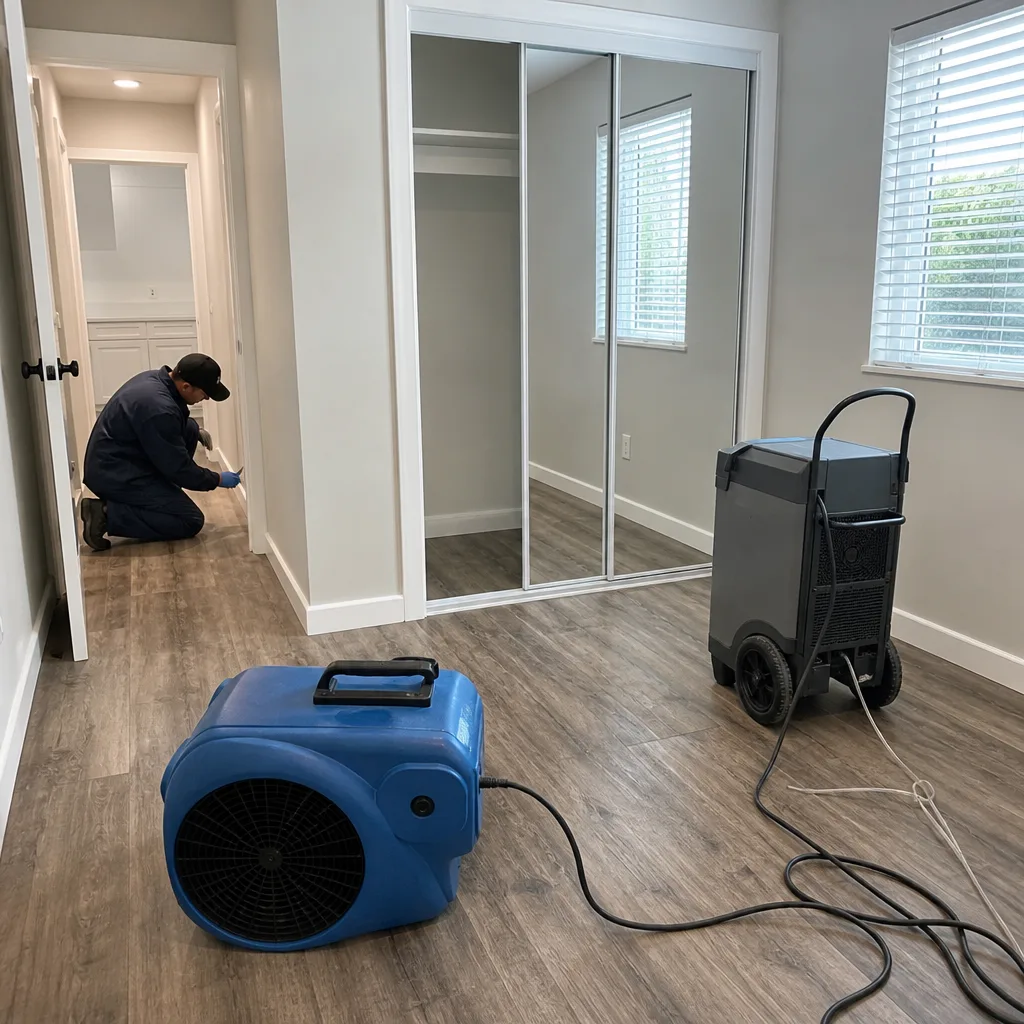
Commercial-grade drying equipment, including Dri-Eaz dehumidifiers and Phoenix air movers, is designed to drive evaporation and capture airborne moisture at rates far beyond residential machines. But even the best equipment can’t finish the job if it’s removed too early. We’ve inspected homes where dehumidifiers ran for four days, then left. The surface moisture was gone. The subfloor and sill plates were still at 18 to 22 percent.
If your restoration company removed equipment before someone took final moisture readings and shared those numbers with you, the drying decision was made on schedule, not on science. That is the single most reliable predictor of a callback.
3. Category Misclassification
The IICRC assigns water damage to one of three categories. Category 1 is clean water from a supply line. Category 2 is gray water with significant contamination – dishwasher discharge, washing machine overflow. Category 3 is black water containing sewage, floodwater, or other hazardous contamination.
Category misclassification happens when a restoration company treats Category 2 or 3 water as if it were Category 1. The risk is not just residual moisture – it is residual contamination. Porous materials that absorbed gray or black water require removal or sanitization protocols that simply cleaning and drying cannot satisfy. Carpet pad under gray water exposure, for example, is not worth saving in most cases. Drywall saturated by Category 3 water is removed, not dried.
If your loss involved contaminated water and your contractor never discussed the water category, ask directly. The answer matters for your family’s health and for whether your insurance claim was handled properly.
4. Skipped Demolition
Some materials were never designed to be dried. Dense fiberglass insulation inside a flooded wall cavity loses R-value and traps contamination. Wet carpet padding breaks down into a damp, odor-producing mat. Sagging ceiling drywall that has lost structural integrity is a fall hazard.
Skipped demolition means the restoration company chose to dry materials that should have been removed and replaced. The result is a home that looks restored but carries a hidden moisture reserve. In crawl-space homes across north Orange County – including many Buena Park neighborhoods built before 1970 – insulation batted between floor joists often absorbs ground-water vapor for years. After a plumbing leak or a storm-water intrusion, that insulation rarely dries without removal.
Demolition is not a failure of restoration. It is the correct protocol when materials cannot be returned to pre-loss condition. A contractor who refuses to remove demonstrably compromised material is often protecting their margin, not your home.
How to Use a Moisture Meter to Test Your Home After Restoration
You do not need to be a certified technician to gather meaningful data about your home’s moisture. A consumer-grade pinless moisture meter, typically $40 to $80 at hardware stores, can read through flooring and wall surfaces to give you reference numbers. Here is a step-by-step process that mirrors the preliminary assessment a restoration technician would perform.
- Purchase or borrow a pinless moisture meter. Look for a meter with a reference scale and multiple material modes. Even a basic model with a relative scale is useful for comparing one area of your home to another.
- Establish a baseline. Test multiple areas of your home that were never wet. The interior of a closet on an interior wall, the center of a room far from the affected area, a hallway floor. Take five to ten readings. Average them. This is your home’s baseline moisture level.
- Test the affected area. Move systematically across the area that was water-damaged and restored. Test baseboards at the floor line, wall surfaces from 0 to 12 inches up, the floor in a grid pattern, and any area that feels different or smells different.
- Compare readings. Materials that were properly dried should read within a few percentage points of your baseline. A reading 5 to 8 points above baseline on drywall indicates residual moisture. A reading 3 to 5 points above baseline on hardwood suggests the floor is not yet at equilibrium.
- Test hidden spots. Pull baseboard corners slightly. Test the subfloor through any gap where flooring meets a wall. Check the underside of cabinets, particularly toe kicks. Moisture hides in exactly these transition points.
- Record the numbers. Write down the location and reading for every test point. Photograph the meter display sitting on the test surface. These records become evidence if you need to file a supplemental claim or dispute a contractor’s work.
The IICRC S500 standard provides target dry standards for common building materials. Hardwood in Southern California should typically reach 6 to 9 percent moisture content. Gypsum drywall should return to 6 to 12 percent depending on the material and location. Plaster typically reads under 5 percent when properly dry. If your meter shows numbers above those ranges – and especially if they stay elevated for multiple days – the structure was not fully dried.
Why Odor Returns After Restoration (And What It Actually Means)
When musty odor returns a month or six weeks after restoration, the most common assumption is that a new leak appeared. In our experience, that is rarely the case. Returning odor is almost always a microbial indicator. The original moisture was never fully removed, and the damp environment it left behind allowed mold, bacteria, or both to establish a presence.
Odor is a volatile organic compound signature. Microorganisms produce metabolic byproducts – chemicals you smell long before you see visible growth. A musty, earthy smell near the site of restoration means something is still alive and metabolizing inside your walls, under your floor, or within your crawl space.
Surface cleaning cannot resolve odor sourced from inside a wall cavity. Neither can air fresheners, ozone treatments, or sealing over the area. If the smell is returning, the moisture source is still present, and the microbial population is still active.
The responsible next step is air sampling. An indoor air quality professional can collect a spore-trap air sample from the affected area and a control sample from outside the home. Comparing the two tells you whether the indoor environment holds a concentrated microbial population. This is not guesswork – it is documented, lab-verified data. For a homeowner in Buena Park dealing with an insurance claim, that lab report also becomes supporting documentation for a supplemental claim or a contractor dispute.
If you suspect mold has taken hold behind restored materials, mold remediation in Brea and surrounding cities follows IICRC S520 protocols – the mold-specific standard for containment, removal, and verification. It is a different scope of work than water restoration, and it requires dedicated containment equipment and clearance testing.
How to Document Ongoing Problems for Insurance and Contractors
When restoration falls short, your documentation determines whether your insurance company pays for a supplemental claim or denies it. It also determines whether a contractor dispute ends with a rework or with an attorney. Here is how to build a file that matches what an adjuster or inspector needs to see.
- Photograph everything. Every symptom, from every angle, with a date and time stamp. Cupped floorboards. Bubbling paint. Baseboard separation. Water stains. White or dark speckling on materials. Capture wide context shots that show the location of the symptom within the room, then close-up detail shots.
- Log your moisture meter readings. Date, time, location, reading, and material tested. A simple spreadsheet works. Photograph the meter on each test point. Repeat readings every two to three days to show whether conditions are stable, improving, or worsening.
- Retain every document from the original restoration. The scope of work. The drying log if one was provided. Any photographs the restoration company took. Your invoice. Correspondence. If you were not provided a drying log, note that fact – the absence of documentation is itself a finding.
- Request an independent inspection. A second-opinion moisture inspection from a certified firm creates a third-party record of current conditions. Ask for a written report with readings, photos, and a professional assessment of whether the original drying reached IICRC dry standards.
- Notify your insurer in writing. Send a concise letter or email summarizing the ongoing issues, attach your documentation, and request a supplemental review. Keep a copy of everything you send. If your insurer requests a specific form, use it – but keep your own records regardless.
For larger losses, we recommend involving a restoration firm that already works in the documentation frameworks insurers require. A company that provides photo-documented assessments and written scopes of work, aligned with IICRC protocols, gives your adjuster something concrete to approve. Vague descriptions of “a smell in the hallway” do not move claims forward.
When to Request a Second-Opinion Moisture Inspection
You are entitled to a second opinion. If your restoration was completed weeks ago and symptoms are reappearing, do not wait another month to see whether they self-resolve. They will not. A second-opinion inspection is warranted if any of the following describes your situation.
- Moisture meter readings in the affected area remain elevated above baseline two weeks after equipment was removed.
- Odor persists or has returned more than 30 days after restoration completion.
- Flooring defects – cupping, crowning, buckling, gapping – have appeared or worsened after the contractor left.
- Paint is bubbling, peeling, or discoloring along the lower sections of walls.
- You never received a drying log, final moisture readings, or a written scope of the work performed.
- Your insurance adjuster has questions about the original mitigation work and has requested additional verification.
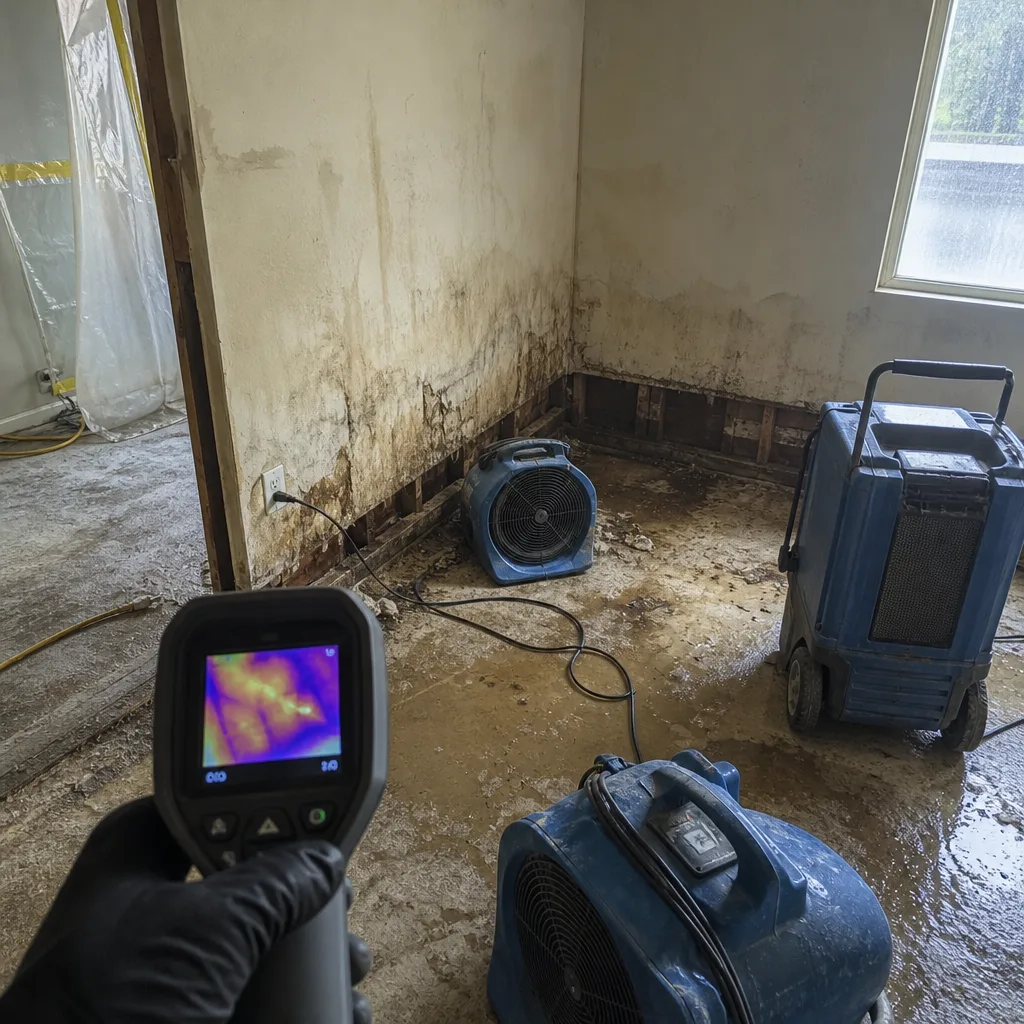
What should that inspection formally include? A reasonable scope covers: visual assessment of all previously affected areas, moisture meter readings of all accessible materials in those areas, thermal imaging to detect temperature differentials that indicate hidden moisture, photos of every reading and finding, and a written report comparing current conditions to IICRC S500 dry standards. If microbial growth is suspected, the inspector should also recommend air sampling or surface sampling by a qualified environmental professional.
In Buena Park, many homeowners discover that their original mitigation was performed by a general contractor or a handyman service – not a specialized restoration company. That distinction often explains the outcome. Water damage restoration is a technical discipline governed by measurable standards. A company certified to IICRC standards and equipped with commercial-grade tools like Dri-Eaz dehumidifiers and Injectidry cavity-drying systems is working from a different playbook than a contractor with a shop vac and fans.
Buena Park-Specific Considerations: Climate, Construction, and Crawl Spaces
Buena Park’s Mediterranean climate creates a drying environment that is both helpful and misleading. Summers are warm and dry, which accelerates surface drying. But that same warmth masks what is happening beneath the surface. A floor that dries quickly on top can remain soaked in the subfloor layer for weeks – and the symptom, the cupping or the warping, only shows up after the surface begins to reabsorb the trapped moisture.
If your home sits on a raised foundation with a crawl space, ground moisture is a constant influence. Many Buena Park homes built before 1970 have vented crawl spaces that draw damp air upward during warm days and trap it during cool nights. After a plumbing leak saturates the floor assembly, that crawl space becomes a humidity reservoir. Proper restoration includes drying or addressing the crawl space environment, not just the finished floor above it.
Slab-on-grade construction – common in Buena Park’s post-1960s tract housing – presents a different challenge. Vinyl and laminate flooring installed over concrete slabs can trap moisture at the slab surface. If the slab was not dried before new flooring went down, the result is buckling, adhesive failure, and trapped moisture that eventually degrades the flooring and creates odor.
Local Drying Benchmarks for Buena Park
Based on our field data from restoration work across north Orange County, we see these typical baseline moisture levels in properly dried Buena Park homes:
- Hardwood flooring: 6 to 9 percent moisture content in summer, 7 to 10 percent in winter
- Gypsum drywall: 6 to 12 percent depending on the age and location of the installation
- Stucco and plaster: below 5 percent in most cases
- Concrete slabs: 2.5 to 4.5 percent at the surface, verified by in-situ probe or calcium chloride test when flooring will be installed over the slab
If your restored materials read above these ranges weeks after the job, the drying was incomplete. These numbers also give you something specific to discuss with an adjuster or a second-opinion inspector. Vague concerns do not trigger rework. Documented readings do.
Common Mistakes to Avoid
- Trusting surface dryness. A wall that feels dry can hold 16 percent moisture at its core. Always verify with a meter, not a touch test. In Buena Park’s dry summers, surface dry-out hides hidden moisture more than it reveals it.
- Waiting to see if symptoms resolve. Cupping, bubbling paint, and returning odor are not self-correcting problems. Every week of delay gives trapped moisture more time to attack adhesives, warp wood, and feed microbial growth.
- Accepting “the drying log showed it was dry” without seeing the log. A drying log should list moisture readings from multiple locations and materials over multiple days. Ask for it. If your contractor cannot produce one, the drying may have been measured in days, not documented.
- Replacing damaged flooring over an unverified subfloor or slab. New hardwood installed over a subfloor that never reached dry standard will cup again. New laminate over a damp slab will buckle. The hidden layer must be verified first.
- Using air fresheners or surface cleaning to address returning odor. Odor is a byproduct of active microbial metabolism, not a cosmetic problem. Masking it delays the unavoidable remediation and gives mold more time to establish a foothold inside the structure.
- Failing to document your evidence. Photos, meter readings, and written correspondence are the difference between an insurance supplement that gets approved and one that is denied. Build your file before you make the phone call.
When to Call a Professional
If your moisture meter shows elevated readings two weeks after restoration ended, if odor persists or returns, if floors are visibly distorting, or if paint is lifting along lower walls, the time for DIY troubleshooting has passed. These are signs of an incomplete restoration – and the fix requires commercial-grade drying equipment, verified moisture readings, and in some cases targeted demolition or mold remediation. A second-opinion inspection costs little compared to the cost of redoing flooring, drywall, and insulation after trapped moisture damages them beyond recovery. If you are in Buena Park, Stonecrest Water Damage offers free estimates. Call (833) 589-9161 to schedule a moisture assessment with a certified technician.
For homes dealing with a broader scope of damage, fire damage restoration in Brea and water mitigation often share the same structural drying requirements. After a fire, suppression water saturates wall cavities and subflooring just as thoroughly as a plumbing leak – and the same IICRC drying standards apply.
When water damage has affected a property in the surrounding region, water damage restoration in Brea follows the same S500 protocols – measured, documented drying, not visual guesswork. And for a broader view of what Stonecrest does across all three damage categories, start at the Stonecrest Water Damage home page.
Frequently Asked Questions
Use a pinless moisture meter to test the restored area against a baseline from an unaffected area of your home. Readings 5 to 8 points above baseline on drywall, or 3 to 5 points above baseline on hardwood, indicate residual moisture. Elevated readings that persist for more than a few days mean the original drying never reached IICRC dry standards.
Returning musty odor is a microbial indicator – evidence that moisture remained inside a wall cavity, subfloor, or crawl space and allowed mold or bacteria to establish themselves. Surface cleaning cannot resolve odor sourced from hidden cavities. Air sampling can confirm the microbial presence, and the affected materials typically require remediation or removal per IICRC S520 protocols.
Yes. Document the ongoing symptoms with dated photographs, moisture meter readings, and a written summary. Request a second-opinion moisture inspection with a written report. Submit everything to your insurer with a request for supplemental review. Insurers respond far more favorably to documented, verifiable findings than to verbal descriptions of problems.
Drying equipment should remain until final moisture meter readings across all affected materials – including structural components – reach the IICRC dry standard for each material. That may be three days or ten days depending on the scope. Equipment should never be removed based on a schedule, a rental period, or noise concerns. Final readings document the decision.
A restoration company certified to IICRC standards follows documented drying protocols, uses commercial-grade equipment, and provides moisture documentation throughout the job. A general contractor may handle demolition and rebuild but typically lacks the moisture-measurement instrumentation and drying equipment needed to verify structural drying. In Buena Park, many incomplete restorations trace back to this exact distinction.
Yes. Stonecrest Water Damage offers free estimates in Buena Park and the surrounding area. Call (833) 589-9161 to schedule a moisture assessment or discuss concerns about a previous restoration that did not hold up.
The Bottom Line
When restoration problems reappear weeks after the crew packed up, the evidence points one direction: the original drying never reached structural equilibrium. Cupping floors, bubbling paint, returning odor, separating baseboards – these are moisture gradients and microbial signatures, not mysteries and not new damage events. You can verify what happened with a $60 moisture meter and a systematic comparison against IICRC dry standards. You can document what you find in a format that moves insurance claims forward. And you can insist on a second opinion from a firm that works to documented, verifiable standards. The cost of certainty is small. The cost of guessing wrong – replacing floors twice, remediating mold in wall cavities, fighting an insurance denial without evidence – is not.
Written by the team at Stonecrest Water Damage, serving Buena Park since 2013.
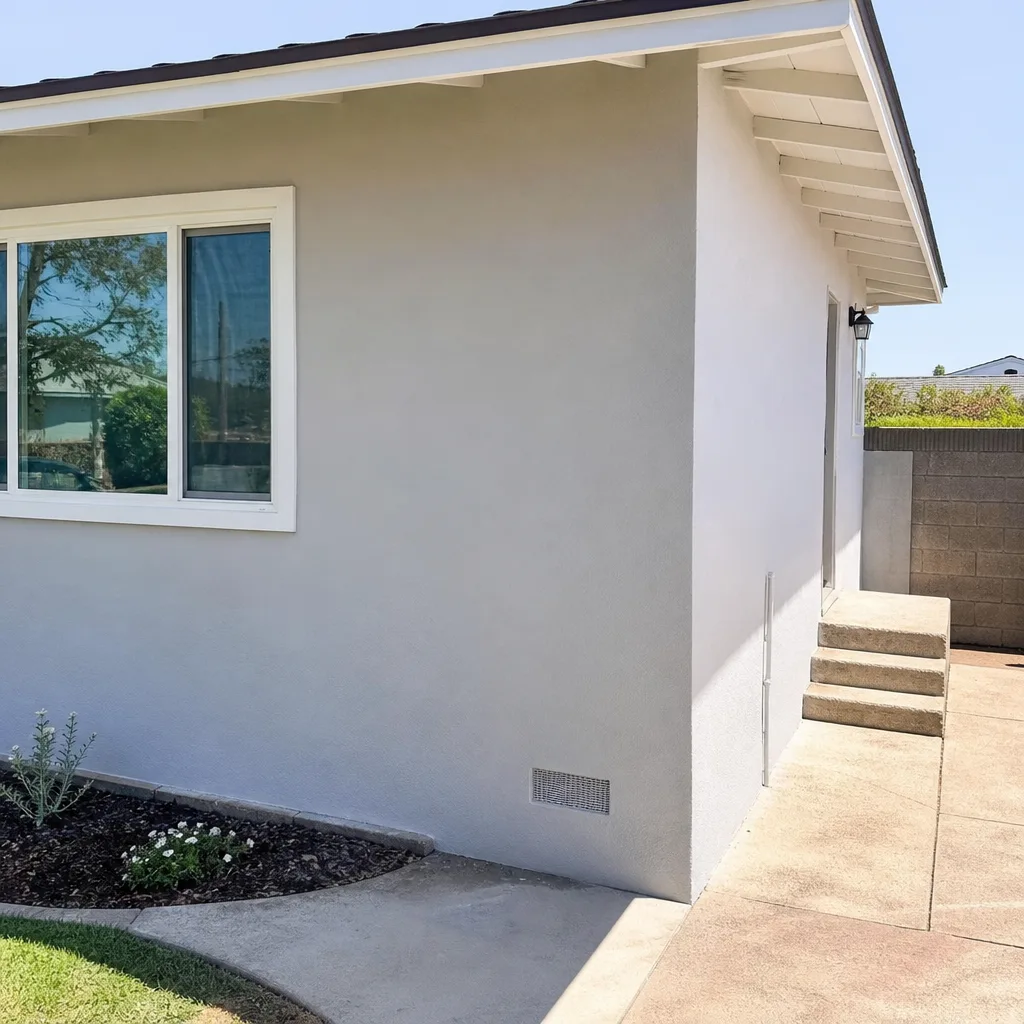
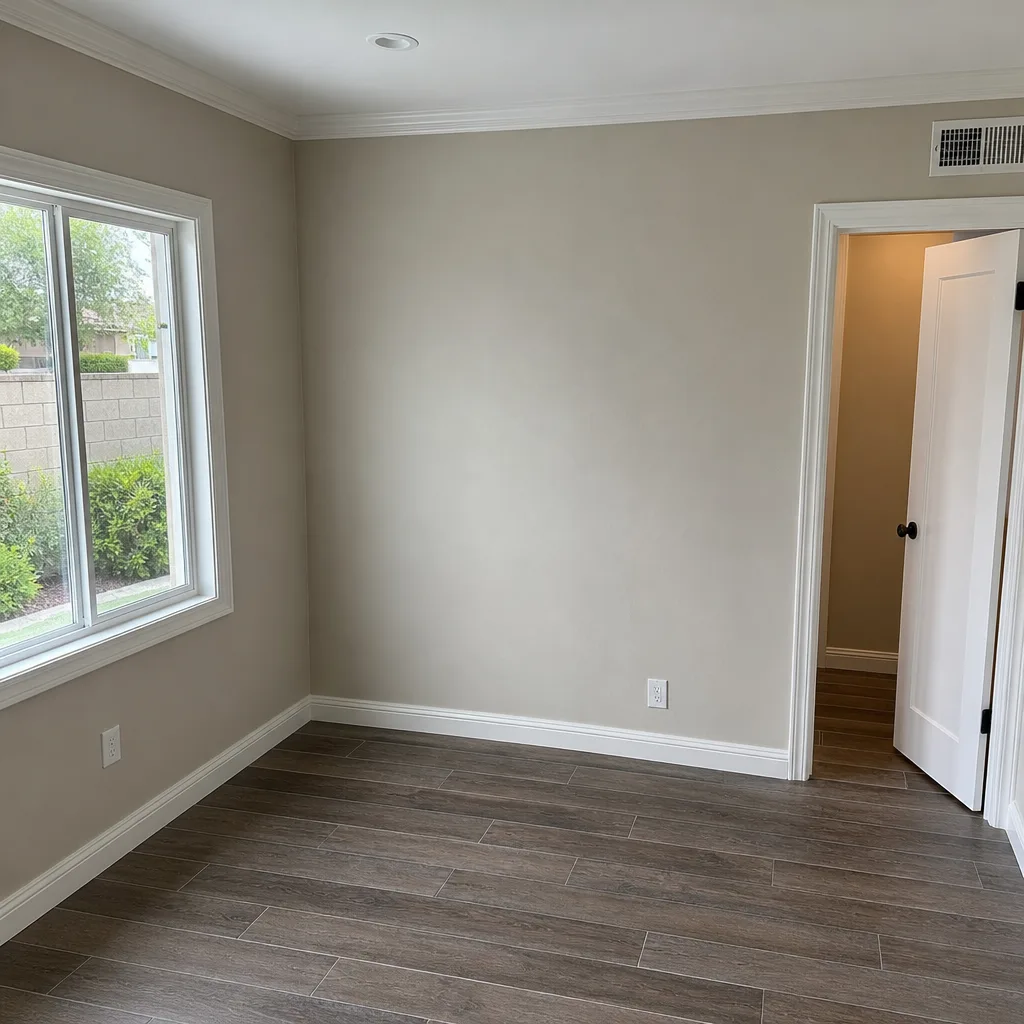
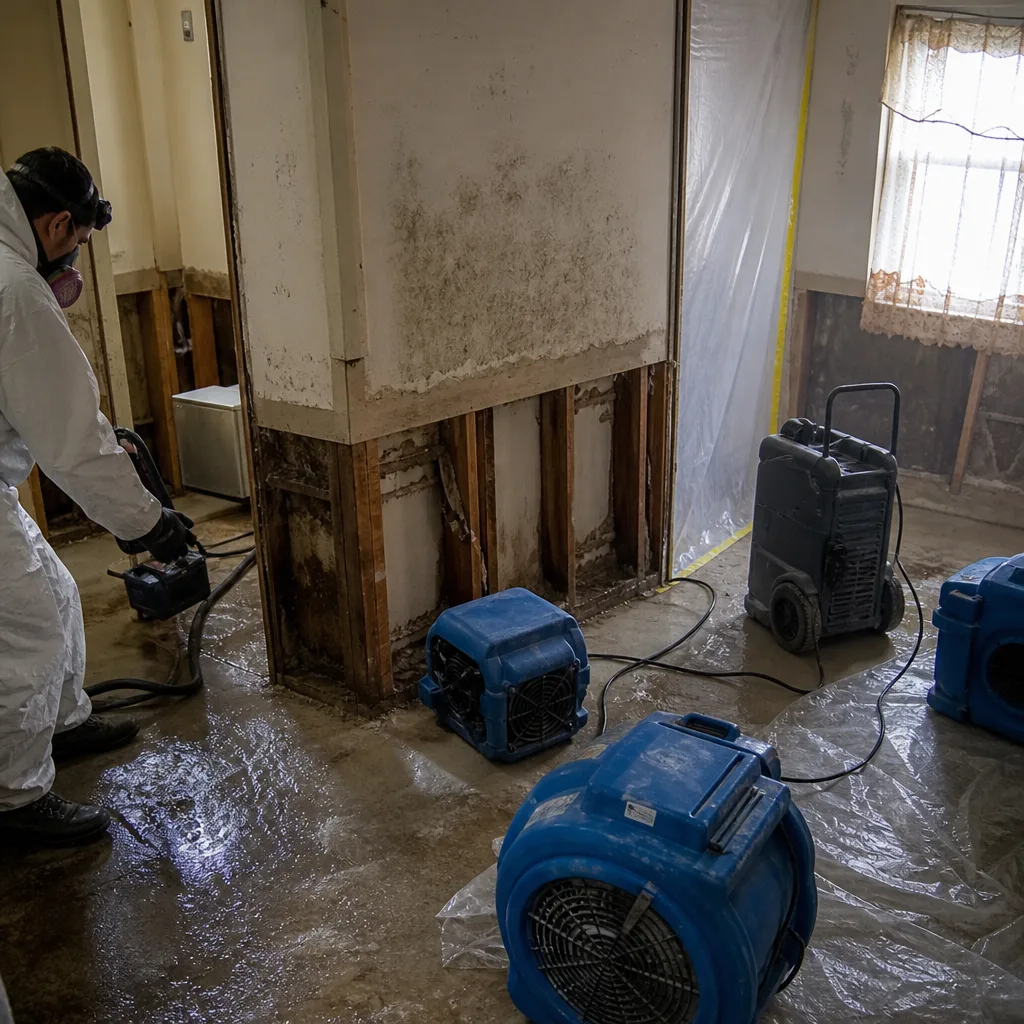
See the difference
 Before
 After
 Before
 After
 Before
 After