

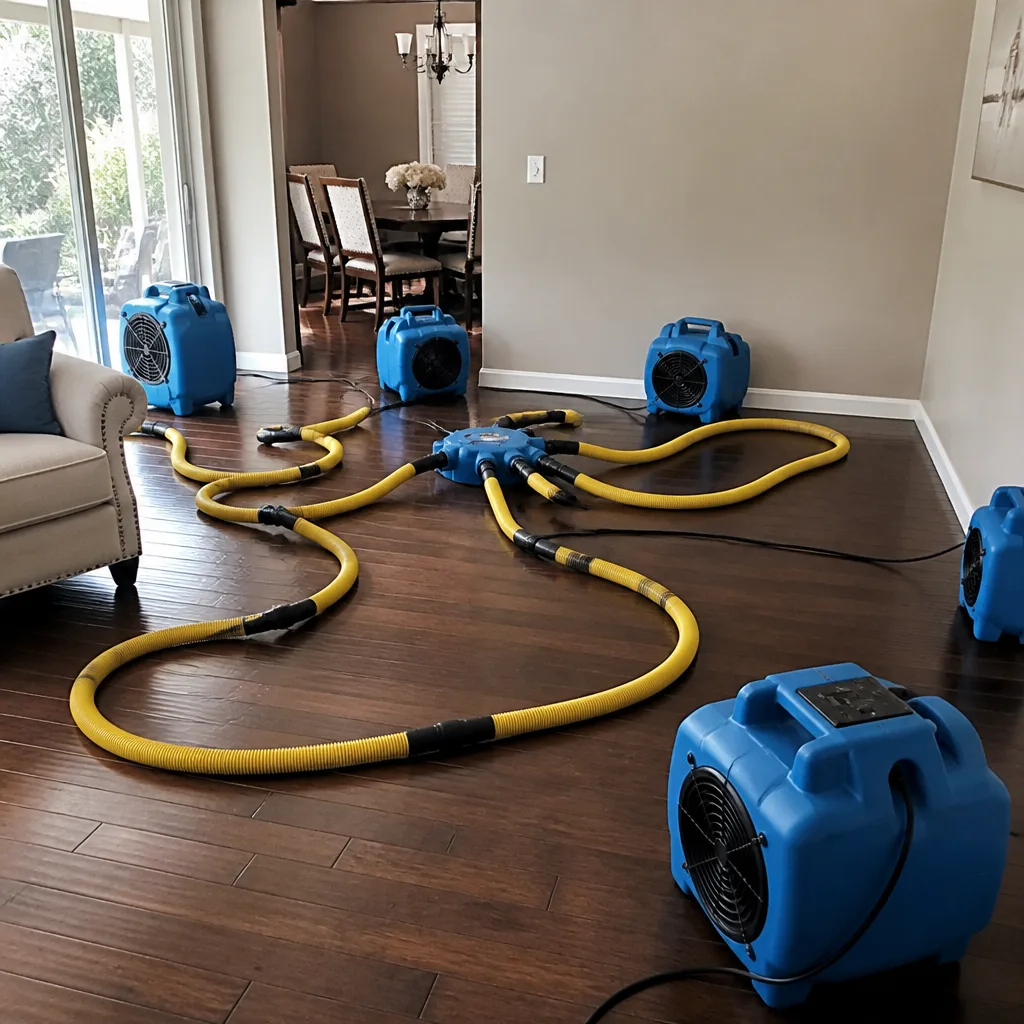
 Water damage drying
 Fire & smoke cleanup
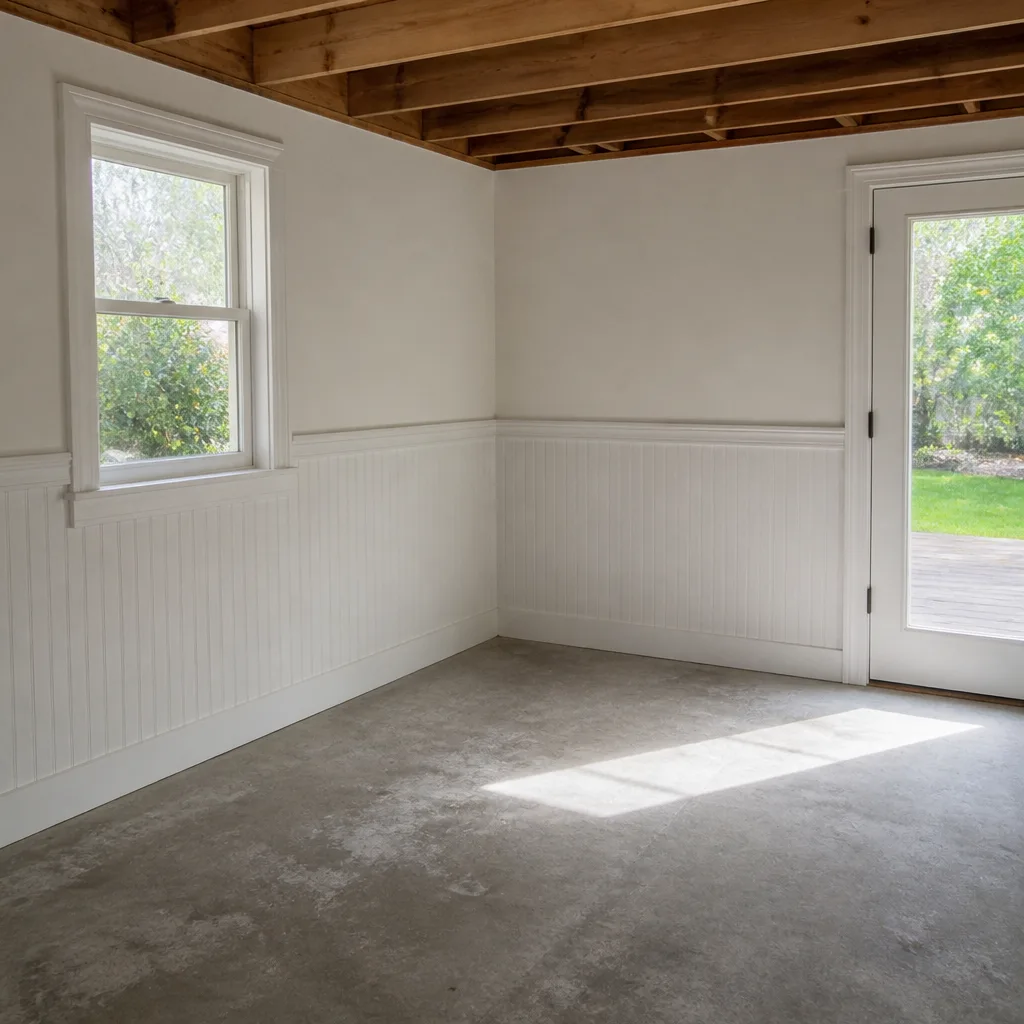 Mold remediation
 Storm response
 Sewage cleanup
 Reconstruction
Free visual inspection and a written scope of work before any mitigation begins - photos, moisture readings, and drying logs go in your claim file
The scope we write is the scope we bill. Anything new gets shown to you, in writing, before we touch it.
Get your free estimateFast, Reliable Mold Remediation Across Upland
Mold remediation in Upland typically costs between $1,200 and $4,500 depending on containment area, materials affected, and whether slab leaks or hillside seepage are feeding the colony. Most jobs in Upland are finished within 3 to 5 working days once we start, with drying equipment set on day one. We know the difference between a surface stain on a 1960s ranch wall off Euclid Ave and a cavity-fed colony pulling moisture from canyon runoff behind the drywall. That distinction is the difference between a job that ends and a job that comes back in the spring. If you have visible mold, a musty smell, or water intrusion that has sat for more than 48 hours, call (833) 589-9161 and we will have a certified technician at your door, moisture meters in hand, usually the same day.
Why Stonecrest Water Damage Is Upland’s Preferred Mold Remediation Company
Stonecrest Water Damage handles mold in Upland as a structural restoration problem, not a surface-cleaning project. We are certified to IICRC standards, which means every job is documented with moisture readings, drying logs, and scope-of-work records before anything gets torn out or treated. Upland homeowners and property managers want to know why the mold appeared, not just that it is gone. Our technicians trace the source: a slab leak under a 1950s ranch home in 91786, hillside seepage soaking a foothill-facing wall in 91784, or a wind-driven roof intrusion after a Santa Ana event along the northern edge near San Antonio Heights.
We come to Upland with commercial-grade equipment from Dri-Eaz, Phoenix, XPOWER, and Injectidry. These are the same systems large loss specialists run on commercial claims, not rental-store machines that underperform in the hard humidity that follows a winter atmospheric river. Our Mold Remediation team can handle the full pack-out, containment, drying, and antimicrobial treatment in one trip. We understand what Upland’s property profile demands: older plumbing under mid-century slabs, steep foothill lots with saturated soils, and homeowners who want a verifiable scope of work for the claims adjuster. Led by Neil Stratton, Stonecrest Water Damage holds membership with the Restoration Industry Association and IFA, operating to the documented standards those bodies enforce.
Restoration work we handle
Professional Mold Removal in Upland
Professional Mold Removal in Upland starts with containment, not demolition. When we arrive at a home in 91786 or 91784, we isolate the affected area with 6-mil poly sheeting and negative air pressure before any drywall is disturbed. That prevents spore spread into clean rooms during the removal. Once containment is sealed, we run moisture mapping across the wall and slab to identify the full extent of the wet assembly, not just the visible stain. Upland homes have a particular vulnerability here: a surface colony near the baseboard is often fed by a pinhole leak in the original galvanized supply line running under a 1950s slab. Ripping out the drywall without tracing the slab means the same mold comes back in 90 days.
Typical professional mold removal in Upland runs $1,500 to $3,800 for a contained bedroom or bathroom, including antimicrobial treatment and post-remediation verification. Larger jobs that cross multiple rooms or require crawlspace access in 91784 foothill properties can push past $5,000. We handle it with Injectidry capability for drying in-wall cavities without gutting the entire assembly. Our goal is restoration to pre-loss condition per IICRC standards, not cosmetic patching.
Containment and Source Removal
We set airtight containment before any cutting starts. Then we locate the active moisture source behind the colony. In Upland’s 91786 ranch stock, that source is often a slab leak in galvanized pipe; on the northern foothill edge, it is more likely runoff-driven seepage through stucco or foundation cracks. We remove only what saturation and mold have compromised, per IICRC S520.
Antimicrobial Treatment and Drying
After removal, we apply EPA-registered antimicrobial treatment to the affected framing and surrounding surfaces. Dri-Eaz dehumidifiers and high-volume air movers run until moisture readings return to dry standard for the material. We log every reading, so the adjuster sees documented drying, not a verbal claim.
Mold Inspection in Upland
Mold Inspection in Upland means finding colonies that are not visible yet, and plenty of Upland homes have them. A musty smell in a back bedroom with no visible growth is often the first sign of a saturated wall cavity or a slow slab leak under a 1950s ranch floor. We inspect with moisture meters, thermal imaging, and visual assessment of the full assembly, from the baseboard down to the crawlspace or slab. An inspection in Upland typically runs $350 to $550 for a focused room or area inspection; whole-home inspections on larger foothill properties in 91784 run $700 to $1,100. The report tells you if remediation is needed, where the source is, and what documentation your insurer will require.
The key thing an inspection has to answer in Upland is whether the colony is fed by outside water or inside water. Outside water is canyon runoff soaking a foothill-facing wall after a winter storm. Inside water is a failed galvanized supply line or cast-iron waste line under the slab. Both are common here, and they require different remediation paths. We identify which one you are dealing with before any remediation quote is written.
Moisture Mapping for Slab Leaks
We map moisture across the slab surface in 91786 ranch homes where the original plumbing is reaching the end of its service life. A pinhole leak in galvanized pipe can feed a wall or floor assembly for months before visible mold appears. Thermal imaging and pin-type meters find the wet path without exploratory demolition.
Foothill Seepage Assessment
On 91784 lots along the Euclid Ave corridor and north toward San Antonio Heights, we check the full wall section for hillside seepage. Saturated soils from a heavy storm can keep a stucco wall assembly wet for weeks, long after the rain stops. Surface cleaning alone will not stop that colony from returning.
Trusted Brands We Service in Upland
Stonecrest Water Damage works on every mold and moisture problem with equipment from the brands restoration professionals actually use: Dri-Eaz for dehumidification and air movement, Phoenix for high-efficiency drying, and Injectidry for in-wall and structural cavity drying. We stock a full complement of supplies in our Buena Park headquarters and dispatch to Upland with gear sized for the job, not a rental truck load. That means faster setup on a 1950s ranch slab leak in 91786 or a foothill seepage job in 91784. We handle the full scope: surface cleanup, cavity drying, antimicrobial treatment, and documentation. Water, mold, and fire damage all land with one certified team, which means no coordination gap when the mold is downstream of a plumbing failure or a fire-response water event.
See the difference
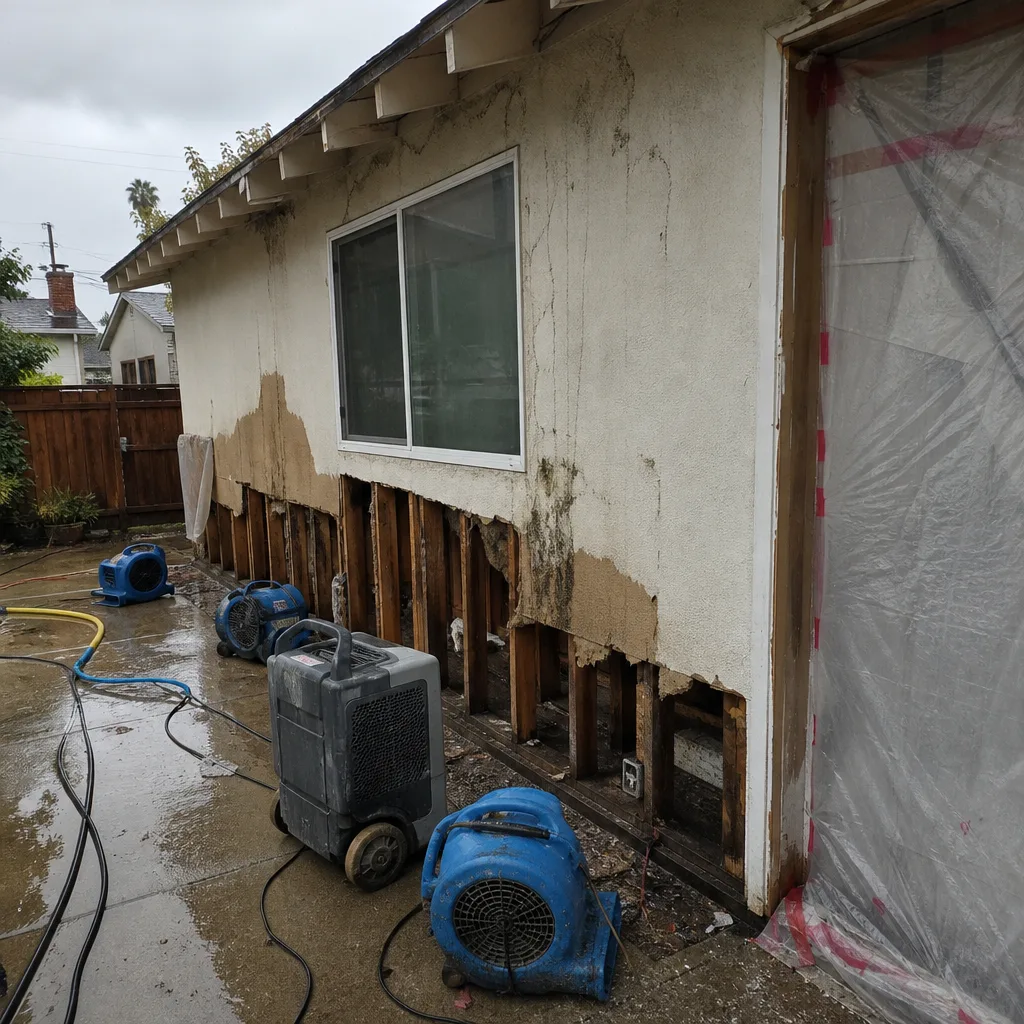 Before
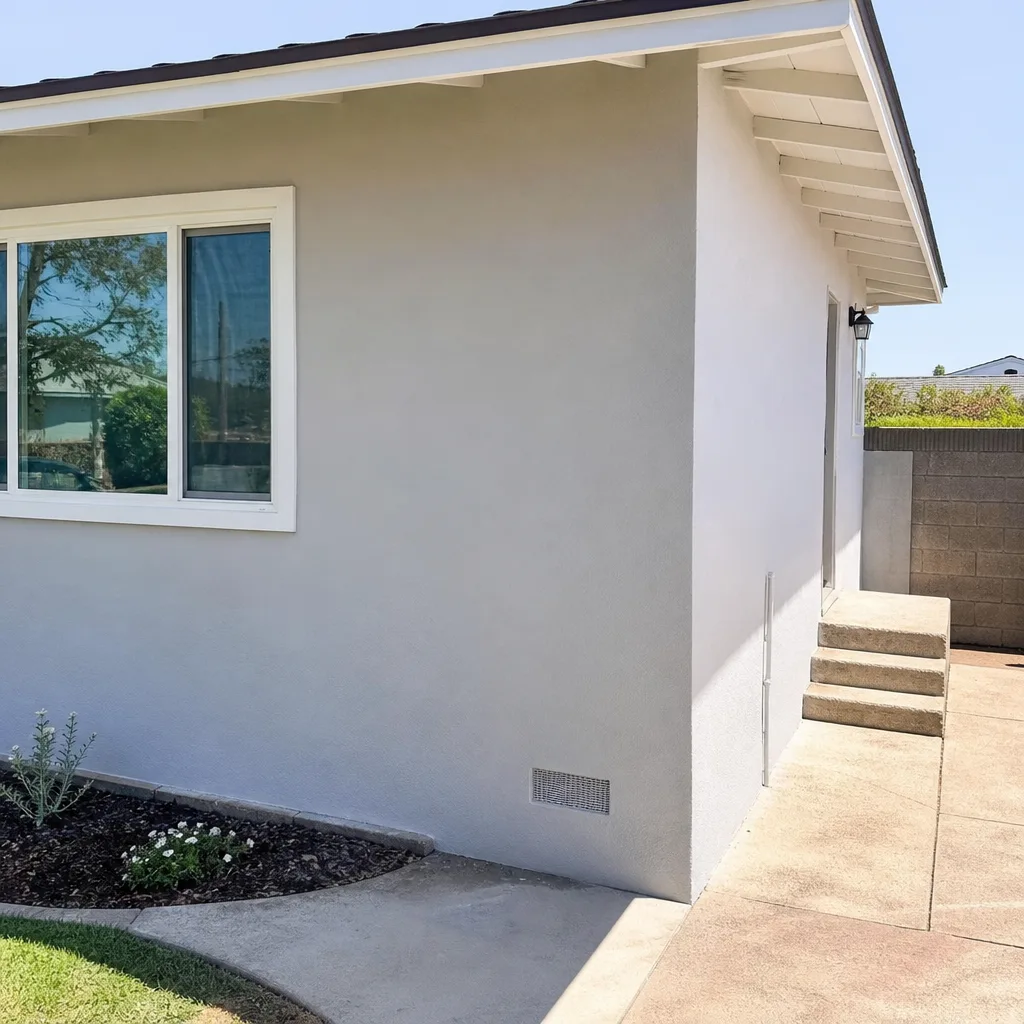 After
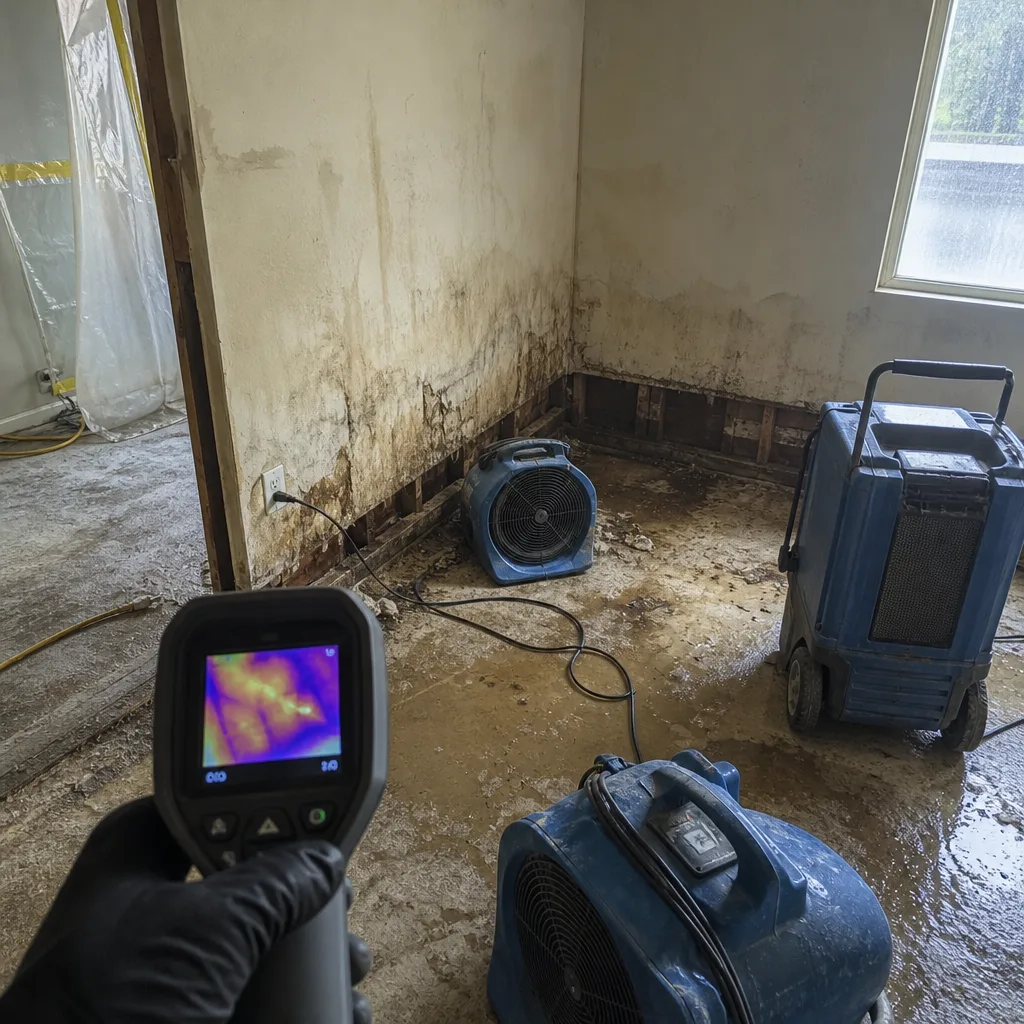 Before
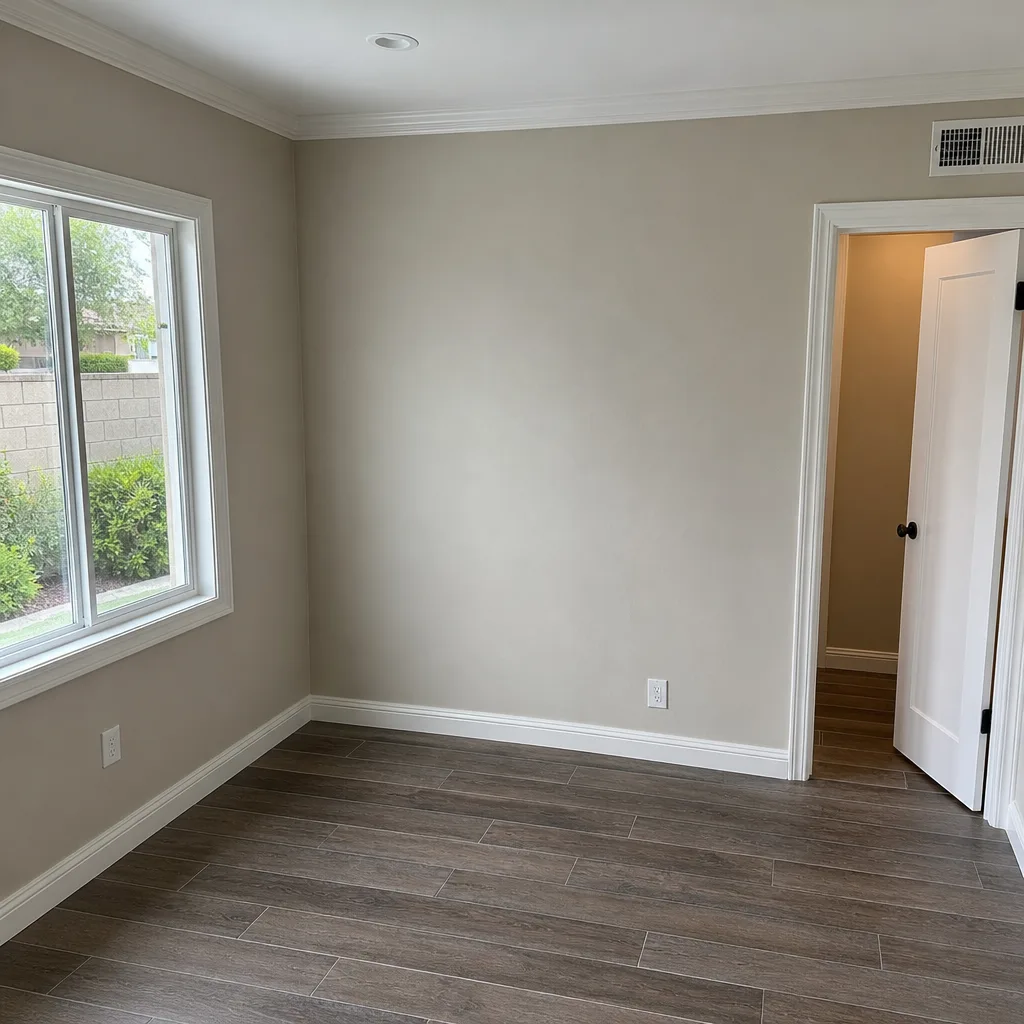 After
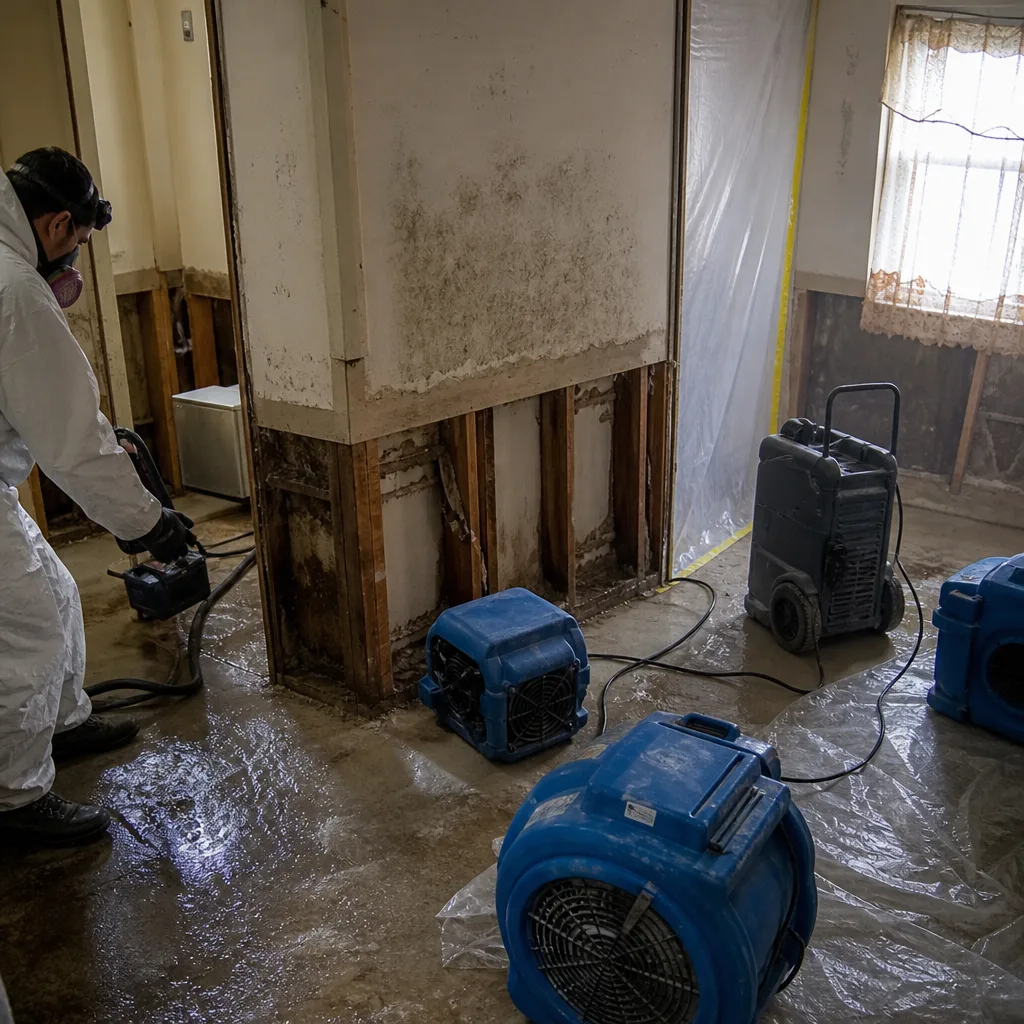 Before
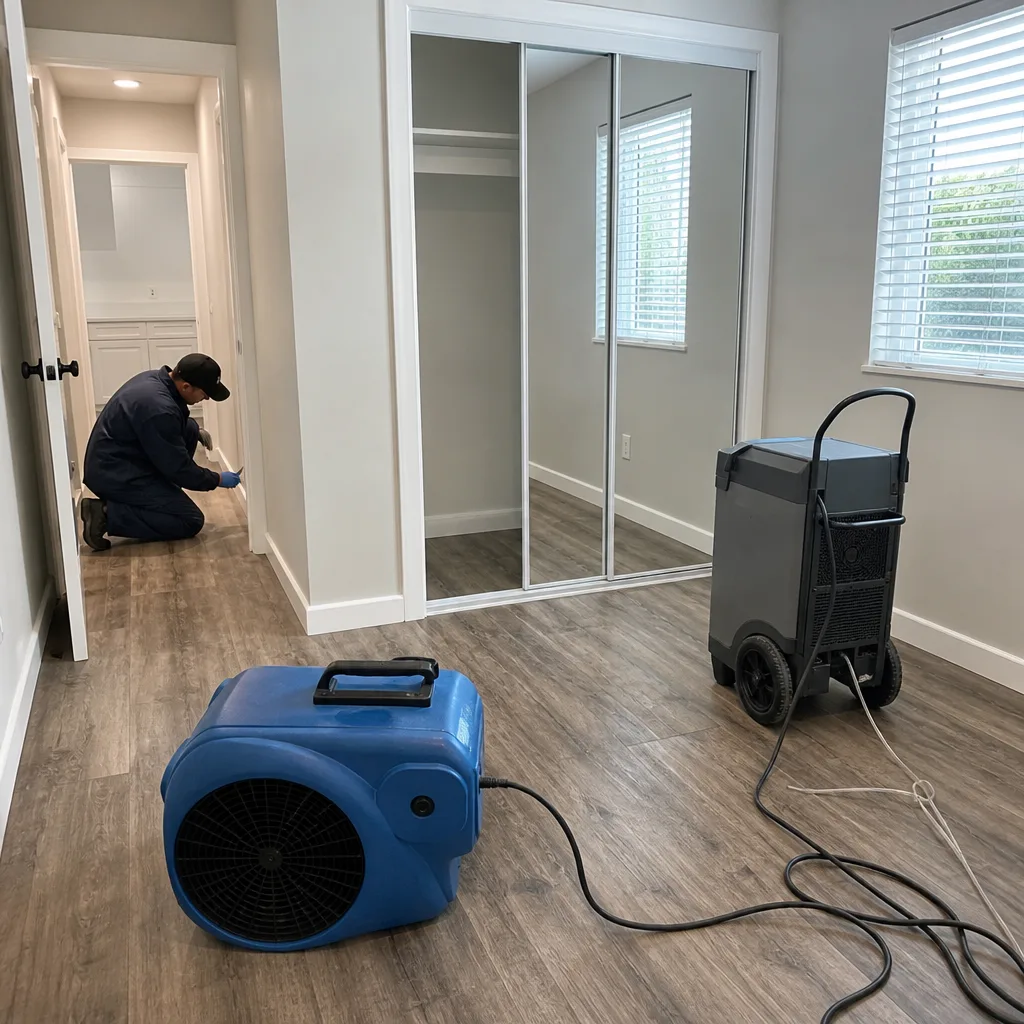 After
Common Mold Remediation Problems We See in Upland Homes
- Two-front moisture intrusion after winter storms. Atmospheric-river runoff off the San Antonio Heights canyons soaks foothill-facing walls from the outside while the same storm surge exposes pinhole leaks in original galvanized pipe under 91786 ranch slabs. A single storm can put mold behind drywall and under the floor at once.
- Slab leaks in mid-century ranch homes. The 1950s and 1960s tract stock along Euclid Ave and surrounding streets was built with galvanized supply lines. Hard local water accelerates corrosion, and a pinhole leak under the slab keeps feeding moisture into the wall assembly no matter how many times you dry the surface.
- Hillside seepage in 91784 foothill properties. Larger custom builds and citrus-era lots on the northern edge hold water in older wall assemblies and saturated soils far longer than a standard three-day drying check accounts for. We see colonies return when the next storm re-wets the same cavity.
- Surface-only treatment by previous contractors. Upland homeowners sometimes call us because a past cleanup treated the visible stain but missed the source. Mold returns. Our process maps the full wet path first, then removes and treats the entire affected assembly.
Pricing for Mold Remediation in Upland, CA
Mold remediation in Upland runs between $1,200 and $4,500 for most single-room jobs. A contained bathroom or closet with a clear source typically lands on the lower end. A bedroom with slab-fed moisture tracing under a 1950s ranch floor, requiring slab inspection and cavity drying, lands in the $2,800 to $3,800 range. Full crawlspace treatment or multiple-room containment on foothill properties in 91784 can exceed $5,000. Inspection and testing, when required for insurance documentation, adds $350 to $1,100 depending on scope. What moves the price is the size of the wet assembly, not the size of the visible stain. That is why we quote after moisture mapping, not before. Call (833) 589-9161 for a free estimate with a written scope of work.
We Also Serve Cities Near Upland
Beyond Mold Remediation in Upland, Stonecrest Water Damage covers Claremont, Montclair, Ontario, and La Verne. If your property sits near the city line off the 210 or along Foothill Blvd, we still get there the same day. The same certified team, the same commercial-grade equipment, and the same documented process applies wherever the job takes us.
Serving Upland, CA — Our Local Coverage Area
We’re based in the Upland area and know this community well. Use the map below to see our service coverage — if you’re nearby, we can almost certainly help.
FAQs About Mold Remediation in Upland
Upland’s mold events are driven by the wettest season, not the hottest one. Winter atmospheric rivers force runoff off the San Gabriel foothills, soaking walls and crawlspaces from the outside while storm surge exposes pinhole leaks in the original galvanized pipe under 91786 slab homes. The moisture feeds colonies behind drywall and under flooring, and most Upland homeowners notice the smell or the staining days to weeks after the storm passes. If you smell must after a wet winter, call (833) 589-9161 and we will map the moisture source before any demolition starts.
Yes, and it is one of the most common hidden mold sources in Upland’s 91786 housing stock. A pinhole leak in original galvanized supply lines can wet the underside of the slab and wick up through the floor assembly for months before visible growth appears. By the time you see bubbling baseboard or a stain, the wall cavity is usually saturated. Our inspection process uses moisture meters and thermal imaging to trace the slab path, because removing the drywall without fixing the pipe underneath just rebuilds the problem.
Under Upland’s indoor conditions, mold can begin colonizing within 24 to 48 hours of saturation. The compounds that feed growth are already present in drywall paper, wood framing, and settled dust. Once the moisture source is active, the clock is running. That is why we recommend inspection within the first two days after a visible leak, slab backup, or storm-driven seepage. Same-day dispatch to Upland means we can often prevent a cleanup job from becoming a full teardown.
Category 1 is clean water from a supply line or rainwater intrusion through a sealed window. Category 2 is gray water, carrying soaps, food particles, or mild biological load, like a washing machine overflow. Category 3 is black water, contaminated with sewage, storm runoff, or standing water that has picked up soil and organic matter. The category determines the remediation protocol the IICRC standard requires. A slab leak under a Upland ranch home is usually Category 1, but once it sits for days, it degrades toward Category 2. Storm runoff from the foothill canyons is Category 3. We classify the water correctly before we design the mold remediation scope, because the wrong classification under-treats the colony and leaves spore reservoirs in the assembly.
Yes. For most foothill properties in 91784 we carry containment, removal tools, antimicrobials, and Dri-Eaz drying equipment on the truck so the job starts in one dispatch. After one of the hard winter storms rolled off the San Gabriel foothills, we were called to a 1960s ranch off the Euclid Ave corridor where the homeowner had found a musty smell and bubbling baseboard in a back bedroom. Our tech ran moisture mapping across the slab and wall cavity, found elevated moisture readings from a pinhole galvanized leak feeding saturated drywall, and set containment with Dri-Eaz dehumidification and air movers while we pulled the affected drywall and applied antimicrobial treatment. We finished the pack-out, logged every drying reading into the scope of work, and closed the job in one trip – inspection, removal, and drying equipment all on the truck. Call (833) 589-9161 and we will do the same for your property.
Written by Neil Stratton, Owner at Stonecrest Water Damage, serving Upland and the Inland Empire since the company’s founding.