
Last updated October 31, 2026
 Water damage drying
 Fire & smoke cleanup
 Mold remediation
 Storm response
 Sewage cleanup
 Reconstruction
Free visual inspection and a written scope of work before any mitigation begins - photos, moisture readings, and drying logs go in your claim file
The scope we write is the scope we bill. Anything new gets shown to you, in writing, before we touch it.
Get your free estimateThe Complete Guide to Damage Restoration in Buena Park
A restoration job that looks finished on the surface can still fail a moisture clearance reading 30 days later. In Buena Park, where coastal air masses push humidity levels higher than inland communities like Riverside or San Bernardino, that quiet failure is more common than most contractors will ever volunteer. This guide walks through the full technical sequence of damage restoration, from the first water extraction through the final documentation package, so you can hold any contractor accountable at every step rather than trusting a clean-looking patch job. For The Complete Water Damage Restoration Guide for Buena Park Homeowners with expanded phase-by-phase detail, see our companion resource.
Quick Answer
Damage restoration in Buena Park is a sequenced, code-governed process that moves through five non-negotiable phases: extraction, structural drying, microbial assessment, repair, and documentation. Skipping or rushing any phase, particularly drying before rebuild or microbial clearance before repair, invalidates the work that follows and typically leads to recurring mold growth, failed inspections, or denied insurance supplements. A properly executed restoration in Orange County also requires psychrometric data logs proving the structure reached dry standard, not just a technician’s visual confirmation.
Restoration work we handle
Table of Contents
- The Five-Phase Restoration Sequence
- How Buena Park’s Climate Changes Drying Timelines
- What IICRC S500 and S520 Actually Require
- Psychrometric Data: The Proof Insurance Actually Reads
- Orange County Permit Triggers: When Repair Work Becomes a Legal Issue
- Equipment Matters More Than Labor Hours
- Insurance, Documentation, and the Adjuster Relationship
- Common Mistakes to Avoid
The Five-Phase Restoration Sequence
Every legitimate damage restoration in Buena Park follows the same underlying sequence, regardless of whether the source was a broken supply line in a La Palma Avenue condo, a roof leak in the Knott Avenue corridor, or a kitchen fire in a tract home near Beach Boulevard. The order matters because each phase depends on the previous one being completed correctly.
- Extraction and source control. For water damage, this means removing standing water with submersible pumps and high-volume extractors while simultaneously stopping the source. For fire, it means removing soot-laden debris and controlling odor sources. For mold, it means isolating the contaminated area with containment barriers and negative air pressure. Nothing downstream works if this phase is rushed or skipped.
- Structural drying. This is where most failed restorations in Buena Park go wrong. Structural drying means bringing wall cavities, subflooring, sill plates, and framing back to a documented moisture content that matches the home’s dry standard, typically 12 to 16 percent for wood in this climate. It is not the same as the surface feeling dry to the touch. A wall can feel bone-dry while the cavity inside the framing holds enough moisture to support mold growth within weeks.
- Microbial assessment. After drying, any materials that were wet for more than 48 hours or show visible fungal growth need evaluation. This phase determines whether remediation is required before rebuilding begins. In Orange County, where permit inspectors increasingly ask for microbial clearance documentation on water loss rebuilds, skipping this step can stall a project at the inspection desk.
- Repair and restoration. Only after the structure is dry and any microbial issues are resolved does rebuilding start. This includes drywall replacement, flooring installation, paint, trim, and finish work. Reversing this order, patching over wet framing or sealing mold behind fresh drywall, is how homes in Buena Park end up with recurring problems six months after the restoration crew leaves.
- Documentation. The final phase is the paperwork. Drying logs, moisture readings, material removal inventories, and repair scopes all get compiled into a packet that insurance adjusters, mortgage servicers, and future home inspectors may request. Contractors who cannot produce this documentation have not actually completed the job to industry standard, regardless of how the living room looks.
We’ve worked on too many Buena Park properties where a previous restoration skipped phase two and jumped straight to phase four. The result is always the same: a homeowner who paid for a complete restoration and got a cosmetic patch, followed by mold, odor, or structural damage that now costs twice as much to correct properly. This sequence isn’t a preference; it’s the structural logic of how buildings dry and how contaminants behave. Reversing it voids the work that follows.
How Buena Park’s Climate Changes Drying Timelines
Buena Park sits close enough to the coast to receive marine-layer humidity that inland cities do not experience. On a typical summer morning, the humidity in Buena Park runs 15 to 25 percentage points higher than in Corona or Ontario. That difference changes drying physics in ways that matter for restoration timelines and equipment choices.
The core issue is equilibrium moisture content, the point at which wood and drywall stop releasing moisture because the surrounding air already holds too much of it. In dry inland air, a wet wall cavity can release moisture quickly through evaporation. In Buena Park’s coastal-influenced air, evaporation slows. The air itself acts like a partially saturated sponge, leaving less room to absorb moisture from building materials. A drying project that might reach dry standard in five days in Rancho Cucamonga could take eight or nine days in Buena Park even with the same equipment and the same water volume.
This means restoration contractors working in Buena Park need to do more than set up fans and wait. They need to manipulate the drying environment itself. That typically means:
- Running desiccant or low-grain refrigerant dehumidifiers to strip moisture out of the air inside the affected rooms
- Using heated drying systems to raise the surface temperature of wet materials, accelerating evaporation from inside wall cavities
- Installing air movers in calculated positions rather than pointing them randomly at wet areas
- Monitoring vapor pressure differentials between the wet structure and the drying chamber
A contractor who dries a Buena Park home the same way they would dry a Palm Springs home is leaving moisture behind. We’ve measured wood moisture content in the mid-20s on Buena Park jobs where the previous contractor had already declared the structure dry and started hanging drywall. The homeowner couldn’t see the problem. The moisture meter could.
This is also why the Stonecrest Water Damage home approach to drying relies on measurement rather than schedule. A drying job is finished when the numbers say it’s finished, not when the rental period on the equipment expires.
What IICRC S500 and S520 Actually Require
The IICRC, the Institute of Inspection, Cleaning and Restoration Certification, publishes the standards that define competent restoration work in North America. S500 covers water damage restoration. S520 covers mold remediation. Both are reference documents that insurance carriers, third-party inspectors, and increasingly courts use to evaluate whether a restoration was performed correctly.
S500’s central requirement is that a structure be dried to its documented dry standard, not to an arbitrary timeline or a visual inspection. The dry standard is the moisture content that the affected materials held before the loss occurred. If the framing in a Buena Park home typically reads 13 percent moisture content in a wall that was never wet, then the restoration is complete when the affected wall reads 13 percent, not 20 percent, not 16 percent, and not “close enough.” The standard is specific to each property and each material type.
S500 also requires that affected materials be evaluated for salvageability based on the material type, the duration of wetting, and the contamination level of the water. Clean water from a supply line is treated differently than category 3 water from a sewage backup. The standard does not allow a contractor to simply dry everything and call it done; some materials, like wet insulation or saturated particleboard, are typically removed rather than dried.
S520, the mold remediation standard, requires containment and controlled demolition when removing mold contamination. It specifies that affected areas be isolated with physical barriers, that air pressure differentials be maintained to prevent cross-contamination, and that cleaning be verified through post-remediation assessment rather than visual inspection alone. A contractor who sprays bleach on a moldy wall and paints over it has not performed S520-compliant remediation, and the work will not hold up if it’s later scrutinized during a property sale or an insurance dispute.
How do you verify a contractor is actually following these standards rather than just claiming to? Ask for the drying logs. Ask for the moisture readings before, during, and after drying. Ask what the target dry standard was for your specific property and how it was established. Ask whether the crew is IICRC-certified and whether the project manager follows S500 or S520 procedures on every job, not just the large ones. Contractors who follow the standards can answer these questions in detail. Contractors who are winging it will deflect.
Psychrometric Data: The Proof Insurance Actually Reads
Insurance adjusters process dozens of water damage claims in Orange County every month. They have seen every restoration report format that exists. The reports that get supplements approved quickly are the ones that include psychrometric data logs: daily readings of temperature, relative humidity, grains per pound of moisture in the air, and the moisture content of specific building materials at specific locations.
Psychrometrics is the science of how heat and moisture interact in air. During structural drying, a restoration technician uses this data to calculate whether the drying environment is actually pulling moisture out of the building materials, and how quickly. The readings tell the technician whether to add more dehumidification, introduce heat, or reposition air movers. They also tell the adjuster something simpler: whether the contractor actually dried the structure or just ran equipment for a few days and packed up.
A paper-only report that says “dry standard achieved” with no supporting data is not sufficient documentation for a serious restoration. Insurance carriers increasingly reject drying claims that lack psychrometric data, because a claim without data is just an assertion. The data log is the difference between “we dried your house” and “here is the measured moisture content of your framing at the start of the job, here it is each day during the job, and here is the final reading showing it reached your dry standard.”
For Buena Park homeowners, this matters for three reasons. First, it protects you from paying for drying work that was never actually completed. Second, it creates a paper trail that supports future claims if a related problem emerges months later. Third, it strengthens your position if you sell the property and the buyer asks whether the home has ever had water damage. A documented, data-backed restoration is a selling point. An undocumented one is a liability.
The equipment that generates this data is not exotic. Professional-grade drying equipment from manufacturers like Dri-Eaz, Phoenix, and B-Air includes built-in sensors and data logging capabilities that produce a continuous record of drying conditions. On our jobs, that data goes to the insurance carrier along with the scope of work. It’s part of what “documented drying” means.
Orange County Permit Triggers: When Repair Work Becomes a Legal Issue
Not every restoration job in Buena Park requires a building permit. But more jobs require one than most homeowners realize, and the threshold is lower than most general contractors will volunteer.
The general rule under the California Building Code, which Orange County adopts with local amendments, is that structural repairs require a permit when the work involves load-bearing components, substantial reconfiguration, or systems work like electrical, plumbing, or mechanical. In restoration terms, that means several common scenarios trigger the permit requirement:
- Replacement of any load-bearing framing. If water damage or fire damage compromised a beam, a header, a post, or a load-bearing wall stud, the repair must be permitted and inspected. Cosmetic patching over damaged structural members doesn’t remove the requirement; it hides the violation.
- Electrical work beyond like-for-like replacement. If water reached wiring, outlets, or panels, or if fire damaged the electrical system, the repair typically requires an electrical permit. A restoration contractor cannot legally rewire a damaged circuit without pulling a permit.
- Re-piping or significant plumbing replacement. Replacing a section of copper supply line that burst is different from reconfiguring drainage or replacing the main line. The latter requires a plumbing permit.
- Roof structural repairs. Water damage that compromised roof sheathing or rafters requires a building permit before the repair. A roofer who patches over rotten sheathing without a permit has created a future inspection failure.
- Mold remediation that requires demolition beyond surface cleaning. Some types of structural demolition during mold remediation, particularly full removal of wall cavities or ceiling assemblies, may trigger permit requirements depending on the scope. The remediation itself is governed by S520, but the rebuild that follows falls under building code.
The permit requirement exists independently of insurance coverage. An insurance carrier may pay for unpermitted work, but that doesn’t make the work legal. And when you sell the property, unpermitted work that should have been permitted becomes a disclosure issue that can kill a deal or force a price concession.
This is one of the reasons we recommend that Buena Park homeowners ask every restoration contractor two questions before signing anything: “Will this job require a permit?” and “Who is pulling it?” A contractor who cannot answer clearly or who suggests skipping the permit process is telling you something about how they operate.
Equipment Matters More Than Labor Hours
Restoration is not a labor-intensive trade in the way that, say, framing or concrete work is. The physical labor, extraction, demolition, drywall, paint, matters, but the outcome of a water or mold job depends primarily on the equipment used and how it’s deployed. Two crews can spend the same number of hours on a Buena Park living room and produce completely different results because one used commercial drying systems and the other used rental-store fans.
Professional restoration equipment is built for measurement and monitoring, not just for moving air. The key categories:
- Low-grain refrigerant dehumidifiers from Dri-Eaz or Phoenix remove far more water vapor from the air per kilowatt-hour than the small units homeowners rent. In Buena Park’s humid coastal conditions, this difference is the gap between a five-day dry and a twelve-day dry.
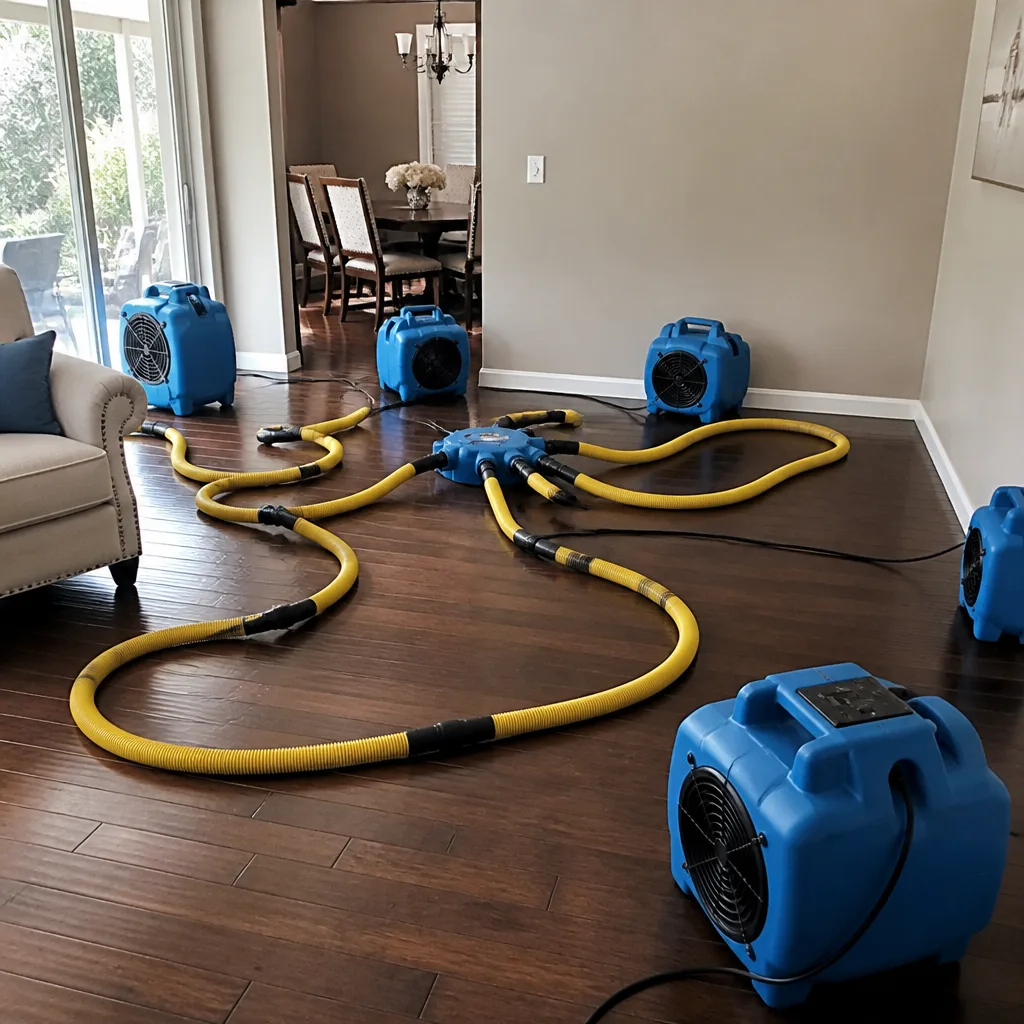
- High-velocity air movers from XPOWER or B-Air create the air flow across wet surfaces that drives evaporation. Positioning matters as much as power; air movers set up at the wrong angle just circulate moist air without pulling moisture out of the structure.
- Injectidry systems are specialized for structural cavity drying. Instead of tearing out drywall to expose wet framing, an Injectidry manifold forces dry air directly into the wall cavity through small access points, drying the framing from the inside. This capability preserves more of the original structure and reduces the rebuild scope, which matters when you’re trying to minimize disruption in an occupied Buena Park home.
- Moisture meters and thermal imaging cameras are not drying equipment, but they’re how a technician knows where the water went and when it’s gone. A restoration without moisture meters is guesswork, regardless of what equipment is running.
We run equipment from Dri-Eaz, Phoenix, XPOWER, B-Air, and Injectidry on our Buena Park jobs because these are the systems designed for structural drying, not for drying a damp carpet after a spill. The distinction is not snobbery. A rental-store blower moves air. A Phoenix low-grain dehumidifier removes water at a rate that makes a seven-day drying timeline possible in a climate where humidity works against you.
This matters for insurance too. When a carrier sees a drying plan that specifies Injectidry for the wall cavities and low-grain dehumidification for the air volume, the adjuster recognizes the technical competence. When they see “set fans and dehus for 5 days” on a scope, they know the contractor is not documenting to IICRC S500 standards and the supplement request will face scrutiny.
Insurance, Documentation, and the Adjuster Relationship
Most Buena Park homeowners who experience significant water, mold, or fire damage are dealing with an insurance claim, whether they filed it on day one or a week later. The claim process follows a rhythm that homeowners often misunderstand, and the misunderstanding costs money.
Your insurance policy covers direct physical loss, meaning damage caused by a covered peril. What it doesn’t automatically cover is damage caused by neglect or delayed mitigation. If a water line bursts and you call a restoration company immediately, the resulting drying and repair work is typically covered. If you wait three weeks and mold develops, the carrier may reasonably argue that the mold was a secondary problem caused by failure to mitigate, and the coverage question shifts. This is why speed matters on the front end of a loss, not because restoration contractors like emergencies, but because the policy language rewards quick action.
Documentation is what converts a restoration into a legitimate insurance claim. Photo documentation of every affected area before work begins. Moisture readings that show the extent of water migration. Equipment logs that show what was deployed and for how long. Material removal inventories that itemize what was torn out and why. Without this paper trail, the carrier has no basis to pay the claim beyond the contractor’s say-so, and the contractor’s say-so is not a contractual obligation.
Some restoration companies in Orange County build their business on insurance work and have adjuster relationships that streamline the process. Others prefer not to deal with insurance at all, leaving the homeowner to navigate the claim alone. Our position is that the restoration contractor should do the technical documentation and the homeowner should understand what’s being submitted. When you hire a restoration company for a Buena Park property, ask whether they provide photo documentation, daily drying logs, and a written scope of work before the job starts. Browse our more guides & resources for additional questions to ask and red flags to watch for. If the answer is no, the claim is going to be harder than it needs to be.
We also recommend that homeowners photograph everything themselves before the restoration crew arrives. Your phone photos are not a substitute for professional documentation, but they establish the loss condition, which matters if there’s any dispute about what was and wasn’t pre-existing.
Common Mistakes to Avoid
- Waiting to call because the water stopped. Water that stopped flowing doesn’t stop damaging. In Buena Park’s humidity, mold can begin colonizing wet drywall within 48 to 72 hours. The clock starts when the water first contacted building materials, not when you noticed the problem.
- Hiring a general contractor for water damage. General contractors build and patch. Restoration contractors dry structures to measurable standards. The skill sets overlap less than the names suggest. A general contractor who says they can handle water damage is usually offering to skip the drying phase and go straight to patch work, which is how homes end up with mold inside the walls a year later.
- Accepting a visual inspection as proof of dryness. A wet wall cavity doesn’t always show moisture on the surface. Drywall can feel dry while the framing behind it reads 25 percent moisture content. The only proof of dryness is a moisture meter reading at the framing level, in multiple locations, documented over time.
- Not asking about permits before demolition starts. If the restoration involves structural framing, electrical work, or significant plumbing replacement, a permit is likely required. Once the wall is open and the work is done, the permit question gets more expensive to answer.
- Skipping mold assessment after a water event that went unnoticed for more than 48 hours. Not every water event produces mold. But every water event that left materials wet for multiple days is a mold risk. A microbial assessment costs less than discovering the problem after new drywall is installed.
- Assuming the insurance company will manage the restoration process. The insurance carrier writes the check. The restoration contractor does the work. You are the one who lives with the outcome. Contractors who keep you informed with written scopes and documented progress are doing their job. Contractors who don’t are giving you a reason to ask questions.
See the difference
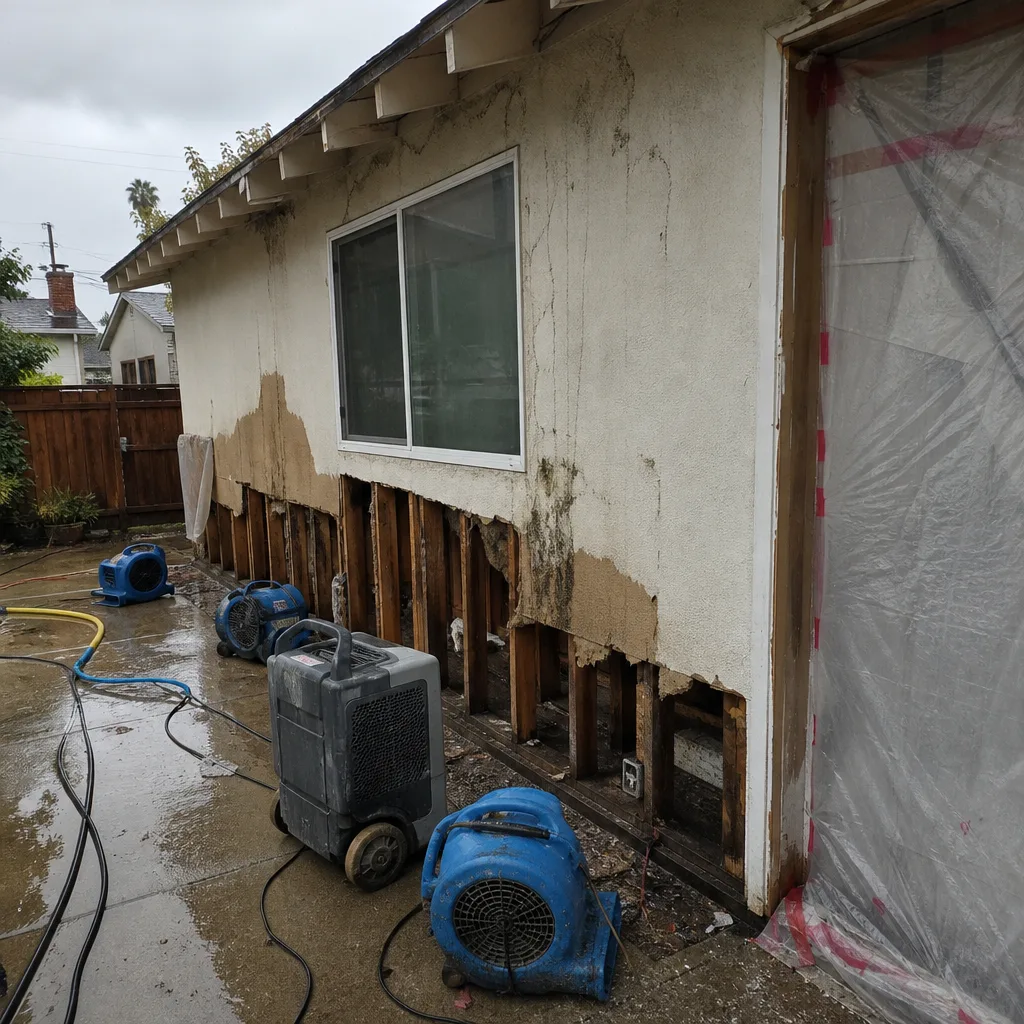 Before
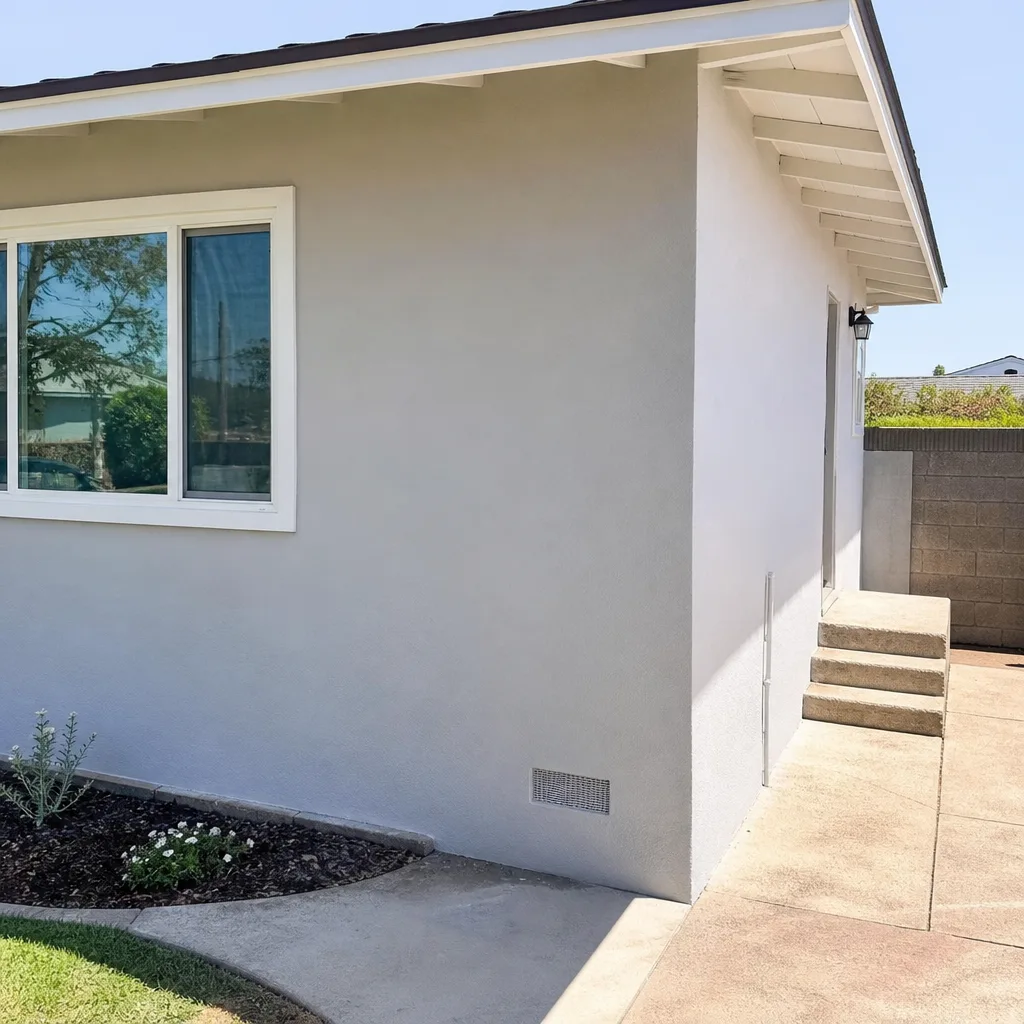 After
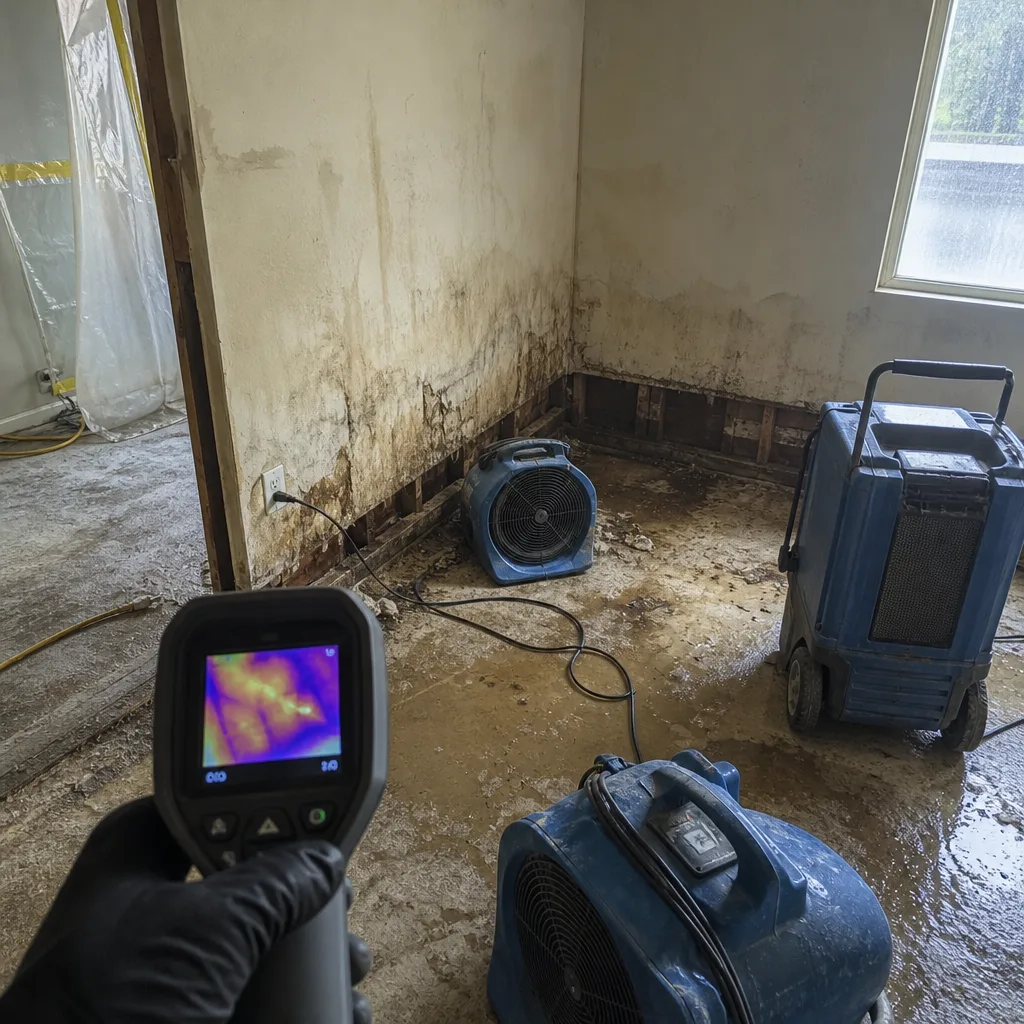 Before
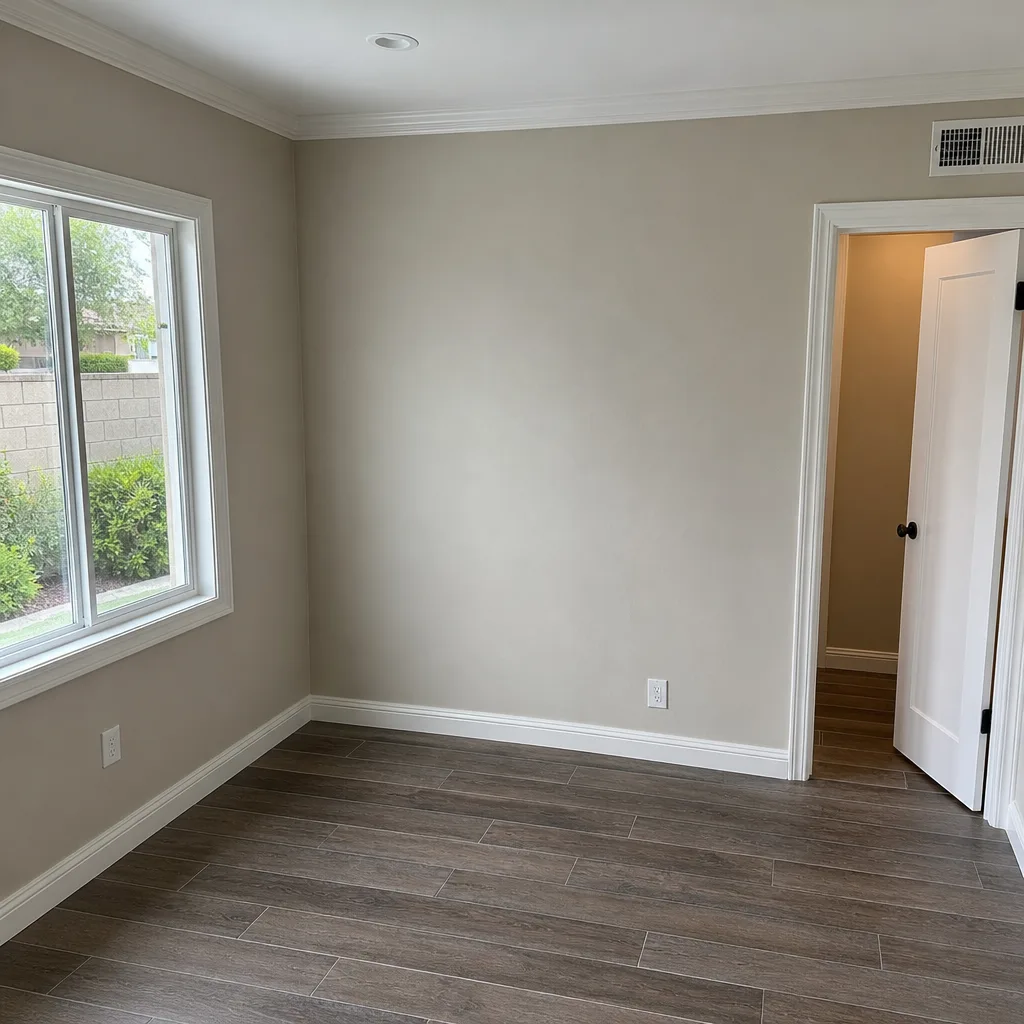 After
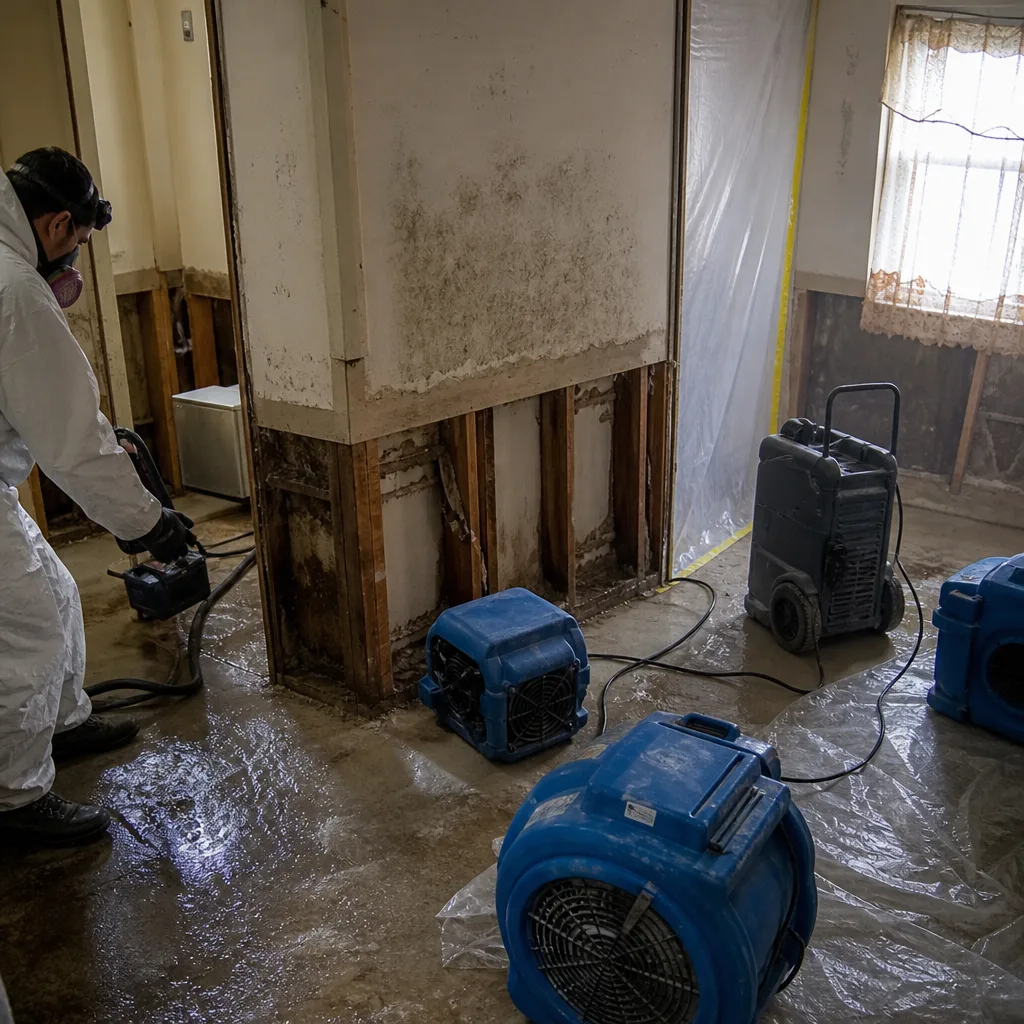 Before
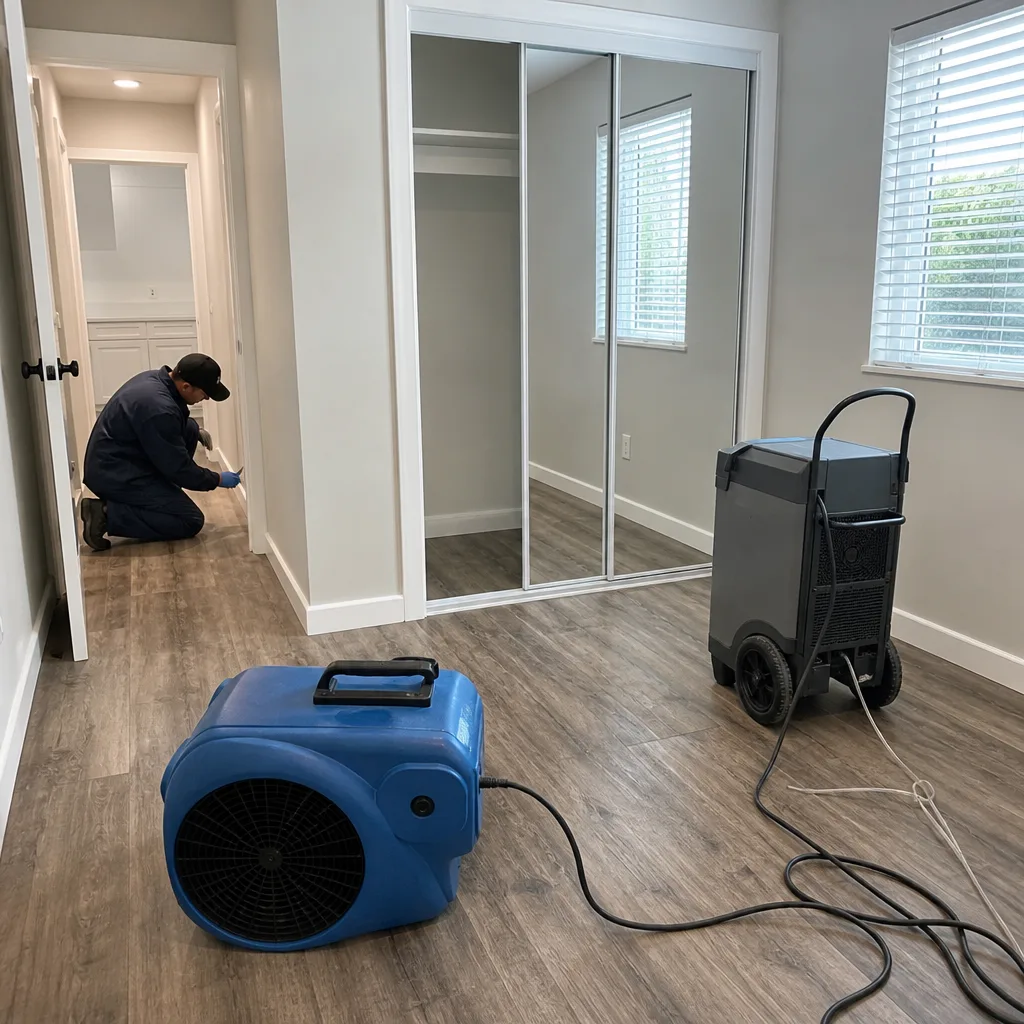 After
When to Call a Professional
Some situations clearly call for professional restoration, and the line is brighter than most homeowners think. Water that has contacted building materials for more than 24 hours, especially in a Buena Park home where ambient humidity slows drying, is beyond the scope of shop vacs and box fans. Any water from a sewage source, a dishwasher overflow, or a toilet backup requires professional extraction and sanitization because the contamination level demands controlled handling. Visible mold covering more than about ten square feet, or mold that has penetrated wall cavities, needs containment and S520-compliant remediation rather than spray-and-wipe cleaning. Fire damage of any size, even a small kitchen fire, produces soot and odor compounds that require specialized cleaning beyond what household products can address.
If you’re reading this guide because you’re facing one of these situations in Buena Park, you don’t need to make the assessment alone. Water damage restoration, mold remediation, and fire damage restoration each follow the five-phase sequence described above. Stonecrest Water Damage offers free estimates in Buena Park, call (833) 589-9161 and we’ll tell you honestly what you’re dealing with and what the scope looks like.
Frequently Asked Questions
Drying alone typically takes three to seven days for a standard water loss in Buena Park, depending on the water volume, the materials affected, and the ambient humidity at the time of the loss. Full restoration including repair and rebuild typically takes two to six weeks. In Buena Park’s coastal-influenced climate, drying runs slower than inland communities, so a contractor who promises a two-day dry on structural framing is not being realistic. Call (833) 589-9161 to get an estimate based on your specific situation.
Homeowners insurance covers water damage when the loss is sudden and accidental, like a burst pipe or a water heater failure. It typically does not cover gradual leaks, flooding from external sources, or damage caused by failure to mitigate after a known leak. The key factor is documentation: carriers pay claims that are supported by moisture readings, drying logs, and photo documentation. Restoration work certified to IICRC standards produces exactly that paper trail.
Stonecrest Water Damage responds to Buena Park calls the same day in emergency situations, because water damage mitigation becomes more expensive and more complicated every hour it’s delayed. In our experience, a home that gets professional extraction and drying within the first 24 hours avoids most of the secondary damage that drives up restoration costs. Call (833) 589-9161 and we’ll tell you exactly when we can be on site.
Mold returns after remediation only when the underlying moisture problem was not resolved. S520-compliant remediation removes the mold contamination and the moisture source, and post-remediation verification confirms the cleanup worked. If a Buena Park home has recurring mold after a professional remediation, the problem is either an unresolved moisture source, like a leak that was never fixed, or the remediation wasn’t actually performed to standard.
Permits are required when the repair involves load-bearing framing, electrical work, significant plumbing replacement, or other structural changes governed by the California Building Code. Cosmetic repairs like drywall and paint typically do not require permits. The restoration contractor should be able to tell you clearly which parts of your job require a permit and who is responsible for pulling it.
Drying is the process of removing excess moisture from building materials and returning a structure to its dry standard. Remediation is the process of removing mold contamination that has already developed. They are related but distinct: drying prevents mold from growing, remediation removes mold that has grown. A company that offers both, rather than farming one out to a subcontractor, gives you single-source accountability. Call (833) 589-9161 for a free estimate on either scope.
The Bottom Line
Damage restoration in Buena Park is not a single event; it’s a sequenced process with physical, legal, and documentary requirements. The five phases, extraction, structural drying, microbial assessment, repair, and documentation, must happen in order, and each phase must be verified by measurement rather than visual inspection. Buena Park’s coastal humidity makes drying harder, which makes professional equipment and psychrometric monitoring more important, not less. IICRC standards exist because restoration is a technical discipline, and following them is what separates a documented restoration from a cosmetic patch. If you’re facing water, mold, or fire damage, start by understanding the process, then call a contractor who can explain it the same way. Stonecrest Water Damage is certified to IICRC standards and offers free estimates in Buena Park at (833) 589-9161.
Written by the team at Stonecrest Water Damage, serving Buena Park since 2013.