
Last updated October 31, 2026
 Water damage drying
 Fire & smoke cleanup
 Mold remediation
 Storm response
 Sewage cleanup
 Reconstruction
Free visual inspection and a written scope of work before any mitigation begins - photos, moisture readings, and drying logs go in your claim file
The scope we write is the scope we bill. Anything new gets shown to you, in writing, before we touch it.
Get your free estimateDamage Restoration Cost Breakdown: The Buena Park Homeowner’s Reference for 2026
Two restoration estimates for the same Buena Park water loss can differ by $8,000. Not because one contractor is dishonest, but because one is running commercial desiccant dehumidifiers billed at actual commercial rates while the other is subbing big-box rental machines and marking them up. The gap isn’t greed. It’s equipment class, labor certification, material category, and disposal fees all stacked into a single number most homeowners never see broken down. This guide—along with our Damage Restoration Warning Signs: A Buena Park Homeowner’s Reference Guide—pulls that number apart, line by line, so you can evaluate any estimate you receive in Buena Park rather than just accept or reject the total.
Quick Answer
Damage restoration costs in Buena Park for 2026 typically range from $1,200 for a small Category 1 water loss to $25,000+ for full fire restoration with structural rebuild. Water damage averages $3,500 – $7,500, mold remediation runs $2,000 – $6,000 per affected area, and fire restoration starts around $5,000 for light smoke and climbs steeply once framing and subfloor are involved. The single largest variable is equipment class: commercial-grade drying systems cost more per day than rental-tier machines but finish the job faster and reduce the final scope.
Restoration work we handle
Table of Contents
- How Water Category and Damage Class Set the Price Floor
- Equipment Cost Transparency: Commercial vs. Rental-Tier Rates
- Material Removal Pricing by Assembly Type
- Orange County Disposal Fees for Contaminated Material in 2026
- How Insurance Scope Negotiations Actually Work in Buena Park
- What Mold Remediation Costs and Why Testing Matters
- Fire Damage Restoration: The Cost Structure Nobody Explains
- Common Mistakes to Avoid
- When to Call a Professional
- Frequently Asked Questions
How Water Category and Damage Class Set the Price Floor
Every water damage estimate in Buena Park starts with two classifications, and if your contractor cannot name them, walk away. Water category describes how contaminated the source is. Damage class describes how far the water traveled through the structure. Together, they mechanically determine minimum equipment counts, labor hours, and drying days. You cannot negotiate these numbers down. They are calculated, not guessed.
Category 1 is clean water from a supply line, sink overflow with no contaminants, or a tub. Category 2 is grey water: dishwasher discharge, washing machine overflow, aquarium leaks. Category 3 is black water: sewage, floodwater from outside, toilet backflow past the trap. The jump from Category 2 to Category 3 is where costs spike because it triggers full containment, antimicrobial application, and in many cases carpet and pad removal rather than drying.
The four damage classes describe saturation spread:
- Class 1: Small area, low porosity materials only. Minimal equipment. Usually a one-day dry time. Often under $1,500.
- Class 2: Entire rooms affected, carpet and cushioning saturated, wicking up drywall up to 24 inches. Requires multiple air movers and an LGR dehumidifier. Typically 3 – 5 dry days.
- Class 3: Water came from above, saturating walls, insulation, and ceilings. Ceiling cavities hold water, subflooring is wet. Requires wall cavity drying, often an Injectidry system. 5 – 7 dry days.
- Class 4: Water trapped in hardwood flooring, concrete, stone, or dense subfloor materials. Requires specialized drying mats or desiccant dehumidifiers. 7 – 14 dry days or longer.
Buena Park’s clay-heavy soil and older slab foundations mean Class 4 is more common here than in newer coastal developments. Homes along Beach Boulevard and the older pockets near Knott’s Berry Farm sit on slabs where water beneath vinyl or hardwood has nowhere to drain. A Class 4 loss in a 1970s Buena Park ranch house will carry a higher equipment day count than the same square footage in a newer raised-foundation home.
Our team at Stonecrest Water Damage documents classification in writing before equipment is placed. That documentation becomes the basis of the insurance scope. If a contractor skips the classification step, you are paying for their intuition, not for measurable work. See our Water Damage Restoration in Brea page for how we apply the same process in neighboring cities.
Equipment Cost Transparency: Commercial vs. Rental-Tier Rates
The largest line item on any drying estimate is equipment rental, and this is where the honest gap between bids appears. A professional restoration company in Buena Park charges daily rates for commercial equipment that reflects purchase cost, maintenance, calibration, and transport. A contractor using rental machines from a hardware store is billing you for those same daily rates while paying a fraction of the equipment cost. The outcome difference is measurable.
Here is what the daily rate structure looks like in 2026 for the Orange County market:
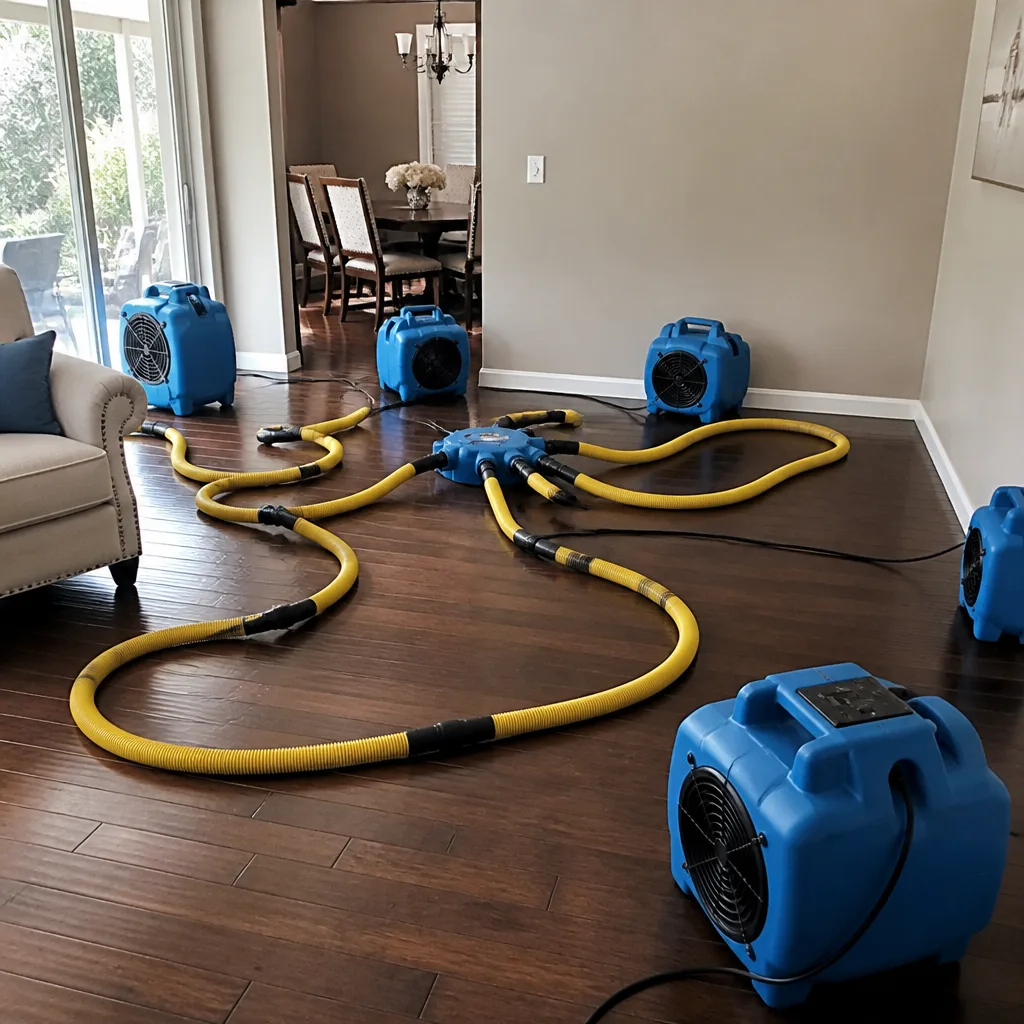
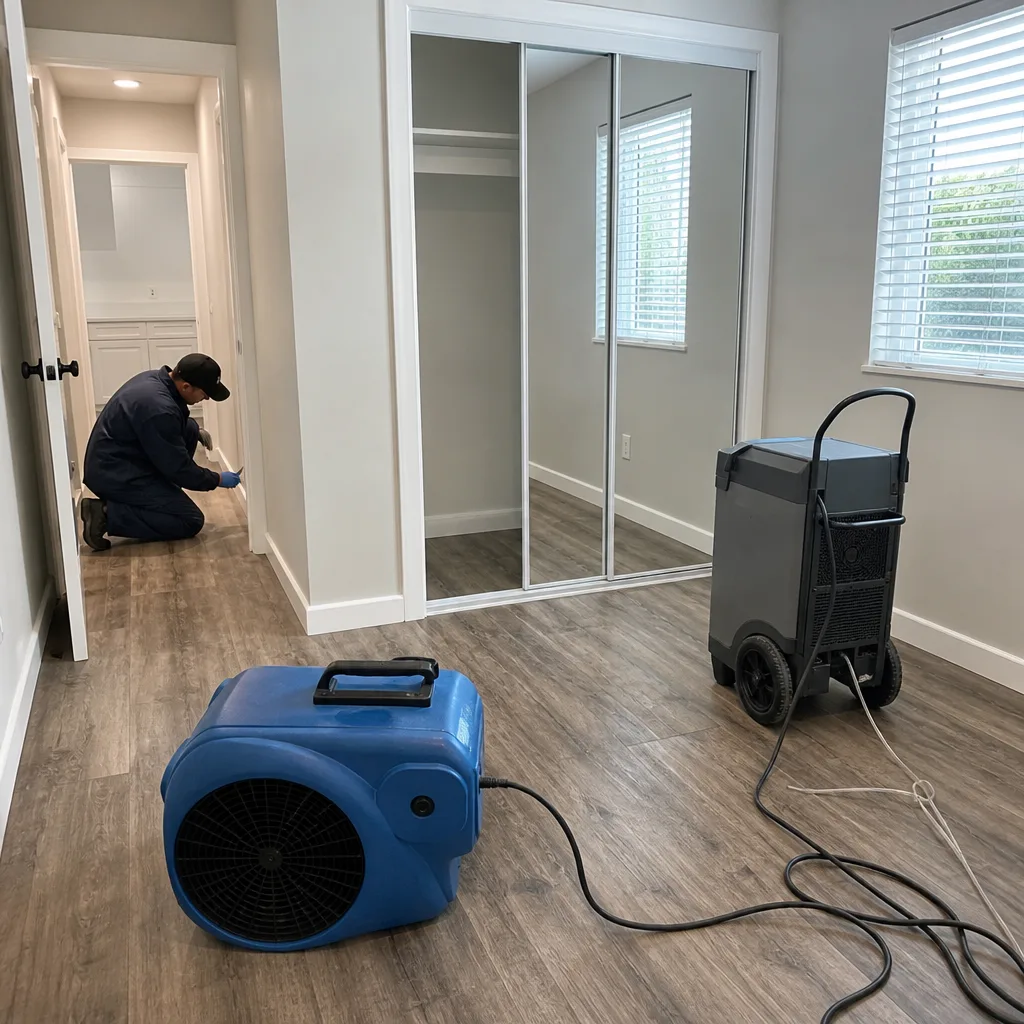
- LGR dehumidifier: $90 – $140 per day. These units pull 130 – 150 pints per day at AHAM conditions. One LGR typically covers 2,500 – 3,500 square feet of affected area depending on class.
- Desiccant dehumidifier: $250 – $450 per day. Used for Class 4 losses, deep materials, or when the structure requires low-grain drying. These are the Dri-Eaz and Phoenix units you see on large commercial loss sites.
- Air mover: $25 – $40 per day each. A standard Class 2 water loss in a Buena Park living room typically requires 6 – 10 air movers.
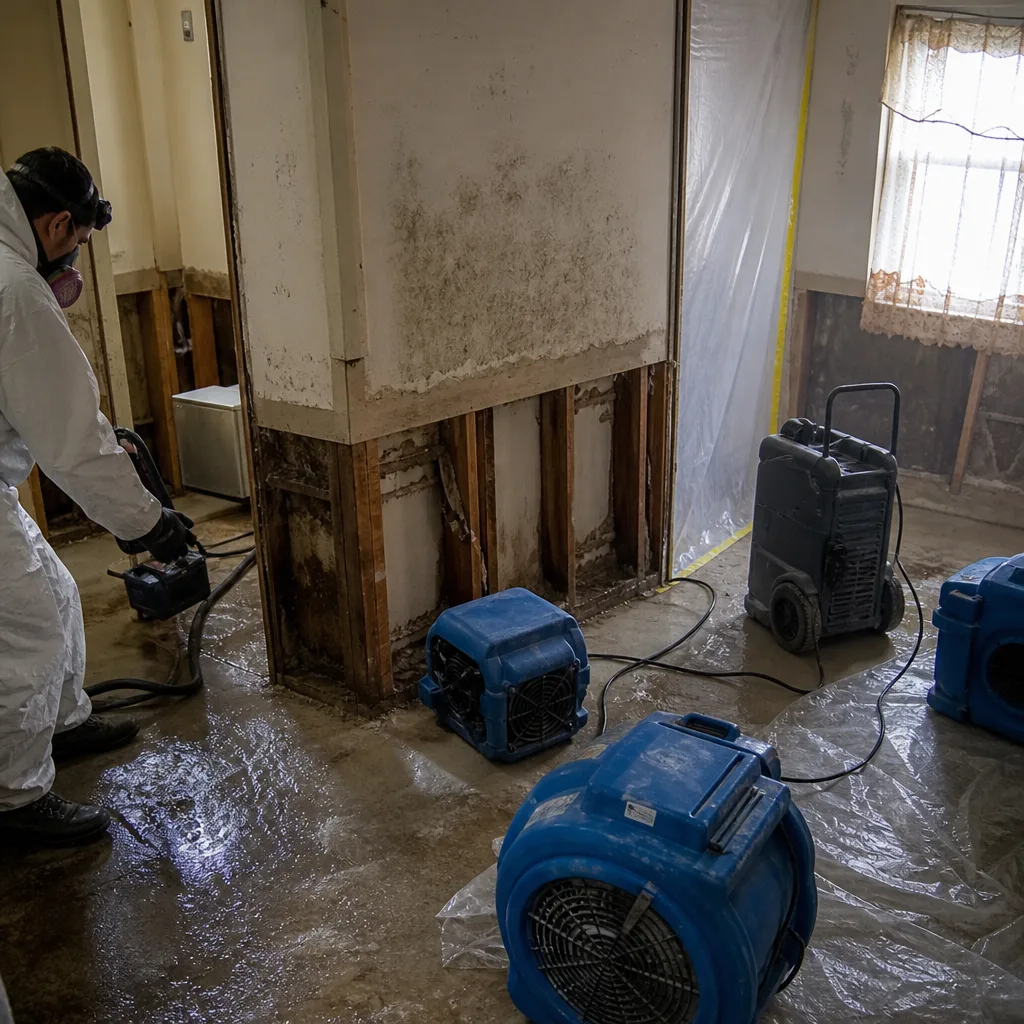
- Negative air machine with HEPA filtration: $150 – $250 per day. Required for Category 3 water and mold containment.
- Injectidry wall cavity drying system: $200 – $350 per day depending on the number of panels. This is how you dry inside walls without cutting out drywall.
- Dehumidifier monitoring and recalibration: Included with commercial equipment; not available at all with rental-tier.
The rental-tier comparison is stark. A homeowner-grade dehumidifier from a major hardware chain pulls 30 – 50 pints per day and is not designed for structural drying. Running four rental machines to match one LGR means higher electricity draw, no moisture documentation, and a dry time that can double. In Buena Park’s summer humidity, that extra week is the difference between salvageable drywall and a mold colony forming behind the baseboard.
XPOWER and B-Air air movers and Phoenix LGR units are what we run on every job. They are calibrated, logged, and placed according to IICRC S500 airflow calculations. The equipment list on your estimate should specify brand and model. If it says only “dehumidifier” with no spec, ask why.
Material Removal Pricing by Assembly Type
Once water or fire affects a material beyond salvage, removal pricing enters the estimate. Different assemblies carry different labor and disposal structures. A detailed estimate lists these as separate line items, not as a lump-sum “demo” charge. Here is what Buena Park homeowners see in 2026:
Drywall and insulation removal: $2.50 – $4.50 per square foot including labor, containment, and bagging. Wet cellulose or fiberglass insulation behind drywall cannot be dried effectively. It gets cut out, bagged, and disposed of. If the drywall is saturated with Category 3 water, the cut line extends 12 – 24 inches above the visible water line to reach the wicking edge.
Subfloor and underlayment removal: $4 – $8 per square foot. Plywood subfloor that has delaminated or particleboard underlayment that has swelled cannot be saved. This is one of the most commonly missed line items in cheap estimates. Contractors quote drying and then “discover” subfloor damage after the equipment is in place, which triggers a supplement. A proper estimate anticipates it from the moisture map.
Carpet and pad removal: $1 – $2.50 per square foot. Carpet saturated with Category 3 water is always removed. Category 2 carpet is salvaged only if drying begins within 48 hours. Pad is almost never saved once saturated.
Cabinetry removal and reset: $150 – $350 per linear foot depending on custom vs. stock. Lower cabinets in a kitchen flood absorb water through the toe kick and delaminate. Removal is often required to access wall cavities behind them for drying. A qualified restoration company removes cabinets and stores them for reset rather than condemning them.
Buena Park’s housing stock skews toward 1950s – 1970s construction, which means gypsum board with lapped seams and older framing. These assemblies rarely dry as cleanly as modern materials. Expect removal pricing to run higher in these homes than in a 2010s build in a newer Buena Park tract.
Orange County Disposal Fees for Contaminated Material in 2026
Disposal is the least understood line item on a restoration estimate, and Orange County sets rates that change what restoration costs in Buena Park specifically. Contractors do not set these fees. They pass them through from county-approved transfer stations and landfills.
For 2026, Category 3 water damage debris from Buena Park homes falls under contaminated solid waste disposal at Olinda Alpha Landfill or the Frank R. Bowerman Landfill depending on routing. Tipping fees for this classification run $120 – $200 per ton, and contaminated loads are charged at a higher rate than standard construction debris. A single Category 3 kitchen flood in a Buena Park home generates 1,000 – 2,500 pounds of contaminated drywall, insulation, and flooring before containment bags and liners are added.
The bigger variable is asbestos. Buena Park has thousands of pre-1980 homes. When water damage or fire requires removal of original drywall, popcorn ceilings, vinyl sheet flooring, or duct wrap, testing is required before demolition—something covered in our Damage Restoration Permits, Codes & Inspections in CA: What You Need to Know. If asbestos-containing material is present:
- Asbestos testing: $250 – $500 per sample, multiple samples required per assembly.
- Abatement containment and removal: $8 – $20 per square foot, handled by a licensed abatement contractor.
- Asbestos waste disposal: $400 – $800 per ton at a Class I hazardous waste facility. Orange County has limited sites accepting this classification, which adds transport distance.
If your home is pre-1980 and the restoration bid does not include a testing contingency line, the estimate is incomplete. The cost will appear on a supplement later, but now you are negotiating mid-project instead of before work begins.
How Insurance Scope Negotiations Actually Work in Buena Park
Your insurer pays adjusters to write estimates using Xactimate, the pricing database that insurance carriers adopted years ago. Xactimate uses regional labor and material rates, but it frequently lags behind what Orange County contractors actually charge in 2026. The gap is a known problem in the restoration trade, and it falls on the homeowner when the insurer’s number cannot buy the scope that was written.
Here is the mechanics of how a claim works and where costs get contested:
- The adjuster writes a preliminary scope. This is often the lowest defensible number, written from photos without moisture readings or an on-site walkthrough.
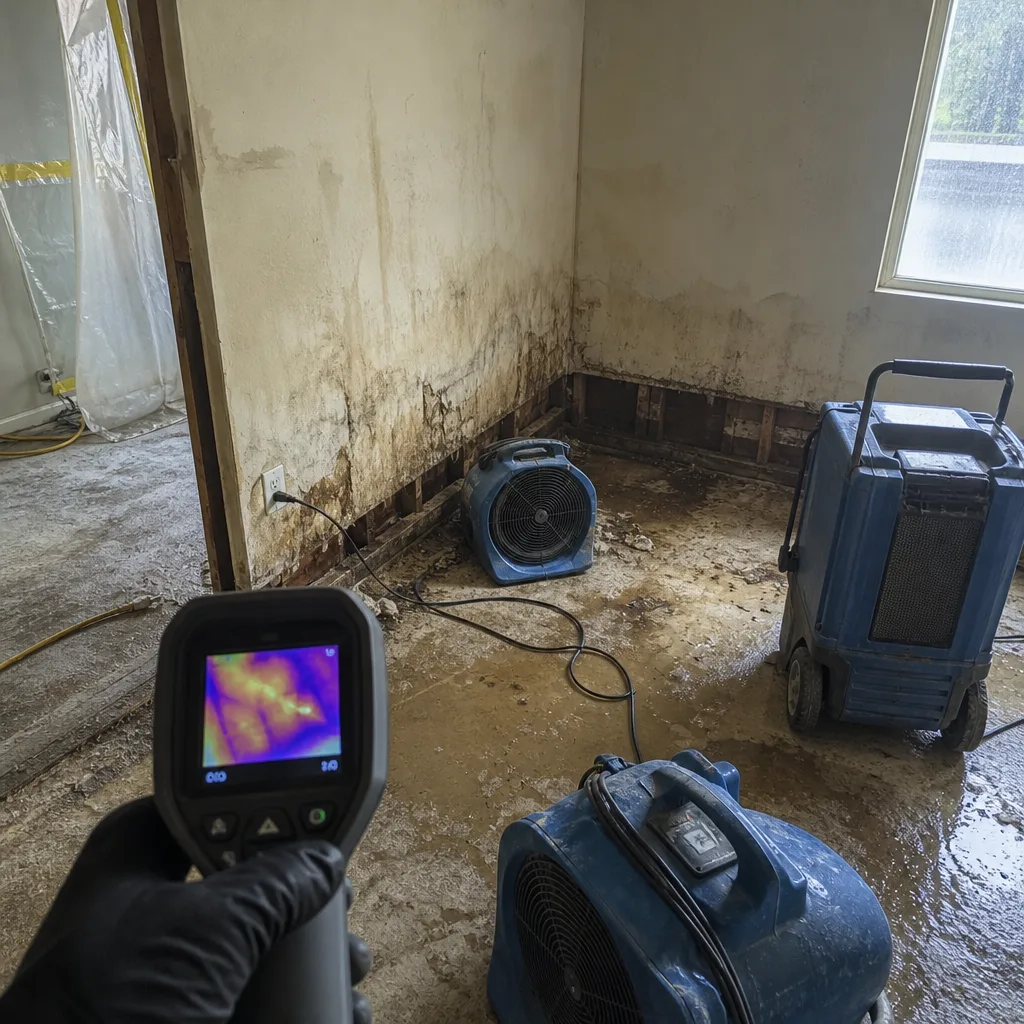
- Your restoration contractor documents actual conditions. Moisture maps, thermal camera images, classification reports, and material inventories. This documentation package is what moves the claim from the preliminary number to the real scope.
- A supplement is submitted. The difference between the original estimate and the documented scope gets filed as a supplement. Most insurers expect supplements. It is the system working.
- The adjuster reviews and approves or counters. Items with clear documentation and line-item justification get approved. Items with vague descriptions or no documentation get denied.
The homeowners who recover the most from insurance are the ones whose contractor documents everything. Photo records of standing water, moisture readings from affected assemblies, serial numbers from equipment, and daily drying logs all support the supplement. Without them, it is your word against a pricing database. You lose that fight.
If your claim involves mold or fire work, the documentation requirements are heavier. See our Mold Remediation in Brea and Fire Damage Restoration in Brea pages for how we build documentation packages that adjusters accept.
What Mold Remediation Costs and Why Testing Matters
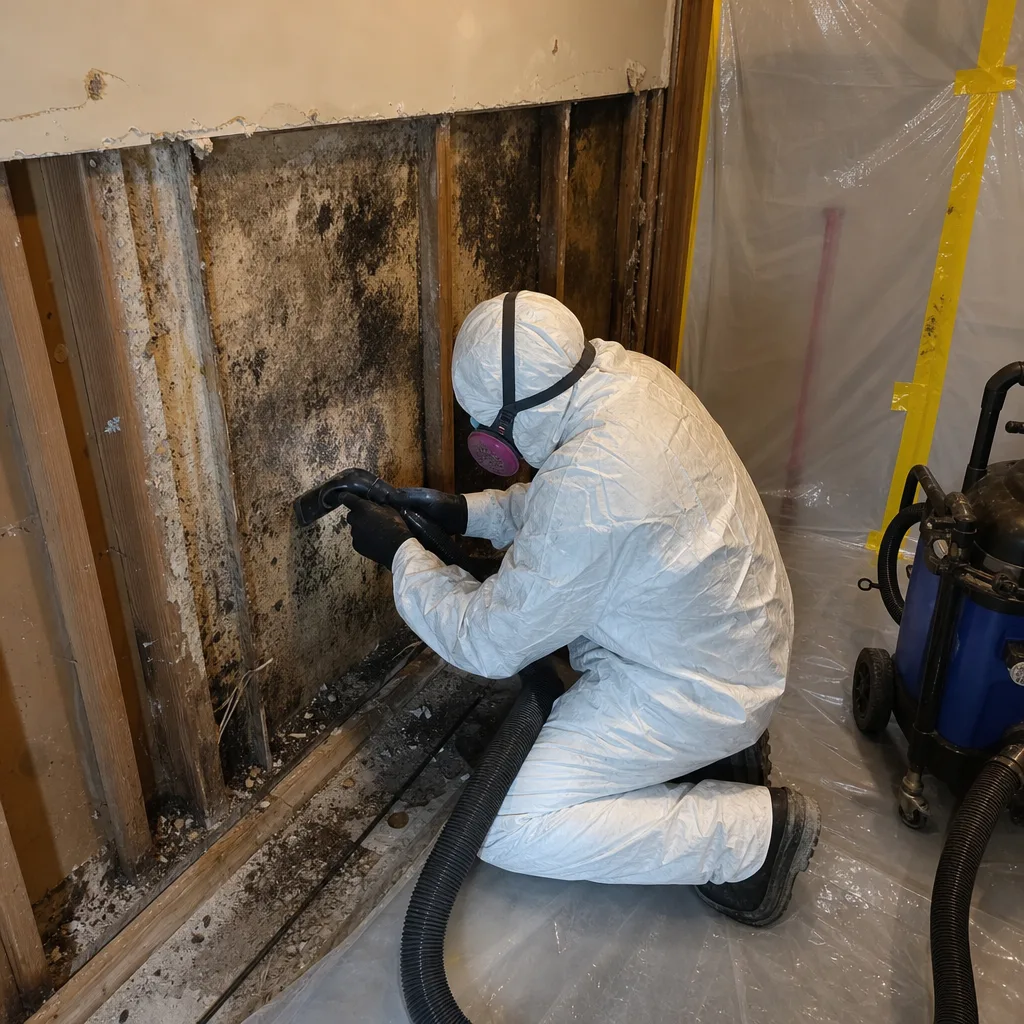
Mold remediation in Buena Park runs $2,000 – $6,000 for a typical affected area of 100 – 300 square feet. Whole-home mold projects in crawlspaces, attics, or multiple rooms can exceed $15,000. The range depends on containment requirements, material removal scope, and whether HVAC cleaning is involved.
Testing is separate from remediation and should be. An independent mold assessor collects air and surface samples before work begins, writes a remediation protocol, and returns after work to verify clearance. This third-party testing costs $400 – $1,200 depending on the number of samples. Contractors who test and remediate in the same bid are operating under a conflict of interest that California licensing boards frown on.
Remediation itself follows this general structure:
- Containment setup: Poly sheeting, negative air pressure, and HEPA scrubbers isolate the work area. $500 – $1,500 per containment zone.
- Material removal: Mold-contaminated drywall, insulation, and carpet get cut out double-bagged and disposed of at contaminated waste rates.
- Surface treatment: Remaining framing and studs get sanded, wire-brushed, and treated with antimicrobial agents per IICRC S520 standard.
- Post-remediation verification: An independent assessor returns for clearance testing. The job is not done until this passes.
Buena Park’s older housing stock and flat roof designs on some 1960s and 1970s homes create recurring mold conditions. Swamp coolers on older homes, which are still common in this part of Orange County, introduce interior humidity that feeds mold in wall cavities. The Stonecrest Water Damage home page explains how our equipment-grade approach handles these recurring conditions rather than just cleaning surface mold.
Fire Damage Restoration: The Cost Structure Nobody Explains
Fire restoration is priced differently from water damage because the damage types layer on each other. There is char removal, smoke penetration, water damage from suppression, and odor treatment. Each has its own labor and material cost, but they are all billed as part of one restoration scope.
The cost tiers for Buena Park fire restoration in 2026:
- Light smoke, no structural damage: $5,000 – $10,000. Soot cleaning, ozone or hydroxyl treatment, repainting, and HVAC cleaning.
- Kitchen fire with drywall and cabinet damage: $12,000 – $25,000. Structure cleaning, selective demolition, cabinet replacement or reset, and full repaint.
- Whole-room fire with framing damage: $25,000 – $60,000. Structural repair, subfloor replacement, electrical rework, full system rebuild.
- Whole-home fire or fire with smoke throughout: $60,000+. Full reconstruction, HVAC replacement, sometimes complete interior rebuild.
Smoke odor is the cost multiplier that surprises Buena Park homeowners. Smoke penetrates porous materials and resurfaces for years if not fully treated. Thermal fogging and hydroxyl generator treatment run $1,500 – $5,000 depending on affected square footage. Skipping it saves money on the estimate and costs more in repainting and re-cleaning within twelve months.
Water damage from suppression is part of the same claim. Firefighters can put 200 – 500 gallons of water into a structure. That water sits in drywall, insulation, and flooring while the fire claim gets written. A restoration company that handles fire but not water will miss this cross-category scope. One certified team handling both is why Stonecrest Water Damage runs water, mold, and fire as integrated service lines rather than trading subcontractors.
Common Mistakes to Avoid
- Accepting a lump-sum bid without line items. A single number for “water damage restoration” means you cannot evaluate the equipment class, drying days, or material scope. You are betting on trust, not documentation. Ask for line-item detail before signing.
- Choosing the lowest estimate without comparing equipment specs. The $8,000 gap from our opening example exists because rental-tier machines get billed like commercial units. A lower bid that takes twice as long to dry a structure costs more in secondary damage.
- Delaying mitigation while you wait for the adjuster. In Buena Park’s climate, standing water becomes a mold problem within 48 – 72 hours. Insurers expect you to mitigate immediately. Documentation of the mitigation is what supports the claim, not waiting for permission.
- Using a contractor that does not document moisture readings. Without before, during, and after moisture measurements, you have no proof the structure was dried to standard. This is how hidden mold happens.
- Skimping on post-remediation verification for mold. Clearance testing is how you know the remediation worked. Skipping it to save $500 on a $5,000 job is how mold comes back and insurance denies the second claim.
- Signing an assignment of benefits without reading the scope. In California, some contractors ask homeowners to sign over their claim rights. This can leave you out of the negotiation entirely. Get everything in writing first.
- Patching over fire smoke odor instead of treating it. Paint seals smoke on surfaces but not inside wall cavities. The odor returns. Proper treatment reaches the source or the materials come out.
When to Call a Professional
Call a restoration company the moment you identify standing water, visible mold growth larger than 10 square feet, or smoke damage that extends beyond a single room—our Damage Restoration Emergency Preparedness Guide for Buena Park Homes outlines what to have ready before that call. These are not handyman repairs. They involve structural drying, containment, and documentation that only certification-backed equipment and processes can provide. If you see water staining on the ceiling, smell musty odors that do not clear with cleaning, or the drywall feels soft to the touch, the damage has already progressed into the structure.
Fire damage is the same. Soot that wiped off a counter also entered the wall cavity behind it. Mold behind a bathroom vanity is growing into the drywall cavity. What you see is the visible edge of a larger condition. Stonecrest Water Damage offers free estimates in Buena Park. Call (833) 589-9161 and we will document the full scope before anyone places equipment.
Frequently Asked Questions
Water damage restoration in Buena Park typically costs $3,500 – $7,500 for a standard Category 1 or 2 loss affecting one to three rooms. Smaller losses under 100 square feet run $1,200 – $3,000; large Class 4 losses can exceed $12,000. Equipment rental, labor, and material removal are the three largest cost components. Call (833) 589-9161 for an exact quote based on your specific damage.
Estimates differ primarily because of equipment class, not labor rates. Commercial LGR and desiccant dehumidifiers cost more per day than rental-tier machines, dry faster, and produce verifiable moisture levels. A contractor using Dri-Eaz or Phoenix commercial units passes those costs through at market rate. A contractor using hardware-store rentals charges for equipment that cannot achieve the same dry time or documentation standard.
Most homeowners insurance policies cover sudden and accidental water damage and fire damage, but mold coverage is typically limited to $5,000 – $10,000 in California policies unless caused by a covered water loss. Your insurer’s adjuster writes the initial scope using Xactimate, and documentation from your restoration contractor is what moves that number to actual cost. If the damage results from long-term neglect or maintenance failure, coverage may be denied.
Professional restoration companies in Buena Park dispatch within hours for active water or fire damage, and mitigation equipment is typically placed the same day. The window that matters is the first 48 hours: drying that starts within that window saves drywall, flooring, and framing that cannot be saved afterward. Call (833) 589-9161 any time, day or night.
If visible mold covers more than 10 square feet, IICRC standards require full containment and remediation, not surface cleaning. Smaller areas can sometimes be cleaned by a certified technician without containment. The deciding factor is whether the mold is on the surface or inside the material. Surface cleaning cannot reach inside drywall cavities or under flooring. In our experience, most visible mold in Buena Park homes is the tip of a larger hidden colony.
You do, but your restoration contractor should document everything the adjuster needs to approve the full scope. Photo records, moisture maps, classification reports, equipment logs, and material inventories all support the supplement process. A contractor who communicates directly with your adjuster and provides daily drying logs makes the claim move faster. You remain in control of the claim decision. The contractor provides the evidence.
The Bottom Line
Restoration pricing in Buena Park is a calculation, not a guess. Water category and damage class set the minimum equipment and labor hours. Equipment class determines the daily rate and the dry time. Material assembly determines removal and disposal costs. Orange County disposal fees and pre-1980 asbestos conditions add pass-through costs that honest contractors disclose up front. The best estimate you can receive is one that gives you every line item, names the equipment brands, documents the moisture readings, and explains the classification. For more guides & resources on protecting your Buena Park home, see our blog. That is the bid worth signing. Without it, you are comparing total numbers instead of outcomes.
Written by the team at Stonecrest Water Damage, serving Buena Park since 2013.
See the difference
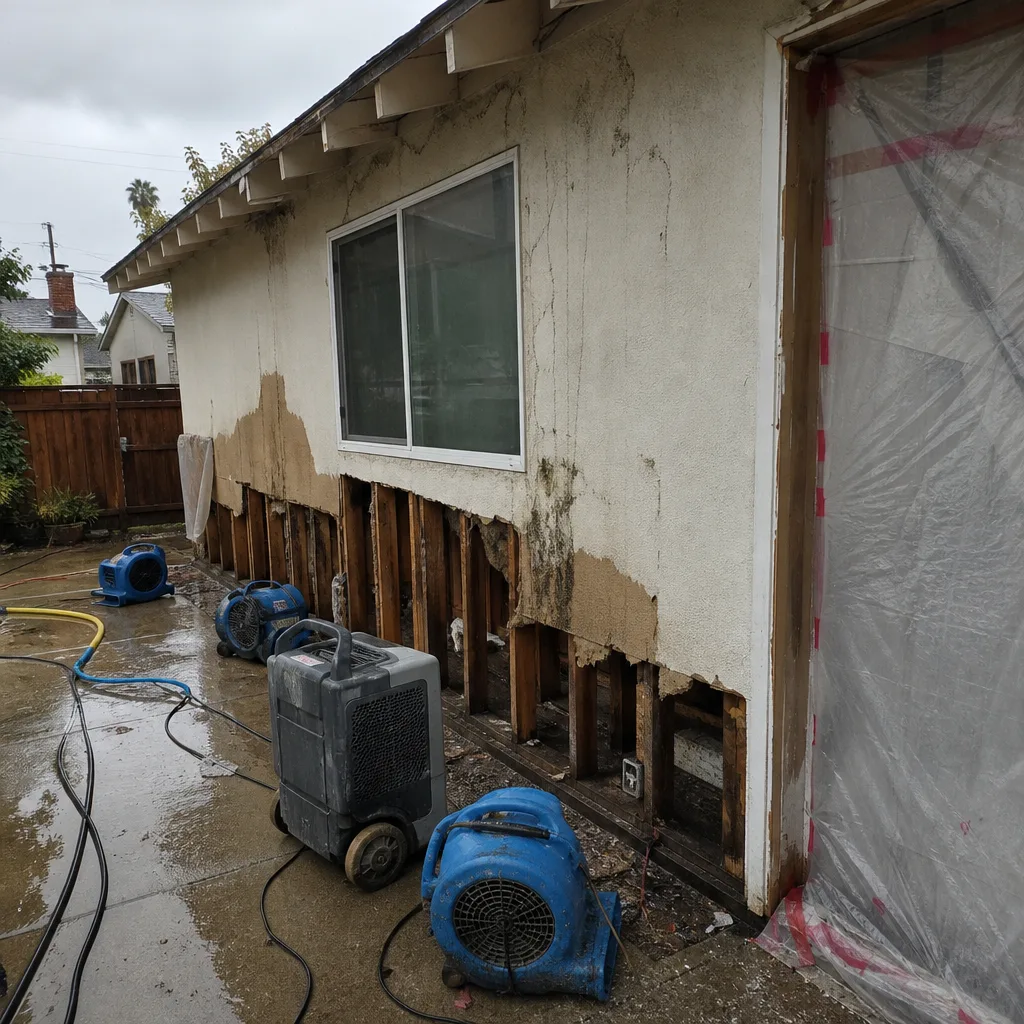 Before
 After
 Before
 After
 Before
 After