

Last updated October 31, 2026
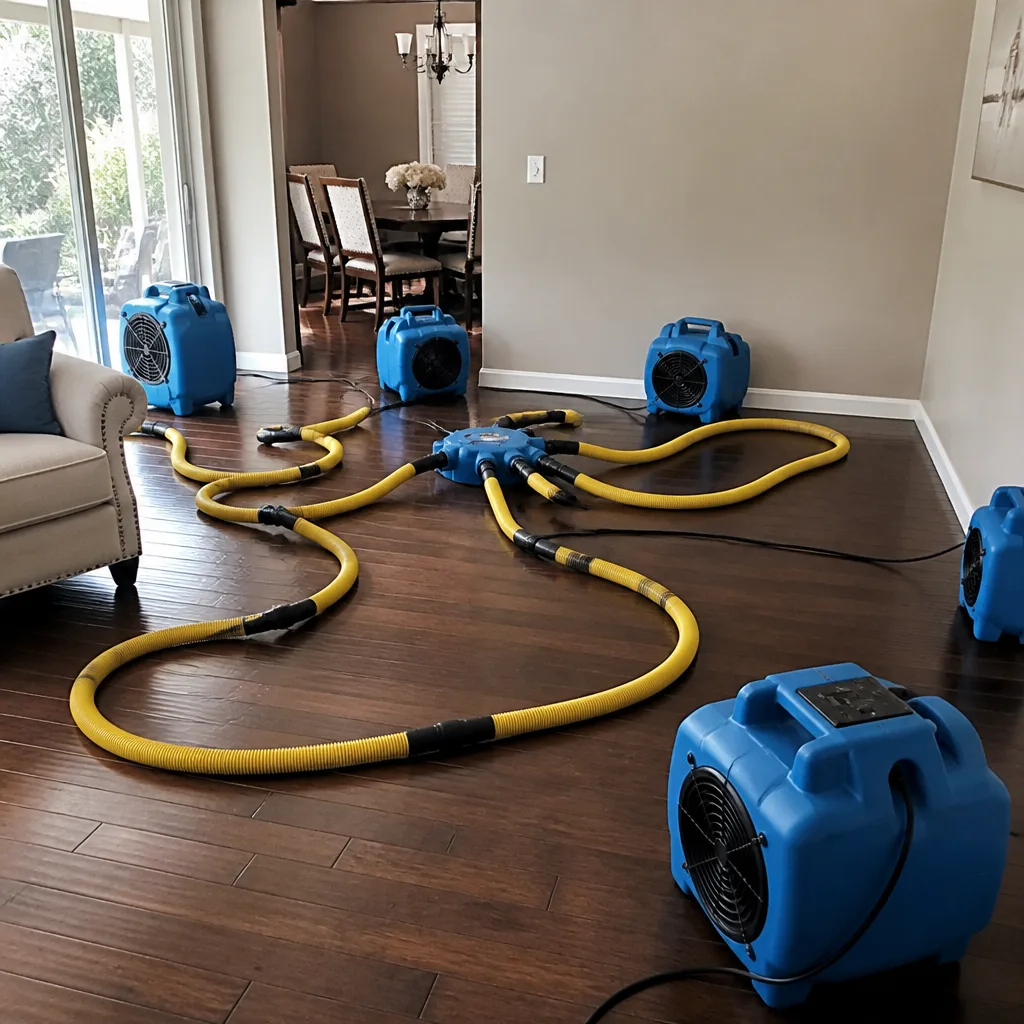 Water damage drying
 Fire & smoke cleanup
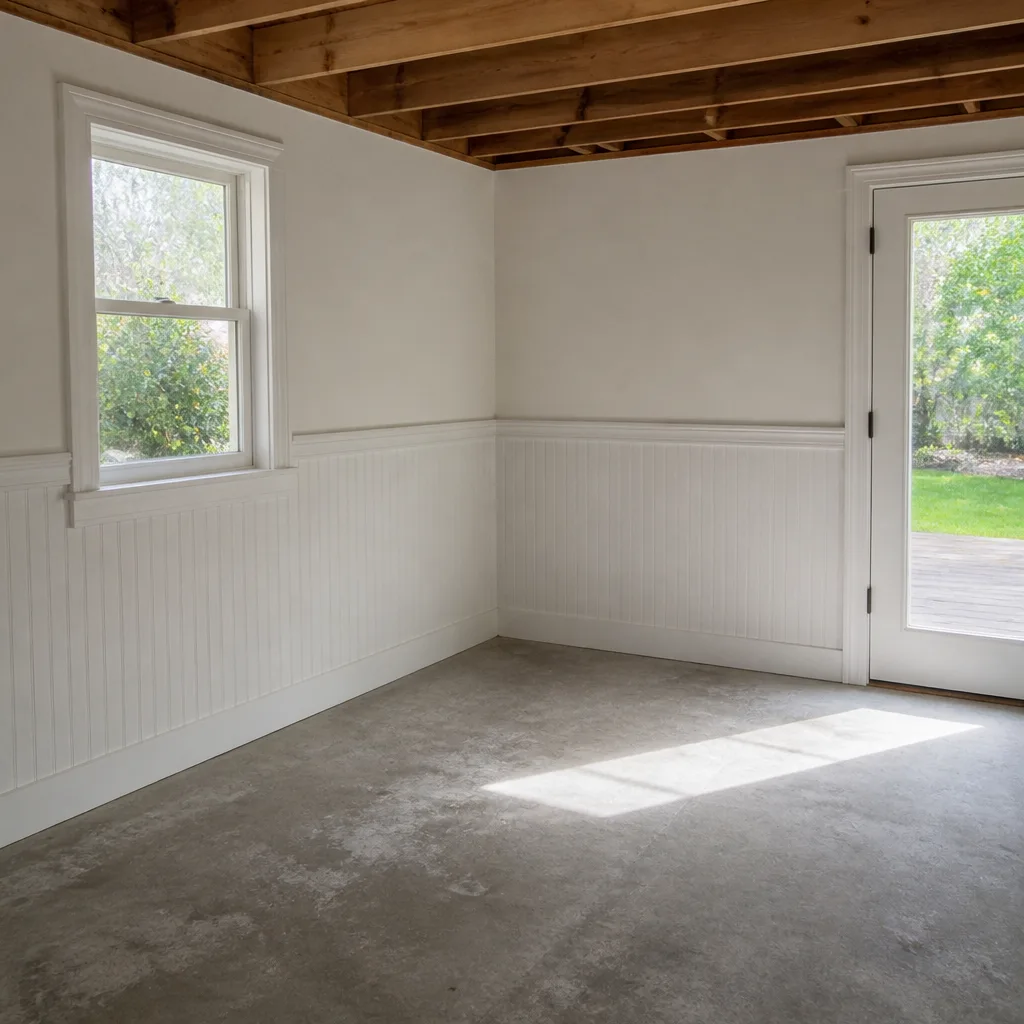 Mold remediation
 Storm response
 Sewage cleanup
 Reconstruction
Free visual inspection and a written scope of work before any mitigation begins - photos, moisture readings, and drying logs go in your claim file
The scope we write is the scope we bill. Anything new gets shown to you, in writing, before we touch it.
Get your free estimateWater Damage Restoration Maintenance Checklist for Buena Park Homeowners
The most expensive water damage claim Stonecrest responds to in Buena Park properties almost never starts with a burst pipe. It starts with a slow drip behind a cabinet that went undetected for 60 days while mold colonized the wall cavity. By the time the homeowner notices the warped baseboard or the musty smell, what began as a $12 supply line failure has become a Category 3 contamination event requiring full containment, demolition, and structural drying. This guide is built to stop that timeline before it starts. You’ll learn which failure points in Buena Park housing stock fail most often, what maintenance actually prevents them, and how to document your efforts so your insurance claim isn’t denied for “lack of maintenance.”
Quick Answer
A water damage prevention checklist for Buena Park homeowners should prioritize supply line inspection, moisture meter baselines, HVAC condensate drain testing, water heater and washing machine hose replacement, and exterior stucco and slab inspection. For more guides & resources, explore our blog. The most critical action item is quarterly inspection of water supply lines under sinks and behind toilets, especially in homes built before 2000 where polybutylene plumbing may still be present. Catch failure conditions at the Category 1 stage and you avoid the mold remediation, structural drying, and insurance complexity that follow Category 2 and 3 water losses.
Restoration work we handle
Table of Contents
- Supply Line Inspection Protocol: The Highest-Frequency Failure Point
- Moisture Reading Baselines: What Numbers Actually Mean in Buena Park
- Polybutylene Plumbing in Pre-2000 Buena Park Homes: Know the Risk
- Slab Construction and Stucco Exteriors: Failure Points Specific to Buena Park Housing Stock
- HVAC Condensate Drain Testing Before Summer Cooling Load
- Water Heater and Washing Machine Hose Replacement Intervals
- The Documentation Habit: Paper Trails That Strengthen Insurance Claims
- Exterior Drainage and Grade: Managing Buena Park’s Winter Rain Events
Supply Line Inspection Protocol: The Highest-Frequency Failure Point
In our experience responding to water damage in Buena Park, supply lines under sinks and behind toilets fail more often than any other single component. These are the flexible lines that connect your shutoff valve to your faucet, toilet, or appliance. They’re under constant pressure, they flex every time you use the fixture, and most homeowners never look at them until water is already pooling on the floor. The failure mechanism is almost always the same: the rubber washer inside the connection degrades, the braided jacket frays, or the line itself develops a pinhole from corrosion at the fitting.
The distinction between braided stainless steel lines and unbraided rubber or plastic lines matters more than most homeowners realize. Braided lines have a stainless steel jacket that resists abrasion and pressure spikes. Unbraided lines, especially the older plastic or rubber versions common in 1980s and 1990s construction, fail at dramatically higher rates. Industry data suggests braided supply lines should be replaced every 5 to 7 years. Unbraided lines should be replaced immediately, regardless of apparent condition, because the failure mode isn’t visible until it happens.
What to Inspect, Step by Step
- Locate every supply line in the home. This means under every sink (kitchen, bathroom, laundry, utility), behind every toilet, and at the connection points to the dishwasher, washing machine, water heater, and any ice maker or water filtration system. A typical Buena Park three-bedroom home has between 8 and 14 supply lines.
- Check the connection points first. Look for any green or white crusty buildup at the fittings. That’s mineral deposit from a slow weep. The weep may be too slow to drip, but it’s degrading the connection and will eventually fail.
- Run your finger along the braid (if braided). Feel for frayed strands, flat spots, or any section that feels thinner than the surrounding braid. Fraying means the jacket is compromised and the inner tube is no longer fully protected.
- Check for bulges. A soft bulge anywhere along the line means the inner tube is failing and the jacket is holding pressure it wasn’t designed to hold alone.
- Note the age of each line. If you can’t remember replacing a supply line, it’s overdue. Write the inspection date and line condition on a small tag or in a phone note.
Replacing a supply line costs between $8 and $30 and takes 15 minutes. Ignoring one costs thousands in Water Damage Restoration services and can force you into mold remediation territory if the water sits long enough. This is the highest-ROI maintenance item on the entire list.
Moisture Reading Baselines: What Numbers Actually Mean in Buena Park
A non-invasive moisture meter is the single most underused tool in home maintenance. It costs between $40 and $80, it takes readings in seconds, and it gives you an objective number instead of a guess. But the number only matters if you know what it means. In Buena Park’s coastal-influenced climate, normal wood equilibrium moisture content runs between 8% and 12%. Indoor framing lumber, baseboards, and cabinet bottoms should read in that range. A reading of 13% to 17% indicates elevated moisture worth investigating. Anything above 20% on wood or drywall signals active water intrusion that requires professional attention, especially if the reading persists across multiple days.
The key habit is establishing a baseline before there’s a problem. Walk your home with a non-invasive meter once a quarter. Record readings at 8 to 10 consistent locations: under each sink, behind each toilet, around the water heater, along exterior walls in bedrooms, and in any room with a history of condensation. Write the numbers down. If a reading jumps from 9% to 16% between quarters, you’ve caught a leak before it becomes visible damage. That’s the entire game.
What a Professional-Grade Meter Tells You That a Visual Inspection Can’t
Stonecrest Water Damage runs commercial-grade moisture measurement on every job because visual inspection lies. A wall can look perfectly dry while the cavity behind it holds 25% moisture content and active mold growth. The non-invasive meters used in our documentation process are calibrated to IICRC standards, which means they read through surfaces without pinhole probes and produce numbers that insurance adjusters accept. Your homeowner-grade meter won’t match that precision, but it will catch the trend. And catching the trend is what preventive maintenance is for.
Polybutylene Plumbing in Pre-2000 Buena Park Homes: Know the Risk
Buena Park residential development peaked across multiple decades, but a significant portion of the housing stock was built between 1978 and 1995. That window matters because it’s when polybutylene plumbing was widely installed in Southern California residential construction. Polybutylene is a gray or blue flexible plastic pipe used for interior water distribution. It was marketed as a durable, low-cost alternative to copper, but it degrades when exposed to chlorine and other oxidants in municipal water. Over time, the pipe becomes brittle, the fittings fail, and the result is a pinhole leak or a sudden rupture inside a wall or slab.
If your Buena Park home was built before 2000 and you have gray or blue plastic pipes, you’re on borrowed time. The failure isn’t a question of if. It’s a question of when and where. The pinhole leaks typically start at the fittings first, which means they often occur inside wall cavities or under the slab where they’re invisible until the damage is extensive. Remodeling projects that expose polybutylene lines are an opportunity to repipe before the plumbing fails on its own schedule.
Replacing polybutylene entirely is a major plumbing project, not a weekend fix. But identifying it is a maintenance task. If you find polybutylene, you know your home falls into a higher-risk category for hidden leaks. That changes your inspection frequency, your documentation discipline, and your tolerance for “small” moisture readings. It also changes the conversation if you’re buying a home. A home inspection that reveals polybutylene should trigger a repipe negotiation, not a hope that the previous owner got lucky.
Slab Construction and Stucco Exteriors: Failure Points Specific to Buena Park Housing Stock
Most homes in Buena Park are built on concrete slab foundations with stucco exteriors. That’s not unique to the city, but it creates a specific failure profile that homeowners need to understand. Slab construction means water supply lines and drain lines are embedded in or under the concrete. When a line leaks under the slab, water doesn’t pool visibly. It saturates the soil, wicks up through the slab, and appears as dampness at the base of interior walls, lifting tile, or a persistent musty odor with no obvious source. By the time you see it, the leak has typically been active for weeks or months.
Stucco exteriors create a different problem. Stucco is a cement-based material that can act as a reservoir when it’s not properly drained. Cracks in stucco, improper flashing at windows and doors, and clogged weep screeds (the small gaps along the bottom edge of the stucco system) all allow water into the wall cavity where it’s trapped against the framing and drywall. The result is hidden mold growth behind the stucco that won’t show on the interior surface until the damage is structural.
What to Watch For on Slab and Stucco
- Cracks in the slab at the garage threshold or exterior patio. These can be entry points for groundwater during winter rain events.
- Stucco cracks wider than 1/8 inch. Seal them with a flexible elastomeric caulk before the rainy season.
- Stucco cracks radiating from window corners. These indicate movement or water intrusion at the window flashing.
- Weep screeds painted over or caulked shut. If water can’t drain out the bottom of the stucco system, it drains into your wall.
- Baseboard stains or warping on exterior walls. This is the interior signature of a stucco-side leak.
Stonecrest’s Injectidry system is designed specifically for these hidden-cavity situations. When the wall cavity behind stucco or under a slab shows elevated moisture, Injectidry pulls air through the structural space without requiring full demolition of the exterior. That’s the difference between a restoration project and a full rebuild.
HVAC Condensate Drain Testing Before Summer Cooling Load
Every air conditioning system produces condensation. In Buena Park, where summer temperatures routinely push air handlers into heavy cooling cycles, the condensate drain line handles gallons of water per day. When that drain line clogs with algae, dust, or insect debris, the water backs up into the drain pan, overflows, and soaks whatever is under the air handler. In many Buena Park homes, the air handler sits in a closet or attic space where an overflow runs through the ceiling or into wall cavities before anyone notices.
Testing the condensate drain line is a 20-minute maintenance task that should happen every spring before the first real heat wave. The good news is the test is simple. The bad news is most homeowners never do it.
How to Test an HVAC Condensate Drain Line
- Locate the air handler and the condensate drain line. In most Buena Park homes, the line is a white PVC pipe exiting the air handler and running to a drain or the exterior.
- Find the cleanout port. This is a small vertical pipe or capped tee near the air handler. If your unit doesn’t have one, you’ll need to access the drain pan directly.
- Pour 1 cup of white vinegar into the cleanout port. Vinegar breaks down the algae and mineral scale that causes most clogs. Do this slowly, not all at once.
- Watch for the vinegar to exit the drain line at the termination point. If it doesn’t flow through, the line is clogged. At minimum, run a wet/dry vac on the termination point to pull the clog loose, or call a professional.
- If your air handler has a secondary drain pan, check it. If it holds standing water or damp residue, the primary drain is already failing and you’re one heat wave away from an overflow.
For air handler units installed in attics, this maintenance is more important because an overflow in an attic means water running through insulation, drywall, and ceiling framing before it becomes visible. Homes with horizontal air handler installations in the attic are the highest-risk category for HVAC-related water damage.
Water Heater and Washing Machine Hose Replacement Intervals
Washing machine hoses are the single most common cause of water damage in American homes, and Buena Park is no exception. The standard rubber hoses that ship with most washing machines are rated for about 3 to 5 years of service. The problem is that the failure is a burst, not a leak. When a washing machine hose fails, it releases full municipal water pressure into the laundry room. If the laundry room is upstairs, or if the washer sits in a hallway closet, the water runs through the floor into whatever room is below. That’s a Category 1 to Category 3 contamination transition happening in real time as the water picks up dirt, soap residue, and whatever else it crosses on its way through the structure.
Replace rubber washing machine hoses with braided stainless steel hoses. The braided versions cost $20 to $40 for a pair and last 7 to 10 years. Mark the installation date on the hose with a permanent marker. When the date is 5 years old, replace them whether they look worn or not. The failure is internal, not visible, and waiting for a visual sign is waiting too long.
Water heaters present a different failure profile. The most common water heater failure in Buena Park is tank corrosion leading to a slow leak at the bottom of the unit. The leak is often small enough to evaporate between cycles, which means it goes undetected for months while it corrodes the tank fitting, soaks the closet floor, and eventually spreads into adjacent wall cavities. If your water heater is more than 10 years old, inspect the bottom of the unit monthly. Look for water stains on the metal, rust on the tank base, or any dampness around the pressure relief valve. If your water heater sits inside the home (common in slab-construction houses), the stakes are higher than a garage installation because the water has nowhere to go but into the structure.
The Documentation Habit: Paper Trails That Strengthen Insurance Claims
The insurance conversation after a water loss often turns on one question: was this damage sudden and accidental, or was it the result of neglected maintenance? For guidance on selecting a provider, see our article on Choosing the Right Damage Restoration Brand: A Buyer’s Guide for Buena Park. Homeowners who can’t answer that question with evidence often see their claims reduced or denied. Homeowners who keep a maintenance log can show they were maintaining the property, which changes the position of the claim from the first adjuster conversation.
Documentation doesn’t need to be elaborate. A phone note with the date, the item inspected, and the reading or condition observed is enough. A photo taken at the same time is better. This creates a timeline that demonstrates you were actively maintaining the home before the event occurred. When the adjuster asks “when did you last inspect these supply lines?”, a dated photo from three months prior answers the question. When you can’t answer, the adjuster makes an assumption you won’t like.
What to Document Every Quarter
- Date of inspection
- Condition of each supply line (good, fraying, corrosion noted, replaced)
- Moisture meter readings at your baseline locations (specific numbers, not “looks dry”)
- Photos of any area showing change from the previous quarter
- HVAC condensate drain test date and result
- Washing machine hose installation date (for replacement interval tracking)
Stonecrest’s documentation-based drying process works on the same principle from the other side of the equation. We record moisture measurements before, during, and after drying because the numbers tell the story. When you do the same for your maintenance, you’re speaking the language insurance adjusters understand. That matters when the claim comes.
Exterior Drainage and Grade: Managing Buena Park’s Winter Rain Events
Buena Park winters bring rain, sometimes in concentrated bursts. The city’s flat topography and dense residential development mean drainage has to work correctly or water finds the path of least resistance, which is often toward a foundation or under a slab. Two exterior failures cause most winter water intrusion in Buena Park homes: improper grade and clogged or broken downspouts.
Proper grade means soil slopes away from the foundation at about 6 inches of drop over the first 10 feet. In older Buena Park neighborhoods, decades of settling often reverse this slope, creating a swale that channels rainwater toward the foundation instead of away from it. The fix can be as simple as adding soil to restore positive grade, or as involved as installing a French drain or surface drainage system to intercept water before it reaches the slab edge.
Downspouts are the second failure point. A downspout that terminates at the foundation wall pours concentrated roof runoff directly into the soil at the most vulnerable point of the structure. Extend downspouts at least 6 feet from the foundation. Check gutters before the rainy season for debris that causes overflow, which sends water cascading down stucco walls and into the wall cavity through any crack or unsealed penetration. The stucco issue described earlier amplifies here: a clogged gutter plus a hairline stucco crack equals water in the wall cavity for the entire rainy season.
Exterior Drainage Checklist, Order of Importance
- Grade inspection. Walk the perimeter during a rain event if you can. Look for water pooling against the foundation or flowing toward the house from adjacent concrete.
- Gutter and downspout clearing. Do this before the first heavy rain, not during it.
- Downspout extension check. Verify each downspout carries water at least 6 feet from the foundation.
- Stucco crack sealing. Seal any crack wider than 1/8 inch before rain season.
- Weep screed inspection. Make sure the bottom edge of stucco walls has clear weep openings that aren’t painted over or caulked.
Common Mistakes to Avoid
- Waiting for visible water to start maintenance. By the time water is visible in a Buena Park home, the damage has usually spread well beyond the visible area. Preventive maintenance happens before the water, not after.
- Using the wrong hose for the wrong job. Rubber washing machine hoses and unbraided supply lines are failure waiting to happen. Braided stainless steel is the minimum acceptable standard on every pressurized line in the home.
- Ignoring small moisture meter readings because they’re “not that bad.” A reading of 15% on an interior wall that read 9% last quarter is a problem. The trend matters more than the absolute number.
- Sealing stucco cracks with the wrong product. Standard caulk fails quickly on stucco because the material moves. Use an elastomeric sealant designed for exterior stucco, or the crack reopens within one seasonal cycle.
- Assuming your HVAC condensate drain is fine because the air conditioner works. The AC will cool with a clogged drain line. The water backs up into the pan and overflows into the structure. Cooling function doesn’t tell you anything about drain health.
- Skipping documentation because “nothing changed.” The insurance claim you’re protecting against is one where you need proof of maintenance. No change is a data point. Write it down.
- Treating polybutylene plumbing as a problem for “someday.” If you have polybutylene in a pre-2000 Buena Park home, the clock is running. Plan for repiping during your next remodel, not after the leak happens mid-slab.
See the difference
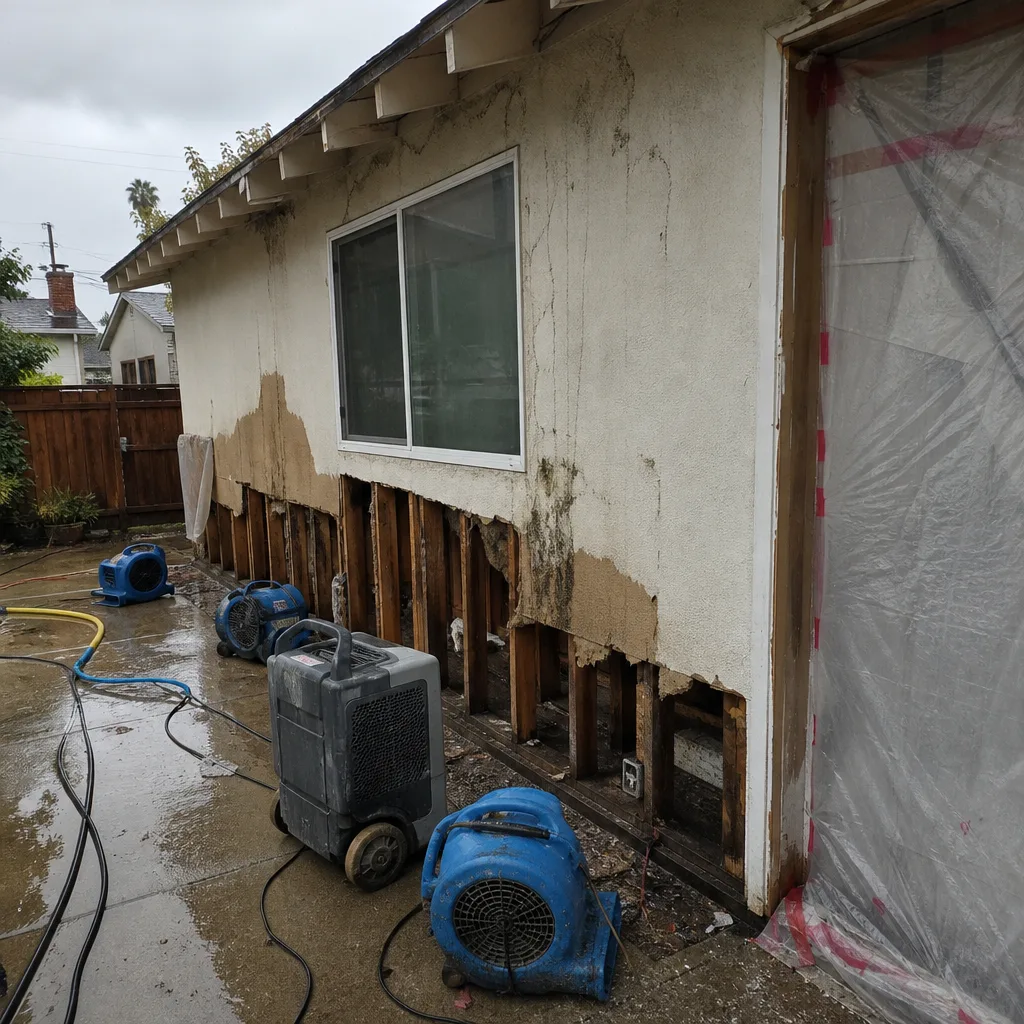 Before
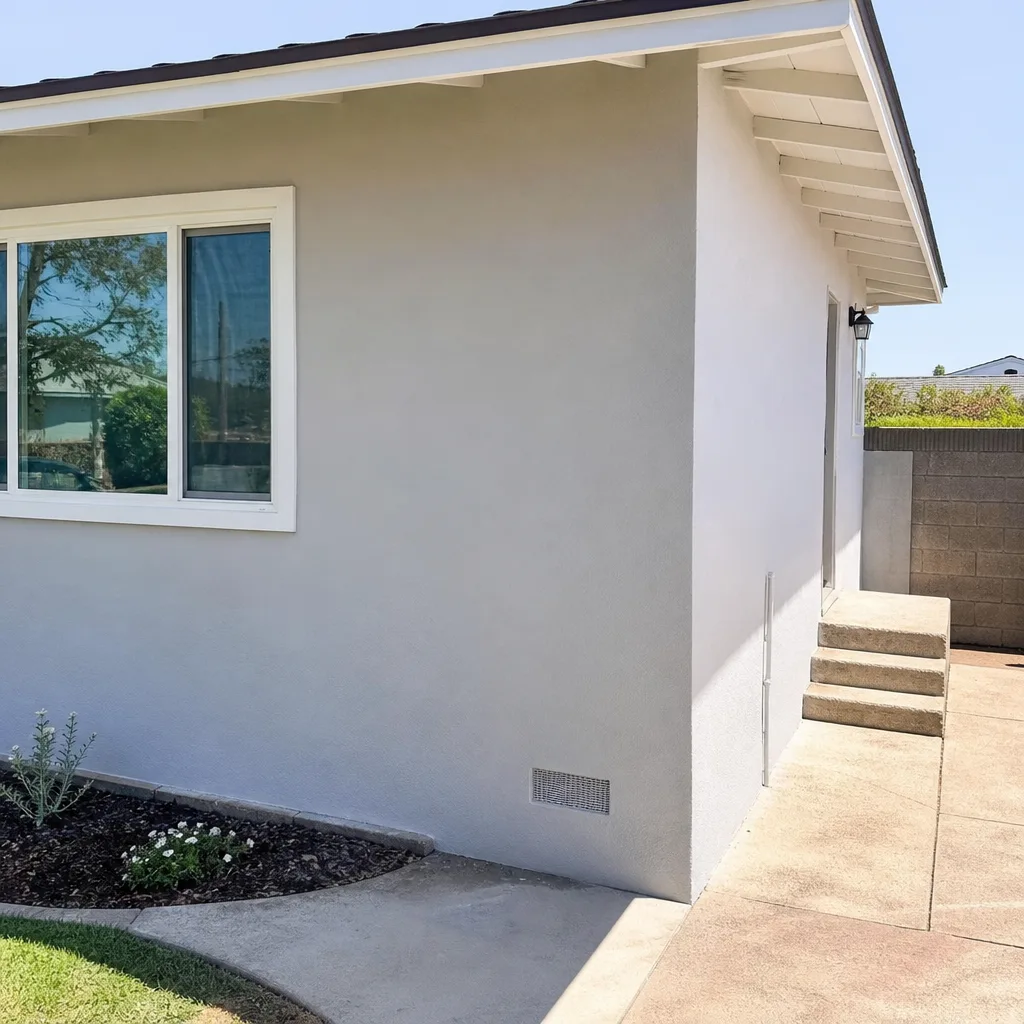 After
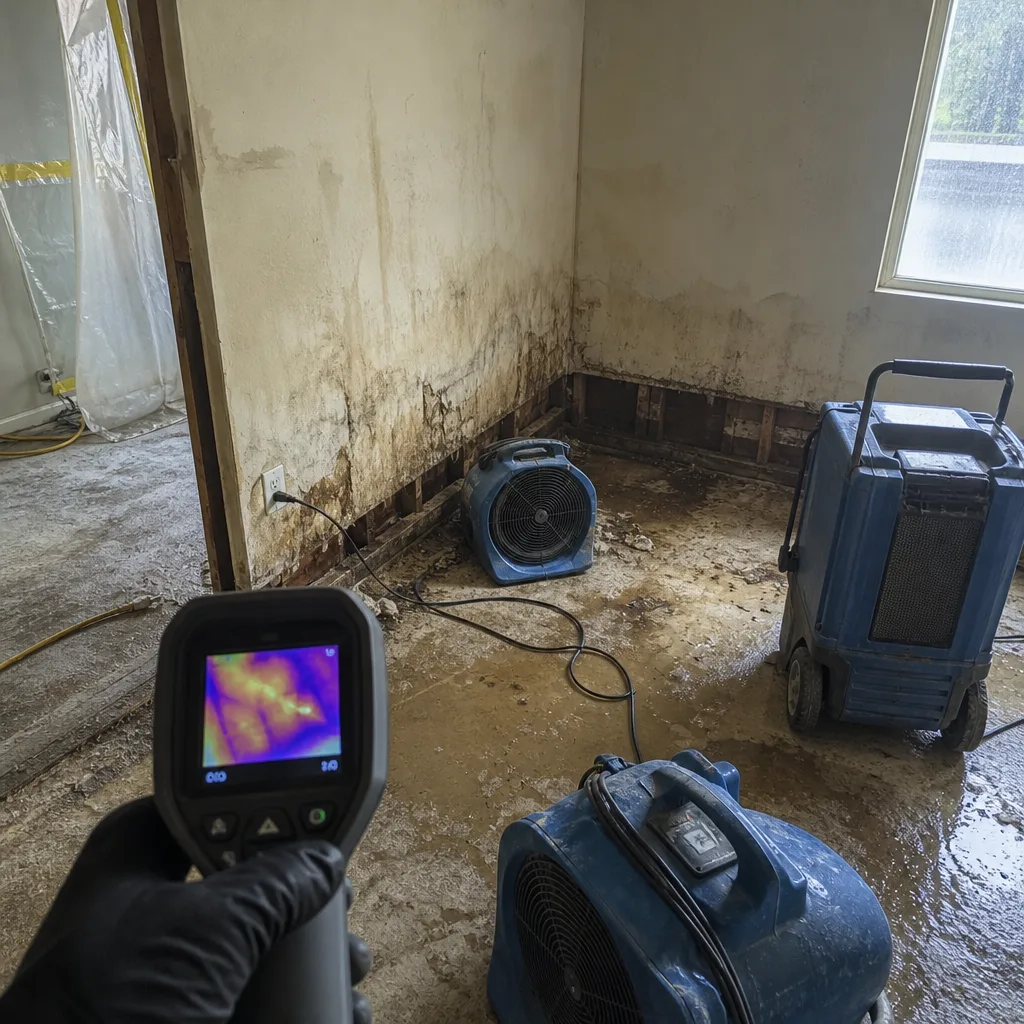 Before
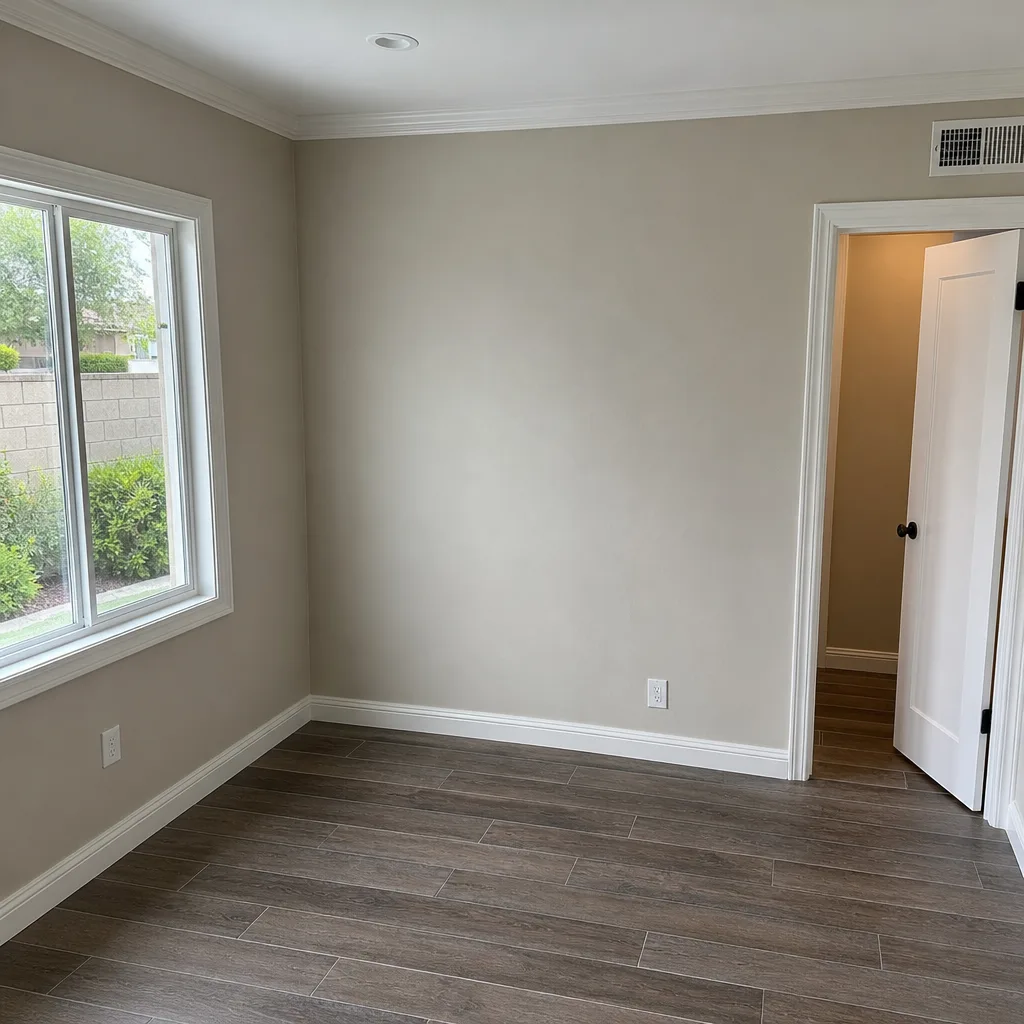 After
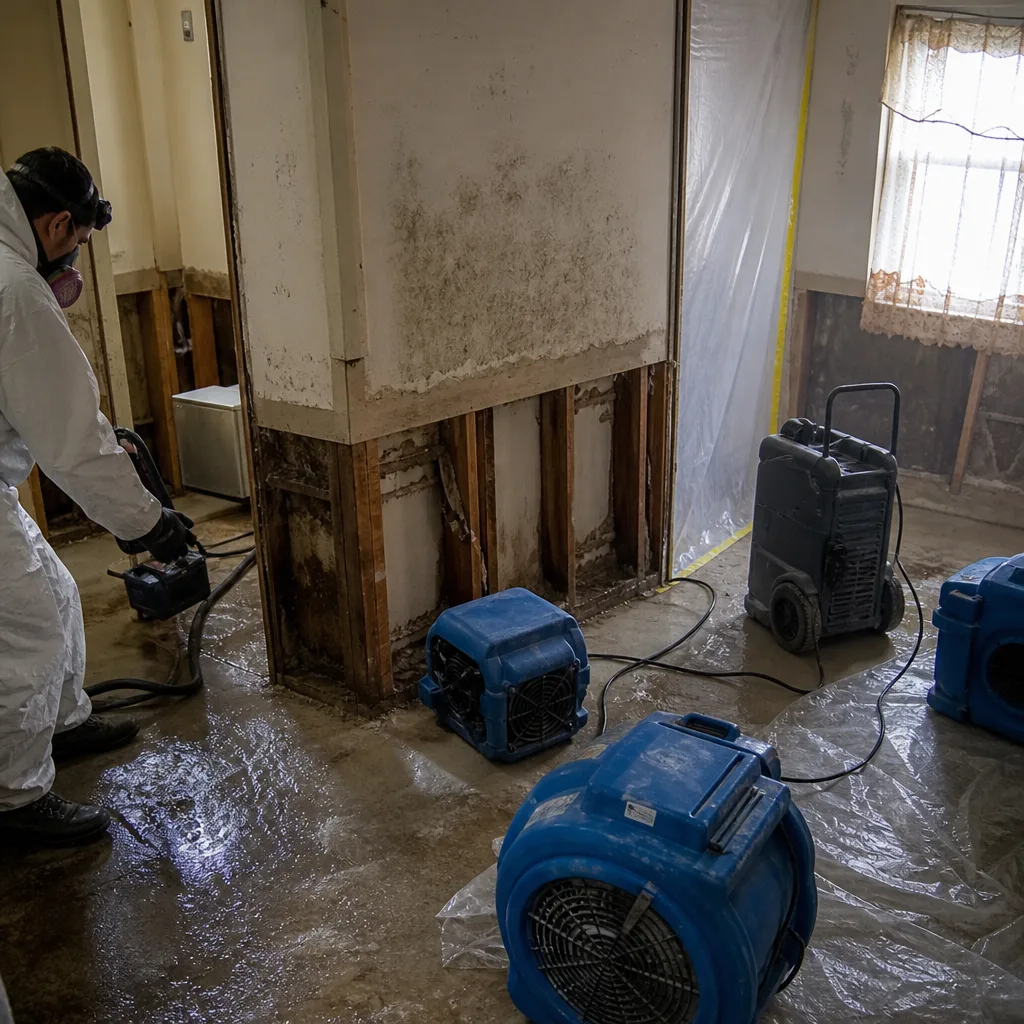 Before
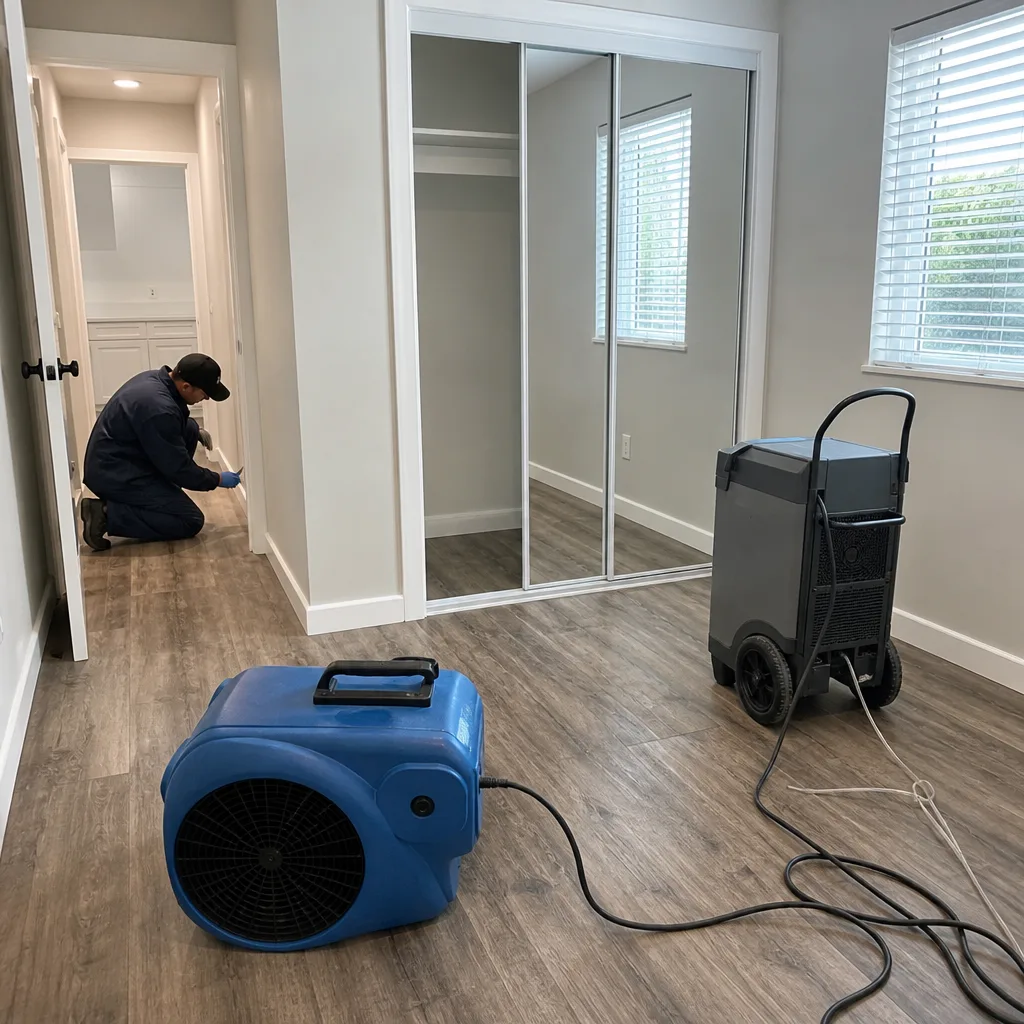 After
When to Call a Professional
Some maintenance tasks are DIY. Some failure conditions are not. If your moisture meter shows sustained readings above 20% on wood or drywall, if you find active mold growth on any surface larger than 10 square feet, if a supply line bursts while you’re not home, or if a stucco-side leak has left interior stains and warping, the situation has moved past prevention into restoration. Stonecrest Water Damage offers free estimates in Buena Park, and our IICRC-certified technicians arrive with commercial-grade drying equipment from Dri-Eaz and Phoenix, not rental-store machines. If you’ve caught a failure condition early, we can often dry the affected area without demolition using Injectidry technology for in-wall and structural cavity drying. If you’ve caught it late, we handle the full scope: water damage restoration, mold remediation, and any fire damage restoration in Brea and surrounding areas. Call (833) 589-9161 for a measured, documented assessment.
For homeowners who want to understand how water damage restoration works before they need it, our Stonecrest Water Damage home page covers the full scope of our services. Homeowners in neighboring communities can also reference our service pages for Water Damage Restoration in Brea, Mold Remediation in Brea, and Fire Damage Restoration in Brea if they need help outside Buena Park.
Frequently Asked Questions
Inspect all supply lines quarterly. Braided stainless steel lines should be replaced every 5 to 7 years. Unbraided rubber or plastic lines should be replaced immediately, regardless of appearance, because the failure mode is internal and invisible until the line bursts.
A sustained reading above 20% on wood or drywall indicates active water intrusion. Normal indoor wood equilibrium moisture content in Buena Park runs between 8% and 12%. Readings between 13% and 17% warrant investigation and repeat measurement.
Yes. Homes built between 1978 and 1995 in Buena Park may contain polybutylene plumbing, which degrades from chlorine exposure and fails at fittings inside walls and slabs. If you have gray or blue plastic pipes, your home is in a higher-risk category for hidden leaks.
Pour one cup of white vinegar into the cleanout port and watch for it to exit the drain line termination point. If it doesn’t flow through, the line is clogged. Also check the secondary drain pan for standing water, which indicates the primary drain is already failing.
Coverage depends on the policy and the nature of the loss, but a maintenance log strengthens your position significantly. Sudden and accidental damage is generally covered. Damage attributed to neglected maintenance is often reduced or denied. Documented inspections show you were maintaining the property.
Yes. Stonecrest Water Damage handles water damage restoration and mold remediation under one certified team. If a leak has already led to mold growth, our IICRC-compliant process includes containment, removal, and drying to documented standards. Call (833) 589-9161 for a free estimate.
The Bottom Line
Water damage prevention in Buena Park isn’t about eliminating all risk. It’s about catching failure conditions at the Category 1 stage, before a slow drip becomes a contaminated loss. The highest-ROI actions are quarterly supply line inspection, moisture meter baselines, braided hose replacement on washing machines, HVAC condensate drain testing before summer, and documentation of every check you perform. Homes with polybutylene plumbing, slab construction, and stucco exteriors need a higher inspection frequency because their failure points are hidden. Do this work consistently and you’ll likely never need restoration. Skip it and the odds eventually catch up. For Water Damage Restoration Troubleshooting: Common Problems and How to Fix Them, or when you need the water damage restoration team at Stonecrest, we’re one call away.
Written by the team at Stonecrest Water Damage, serving Buena Park since 2013.