
Last updated October 31, 2026
 Water damage drying
 Fire & smoke cleanup
 Mold remediation
 Storm response
 Sewage cleanup
 Reconstruction
Free visual inspection and a written scope of work before any mitigation begins - photos, moisture readings, and drying logs go in your claim file
The scope we write is the scope we bill. Anything new gets shown to you, in writing, before we touch it.
Get your free estimateHow to Hire a Damage Restoration Contractor in Buena Park: A Step-by-Step Guide
California’s contractor licensing database shows that dozens of companies operating under “restoration” trade names in Orange County hold only a general B license. That means they’re legally authorized to rebuild a wall, but not to perform the drying and remediation work they’re also billing for. Buena Park homeowners facing a flooded living room or a mold outbreak rarely know to check this distinction until the adjuster denies a claim or the work fails inspection. This guide gives you a verification-first hiring framework built around the questions restoration contractors hope you won’t ask.
Restoration work we handle
Quick Answer
Hiring a damage restoration contractor in Buena Park requires verifying three things before you sign anything: confirmed IICRC certification for the specific damage type (water, mold, or fire), a line-item estimate that separates extraction, drying, and demolition costs, and a written drying protocol with target moisture readings and a projected timeline. Call (833) 589-9161 for a free assessment from a certified team that provides all of this documentation on every job.
Table of Contents
- Step 1: Verify Credentials Before You Verify Anything Else
- Step 2: Understand the Gap Between a CSLB License and IICRC Certification
- Step 3: Read the Estimate Like an Adjuster Would
- Step 4: Demand a Drying Protocol Document Before Work Starts
- Step 5: Understand Direct Billing vs. Assignment of Benefits
- Step 6: Check References the Restoration-Specific Way
- Step 7: Ask What Equipment They’re Actually Bringing
- Common Mistakes to Avoid
- When to Call a Professional
- Frequently Asked Questions
- The Bottom Line
Step 1: Verify Credentials Before You Verify Anything Else
When water is spreading across your Buena Park kitchen floor at 2 a.m., the instinct is to call the first number that appears on your screen. That instinct is how homeowners end up paying twice: once for the initial “emergency” work, and again when a certified contractor has to redo it. Before you let anyone through your door, you need to confirm three things.
- IICRC certification specific to your damage type. The Institute of Inspection, Cleaning and Restoration Certification offers distinct certifications for water damage (WRT), mold remediation (AMRT), and fire restoration (FSRT). A company certified in water damage is not automatically qualified to handle mold. Ask for the specific certification, then verify it on the IICRC’s public registry. Any legitimate contractor will provide this without hesitation.
- Professional affiliations that carry accountability. Membership in the Restoration Industry Association (RIA) or the International Fireproofing Alliance (IFA) isn’t decorative. These bodies hold member companies to trade-specific ethical and technical standards. A contractor who invests in memberships is signaling they operate within a professional ecosystem with consequences for substandard work.
- Insurance and bonding that cover the actual scope. General liability insurance is standard. The question is whether the policy covers the specific work being performed. Restoration work, particularly mold remediation, carries elevated risk profiles. Ask for a certificate of insurance naming you as an additional insured, and confirm the policy is active with a direct call to the carrier.
In our experience responding to restoration projects across Buena Park, we’ve seen homeowners handed photocopies of lapsed policies and outdated certificates. A two-minute verification call saves weeks of dispute later. The Stonecrest Water Damage home page outlines the credential documentation we provide on every estimate, before any work begins.
Step 2: Understand the Gap Between a CSLB License and IICRC Certification
California’s Contractors State License Board (CSLB) issues a general B license that authorizes construction and reconstruction work. It does not authorize restoration work. Restoration, in the technical sense, is a separate discipline governed by its own standards and protocols. Here’s the gap that catches Buena Park homeowners off guard.
A general contractor with a B license can legally rebuild framing, hang drywall, and install flooring. But when the same contractor runs fans and dehumidifiers to dry a structure, or sets up containment for mold remediation, they’re performing work that should follow IICRC S500 (water damage) or S520 (mold remediation) standards. Those standards require training, equipment, and documentation that a B license alone does not verify.
The legal distinction matters for insurance claims. California adjusters increasingly ask for drying logs, moisture maps, and equipment placement records that demonstrate IICRC-compliant processes. Without those documents, a claim can be denied or reduced even when the visible work looks fine. You’re not just hiring someone to dry your walls. You’re hiring someone to prove to your insurance company that the walls were dried correctly.
What to ask when you call a contractor in Buena Park:
- “What IICRC certifications do your technicians hold, and in which categories?”
- “Do you follow IICRC S500 standards for water damage and S520 for mold?”
- “Will you provide a written drying log and final moisture readings?”
- “Who signs off on the completion documentation?”
A contractor who hesitates on any of these questions is telling you something important. A contractor who answers immediately, with specific certifications and documentation practices, is the one you want in your home. Our team at Stonecrest Water Damage operates under IICRC-certified restoration processes as the baseline standard, not as an upsell option.
Step 3: Read the Estimate Like an Adjuster Would
Restoration estimates are where vague language does the most damage. A line item that reads “water damage restoration: $8,400” tells you nothing about what was done, how it was done, or whether the price is reasonable. When extraction, drying, demolition, and rebuild costs are lumped into a single number, you lose the ability to dispute anything.
Request a line-item estimate that separates these categories:
- Emergency extraction: What equipment, how many hours, what volume removed
- Structural drying: Number of air movers and dehumidifiers, daily monitoring schedule, target grain-per-pound readings
- Demolition: Square footage removed, materials, disposal costs
- Remediation: Containment setup, antimicrobial application, clearance testing
- Reconstruction: Materials and labor broken out by trade (drywall, flooring, paint, electrical)
In Buena Park, where many homes were built in the 1950s through 1970s and may contain asbestos in flooring or drywall texture, demolition line items should explicitly state whether asbestos testing is included or required before demolition begins. A contractor who skips this step is creating a regulatory and health liability on your property.
When you receive the estimate, read every line. If a line says “drying per day,” ask what the daily rate includes. If it says “mold remediation,” ask whether clearance testing is included or will be billed separately. The estimate is the first test of whether a contractor is organized enough to manage your restoration properly. Stonecrest Water Damage provides a written scope of work before any project begins, with enough detail that our Water Damage Restoration Maintenance Checklist for Buena Park Homeowners can be reviewed line by line.
Step 4: Demand a Drying Protocol Document Before Work Starts
This is the step that separates restoration technicians from general contractors with fans. A drying protocol document states, in writing, what the contractor intends to do, what equipment will be used, what measurements will be taken, and what success looks like. It should be delivered before work begins, not after.
A legitimate drying protocol for a Buena Park water damage job should include:
- Initial moisture readings from affected and unaffected areas, establishing a baseline
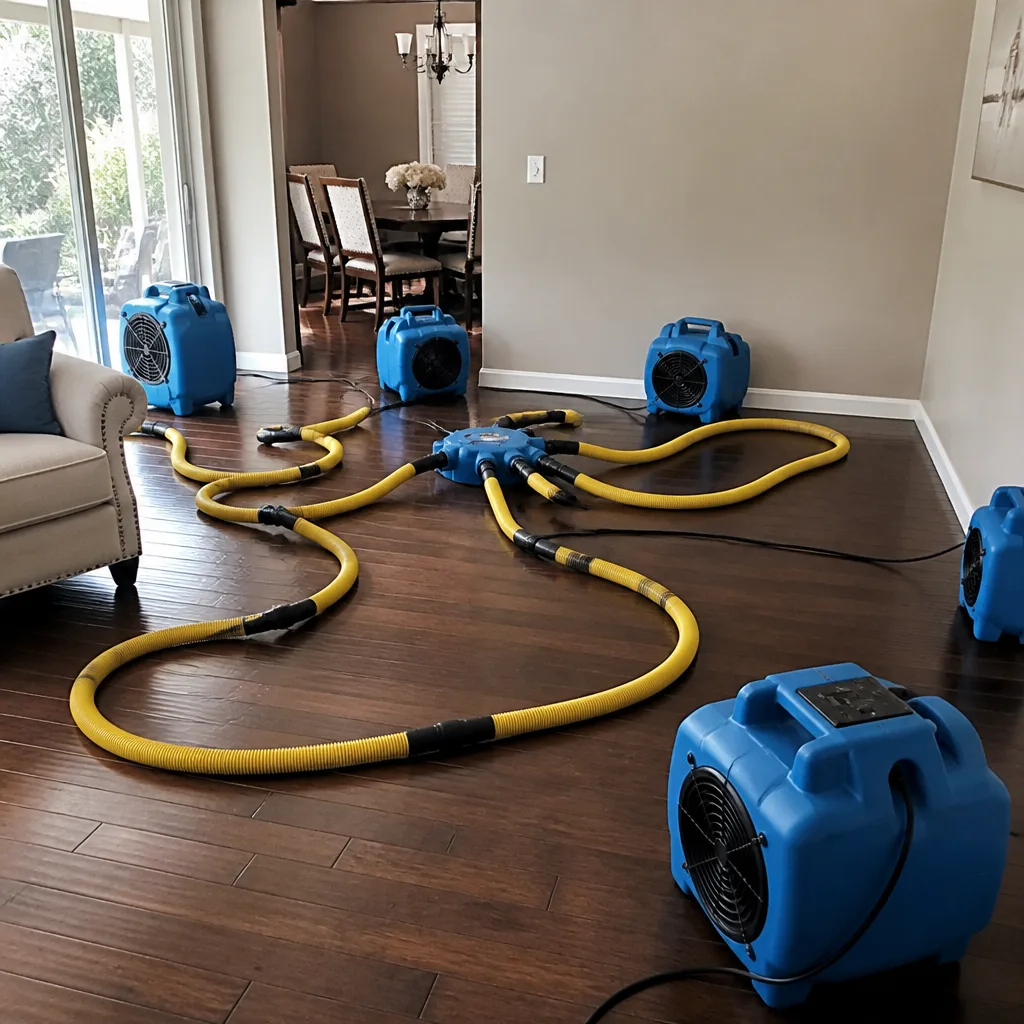
- Equipment placement plan showing where air movers and dehumidifiers will be positioned, and how many
- Target grain-per-pound (GPP) readings for each affected material type
- Projected timeline with daily monitoring checkpoints
- Completion criteria defining when drying is considered done, tied to specific moisture readings
- Contingency plan for materials that don’t respond to drying within the projected window
This document matters for two reasons. First, it gives you a yardstick to measure progress. If the protocol says drywall should reach 12% moisture content in five days and it’s still at 22% on day seven, you have documented evidence that something is wrong. Second, it gives your insurance adjuster verifiable data. Adjusters in Orange County increasingly require this documentation before approving extended drying claims.
Systems like Injectidry allow technicians to dry inside wall cavities and structural spaces without demolishing every surface. Ask whether your contractor has this capability. In older Buena Park construction, preserving original plaster or hardwood can save thousands of dollars in reconstruction costs. A contractor who can dry in place rather than demolish is protecting both your structure and your budget. Our team uses Injectidry systems specifically for this reason: measured, documented drying that preserves more of the original structure.
Step 5: Understand Direct Billing vs. Assignment of Benefits
When you sign an Assignment of Benefits (AOB), you’re transferring your insurance claim rights to the contractor. The contractor then bills your insurance company directly and negotiates the claim on your behalf. In theory, this simplifies the process. In practice, particularly in California’s evolving insurance environment, it can create significant complications.
Under an AOB, the contractor becomes the claimant. You lose direct control over the claim amount, the scope of covered work, and the settlement process. If the contractor inflates the claim, your insurance premiums and claim history bear the consequence. If the insurance company disputes the charges, you’re caught in the middle without standing to intervene.
Direct billing is different. Under direct billing, the contractor invoices you, and you submit the invoice to your insurance company. You maintain control of the claim, you approve the scope, and you decide when the work is complete. The contractor provides documentation and works with your adjuster, but the claim remains yours.
What to ask before signing anything in Buena Park:
- “Do you require an Assignment of Benefits, or do you offer direct billing?”
- “If I sign an AOB, what exactly am I transferring?”
- “Who handles disputes with the insurance company under each arrangement?”
- “What happens if the insurer denies part of the claim?”
Restoration contractors in California are increasingly shifting toward direct billing models because AOBs have generated regulatory scrutiny. A contractor who pressures you to sign an AOB immediately, without explaining the implications, is prioritizing their claim over your rights. Stonecrest Water Damage documents every step of the restoration process with photos and moisture data, and our team coordinates directly with adjusters without requiring an AOB for standard restoration work.
Step 6: Check References the Restoration-Specific Way
The standard “can I talk to a past customer” check doesn’t work well for restoration work. A homeowner can tell you the contractor was polite and showed up on time. They cannot tell you whether the drying was completed to IICRC standards, whether mold was properly contained, or whether the final moisture readings passed clearance thresholds.
Ask for references who can provide these specific artifacts:
- A final moisture clearance report showing moisture readings in all affected materials at project completion
- Drying logs documenting daily equipment checks and progress measurements
- Photos of containment setup for mold work, showing negative air pressure and barrier integrity
- Insurance documentation the client submitted successfully
You can also check restoration-specific review signals. Look for reviews that mention documentation, moisture readings, insurance coordination, and clearance testing. Generic praise like “they were friendly” is less useful than “they provided daily moisture logs and the adjuster approved everything without questions.”
For Buena Park specifically, ask references about the contractor’s performance on the types of homes common in the area. Homes near the 5 freeway corridor, for example, face different drainage and flood patterns than those in the flat neighborhoods near Knott’s Berry Farm. A contractor with local experience knows where water tends to pool, how quickly certain soil types saturate, and which neighborhoods have older plumbing infrastructure prone to slab leaks. Water Damage Restoration in Brea follows the same documentation standards, which tells you the contractor is consistent across service areas, not improvising per job.
Step 7: Ask What Equipment They’re Actually Bringing
Restoration equipment quality is the difference between a home that returns to normal and a house that carries hidden moisture for years. The equipment a contractor brings tells you whether they’re doing restoration or performing a convincing simulation.
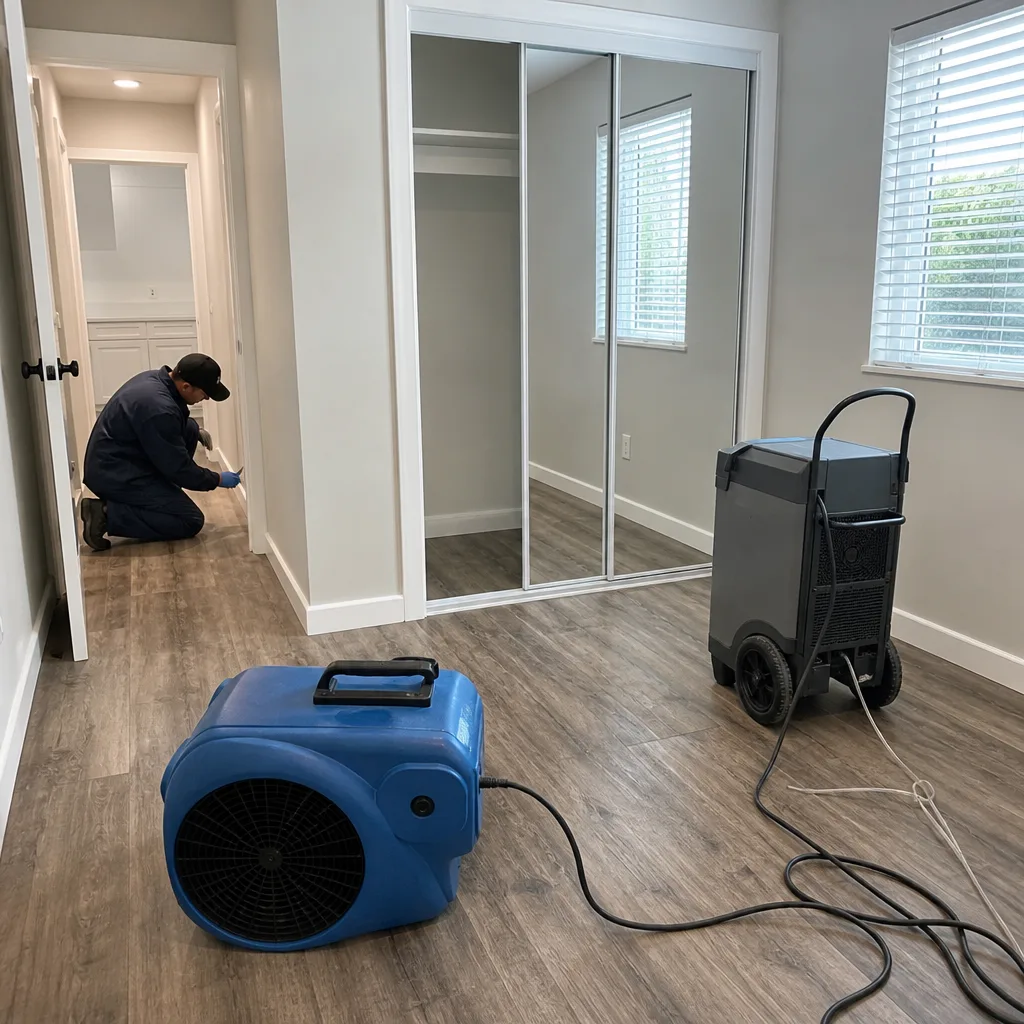
Commercial-grade equipment from restoration-industry leaders like Dri-Eaz, Phoenix, XPOWER, and B-Air is engineered for accuracy and durability under continuous operation. These are the systems used on large commercial loss sites, and they’re the standard you should expect on residential jobs. Rental-store fans and household dehumidifiers cannot achieve the air movement rates or moisture extraction capacity required for structural drying, and they lack the monitoring precision needed for documented results.
Ask these equipment questions:
- “What brand of dehumidifiers and air movers will you use?”
- “Do you have the equipment on hand, or are you renting it for my job?”
- “Can you show me the dehumidifier’s grain-per-pound extraction rate?”
- “Do you use any specialized drying systems for hard-to-reach areas?”
Some contractors own their equipment and maintain it properly. Others rent it per job, which can delay start times and reduce accountability. A contractor who owns a professional-grade fleet has invested in the trade and is less likely to cut corners on the work itself. Stonecrest Water Damage runs Dri-Eaz, Phoenix, XPOWER, and B-Air equipment on every job, along with Injectidry systems for in-wall drying that avoid unnecessary demolition. Commercial-grade equipment on every job is our baseline, not an upgrade option.
Common Mistakes to Avoid
- Hiring based on response speed alone. The first contractor to answer the phone at 3 a.m. is not necessarily the best one. Speed matters, but verification matters more. A two-minute credential check before you authorize work is worth more than a two-hour faster arrival.
- Accepting a lump-sum estimate. When extraction, drying, and demolition are rolled into one number, you lose all visibility into what you’re paying for. Demand line items. If a contractor won’t provide them, walk away.
- Skipping the drying protocol. Without a written protocol with target moisture readings and a completion date, you have no way to know if drying actually worked. You’re relying on the contractor’s word, and “it feels dry” is not a standard.
- Signing an AOB without understanding it. An Assignment of Benefits transfers your claim rights. Read it carefully. Ask what it means. If the contractor can’t explain it in plain language, that’s a red flag.
- Choosing a contractor without IICRC certification. In Buena Park, where older homes come with older plumbing and hidden moisture risks, uncertified drying work can leave mold behind walls for years. Certification exists because the work requires trained judgment.
- Ignoring equipment quality. Rental-store fans don’t dry structures. They move air around. The equipment matters, and a contractor who won’t tell you what brands they use is hiding something.
- Hiring separate contractors for water, mold, and fire work. When multiple companies handle different phases of the same loss, accountability evaporates. Each one blames the other when something goes wrong. One certified team handling the full scope means one point of accountability.
When to Call a Professional
Some situations clearly require professional restoration. A burst pipe that floods multiple rooms has already saturated drywall, flooring, and possibly structural framing. Mold visible on surfaces often extends deeper into wall cavities and requires containment to prevent spore spread. Fire damage combines water from firefighting efforts with soot and smoke residue that requires specialized cleaning protocols. In all of these situations, the damage will worsen while you wait, and the cost of delay compounds quickly. Stonecrest Water Damage offers free estimates in Buena Park for Water Damage Restoration Troubleshooting: Common Problems and How to Fix Them, mold remediation, and fire damage restoration – one certified team handles the full scope. Call (833) 589-9161 before the damage spreads further.
Frequently Asked Questions
Seasonal Damage Restoration Care for Buena Park: Year-Round Homeowner’s Guide typically costs between $2,500 and $12,000 depending on the affected square footage, the water category (clean, gray, or black), and whether structural drying or demolition is required. The estimate should always be line-itemed so you can see exactly what you’re paying for. Call (833) 589-9161 for a free assessment with a written scope of work.
For active water intrusion or sewage backup, a qualified contractor should be on-site within hours, not days. The first 24 to 48 hours matter most for preventing secondary damage like mold growth. When you call, ask about dispatch time specifically, not just general availability. Stonecrest Water Damage prioritizes emergency response for Buena Park homeowners with active water intrusion.
Most homeowners insurance policies in California cover sudden and accidental water damage, fire damage, and mold remediation when it results from a covered event. The key to a successful claim is documentation: drying logs, moisture readings, photos, and a written scope of work that follows IICRC standards. This documentation is what adjusters look for when approving claims. Our team at Stonecrest Water Damage coordinates directly with adjusters and provides the documentation your insurer requires.
If mold covers more than 10 square feet, or if it’s present in wall cavities, HVAC systems, or structural materials, professional remediation with containment is required. Surface cleaning without addressing the underlying moisture source and hidden growth will allow the mold to return. IICRC-certified mold remediation includes containment, air filtration, removal of affected materials, and clearance verification. For smaller surface mold on non-porous materials, cleaning may be sufficient, but a professional assessment is the only way to know for sure.
Under a direct billing arrangement, you maintain the claim and the contractor provides documentation and communicates with your adjuster. Under an Assignment of Benefits, the contractor takes over the claim entirely. Direct billing keeps you in control while still getting professional coordination. Ask any contractor you’re considering which model they use before signing anything.
You know because the contractor provides moisture readings for every affected material at project completion, not because the surface feels dry to the touch. Hidden moisture in wall cavities, under flooring, and in structural framing can feel dry while still supporting mold growth. A legitimate drying protocol includes final moisture readings that demonstrate completion. Request these readings before you sign the completion paperwork. Call (833) 589-9161 for a drying assessment that gives you documented moisture data, not just a visual check, or explore our more guides & resources.
The Bottom Line
Hiring a damage restoration contractor in Buena Park requires verification before trust. Confirm IICRC certification for your specific damage type, not just a state license. Demand a line-item estimate that separates extraction, drying, and demo costs. Get a written drying protocol with target moisture readings before work begins. Understand the difference between direct billing and an Assignment of Benefits before signing anything. Check references for documentation, not just satisfaction. Ask what equipment they’re bringing. The contractor who passes all these tests is the contractor who will restore your home correctly, document the work for your insurance company, and leave you with a structure that’s dry, measured, and verifiable – not just patched and painted. Mold Remediation in Brea and Fire Damage Restoration in Brea follow the same verification and documentation standards, so you know what to expect from a restoration company that does this work right across Orange County.
Written by the team at Stonecrest Water Damage, serving Buena Park since 2013.
See the difference
 Before
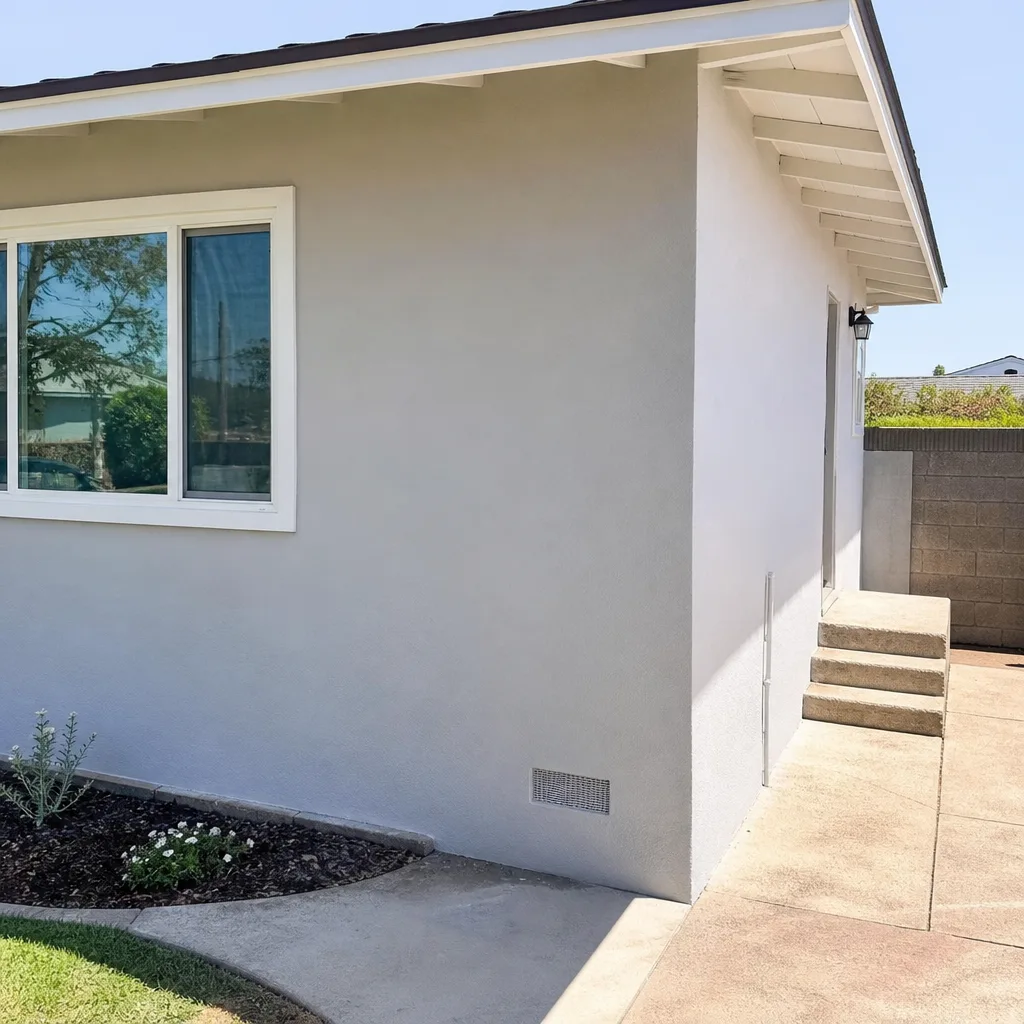 After
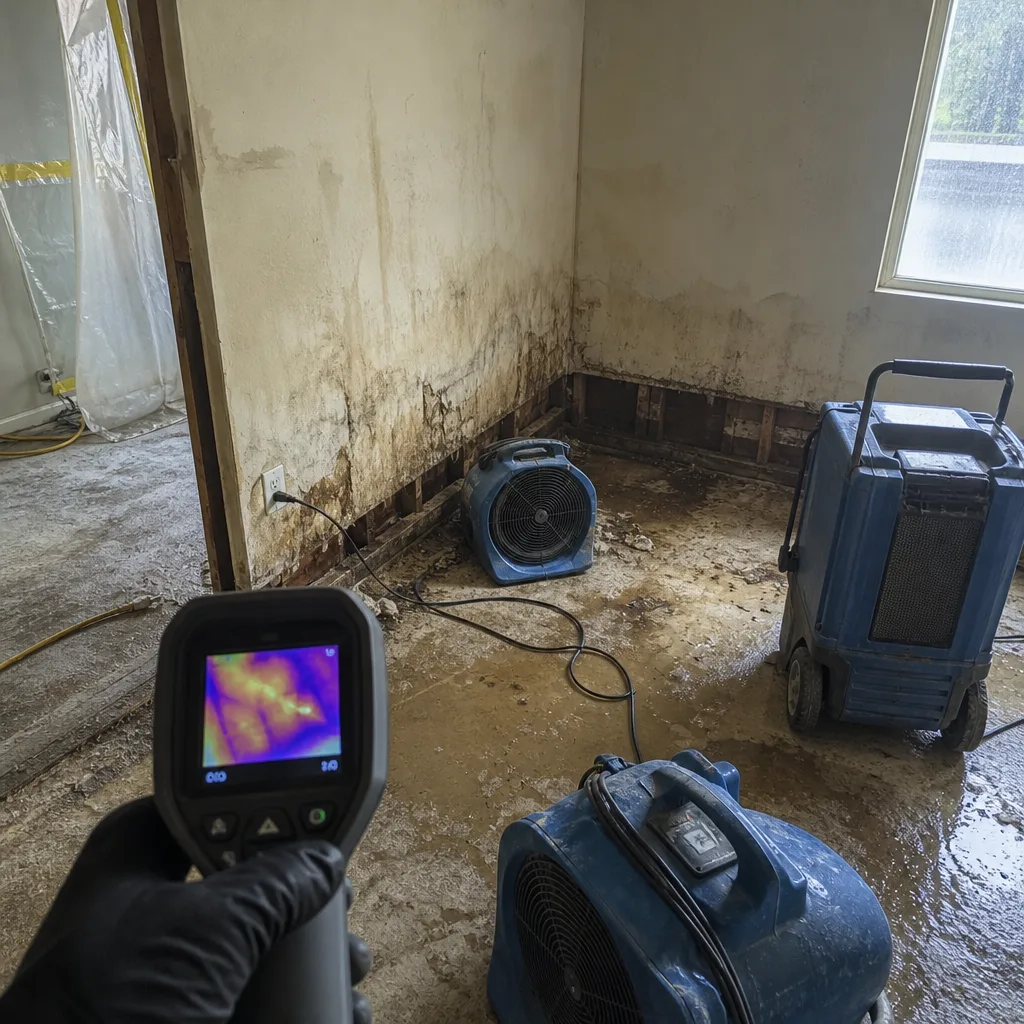 Before
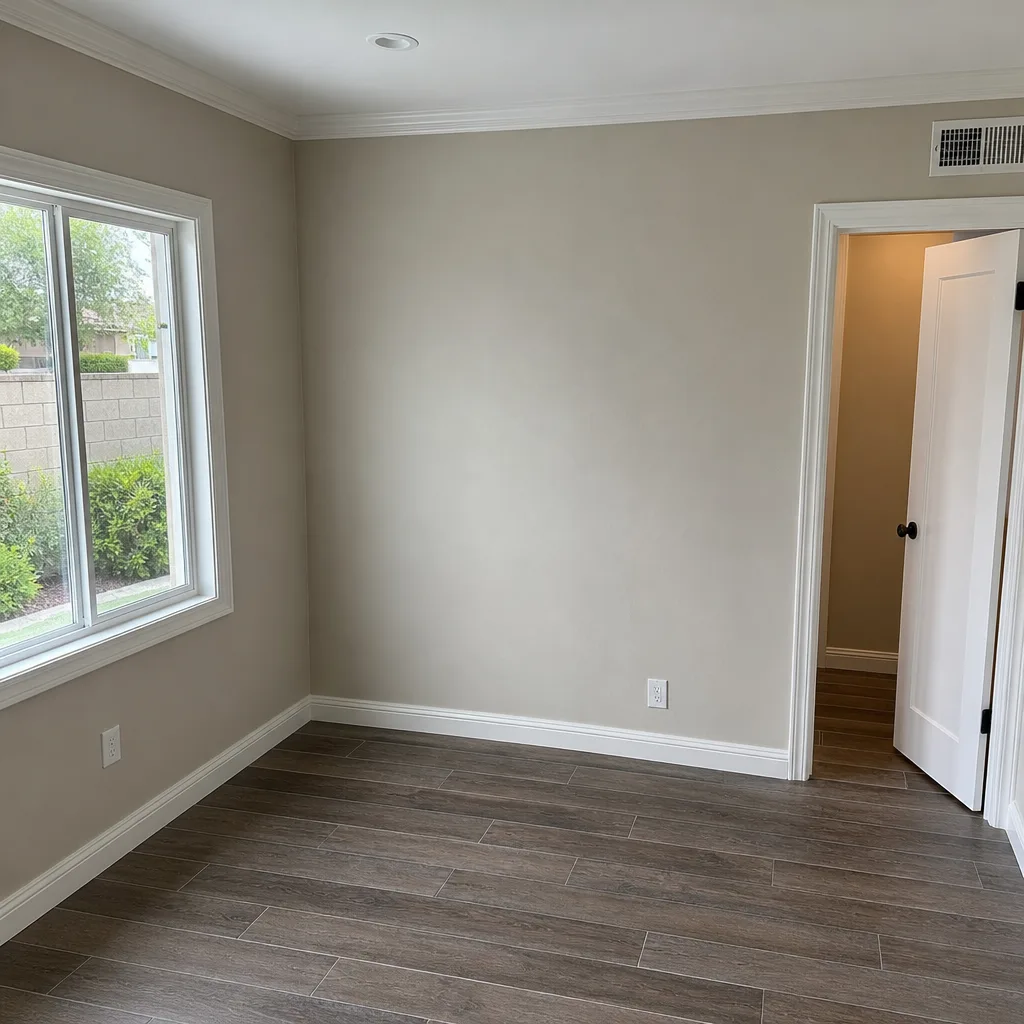 After
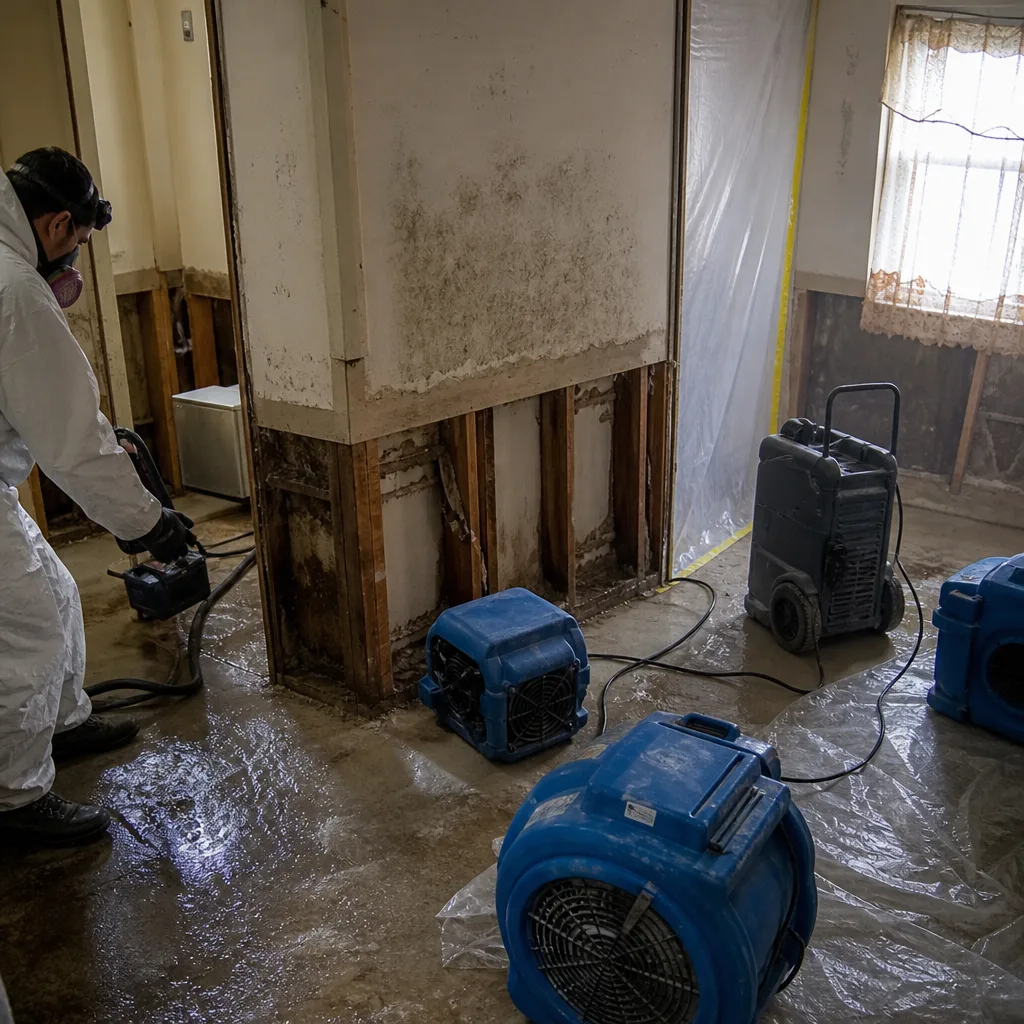 Before
 After