
Last updated October 31, 2026
 Water damage drying
 Fire & smoke cleanup
 Mold remediation
 Storm response
 Sewage cleanup
 Reconstruction
Free visual inspection and a written scope of work before any mitigation begins - photos, moisture readings, and drying logs go in your claim file
The scope we write is the scope we bill. Anything new gets shown to you, in writing, before we touch it.
Get your free estimateChoosing the Right Damage Restoration Brand: A Buyer’s Guide for Buena Park
Here’s a fact most Buena Park homeowners don’t learn until it’s too late: two restoration companies operating under the exact same national franchise name in Orange County can have completely different equipment inventories, certification levels, and subcontractor ratios. The franchise agreement standardizes the logo on the van and the software in the office. It does not standardize whether the local owner invested in commercial drying systems or rents equipment from a big-box store when a job comes in. This guide breaks down what actually separates restoration companies in Buena Park so you can evaluate the company behind the brand, not just the name painted on the truck. For more guides & resources, see our blog.
Quick Answer
The right damage restoration brand for a Buena Park property is one where the local operator, not the franchise name, demonstrates verifiable IICRC certification, owns commercial-grade drying equipment (Dri-Eaz, Phoenix, XPOWER systems rather than rental-store machines), and provides written moisture documentation before work begins. A recognizable brand name tells you nothing about the equipment class, technician training, or subcontractor ratio of the crew that will actually respond to your property.
Restoration work we handle
Table of Contents
- What a Franchise Actually Controls (And What It Doesn’t)
- Equipment Verification: The Selection Criterion Nobody Uses
- The Certification Ladder: Firm Credentials vs. Technician Credentials
- Insurance Preferred Vendor Programs: Who’s Really Making the Recommendation
- Scope Documentation: The Difference Between Restoration and Repair
- Buena Park-Specific Considerations for Damage Restoration
- Questions to Ask Before You Sign Anything
- Common Mistakes to Avoid
What a Franchise Actually Controls (And What It Doesn’t)
When you call a national restoration franchise in Buena Park, you’re not calling a national company. You’re calling a local business owner who purchased the right to use that brand name. The franchise agreement controls three things: branding, proprietary software for job management and estimating, and access to national referral networks, particularly insurance TPA (Third Party Administrator) programs. That’s largely it.
What the franchise agreement does not control is everything that determines whether your property gets dried correctly. The local owner decides what equipment to buy. The local owner decides how many technicians to staff and what certifications those technicians hold. The local owner decides whether to run in-house crews or subcontract the work to the lowest bidder. The local owner decides whether to invest in a second or third moisture meter when business is slow, or whether to make do with what’s in the truck.
This creates a situation unique to the restoration industry. In Buena Park, a city with roughly 80,000 residents and a housing stock spanning 1950s ranch homes to newer construction near the 91 and 5 freeway corridors, restoration demand spikes unpredictably. A burst pipe in a Knott Avenue apartment complex at 2 a.m. requires immediate response capability. A franchise owner who runs lean to maximize margin will not have the equipment depth to handle that call properly. A franchise owner who invested in commercial drying capacity will. Same brand, same logo, completely different outcomes.
Our team at Stonecrest Water Damage home has walked into Buena Park homes where a previous restoration company, operating under a nationally recognized name, had set up residential-grade fans from a hardware store and called it a drying job. The moisture readings told a different story. This is not a rare occurrence, and it’s why brand name alone is a poor selection criterion.
Equipment Verification: The Selection Criterion Nobody Uses
The single most revealing question you can ask any restoration company in Buena Park is this: “What drying equipment do you own, and what’s the square footage of the largest job you’ve handled with that inventory?” The answer predicts response capability more accurately than any marketing claim, any review, any brand name.
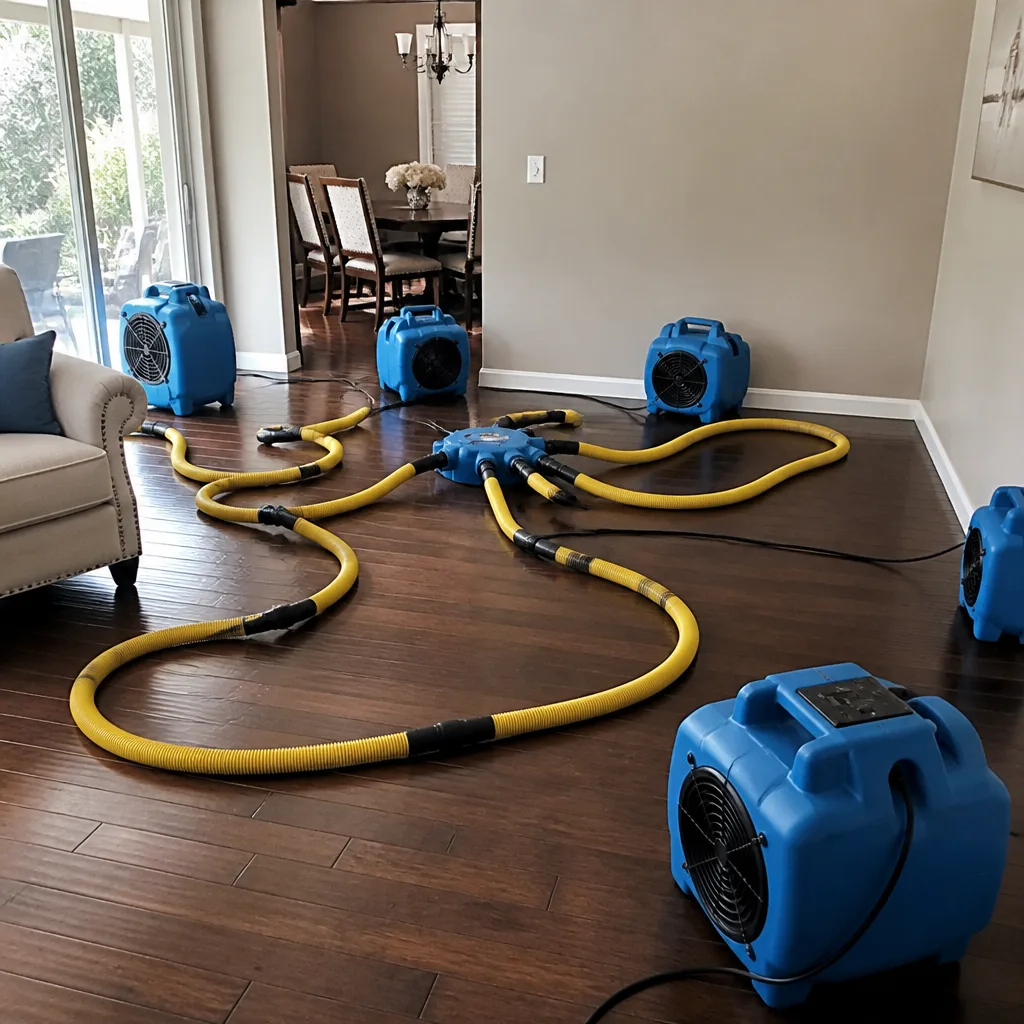
Here’s why equipment ownership matters. A company that owns its drying fleet has made a capital investment in the work. They’ve committed six figures or more to dehumidifiers, air movers, and specialized drying systems. That investment changes behavior. A company that rents equipment per job is managing costs, not outcomes. They’ll deploy fewer machines than the situation requires because every additional unit cuts into their margin. And rental-store machines, the kind available at big-box home improvement stores, are built for occasional use. They lack the extraction rate, the low-grain refrigerant capability, and the durability of restoration-grade equipment.
The equipment brands that define restoration-grade work are specific. Dri-Eaz builds dehumidifiers and air movers designed for structural drying, with extraction rates measured in pints per day at AHAM conditions. Phoenix systems are engineered for high-temperature, low-humidity output that accelerates evaporation. XPOWER and B-Air provide the high-velocity air movement required to lift moisture from carpets, drywall, and hardwood. The Injectidry system, which we use for in-wall and structural cavity drying, pushes dry air directly into enclosed spaces without requiring demolition. These are the machines used on large commercial loss sites, not the ones sitting on a rental shelf.
Ask a company to name their equipment by brand. A restoration professional can rattle off their inventory without hesitation. A company operating at the margins will deflect with vague language about “industrial equipment” or “professional tools.” That deflection is itself an answer.
The Certification Ladder: Firm Credentials vs. Technician Credentials
The restoration industry’s credentialing system has two distinct levels, and most Buena Park homeowners don’t know the difference. Understanding it will change how you evaluate any company.
Level 1: IICRC Firm Certification. The Institute of Inspection, Cleaning and Restoration Certification (IICRC) certifies companies as firms. A firm certification means the company has committed to operating under IICRC standards, maintains insurance, and employs certified technicians. It’s a meaningful baseline, but it’s a floor, not a ceiling. Think of it as the company promising to do things correctly, with the industry watching.
Level 2: Individual Technician Certifications. This is where the real differentiation occurs. Individual technicians earn credentials through training and testing: WRT (Water Restoration Technician), ASD (Applied Structural Drying), AMRT (Applied Microbial Remediation Technician), FSRT (Fire and Smoke Restoration Technician). A technician with WRT certification has demonstrated understanding of psychrometry, the science of drying. A technician with ASD certification has proven they can calculate drying chamber requirements, set up equipment for maximum evaporation, and monitor moisture until the structure reaches dry standard.
The distinction matters because of how restoration crews are assembled. Some companies hold firm certification but staff their trucks with uncertified labor, relying on one certified supervisor to sign off on work done by people without training. That supervisor might not even be on-site. Ask directly: “Will the technicians in my home hold WRT or ASD certifications, or will they be working under a certified supervisor who isn’t on the job?” The answer reveals a lot.
Certification also matters because of documentation. IICRC standards, specifically the S500 for water damage and S520 for mold remediation, define what proper restoration looks like. A company operating to these standards can produce moisture logs, drying chamber calculations, and final readings that verify the structure is actually dry. That documentation is what insurance adjusters and third-party inspectors accept. Without it, you’re taking someone’s word that the walls are dry. In Buena Park’s climate, where summer temperatures regularly exceed 90 degrees and humidity can spike during marine layer mornings, unverified drying invites mold growth behind walls.
Insurance Preferred Vendor Programs: Who’s Really Making the Recommendation
When your insurance company recommends a restoration contractor in Buena Park, that recommendation didn’t come from a careful evaluation of local restoration quality. It came from a TPA, a Third Party Administrator that manages claims on behalf of insurers. The TPA maintains a network of restoration companies enrolled in its preferred vendor program. Those companies signed agreements that include negotiated pricing, specific documentation requirements, and volume commitments.
None of that is inherently bad. Preferred vendor programs exist to control claims costs and standardize documentation, which benefits insurers and, indirectly, policyholders who pay premiums. But the financial structure creates incentives worth understanding. A restoration company in a TPA network is often paid at rates negotiated below standard market pricing. They make their margin on volume and efficiency. That pressure can manifest in ways that don’t serve you: shorter drying times than the structure actually needs, less equipment deployed than the chamber calculation calls for, and a faster transition from mitigation to reconstruction, sometimes before the structure has truly dried.
You have choices here, and Buena Park homeowners should understand them. Your insurance policy does not require you to use the preferred vendor. You can select any licensed restoration company and your insurer is still obligated to cover the covered portion of the loss. What a preferred vendor offers is streamlined billing and direct adjuster coordination. What an independent restoration company offers is the ability to prioritize your property’s outcome over a volume agreement. Neither is universally right. The key is knowing that the recommendation carries financial mechanics, not just a quality assessment.
If you’re weighing a preferred vendor against a company you’ve researched independently, ask the independent company three questions: Can you bill my insurance directly? Will you coordinate with my adjuster? Can you provide the same documentation the preferred vendor would provide? The answer to all three should be yes from any serious restoration company. If it’s not, the preferred vendor’s convenience advantage is real.
Scope Documentation: The Difference Between Restoration and Repair
Here’s the sharpest line separating restoration companies in Buena Park: what they put in writing before work begins.
A repair company provides an estimate. A restoration company provides a scope of work. The difference is specificity. A scope of work from a company operating to IICRC standards includes the drying protocol: target moisture readings for each affected material, the number and type of air movers to be deployed, the dehumidifier capacity in pints per day, the anticipated drying timeline, and the daily monitoring schedule. Before equipment is placed, you know exactly what will happen, why it will happen, and how you’ll know it worked.
That documentation serves three purposes. First, it protects you. A written protocol is a commitment. If the contractor deviates, you have a document to reference. Second, it protects your claim. Insurance adjusters process claims efficiently when files contain precise documentation. A drying log with before-and-after moisture readings converts a disputed claim into an approved one. Third, it protects the structure. Documented drying processes catch problems early. A moisture reading that isn’t dropping on schedule signals a hidden water source or a failed equipment placement, something that cheap visual-only assessments miss.
This is the fundamental difference between restoring and repairing. Repair patches surfaces. Restoration returns a structure to a documented pre-loss condition, verifiable by measurement. In Buena Park, where many homes have original 1950s and 60s hardwood floors under carpet, a visual “looks dry” assessment can leave moisture trapped in the subfloor, warping boards and feeding mold for months after the check clears. Measured, documented drying prevents that.
Buena Park-Specific Considerations for Damage Restoration
Buena Park’s geography and housing stock create specific restoration challenges that a generic guide won’t address. Understanding them will help you evaluate whether a restoration company actually knows this city.
Climate factors. Buena Park sits in a semi-arid Mediterranean climate zone, but we’re close enough to the coast for marine layer mornings that elevate indoor relative humidity. During summer, when temperatures climb into the 90s, the combination of high outdoor heat and indoor moisture from a water loss accelerates mold growth dramatically. The 24-48 hour mold colonization window matters more here than in drier inland cities. A restoration company needs to deploy dehumidification capacity appropriate for these conditions, not a formula copied from a national playbook.
Housing stock. Buena Park’s residential buildings divide roughly into three eras: mid-century ranch homes (1955-1975), 1980s-90s suburban tracts, and post-2000 construction. Each presents different drying challenges. Mid-century homes often have plaster walls and hardwood floors that require gentle, extended drying cycles. 1980s construction frequently used building materials that hold water differently than modern engineered products. The point isn’t that a restoration company needs to be a Buena Park historian. The point is that a company operating here regularly has seen these specific conditions and calibrated their protocols accordingly.
Water system infrastructure. Buena Park’s municipal water system serves the city through aging supply lines in some of the older neighborhoods. Water damage from supply line failures in a mid-century home near Beach Boulevard presents different challenges than a supply line failure in newer construction near the Buena Park Downtown area. The restoration process is the same, but the water chemistry and pipe material can affect drying strategies and contamination risk.
Commercial demand. Buena Park is a tourist destination city. Knott’s Berry Farm draws visitors year-round, and the surrounding hospitality infrastructure, hotels, restaurants, and short-term rentals, creates constant demand for rapid-turnaround commercial restoration. This matters to residential customers because it affects which companies are actually available for residential work. A restoration company heavily committed to commercial contracts may be less responsive to a single-family home emergency. Ask about residential response capacity specifically.
Questions to Ask Before You Sign Anything
When a restoration company stands in your Buena Park living room and asks you to sign a work authorization, you have leverage you’ll never have again: the job hasn’t started and the meter hasn’t begun running. Ask these questions in this order.
- “Can I see your IICRC firm certification, and will the technicians on my job hold WRT or ASD credentials?” A serious company answers immediately. The certifications should be current, not expired, and the specific technicians named should match the credentials on file.
- “What drying equipment do you own, and what’s the largest residential loss you’ve handled with your own inventory?” Listen for specific brand names like Dri-Eaz, Phoenix, XPOWER, B-Air, or Injectidry. Listen for specifics about capacity, not vague assurances.
- “Will you provide a written drying protocol with target moisture readings before starting work?” The correct answer is yes, always. If the company hesitates or offers only a total cost estimate, that’s a signal you’re dealing with a repair company, not a restoration company.
- “How do you handle insurance billing and adjuster coordination?” A restoration company that handles water, mold, and fire damage under one roof should be fluent in the documentation insurers require. They should offer direct billing and be willing to speak with your adjuster from day one.
- “Who will be doing the physical work, your employees or subcontractors?” Subcontracting isn’t automatically disqualifying, but it adds a coordination layer and, often, a quality control gap. In-house crews carry accountability directly. This matters most on mold remediation jobs, where containment and removal protocols must be followed precisely.
- “What’s your protocol if moisture readings aren’t dropping on schedule?” The answer should reference adjusting equipment placement, adding drying capacity, or investigating hidden water sources. A company without a contingency plan for standard complications lacks the experience to handle your job.
None of these questions is confrontational. A restoration professional expects them and answers them without hesitation. A company that gets defensive or evasive is telling you something important about how the job will go.
Common Mistakes to Avoid
- Choosing a company because the brand name is familiar. Franchise name recognition in the Buena Park market is a marketing achievement, not a quality certification. The local franchise owner’s equipment and certification level are what determine your outcome.
- Accepting a visual “dry” assessment without moisture readings. Drywall and hardwood can look and feel dry while retaining damaging moisture levels. Moisture meters cost money and trained technicians know how to use them. Demand documentation.
- Signing a work authorization before understanding the scope. Once you sign, the restoration process begins and stopping it midway creates complications with both insurance and contractors. Get the written protocol first.
- Assuming your insurance company’s preferred vendor is your only option. You have the right to choose any licensed restoration company. The preferred vendor offers convenience, but an independent company with certified technicians and documented processes can provide equal insurance documentation plus undivided loyalty to your outcome.
- Hiring a general contractor for restoration work. General contractors build and patch. They don’t typically hold IICRC certifications, own restoration-grade drying equipment, or understand the documentation requirements of insurance claims. Restoration is a distinct discipline.
- Waiting to call after discovering water damage. In Buena Park’s climate, mold colonization begins within 24-48 hours of water intrusion. Every hour of delay increases remediation cost and complexity, and some insurance policies exclude mold damage that develops from unreported water events.
- Choosing a company that only handles one damage category. Water damage often leads to mold, and fire damage involves water from suppression efforts. A company handling Water Damage Restoration in Brea, Mold Remediation in Brea, and Fire Damage Restoration in Brea under one roof eliminates the coordination gap that appears when three different contractors point fingers at each other.
See the difference
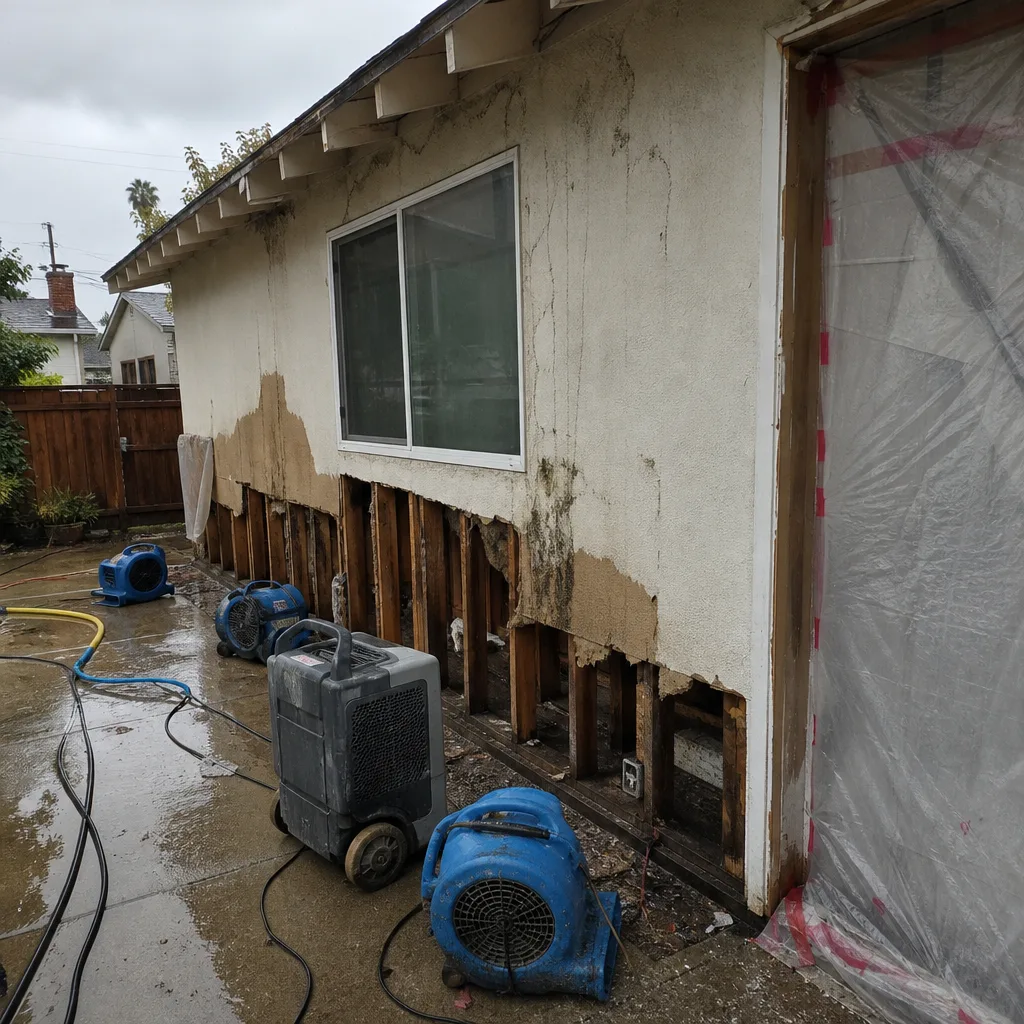 Before
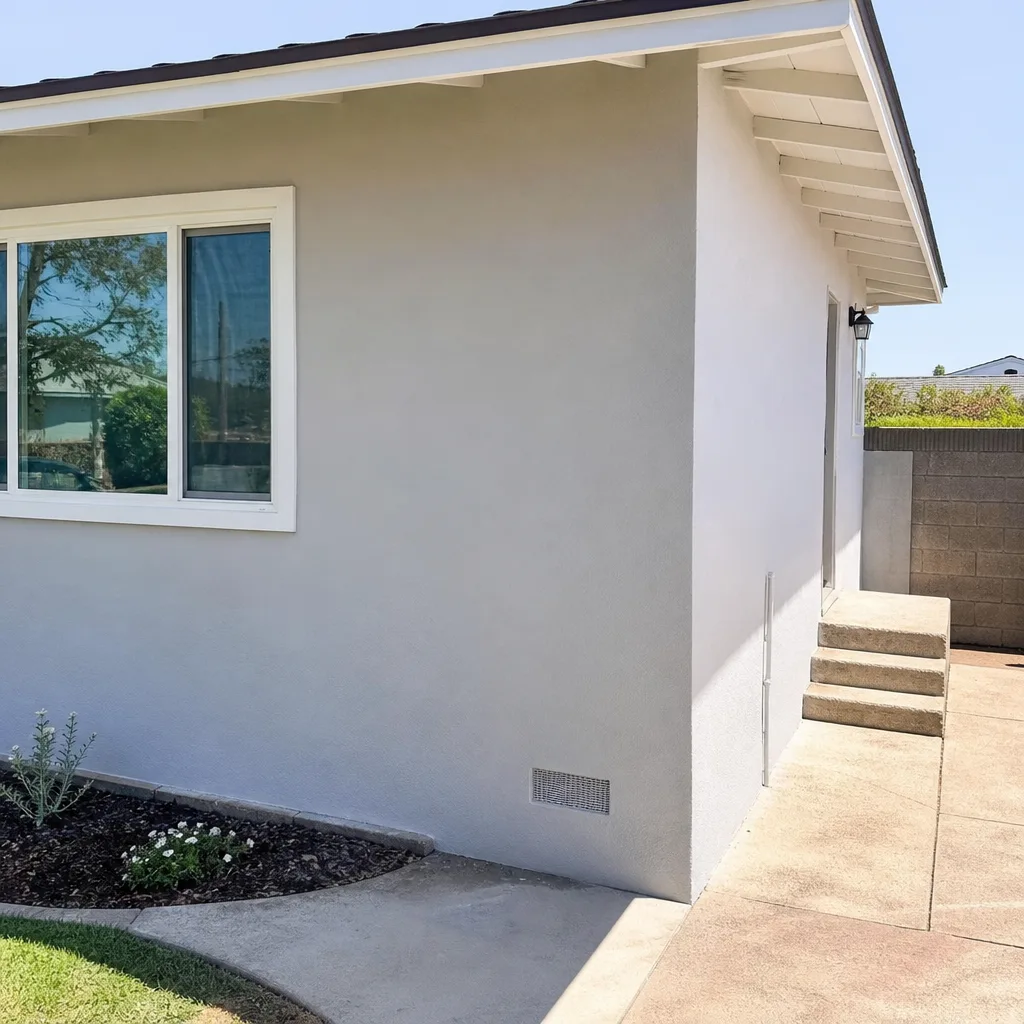 After
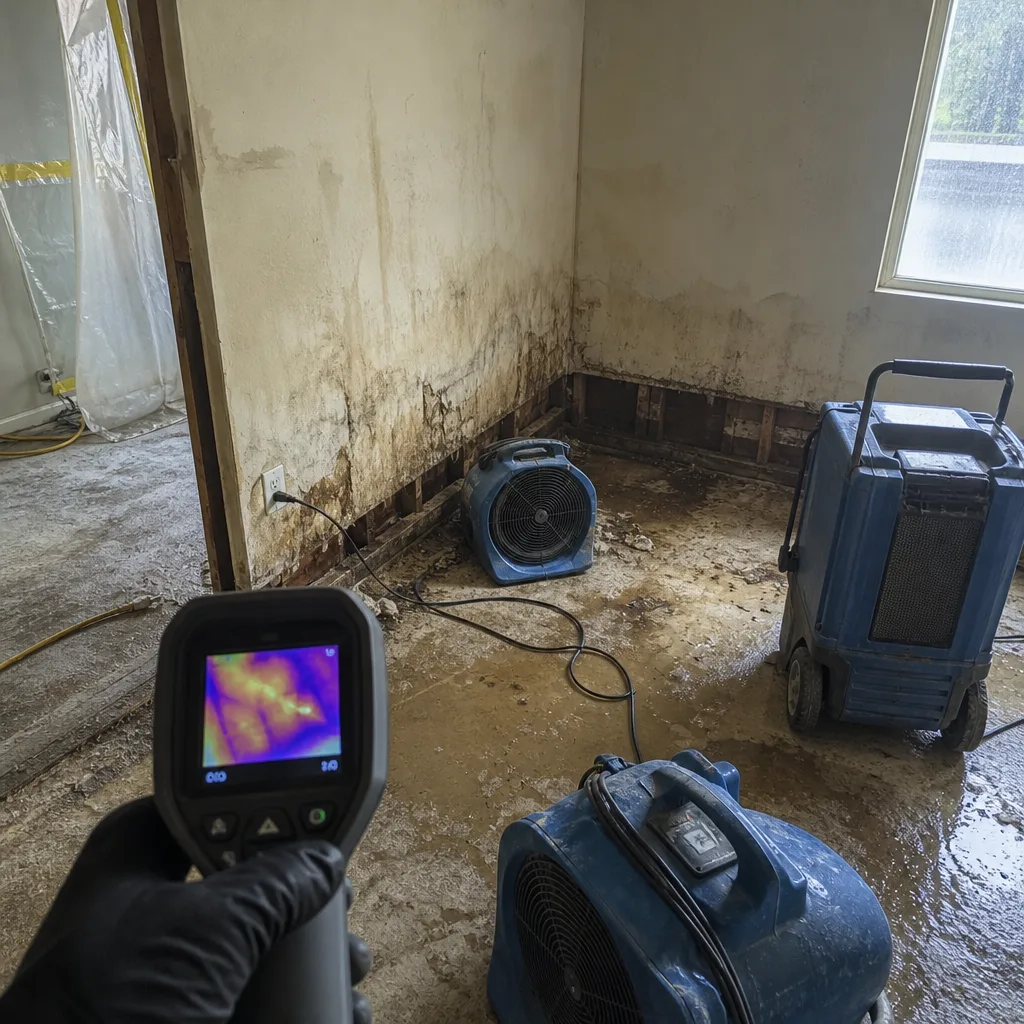 Before
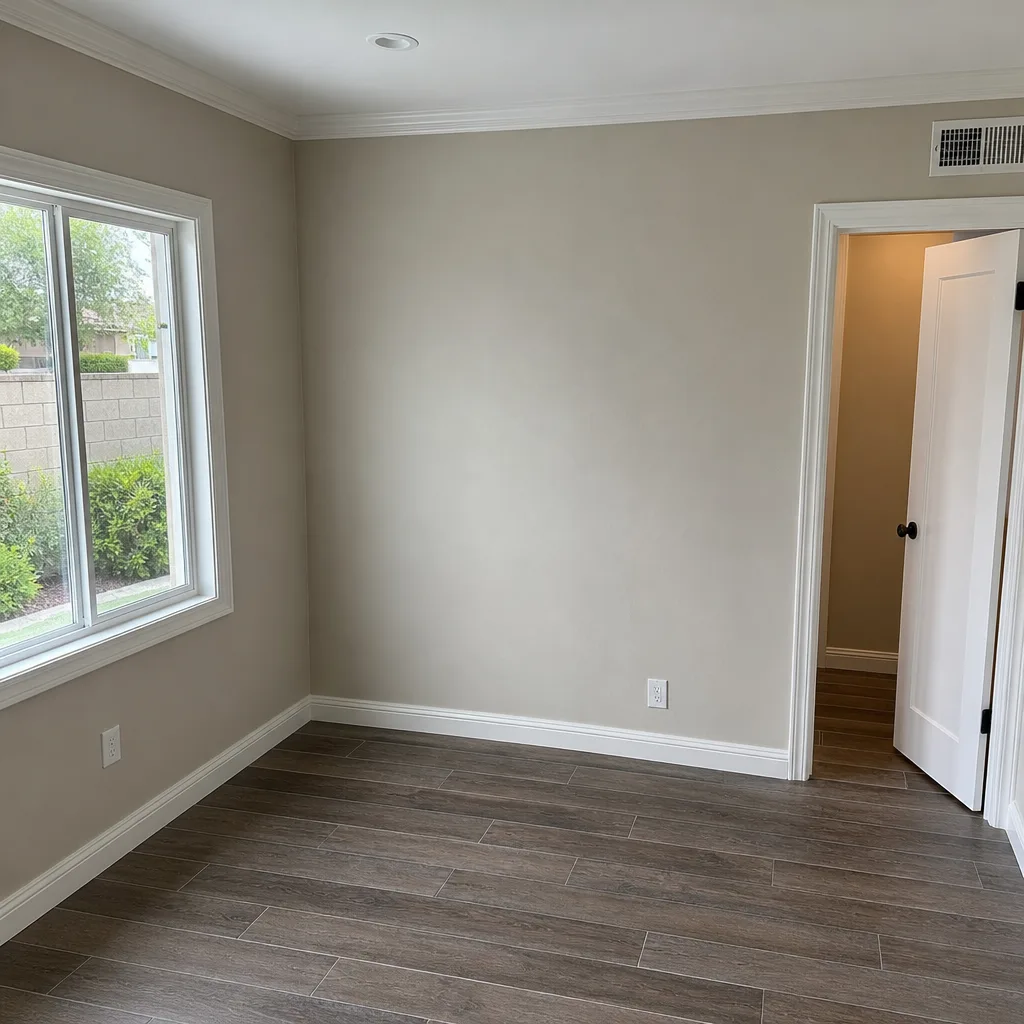 After
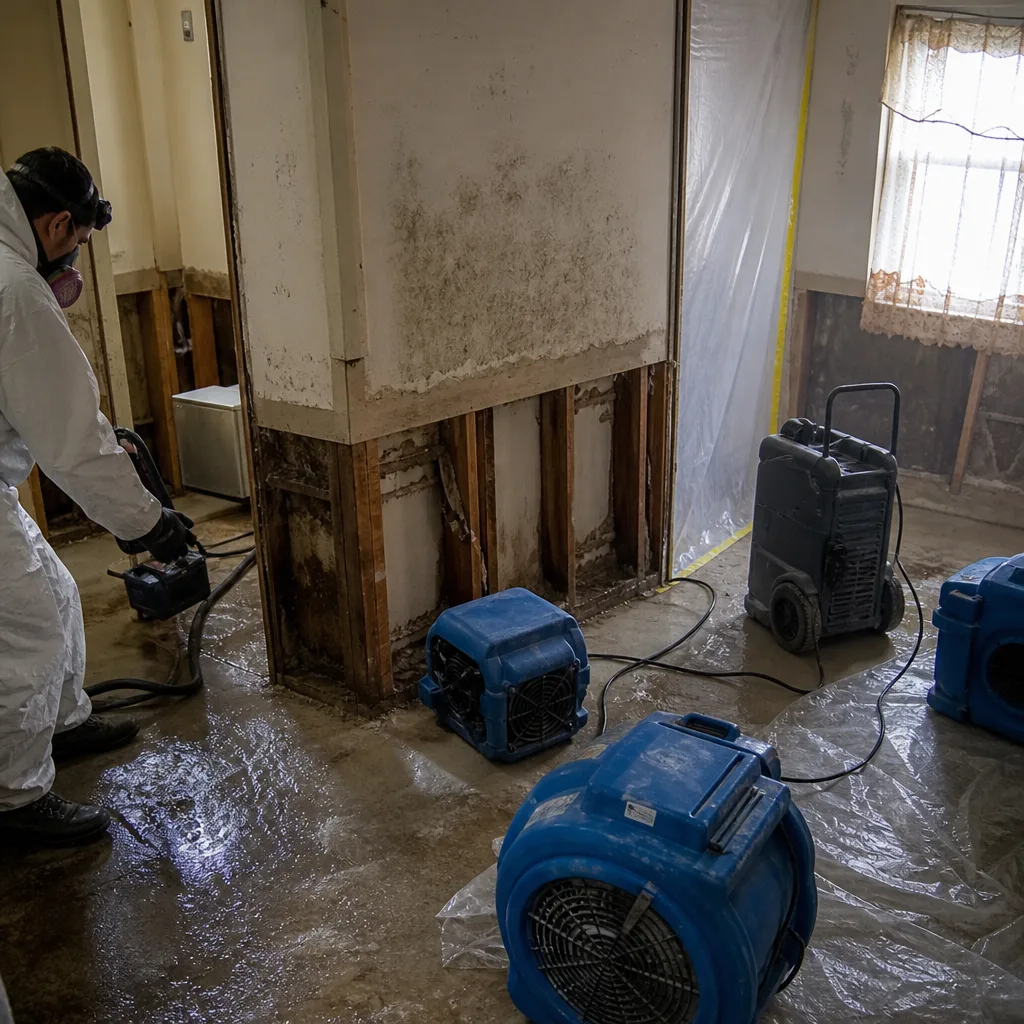 Before
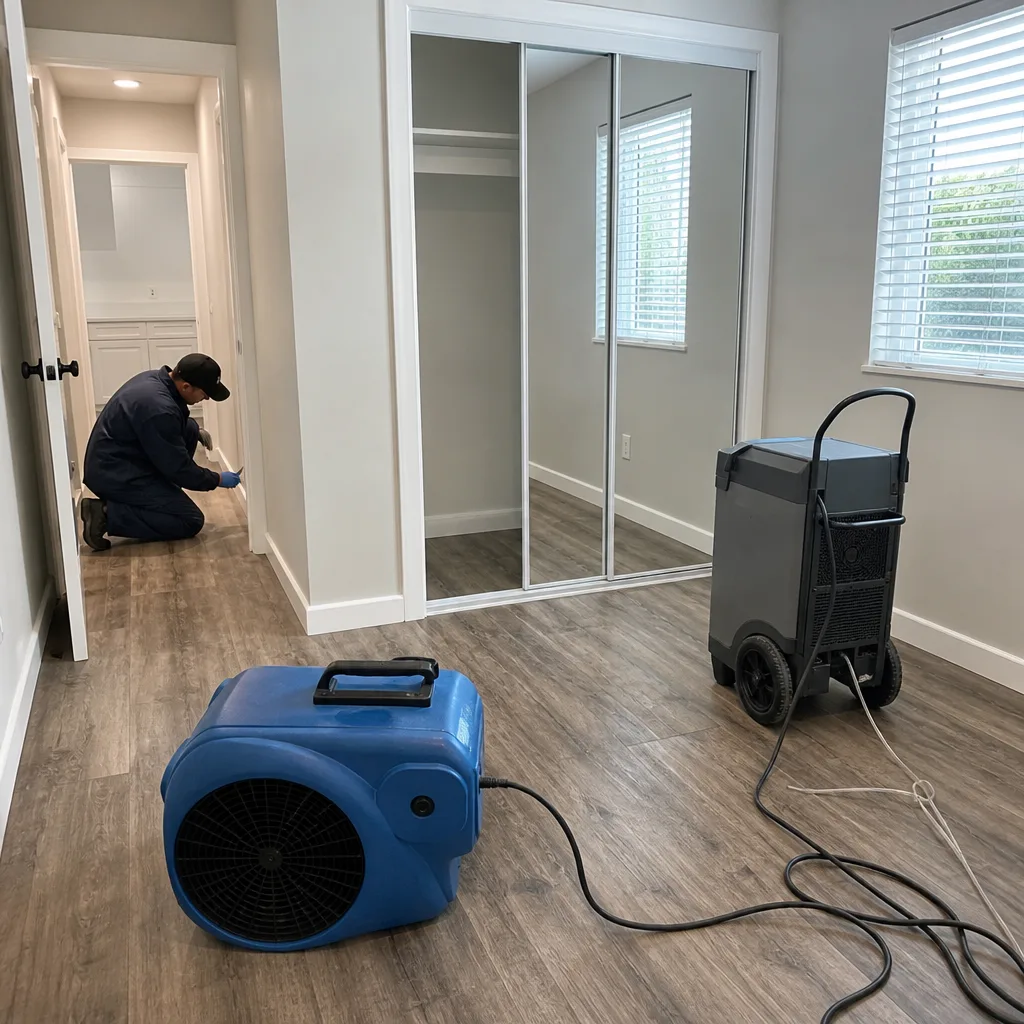 After
When to Call a Professional
Some situations are unambiguous. Call a restoration professional immediately if you have water intrusion from a supply line break, sewage backup, or roof failure; if you’ve discovered visible mold growth larger than about ten square feet; or if you’ve experienced a fire of any size that required suppression. Secondary signs also warrant immediate calls: musty odors that persist after cleaning, warped flooring, bubbling paint, or baseboards separating from walls. These indicate hidden moisture that will not resolve on its own. If you’re uncertain whether the condition requires professional assessment, err toward calling. Stonecrest Water Damage offers free estimates in Buena Park, call (833) 589-9161, and a moisture assessment costs nothing compared to the cost of undiscovered mold growth spreading behind your walls.
Frequently Asked Questions
Ask for the company’s IICRC firm certification number and the individual certification numbers of the technicians who will work on your property, then verify both at the IICRC’s public database or by contacting the organization directly. A legitimate company provides these numbers without hesitation, and the verification process takes minutes.
Neither is inherently better, because a franchise is actually an independent company operating under a brand license. The quality of the local operator, measured by equipment ownership, technician certification, and documentation practices, matters more than whether the brand name is nationally recognized or locally established.
Yes, your insurance policy covers the covered portion of the loss regardless of which licensed restoration company you select, and your insurer is legally obligated to process the claim. A preferred vendor offers streamlined billing and adjuster coordination, but any restoration company fluent in insurance documentation can provide the same service.
Mold colonization can begin within 24 to 48 hours of water intrusion under the right conditions, and Buena Park’s summer heat combined with marine layer humidity creates conditions that accelerate growth. This is why immediate moisture assessment and professional drying are critical, not just for the visible water but for what’s happening inside walls and under flooring.
A restoration company is certified to IICRC standards, operates restoration-grade drying and remediation equipment, and produces the moisture documentation insurance adjusters require. A general contractor is licensed to build and repair structures but typically lacks restoration certifications, restoration-grade equipment, and the moisture science training that separates restoration from repair.
Restoration costs vary by damage category, affected square footage, and materials involved, but water damage mitigation for a typical single-room incident in Buena Park generally runs between $1,500 and $4,500 before reconstruction, while mold remediation and fire restoration scale significantly based on scope. For detailed pricing information, see our Damage Restoration Cost Breakdown: The Buena Park Homeowner’s Reference for 2026. Call (833) 589-9161 for a free estimate with a written scope, exact pricing requires an on-site assessment, and no legitimate restoration company should quote a firm price without seeing the moisture readings.
The Bottom Line
Choosing a damage restoration brand in Buena Park is really choosing a local operator, not a brand name. The franchise logo doesn’t equip trucks, train technicians, or write drying protocols. Those decisions belong to the local business owner, and they vary enormously even under identical brand banners. Judge restoration companies by what you can verify: IICRC certification at both firm and technician levels, ownership of commercial-grade drying equipment from names like Dri-Eaz, Phoenix, XPOWER, B-Air, and Injectidry, willingness to provide written drying documentation before work begins, and experience handling water, mold, and fire damage under one roof. These are the signals that predict whether a property gets restored to documented standards or simply patched and painted over. For water-specific guidance, see The Complete Water Damage Restoration Guide for Buena Park Homeowners. In a city where the difference between those outcomes can mean mold behind walls or a claim your adjuster won’t question, verification beats brand recognition every time.
Written by the team at Stonecrest Water Damage, serving Buena Park since 2013.